
Trump has to go
At a rally in Nebraska on October 5, Trump was discussing the economic costs of the Iran war. He said:
“They can take out a city. Let them take out Los Angeles. Let them take out San Diego. This is a very small price to pay.”
He then said the war would end “very soon.”
He explicitly named Los Angeles and San Diego as cities whose destruction he characterized as a “very small price to pay.”
But the actual words were extraordinarily stark, and California officials immediately condemned them.
Trump said that it would be good for China purchasing American arms?
Ukrain is gaining territory.

TRUMP’S BRAND-NEW WEBSITE FACT-CHECKS HIM ON DAY ONE
Trump launched a new government website Tuesday, and within hours it was telling people he lost in 2020.
He rolled out America.gov himself. “We are launching today something that is really not just something simply a website,” Trump said. “It’s a restoration of America’s promise and a reinvention for the 21st century and beyond.” The site is an AI-powered portal billed as “a government information assistant from the General Services Administration.”
Users asked it whether Trump lost the 2020 election. “Yes,” it answered. “Official certified results show Joseph R. Biden won the 2020 presidential election.” Then it gave the Electoral College count: Biden 306, Trump 232.
On Monday in the Oval Office, Trump said, “We have the best economy we’ve ever had.” His website disagreed. “No official U.S. statistical agency ranks the current economy as the best it has ever been,” it said, noting that unemployment was lower in other periods, “for example about 3.5% in 2022,” and that GDP growth has been faster in many past quarters.
Trump also said Monday that “prices for groceries have come way down from Biden.” The site answered with one word first. “No. Official BLS data do not show grocery prices ‘way down’ in President Trump’s second term versus President Biden’s term.”
It knocked down his investment number too. Trump likes to say he’s secured more than $21 trillion in foreign investment. “No official source I found confirms $21 trillion,” the site said, pointing out that the White House’s own figures are around $11 trillion and mix together company plans, foreign pledges and deals that may never be finished.
He told the UN on September 22 that “more Americans are working today by far than ever before.” America.gov: “Latest official data do not show that more Americans are working ‘by far’ than ever before.” It added that the latest household employment figure is down.
Trump’s administration has spent at least $1.7 million on TV ads telling people how great things are. Now his own government website is telling them to check the numbers.
Reflecting Pool
The contractor behind the Lincoln Memorial Reflecting Pool renovation admits mistakes made during the repair caused the pool’s new blue liner to peel and blister, according to a new report.
Atlantic Industrial Coatings found that workers did not apply enough primer in some areas and that two materials used for the liner were not compatible, according to documents reviewed by The New York Times.
The findings contrast claims of vandalism made by President Trump, who has repeatedly blamed vandals for the damage found at the pool despite the Department of Justice (DOJ) dropping charges against several people accused of damaging the liner.
The company said one of the materials became too hot for the layer underneath it, causing parts of the liner to bubble and come loose, in an apparent worker oversight.
Atlantic is now repairing the pool, which remains drained while the work continues, under warranty.
9/11
Last night was the second night of the Republican midterm convention Trump staged to fire up his base. Such a midterm convention is rare—the purpose of national conventions is to pick a president and write a platform—but Trump has turned the Republican Party into a vehicle for his own power and apparently thinks putting himself at the center of the midterms can overcome the headwinds the Republicans are battling.
Or perhaps, with his approval ratings hitting a new low, he just wanted to stand in front of cheering crowds again.
The audience at the American Airlines Center in Dallas was sparse, and according to Kara Voght of the Wall Street Journal, many who were there had received their tickets for free from state parties or right-wing groups like Moms for Liberty. But, she wrote, “everyone wanted to watch another episode of the Trump show.”
Although the crowd was small enough that it did not fill the arena, Trump got the absolute loyalty he demanded from those who had turned out. At the event, he led the crowd in an oath. “Please raise your right hand,” he shouted. “I pledge to the greatest president in the history of the United States.[not to the Constitution, but to him] That loves us so much he can’t even breathe.” The crowd chanted dutifully after him.
“That I will go out with my family, my friends, I’ll do it any way—I don’t care if I’m registered or not, I’m going to try and cheat like hell like they do, they’d never, there’s never been bigger cheaters, they don’t care. I am gonna go out and I’m gonna get my friends, my family, and we are going to vote on November third or we are going to vote before that!” The crowd erupted in applause.
Once again, he promised that if the Republicans held control of the House and Senate after the midterms, he would distribute a $5,000 check to all adult U.S. citizens, a plan that would cost more than a trillion dollars even if it were legal for him to do so (which it is not).
But while the Trump show in Dallas was being broadcast to the president’s fans, reality was very much on the minds of those watching events in the Middle East.
There are two main shipping routes for oil and other products out of the region, and both have strategic chokepoints. And both are now closed.
The Strait of Hormuz sits on the eastern side of the Arabian Peninsula where the Persian Gulf empties into the Arabian Sea. The Bab el-Mandeb strait sits on the western side of the Arabian Peninsula. It pinches the outlet of the Red Sea on its way to the Arabian Sea and from there to the Indian Ocean and world markets.
When Trump struck Iran in February 2026, Iranian forces took control of the Strait of Hormuz, largely stopping traffic of oil through the outlet. And so Saudi Arabia, which is the world’s largest oil exporter and a close ally of the United States, relied on sending exports via the Red Sea route, passing through the Bab el-Mandeb strait.
It did so by moving oil across the Arabian Peninsula from the Persian Gulf to the Red Sea through the East-West oil pipeline, which runs about 750 miles (1,200 kilometers) across Saudi Arabia. It can move about 7 million barrels of crude oil per day and has been sending about 5 million a day since the outbreak of the war on Iran. From there, oil can be loaded onto tankers and shipped down the Red Sea, through the Bab el-Mandeb, and on to global markets.
Yesterday Iran-backed Houthi militants swept along the shoreline of the Red Sea toward the Bab el-Mandeb. They captured the seaport and city of Mocha, which is about 50 miles (80 kilometers) from the strait, from Saudi-backed Yemeni forces.
Today Yemeni government officials told Mohammed Ghobari, Eman Abouhassira, and Yasmine Ghania of Reuters that the Houthis have taken the coastal town of Dhubab, which sits on the Yemen mainland at the point of the strait. The sources said Yemeni forces had also evacuated the island of Perim, which sits about a third of the way between the mainland and the Djibouti shore to the west. Later this afternoon, sources said the Houthis had captured the island.
Although the Houthis do not control the Djiboutian side of the strait, they now threaten shipping through the passage. Saudi Arabia’s East-West pipeline has also come under attack. Spencer Kimball of CNBC reports that the Saudi Energy Ministry announced the pipeline had been shut down as a precautionary measure after it had sustained a number of attacks. Kylie Atwood, Katie Bo Lillis, Thomas Bordeaux, and Zachary Cohen of CNN added that the attacks apparently originated in Iraq, that U.S. officials had told them that pumping stations had been hit, and satellite imagery showed smoke coming from one of them and fire damage at another.
The price of oil briefly jumped to almost $110 a barrel on Friday. Diesel prices moved to $6.06 a gallon, up 60% since the U.S. and Israel first attacked Iran in February.
Trump and his advisors have said they plan to strangle Iran economically through their blockade of Iranian ports. Now it appears Iran is retaliating with a plan to strangle the U.S. economy by slowing the transport of oil even further.
Today is the twenty-fifth anniversary of 9/11, the day terrorists from the al-Qaeda network used four civilian airplanes as weapons against the United States.
President Donald Trump did not attend the commemoration at Ground Zero, now the National September 11 Memorial, in downtown Manhattan because, according to New York Times reporters Maggie Haberman, Zolan Kanno-Youngs, Dana Rubinstein, and Sally Goldenberg, he wanted to deliver a speech but the event organizers don’t allow speeches, focusing on nonpartisanship and honoring the victims. Trump responded to the story with a personal attack on Haberman, calling her “Maggot.”
Instead, Trump went to the Pentagon, where he delivered a speech tying his war on Iran to the attacks of 9/11, saying: “We salute every member of the United States military who served in the ‘war on terror’. And we salute the service members working right now to ensure the world’s number one sponsor of terror, the Islamic Republic of Iran, will never ever have a nuclear weapon.”
Then he fell asleep. Right there in full view.
Defense Secretary Pete Hegseth added: “We’re still sending terrorists where they belong—to hell. And tankers to the bottom of the ocean where they belong, and we are ensuring that Iran will never have a nuclear weapon. The economic pressure tightens every day.”
All four living ex-presidents and first ladies—Bill Clinton and Hillary Clinton, George W. Bush and Laura Bush, Barack Obama and Michelle Obama, Joe Biden and Jill Biden—attended the Ground Zero commemoration in Manhattan.
Joe Biden stood at attention for hours.
There the victims’ names were read, and the ceremony for the first time included a moment of silence for those who died of illnesses related to conditions in the aftermath of the buildings’ collapse.
Adam Schiff
Investigators in my office uncovered the contracts behind the banners of Donald Trump’s face now hanging on federal buildings across Washington — the largest of them eight stories tall at the Department of Health and Human Services, with “America First” printed beside it:
The American people paid for every inch of them, and we have the receipts. $114,000 from the FAA. $39,000 from Interior. A third check from the Labor Department.
The list goes on and on of President Trump engaging in a spree of self–aggrandizement creating a mythologized, superhuman and omnipresent persona leading to idolatry. :
- Kennedy Center: Officials renamed the venue to include his name on the building facade.
- Airport Trademarks: His family business filed trademarks for airport names and merchandise.
- Federal Etchings: His name has been linked to various federal structures and investment accounts.
- Battleships named after himself
Congress long ago outlawed spending taxpayer dollars on propaganda and self-aggrandizement, and an eight-story-high Donald Trump head certainly qualifies.
Because I spent years as a federal prosecutor, and I know a pattern of intent when I see one. In every country where democracy gave way to one man, the faces went up on the government buildings first. Not as decoration, and not even as vanity — but to teach the people who paid for those buildings a simple lesson: all of this belongs to him now.
And yet not one of those buildings belongs to Donald Trump. They belong to the American people, to the taxpayers who funded them. We were never asked, and we do not have to accept it.
There is one check on this president that he cannot fire and cannot intimidate: a Democratic Senate, with the gavels and subpoena power to hold him to account.


Human Services Secretary Robert F. Kennedy Jr. Lies
The U.S. has “the sickest children in the history of the world.”
False
Health and Human Services Secretary Robert F. Kennedy Jr. speaks at the Republican convention Thursday, Sept. 10, 2026, in Dallas. (AP)
RFK Jr.’s claim that the US has the ‘sickest children’ in world history is wrong
For most of human history, about half of children died before puberty, with disease as a major contributor.
Childhood mortality has fallen significantly in the U.S. and globally in the last century, largely because of advances in sanitation and medicine, including vaccines.
U.S. children have a significantly higher mortality rate than children in comparable high-income countries. Children’s chronic disease rates in the U.S. have increased in recent decades.
Health Secretary Robert F. Kennedy Jr. said despite high healthcare spending, the U.S. is failing its children on an unprecedented level.
“This country pays two to three times what every developing nation in the world pays, and yet we have the sickest children in the history of the world,” Kennedy said, addressing the Republican midterm convention in Dallas on Sept. 10. “We have the highest chronic disease burden ever recorded.”
For this fact-check, we’re focusing on the claim that the U.S. has the “sickest children in the history of the world.”
Kennedy’s statement ignores the massive drop in childhood mortality and infectious disease rates since the 19th century.
For almost all of human history, about half of all children died before reaching puberty, with infectious disease as a major contributor. Children worldwide got sick and died far more often in the past than they do today, including in the U.S.
In 1900 in the United States, 1 in 5 children died before age 5, according to the U.S. Centers for Disease Control and Prevention. In 2018, 24 in 100,000 U.S. children ages 1 through 4 died.
Sanitation, vaccination and antibiotics are the three big contributors to the huge decrease in childhood mortality over the 20th century. A 2024 study found that vaccination prevented 146 million deaths among children under 5 globally since 1974.
Compared with developing countries, American children have better health outcomes. The U.S. under-5 mortality rate is about 80% lower than the global average, and some of the leading global causes of childhood death such as diarrhea and malaria now cause almost no childhood deaths in the U.S.
In the long view of history, today’s American children are far less likely to die of disease. But by some metrics, U.S. children’s health has gotten worse in recent decades, and U.S. children have worse mortality rates than their peers in other developed countries.
A 2024 National Academies of Sciences, Engineering, and Medicine report said the U.S. “ranks at the bottom among wealthy nations on the mental wellbeing, physical health, and academic and social skills of children.”
From 2007 to 2022, the mortality rate for U.S. children and teens ages 1 to 19 was 80% higher than the same age group in other high-income countries, according to a 2025 study published in the Journal of the American Medical Association.
The death rate between U.S. children and peers ages 1 to 19 in other developed nations most differed when it came to gun-related and traffic deaths. U.S. children were 15 times more likely to die because of a firearm compared with children in other high-income countries, the study by researchers at Children’s Hospital of Philadelphia and the University of California, Los Angeles found.
The study also found that chronic diseases such as obesity, sleeping problems and mental health issues have been increasing for U.S. children in recent decades. It found that U.S. children in 2023 were 15% to 20% more likely to have a chronic condition than children in 2011. But chronic diseases are only one form of illness, and the data doesn’t support Kennedy’s sweeping statement.
The same study found infants born in the U.S. were 78% more likely to die than in other developed countries, with prematurity, congenital anomalies, sudden unexpected deaths and respiratory infections being more common.
Our ruling
Kennedy said the U.S. has the “sickest children in the history of the world.”
Before advances in sanitation and medicine in the 19th and 20th centuries, about half of all children worldwide died, largely from infectious diseases.
Some data shows chronic disease rates are rising and children in the U.S. have a higher mortality rate than children in other developed countries. But Kennedy’s statement ignores the major reductions in childhood illness and death achieved over the last 200 years, and he’s wrong that the U.S. has the “sickest children” in history.
We rate that False.?hr />
Vance lies
Here are fact-checks of some of Vance’s statements Thursday 9/10/2026.
Vance statement:
“And what did the Democrats do when the fraud they turned a blind eye to reached these catastrophic levels? We found $250 billion dollars of fraud just since the president made me the fraud czar.”
Vance takes it too far by portraying only Trump officials as tackling fraud.
In his remarks, he mentioned Medicaid fraud in a Minnesota autism program. Minnesota Gov. Tim Walz, who ran for vice president in 2024, has faced criticism for his response to fraud in the state’s safety net programs.
But federal prosecutors in Minnesota announced charges against 47 defendants involving the nonprofit Feeding Our Future in 2022, when Joe Biden was president. During Trump’s current term, federal prosecutors have continued to prosecute Minnesota safety net fraud, including in a program to provide services for people with autism spectrum disorder.
The White House in August published a “fraud ledger,” which says the administration uncovered $245.7 billion in fraud. But that does not represent fraud proven in court.
Rather, it’s an estimate based on data analysis. The White House ledger has a separate category for “fraud enforced,” and that total is $59.1 billion in indictments or settlements.
PolitiFact contacted the White House on Sept. 3 to ask for more details showing how officials arrived at the fraud figure and did not receive that information.
Vance statement:
“We’ve created 1 million new jobs, and unlike the last administration, where most of the job growth went to illegal aliens, 100% of the job growth in the United States of America is going to American citizens.”
Vance’s citation for the number of jobs created during Trump’s second term is in the ballpark. According to federal data, the U.S. added 807,000 jobs during that time.
Still, Trump’s second-term job creation is drastically underperforming the record of his predecessors, Barack Obama and Joe Biden, as well as his own first term.
In Trump’s second term, the U.S. has added 38,000 jobs per month on average. That’s compared with an average of 177,000 and 236,000 jobs created per month under the Obama, Biden and first-term Trump administrations — when leaving out the Great Recession of 2008-09 and the COVID-19 pandemic of 2020-21.
Vance’s point about who is benefitting most from the job growth under Trump needs context.
Since the start of Trump’s second term in January 2025, the estimated number of foreign-born people employed in the U.S. has fallen by 1.29 million, compared with an increase of 1.74 million among native-born workers. At that rate, the number could grow to 4.7 million more native-born workers over a four-year presidential term.
Job growth for native-born people was more robust under Biden, increasing by 7.5 million.
Vance’s claim that the job gains flipped from mostly “illegal aliens” under Biden to U.S. citizens under Trump is misleading. Many of the people counted as foreign-born in this data set are either naturalized U.S. citizens or people legally present in the U.S., often for decades.
Vance attacks Talarico on past comments, baselessly references ‘browser history’
Similar to speakers during the convention’s first night, Vance unleashed an attack on Texas Democratic U.S. Senate candidate James Talarico.
“In Texas, you have Democrats, grown men, who seem to be pretty obsessed with trans children,” Vance said. “I gotta say that the president’s very good at nicknames, but Talafrico maybe tops the list. This Talarico guy, he will not shut up about how there are six genders. He will not shut up about how, quote, ‘God is nonbinary.’ I don’t know what the hell that even means, my friends. He won’t shut up about having traditional Christian values makes you a bigot. And I got to say, a guy that age who is so obsessed and focused on transgender children? I don’t know about you, but I never want to see that guy’s web browser history.”
Talarico, a seminarian, once said he loved a group of transgender children who visited the Texas Capitol to advocate for themselves, calling their actions inspiring. Vance presented no evidence to support the idea that Talarico’s actions toward children have been problematic.
Here’s context about some of Talarico’s comments that Vance referred to:
‘Six genders’: During a 2021 speech in the Texas House of Representatives while debating a bill about transgender youth playing in school sports, Talarico said there are “at least six biological sex characteristics,” referring to traits such as chromosomes, hormones and reproductive anatomy.
In a Sept. 9 interview with Fox News, when asked if he still believes there are six sexes, Talarico said “no.”
“I missed the mark on some of my past statements, I’ll be the first to admit it,” Talarico said. “What I meant is there are two sexes and there’s a small percentage of people with genetic abnormalities. Obviously I didn’t say it correctly. There are not six sexes, there are two.”
‘God is nonbinary’: During the same 2021 speech while debating a bill about transgender youth, Talarico said, “God is nonbinary.”
The full video shows Talarico saying, “The first two lines of the Bible, the first two lines in Genesis, use two different Hebrew words to describe God. One is the masculine Hebrew noun for divinity. The second is the feminine Hebrew noun for spirit. God is both masculine and feminine and everything in between. God is nonbinary.”
Talarico told ABC News the statement was “meant to be deliberately provocative” and that he believes people “can’t use human categories to define God.”

Secretary of Defense Pete Hegseth
President Donald Trump’s biographer Michael Wolff claims “there is nobody anywhere in Washington or across the defense industry who doesn’t believe Trump’s Secretary of Defense Pete Hegseth has to go.”
“[They all believe] that he’s a menace, an incalculable danger, an existential threat,” reports Wolff. “Daily leaks about his blunders, stupidity, malfeasance, and weird conduct — his wife has moved into the Pentagon as his effective second-in-command — have become part of a growing rear-guard rebellion to get him out.”
Over in the White House, Wolff said “the president’s closest circle of advisors believe Hegseth needs to be fired — yesterday is their timetable.”
“Everyone is alarmed — truly, freaked out.” Reports Wolff. “He has no supporters left anywhere. Except for Donald Trump.”
Wolff’s information come on the heels of several revelations as leakers approach the press with news of outlandish behavior, undue firings and a litany of policy missteps.
Wolff said until Trump entered the White House for his second term, everybody in the past who had overseen the planet’s biggest military budget “has had extensive military, corporate, or political experience,” regardless of whether or not voters judged them successful. Each had careers and resumes that “logically placed them in the post.”
“Because the job is so do-or-die, no president, in the modern age, has chosen to appoint anyone who might be considered an outlier,” said Wolff.
But, of course, that was before Trump, he added.
“Hegseth’s resume is not just sparse but lacks all relevant experience otherwise associated with running any complex organization — not to mention the largest organization on earth. It is, in fact, mostly marked by significant failures,” said Wolff, quoting research and source information. “His efforts at a political career and then in running veterans’ organizations — after a stint in the National Guard — were characterized most by his alcoholism and financial mismanagement.”
“His personal life, also characterized by his alcoholism, includes multiple sexual abuse allegations, three marriages, and his fathering of a child with one woman when he was married to another,” Wolff said. “His most substantial employment was as the co-host of a weekend television show on Fox News, where his boss, Roger Ailes, called him ‘Colonel Vodka’ because he talked so often about his National Guard service and then, reliably, passed out in a drunken stupor.”
But Wolff said Hegseth holds his current job not because of expertise, experience, and victories “but precisely because he is lacking them.” During Trump’s first administration, Wolff said the people running Trump’s military were clearly more intelligent than Trump, and they couldn’t hide their contempt for Trump’s stupidity.
“Almost every top-tier commander was struck by the determined ignorance of the commander-in-chief—and too frequently, they didn’t hide their feelings. Hence, Trump, in his second attempt at being president, hires ‘Colonel Vodka’ to run his Defense Department,” said Wolff, adding that Hegseth immediately set out to purge the Pentagon of people who were smarter than Trump.
“Hegseth understood that part of his job was to cleanse the Pentagon of layers of commanders who might believe that their expertise ought logically to provide a counterpoint to the president’s (and his Defense Secretary’s) lack of expertise,” said Wolff.
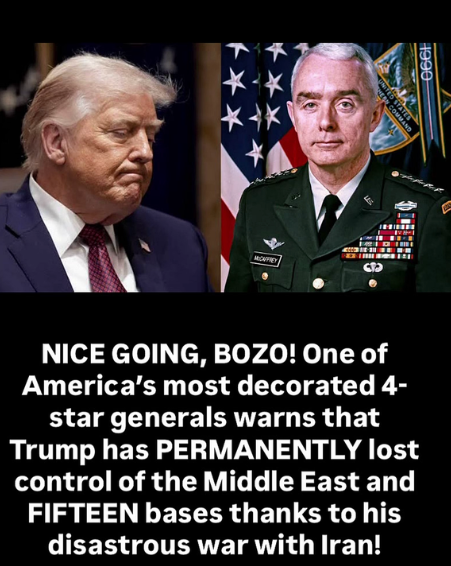
And now Wolff said the Pentagon is in trouble as munitions run low and a series of mistakes and bad decisions send Trump’s entirely voluntary war on Iran to creep into the November midterms.
“There isn’t anyone who believes Pete Hegseth is up to that job,” said Wolff, and insiders are pouring their opinions to the press.
POSTAL SERVICE
Unlike the founders, Trump sees the Postal Service as a vehicle to negate democracy and maintain his personal grip on power. In his first term in office, he tried to gut the service by backing Louis DeJoy, an obsequious campaign donor, to become postmaster general. Among other measures, DeJoy eliminated overtime pay for postal workers, banned late or additional trips to deliver mail and removed highly efficient mail-sorting machines from facilities throughout the country to impede mail-in voting. In May 2025, the Postal Service replaced DeJoy with another Trump loyalist, former FedEx board member David Steiner, who oversaw the adoption of the new mail-in voting rule. In the Supreme Court, the administration is represented by Solicitor General D. John Sauer, who gained Trump’s favor defending him in Trump v. United States, the landmark 2024 case on presidential immunity. In his brief to the court on mail-in balloting, Sauer argues that “the Postal Service’s final rule imposes only modest envelope-design and addressee-information requirements for federal-election ballots sent via U.S. Mail,” and that claims of voter disenfranchisement are overblown. Sauer has likened mail-in ballots to the mailing of cremated remains and replica explosives, which the Postal Service can strictly regulate under federal law. He has also cited the service’s authority to reject unstamped mail and heavy parcels with insufficient postage, an argument that has nothing to do with the blanket prohibitions the new rule would impose. Sauer and his arguments deserve to be laughed straight out of court. But this is the Supreme Court of John Roberts, who has devoted his career to destroying the Voting Rights Act and conferring near-total immunity from criminal prosecution on Donald Trump. It is also the court of Samuel Alito, who wrote the majority decision overturning Roe v. Wade, and Clarence Thomas, who has spent his career accepting unreported luxury vacations paid for by billionaire Republican donors. It is also the court of three Trump appointees — Amy Coney Barrett, Neil Gorsuch and Brett “I Like Beer” Kavanaugh. As recent history confirms, no argument is too absurd for this junta to embrace as long as it furthers the interests of Trump and the MAGA movement.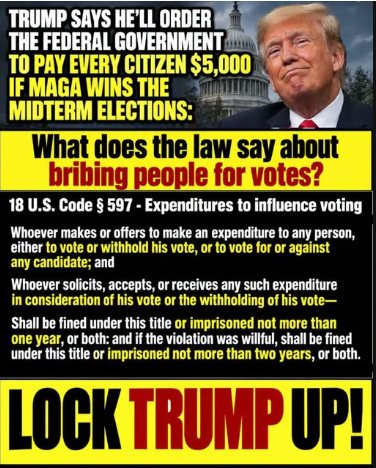
Vote Buying
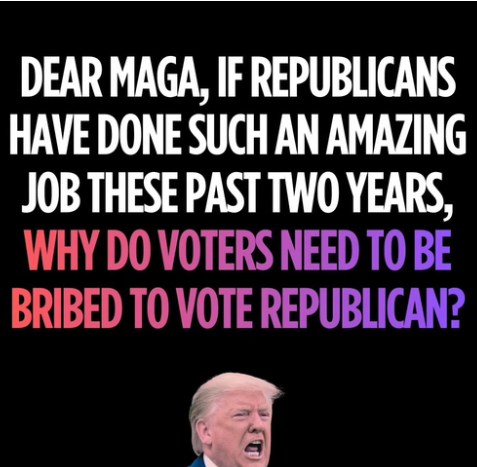
“If the Republicans win, you win with us and you get $5,000,” Trump said during the GOP’s midterm convention in Dallas. “It will be called the Trump Dividend.”
If the promise is genuinely “I will give you $5,000 if you vote a certain way,” that is generally illegal vote-buying.
Federal law, 18 U.S.C. § 597, specifically prohibits offering or paying money to someone to vote—or not vote—for or against a particular candidate. It also prohibits the voter from accepting the payment in exchange for the vote.
Florida law also prohibits corruptly attempting to influence an elector’s vote. Florida’s election code specifically lists “vote selling” among its prohibited election offenses.

Trump Invents New 9/11 Story About Being Rescued by Firefighters
Nobody has ever been rescued from the Twin Towers this many years after the fact.
Trump spoke at a Tunnel to Towers Foundation event on Tuesday, held to honor the victims and first responders of September 11 on the 25th anniversary of the attacks. He used his remarks not to pay his respects, but to tell a new lie about his own heroism.
Trump told the crowd that he brought his entire construction crew to Ground Zero immediately after the September 11th attacks. (a lie) He said they heard a building nearby creak, and that he told everyone around him that it was going to fall down. (A lie)
Then, he said that two firefighters grabbed him under the arms and started running. (a lie) He allegedly told them, “Fellas, I could run myself,” (a lie) but added that they were “amazing.”
Trump has been caught lying multiple times about his involvement in 9/11, including that he sent hundreds of workers to the site, that he helped clear debris, and that he spent time with first responders. (a lie) There is no evidence to support any of those stories. The detail about firefighters physically carrying him appears to be new.
What we do have evidence of on the actual day of the attacks, is Trump calling a local television station to brag that his building was officially the tallest in downtown Manhattan. (also a lie)
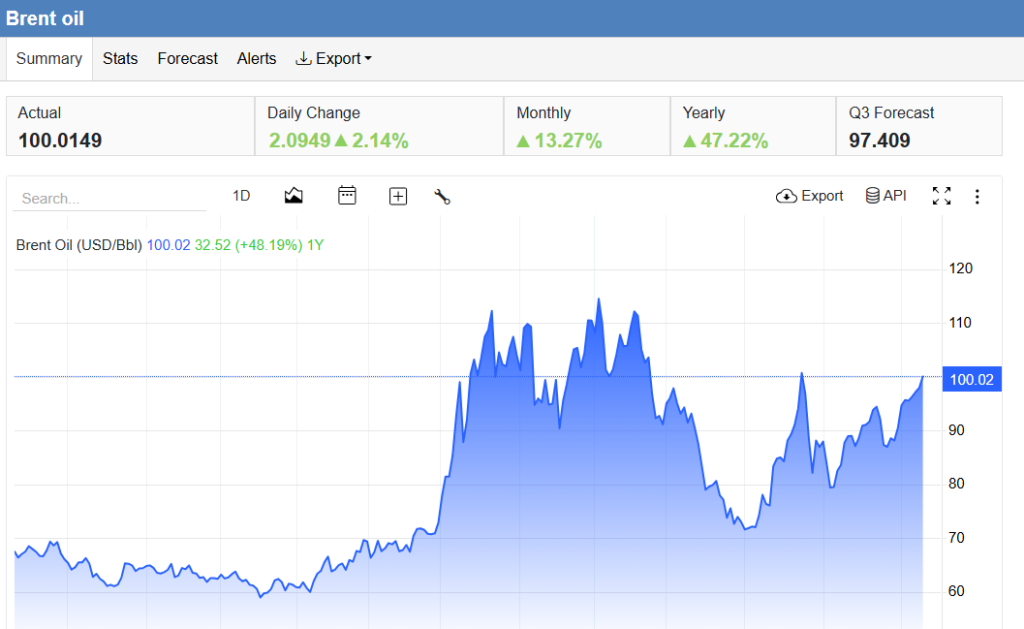
Brent Crude is again $100 a barrell. Gasoline price is the higest ever here. I have an electric car, a great investment!
Insanity
Between Saturday evening and Monday evening, Trump published more than 100 posts on Truth Social that included jabs at allies, egoistical boasting and a couple of posts depicting him conferring with President George Washington. But there were also some themes — at least nine fixated on changing the name of New Mexico. It’s quintessential Trump: floating a rebranding effort to conjure up right-wing nationalist ideas without achieving any substantive change. Never mind that Trump lacks the legal authority to change the name of a state. Suggesting that New Mexico be renamed allows him to taunt our neighbor to the south (in an unbearably corny way).
Trump’s thirst for power seems completely irrepressible.
In one of the posts unrelated to New Mexico, Trump stands before an army of robots shooting lasers out of their eyes. A fissured moon hangs over his head, and below the image a caption reads, “They will dream of us forever.” In another, he walks before a different robot army — this one features flying spiders! — and the caption reads, “They will never sleep again.” In yet another, he stands on a throne flanked by giant robots, with a caption that says, “Give them nightmares.”
If we lived in a functioning democracy, these posts would be considered politically disastrous and a glaring sign that a party needed to immediately remove its leader.
Already in a ditch, Trump digs deeper in defending image depicting him as Jesus
Trump deleted post depicting himself as Christ-like figure amid outrage from Christian right
If we take the posts at face value, Trump appears OK with the leader of an openly sadistic regime using autonomous weapons to suppress the population. If we don’t take the posts at face value, then who knows what they mean. They aren’t purely ironic — there isn’t anything funny about the images, and in the real world, Trump sincerely and ceaselessly attempts to accumulate power using every tactic he can. Ultimately, the images betray his reported desire to be seen as a great man of history. Trump reportedly believes he belongs on a list of many of the most powerful men in human history, including Alexander the Great, Julius Caesar, William the Conqueror, Adolf Hitler, Mao Zedong and Joseph Stalin. He wants to be feared.
But the disconnect between Trump’s frivolous “New America” obsession and his robot tyranny distills how his ambition is destined to go unfulfilled. Trump is too petty, self-involved and fixated on shallow branding exercises to be an effective despot. In fact, he’s so petty, self-involved and fixated on shallow branding exercises that he’s not even able to put his party in the best position to maintain a majority in Congress.
Consider that Trump is begging voters to “pretend” that he’s on the ballot and reportedly planning to spend hundreds of millions of dollars available to his super PAC, MAGA Inc., making the case that he — not the rest of the GOP — is who voters should consider themselves to be voting for. (He has however donated $10 million to Texas Senate candidate Ken Paxton.) Yet Trump is as unpopular as he’s ever been, has lost his touch with endorsements and he has no solutions for widespread anger over the cost of living, exacerbated in no small part by his catastrophic war on Iran.
Trump’s thirst for power seems completely irrepressible. It’s leading his messaging to become stranger, more vulgar, more cartoonish. He’s gambling that enough Americans share his sentiments to keep his movement afloat. I wouldn’t bet on it.
Labor Day Rants
President Trump posted an image of New Mexico with its name crossed out with the new name being “New America.”
It seems likely that he and his aide Natalie Harp, who is apparently behind much of his social media, think trolling the country is a good way to keep attention focused on Trump rather than on rising inflation, corruption, or the war in Iran.
There is much to distract from. On CNN today, pollster Harry Enten noted that on economic issues, Trump’s approval rating for how he is handling the economy is now 41 points underwater. “We’re talking about a switcheroo in the wrong direction of 61 points on this Labor Day,” Enten said. “It is not a happy Labor Day, indeed, for President Trump when it comes to how those who are employed view him on the economy.”
Also today, when Martha Raddatz of ABC News noted that gas and diesel prices are soaring, with the Labor Day gasoline average at $4.10 a gallon compared with $3.16 last year, she played a clip of Trump telling an audience that when they had to “pay a tiny little bit more for your gasoline, just remember, you’re doing it so that a very evil country cannot have—a country, really, it’s the number one state sponsor of terror in the world. We don’t want to have them have a nuclear weapon. So remember that, when you have to pay a little bit more, you’re at $4, it’s okay. I mean, it’s, I’m not, I’m not. I will never apologize. I did the right thing.”
Raddatz asked Energy Secretary Chris Wright today about when we might see a nuclear agreement with Iran, since it’s already been six months of higher prices and there doesn’t seem to be one on the table. Wright answered: “There may not be a nuclear agreement. It may be simply destroying their capabilities to do it. An agreement may await a next administration in Iran. We simply don’t know that. But I think what the president was communicating there is how critically important this is.”
Tonight, Trump posted: “Oil prices will drop precipitously, like everything else is dropping (but more!), when we WIN the war with Iran. Three Dollars a gallon, but ultimately, below Two Dollars a gallon. It will all happen quickly, and Iran will never have a Nuclear Weapon. MAGA! President DJT”
But while at some level Trump might think he is being clever by keeping the focus on himself, what he is really doing is demonstrating that he is no longer even trying to govern and is instead retreating into a world where he simply does whatever he wants without regard for the country. In the early hours of Trump’s rants yesterday, even before they had gained their full momentum, Representative Chellie Pingree (D-ME) called out the Republicans who are refusing to exercise their constitutional powers to protect the country.
“This is truly unhinged,” she posted on social media over a video of his posts. “I don’t want to hear ‘oh, it’s just Trump being Trump’ or he’s ‘trolling.’ Republicans cannot keep shrugging this off. Congress, the Cabinet + everyone around him has a responsibility to stop enabling this dangerous behavior and start asking whether he is fit to hold office.”
Today Trump acknowledged the Labor Day holiday, saying: “Happy Labor Day to all, including the Radical Left Lunatics, Communists, and Dumocrats who will do anything possible to destroy our Country. These Deranged People, after fighting for 10 years, should finally acknowledge that your Favorite President (ME!), knows how to WIN! They should be exhausted by now but, sadly, they’re not. They’re going to give it one last shot at ruining America, but we’re not going to let that happen. We’re going to win the Midterms, BIG, and SAVE AMERICA! President DONALD J. TRUMP”
Former president Joe Biden had a different message for the country on Labor Day: “I’ve said it my entire career,” he posted on social media, “the middle class built America. And unions built the middle class. To every worker who’s ever punched a clock, worked a double, or walked a line for fair wages—and to everyone who stands up for them, at the bargaining table, in the statehouse, or on the shop floor: thank you. This country runs in large part because of you.”
For my part, I hope everyone had a restful Labor Day and is ready to face the fall season—and the midterm elections—with renewed energy.
Trump’s Bonkers Hot Dog Grift
The president’s Virginia golf club is reportedly the site of another grift—at the expense of the Secret Service.
Donald Trump orders Secret Service agents hot dogs while they follow him around his D.C.-area golf course—only to then bill the agency tasked with protecting the president.
At Trump National Golf Club in Lowes Island, Virginia, the 80-year-old president loves playing the role of charitable host, a Forbes report explains. Beside the tee box on the 11th hole, there’s a snack stand with hot dogs that he won’t pass up.
“He has this weird, very odd pride about how good the hot dogs are,” a former club employee said. “The chef has to be out there. And he’s like, ‘Chef, get everyone a hot dog—all these guys.’”
But the billionaire, whose net worth has reportedly more than doubled since taking office for the second time, won’t pay for the hot dogs himself, the former employee said. Instead, his club will actually bill the Secret Service.
The Secret Service, which in June had $352 million in funding redirected by the White House budget office to help pay for Trump’s ballroom, according to The Washington Post.
Trump, who has made golf a regular part of his presidency, spent his Labor Day weekend at his club in Bedminster, New Jersey—the same facility that received 18 health code violations last June.
The president’s reported billing of the Secret Service adds to the taxpayer cost of his golf habit.
Last November, an analysis by HuffPost found that Trump’s rounds since his return to office just 10 months earlier had cost American taxpayers nearly $71 million. Extrapolating that figure to the end of his term, the total would surpass $300 million—nearly double what Trump spent on sports outings during his first term.
During that period, Trump was also criticized for allegedly overcharging the Secret Service for stays at his hotels, including what was then the Trump International Hotel in Washington, D.C.
The hotel “charged as much as 300% or more above the authorized government per diem” for rooms, said an October 2024 report by Democratic members of the House Oversight Committee.
Things are chnging worldwide:
Immigration arrests is sweeping up immigrants with no criminal record whatsoever
A surge in immigration arrests is sweeping up immigrants with no criminal record whatsoever, including many who were already known by the government, as officers push to meet quotas set by the Trump administration.
U.S. Immigration and Customs Enforcement (ICE) officers broke records for the second Trump administration with back-to-back months of arrests topping 50,000 in July and August.
But the data undercut a long-running claim by the Trump administration that it is targeting the “worst of the worst” by removing those with criminal records.
In fact, more than half of those arrested — 55 percent — had no interaction with law enforcement whatsoever, while another 24 percent have faced charges but were never convicted, according to data obtained by the Deportation Data Project.
“I’ve been telling the administration that do not conflate the gangster with the gardener, the nanny with the narco,” said Rep. Maria Elvira Salazar (R-Fla.), who represents a district where more than half the population is foreign born.
It’s a figure that reflects a growing dynamic in immigration enforcement under the Trump administration — going after those with pending asylum claims or are otherwise seeking to adjust their status who are already known to authorities.
“What this shows is that the Trump administration is expanding its mass deportation operations away from people who are public safety threats or who have had some interaction with the criminal justice system and towards everybody else in an effort to hit the quotas put on them by the White House,” Aaron Reichlin-Melnick, a senior fellow with the American Immigration Council, told The Hill.
What do bullies do when someone stands up to their bullying and punches them in the face?
They look for someone weaker to bully who won’t punch back.
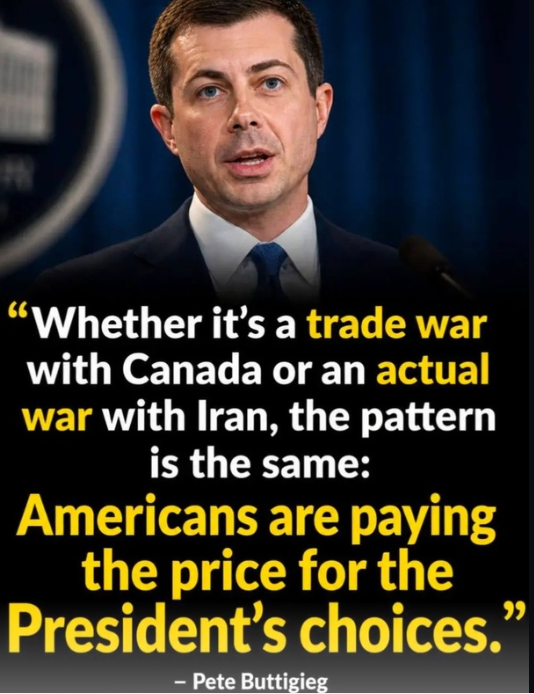
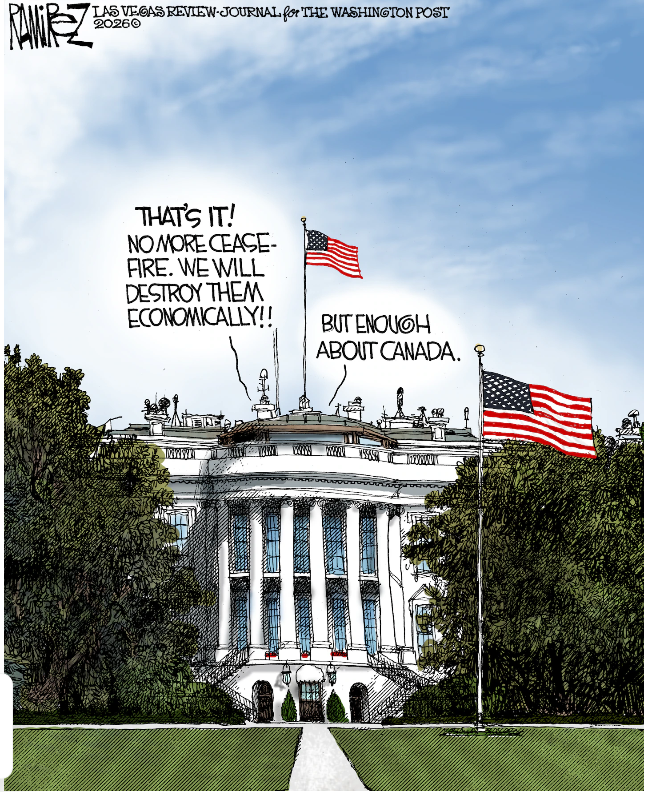
That’s why Donald Trump has now taken on Canada, after Iran punched back so hard in the cage match the US president began more than six months ago as to leave him humiliated and baffled.
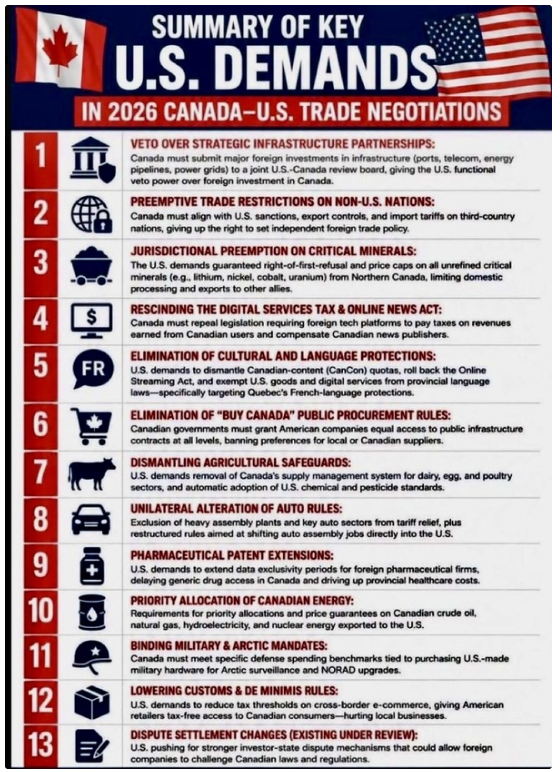
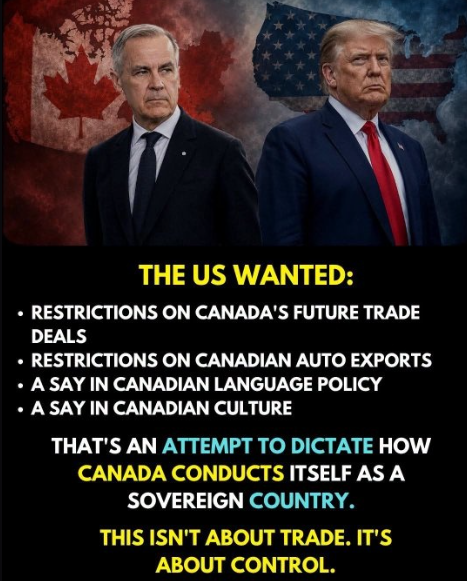
Trump wants to be the bully who humiliates others and forces them into submission. Needing to assert his dominance, Trump has now started a trade war with our northern neighbor, friend, second-largest trading partner (after Mexico) and, at least until now, reliable ally.
He’s hammering Canada on his Truth Social and in media appearances, saying Canada has “ripped off” the US for years, and signing an order to rename Lake Ontario “Lake America”.
This is pure bunk, of course – more empty Trump bravado and ignorant belligerence. Canada? Really? If Mel Brooks were still making movies, this would be a comedy. But as all else with Trump, it’s no laughing matter.
The rebranding of ‘Lake America’ is Trump’s desperate attempt to distract us.
Trump apparently assumed that Canada would quickly surrender because it had more to lose. The tariffs Trump has imposed on Canada – along with those he’s threatening if Canada retaliates – affect a tiny portion of the US’s total imports but a huge portion of Canada’s total exports.
Jamieson Greer, Trump’s US trade representative, says the duties are too small to pose a problem for the US and are “more [Canada’s] emergency than ours”.
But bullies like Trump rarely think about the effects of their bullying on the thinking and attitudes of their targets.
Trump’s bullying of Iran has not only reinforced its hardline regime but shown them that control over the strait of Hormuz is an effective means of gaining concessions from other Gulf states as well as the US, and likely strengthened their resolve to build a nuclear weapon.
Trump’s bullying of Canada, meanwhile, is igniting a patriotism that has often eluded that nation, which separatist factions have long threatened to pull apart.
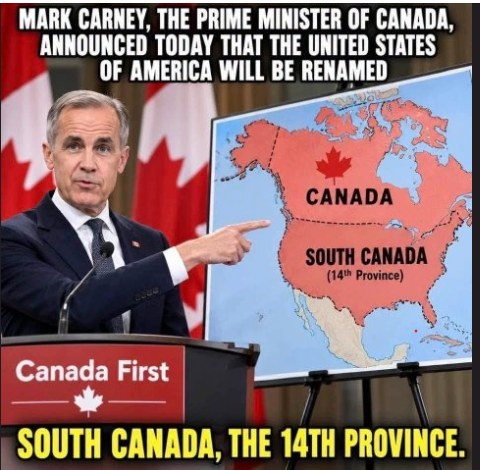
Mark Carney’s decision to stand up to Trump – through “dollar for dollar” retaliation on goods coming from key industries in states including Ohio and Texas with competitive Senate elections – has led to a surge of support for the prime minister’s Liberal party. Liberals won three special by-elections on Monday.
Trump’s trade war with Canada has also dimmed the prospects of Canada’s separatist movements, at least in the short term. A candidate from Carney’s Liberal party edged out a Quebec separatist in one of Monday’s special by-elections, in a district hit hard by US tariffs.
This is a good omen for Canada before 5 October’s vote in Quebec on whether the province’s secessionist party, Parti Québécois, gains additional seats in the province’s legislative body, and 19 October’s vote in Alberta on whether to hold a referendum to secede from the rest of Canada.
Trump may also have underestimated the negative reactions to his trade war at home. According to a new Reuters/Ipsos poll, 57% of Americans oppose Trump’s moves to impose tariffs on Canadian imports. About 63% oppose his peevish order to rename Lake Ontario “Lake America”. Only 20% support the higher tariffs on Canadian goods.
Canadians do not seek a trade war – but nor will we be bullied by Donald Trump.
The negative response is especially pronounced in border states whose economies are tightly interconnected with Canada.
In Michigan, for example, where overwhelming majorities oppose Trump’s tariffs on Canada, Democrats have launched new attack ads on the Republican Senate candidate Mike Rogers for refusing to denounce the tariffs. The Democratic Senate candidate Abdul El-Sayed called Trump an “asshole” for launching the trade war.
There’s still time for the US and Canada to avoid the worst of the economic and political fallout from this. Carney’s “dollar for dollar” retaliation goes into effect on 8 September but Trump’s counter-counter measure – threatened 50% tariffs on autos and auto parts – won’t go into effect until New Year’s Day.
Still, no one should expect an easy resolution to what may go down in history as the stupidest of all the stupid foreign policies Trump has initiated. And given the extent of Trump’s dumb international moves, that is saying something.
Trump’s fear of smart people explains absolutely everything
In his 1513 political treatise “The Prince,” Italian philosopher and statesman Niccolò Machiavelli wrote that truly great leaders surround themselves with the best and brightest advisers they can find. Indeed, he famously summed up his perspective by saying that “the first method for estimating the intelligence of a ruler is to look at the men he has around him.” More than four centuries later, a Republican president named Dwight Eisenhower was rumored to have privately made a similar observation, reportedly saying that “the greatest leaders are the ones smart enough to have people smarter than them around them.”
By contrast, according to a journalist with multiple inside sources into President Donald Trump’s White House, America’s current chief executive has the different philosophy — he surrounds himself with incompetence.
“Speaking on the Inside Trump’s Head podcast, Trump biographer Michael Wolff said, ‘This is not a secret,'” reported The Daily Beast’s Erkki Forster on Thursday, describing a conversation between Wolff and co-host Joanna Coles. Wolff pointed to Trump’s Secretary of Defense, telling Coles that “Pete Hegseth is a… blithering incompetent… yes-man, a suck-up, a man who… knows nothing, and no logic would say he would know enough to run the military-industrial complex.”
He added that Hegseth’s “primary qualification is that he was… a weekend television co-host. So what in the name of God would he know about running… the United States military… at a moment… in which we are in the middle of a, basically, a revolution in terms of munitions, logistics, and supply.”
Wolff concluded, “Pete Hegseth is in this job because Donald Trump is intimidated by competence. It’s not just that he doesn’t want to be bossed around by people; it’s that he can’t deal with people who know things because—for the obvious reason—because he doesn’t know things.”
This is not the first time Wolff has observed that Trump seems to actively avoid smart people. In August he observed that “he’s filled the administration of the second term with unqualified people, morons of one variety or another, because he can’t have people who are clearly smarter than he is.”
Similarly-famed entrepreneur and investor Jason Calacanis said earlier in September that Presidential Rule No. 1 should be “don’t start a never-ending war in the Middle East. Americans have PTSD from them. Presidential Rule No. 2: it’s the economy, always has been. Leadership Rule No. 1: Surround yourself with competent people who tell you uncomfortable truths – not sycophants or loyal incompetents. The sycophants will do you in every time. Never get high on your own supply.”
The House of Representatives has set records in the 119th Congress for being among the most “do nothing” sessions in history.
Now they’re canceling the last two weeks of session in September.
The term “Do-Nothing Congress” originated with the 80th Congress, which served from 1947 to 1949. President Harry Truman used the phrase during his 1948 reelection campaign to attack the Republican-controlled Congress for blocking much of his domestic agenda, particularly when it came to proposals involving housing, prices, labor and civil rights. At that point, there were hundreds of bills that passed through the 80th Congress.
In 2026, Congress passed 30 public laws. Collectively, for the full session, they’ve passed 103 laws. As of Sept. 3, only 64 of those bills have actually become laws. The only Congress worse than the 119th was the first session of the 118th Congress in 2023. Controlled by Republicans, the House passed only 34 bills. The Republican-led Congress in 2013 was also extremely low, with fewer than 60 votes passed. The House, Senate and White House are all controlled by Republicans.
Congress stops Pentagon from carrying out Trump’s oil scheme
President Donald Trump’s new scheme to try and reduce fuel costs ahead of the election was to announce that he’d be taking some of the Venezuelan oil. But, Congress told the Pentagon it’s not legal, Semafor reported Thursday.
Experts have made it clear that the thick, tar-like oil in Venezuela’s fields requires a specialized refineries to process the oil into usable fuel. There’s also a major infrastructure issue. The country lacks the necessary upgrades to get it out of the oil fields. Infrastructure has suffered years of under-investment and deterioration, CNBC reported. Repairing pipelines, power systems, drilling equipment and upgrades could take years.
But oil reserves aren’t the same as barrels currently being produced. Experts agree that, at most, Trump’s plot could put modest downward pressure on prices over the longer term, but it likely wouldn’t impact fuel prices for 10-15 years, the report said.
Semafor cited a person familiar with the matter who said that Congress told the Pentagon’s Office of Strategic Capital that it doesn’t have the authority to take an equity stake in a private company. Trump used the Pentagon’s Office of Strategic Capital to take an equity stake in the second-largest oil firm in Venezuela.
“It did so by declining to pass legislative proposals that would have granted the office the legal authority to seek equity stakes that were submitted by the Pentagon in recent years,” the person told Semafor.
Skeptical lawmakers on both sides of the aisle are asking the Trump administration to give information about the effort and how it would work.
The more immediate problem is accessing oil elsewhere, like Iran. Analysts made it clear that the Iran conflict and disruptions in global oil routes are exerting a much greater short-term influence on prices than Trump’s Venezuela scheme.
U.S. pump prices respond to worldwide crude prices, refinery capacity, transportation costs, seasonal demand and geopolitical disruptions. It trades on the global market. So, even Trump flooding the U.S. market with oil from the Strategic Petroleum Reserve (SPR) can only go on so long. The Reserve continues to blow through its nearly 290 million barrels left in an effort to soften the blow of soaring gas prices.
Currently, U.S. refineries are operating at near capacity (97 percent), the Wall Street Journal reported this week. More oil doesn’t automatically mean more gasoline if there isn’t enough refinery capacity to process it.
Venezuelan oil would be only one additional source of supply and could not control the global market on its own.
U.S. allies balk as Trump extends yet another reward to Putin’s Russia
The administration had no reason to invite Russia’s finance minister to a G20 summit. Team Trump did it anyway, extending an ugly pattern.
What was the CIA director doing in Russia?
August 28, 2026 / 08:34
By
Steve Benen
The finance ministers and central bankers from nations in the Group of 20 began a summit in North Carolina this week, ostensibly to focus on international challenges such as the war in Iran and inflation. There was no reason to assume the gathering would create new tensions between the United States and its traditional allies in Europe — but it did, and it’s worth understanding why.
The problem emerged on Monday morning, when attendees discovered they had been joined by Anton Siluanov, Russia’s finance minister, who was making his first in-person appearance at a G20 event since Russia invaded Ukraine in 2022. The New York Times reported:
Russia’s finance minister made a surprise appearance at a gathering of top global economic policymakers on Monday after a prolonged absence, an invitation that was extended by the Trump administration but drew rebukes and protests from European officials committed to isolating Moscow for its war against Ukraine.
The White House evidently neglected to let other participants know in advance about the invitation to Siluanov, who was also rewarded with a one-on-one meeting with Treasury Secretary Scott Bessent.
“Receiving the Russian finance minister here sends a signal I find troubling,” Lars Klingbeil, the German vice chancellor and finance minister, told reporters. “I would have preferred clear positioning from the U.S. side that he not be received like a regular guest.”
Klingbeil added, “You cannot simply return to normality.”
To complicate matters, Team Trump didn’t merely extend a surprise invitation to Russia’s finance minister, as the Times also reported; the Republican administration also withheld invitations to South Africa, a longtime member of the G20 and Africa’s largest economy, as well as to journalists from prominent American news organizations.
But stepping back, the question that desperately needs an answer is why Donald Trump and his team appear so eager to reward Vladimir Putin’s Russia in the first place.
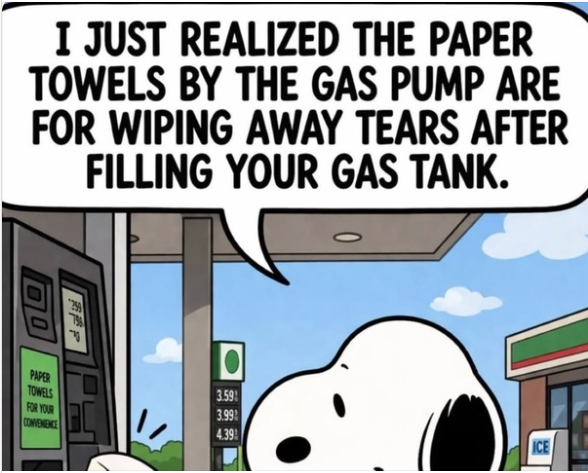
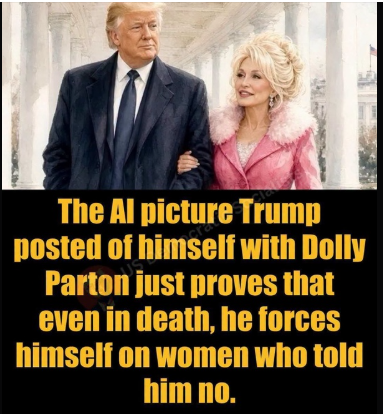
Interesting, are they trying to tell us something?
In June 2026, the FBI quietly revised its background-check standards, communicated internally via a memo dated June 16. Conduct that previously served as an automatic disqualifier — hiring prostitutes, engaging in bestiality/animal cruelty, and theft from an employer — is no longer on that automatic-disqualifier list, a departure from what an archived 2023 FBI eligibility document had stated.
Trump’s tricks
The US lured Chinese solar companies to invest and build plants in the US, then applied lawfare to force them out. So the Chinese were forced to sell their assets at heavy losses to local American companies.
Now you think the local American companies have won?
Not so fast. It turns out that signs are in Chinese, equipment is labelled in Chinese, the operating software is Chinese, and the AI voice command system is in Chinese.
Very few people study Chinese in the US so this is a language skill that almost no Americans possess. They will have to spend a lot to convert things to English. Otherwise their freshly acquired solar plants are unable to operate.
Arlington National Cemetery stops highlighting some historical figures on its website
Arlington National Cemetery has begun wiping from its website histories highlighting Black, Hispanic and women veterans. The change is in line with President Trump’s directive to remove references to and support for diversity, equity and inclusion from the federal government.
A U.S. official not authorized to talk to media told NPR the removal of links and sections about these groups have been dubbed a “digital content refresh” by top Pentagon officials.
War heroes are among 26,000 images flagged for removal in Pentagon’s DEI purge
Articles, photos and videos that are seen as promoting DEI will be removed under the new approach.
For example, Gen. Colin Powell was the first Black chairman of the Joint Chiefs of Staff, and the 6888th Central Postal Directory Battalion was the first corps comprised only of Black women to work overseas during World War II. Their stories are no longer prominent on the website.
Additionally, the Pentagon has marked thousands of photos representing diverse veterans to be removed from the website.




Trump says US has stolen Venezuela’s 65 billion barrels of country’s oil reserves
President Donald Trump said Friday night the United States reached an oil agreement with Venezuela, a move he said will more than double American oil reserves, increase oil supply and lower gas prices.
Putin sees U.S. as weakened by Iran war
The classified assessment of the Kremlin’s thinking preceded CIA Director John Ratcliffe’s secret trip to Moscow this week.
CIA Director John Ratcliffe’s mysterious trip to Moscow this week was preceded by fresh U.S. intelligence indicating that the Kremlin sees the United States as weakened by the Iran war, offering Russia an opportunity to escalate action against American interests and allies in Europe, according to two people familiar with the matter.
The details of Ratcliffe’s talks with his Russian counterpart remain secret, but one of the people told The Washington Post that the CIA chief warned Moscow against ramping up its war against Ukraine, arguing that such a move would backfire. This person and others spoke on the condition of anonymity because of the subject’s sensitivity.
Ratcliffe flew to Moscow on Tuesday, the first known visit there by a CIA director since late 2021, when President Joe Biden’s spy chief, William J. Burns, attempted to sway the Kremlin from an invasion of Ukraine.
Sergei Naryshkin, the head of Russia’s foreign intelligence service, the SVR, confirmed the Ratcliffe conversations, saying there was “nothing unusual” about the meetings.
Ratcliffe did not meet Russian President Vladimir Putin, according to the Kremlin.
The CIA and the White House declined to comment on Ratcliffe’s trip.
The classified intelligence suggesting that Putin sees the U.S. as weakened by the six-month-old war in Iran follows reports of diminished troop readiness and munitions shortfalls as a result of the extended campaign against Tehran.
U.S. military stockpiles of key weapons have been severely depleted, including Patriot and other air-defense platforms, as well as sophisticated offensive weapons like Tomahawk cruise missiles and the short-range Army Tactical Missile System, which is also in demand in Ukraine.
The Post previously reported that the U.S. has lost roughly a quarter of its Reaper drones, which cost between $30 million and $50 million apiece and are used for surveillance and targeting.
The weapons shortages have alarmed allies in Asia, raising questions about Washington’s ability to deter a potential confrontation with China.
The people familiar with intelligence collection on Putin’s assessment of the U.S. strategic position due to the Iran war did not provide more detail on how it was collected or how confident CIA analysts are about its accuracy.
Ratcliffe arrived in Moscow on Tuesday morning local time aboard a C-17A military transport aircraft, after a stop in Riga, the Latvian capital. A video shared on social media showed a motorcade of cars, some with diplomatic plates, driving through central Moscow. The C-17A took off from Moscow at 5:30 p.m., about 8½ hours after it landed, tracking data shows.
With the ground war in Ukraine largely stalemated, Moscow and Kyiv have launched increasingly devastating strikes on each other’s territory. Ukraine has hit high-profile targets, frequently aiming at key nodes of Russia’s energy industry and online commerce. Moscow, meanwhile, continues to bombard civilian targets like apartment blocks as well as industrial infrastructure and power plants throughout Ukraine.
Russia has taken advantage of Ukraine’s dwindling stockpile of air defense interceptors, which have been supplied by the United States. European countries have pledged to supply Kyiv with missile interceptors, but many will not arrive until next year.
Ratcliffe’s trip to Moscow was “less about Putin being in a corner” because his army has failed to break a stalemate on the Ukraine battlefield “and more because Russia assesses we are depleted and can’t intervene,” one of the people familiar said.
Ratcliffe told Russian officials that if Putin significantly escalated the war in Ukraine, it would push Trump toward Ukrainian President Volodymyr Zelensky, this person said.
As the war in Ukraine drags through its fifth year, Europe has been hit by hybrid warfare attacks, including an attempted drone strike at Germany’s Leipzig/Halle Airport, that many analysts and some governments say appear to be the work of Russia.
NATO countries in Eastern Europe, particularly the Baltic nations, have voiced alarm that Putin might step up pressure or authorize increasingly provocative incursions, building on airspace violations and apparently errant drones.
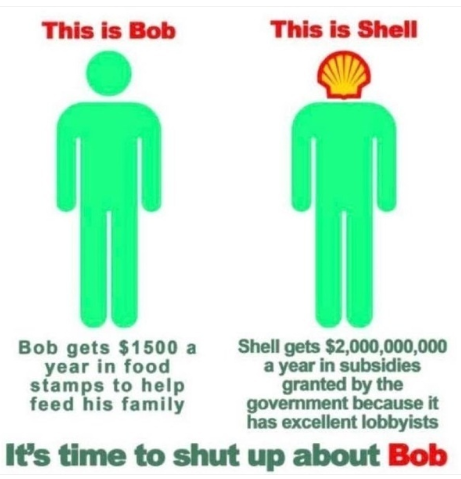

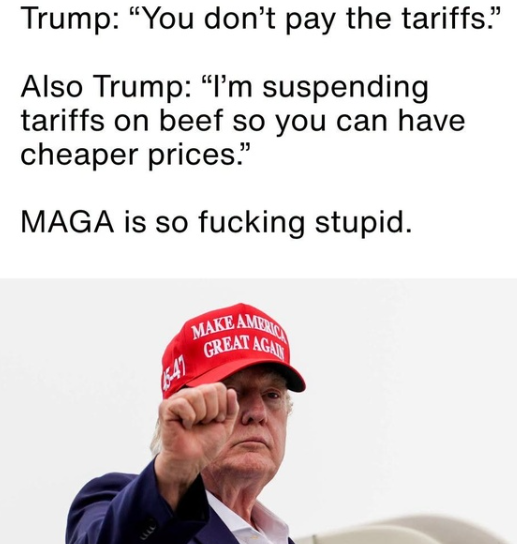
U.S. ranchers and farmers are just the latest “victims” of the Trump FAFO show. They made the fatal error of believing the BS that Trump flung about. With just a little research, they would have found that Trump had no idea of how to accomplish what he promised. And that he would “fire” any experts that actually did.
Trump’s entire relationship with both business and politics is “transactional,” and he is noted for his lack of ability to either think or act in a “long term” manner. He sees a “short term” advantage in allowing imported beef, even though it damages domestic suppliers.






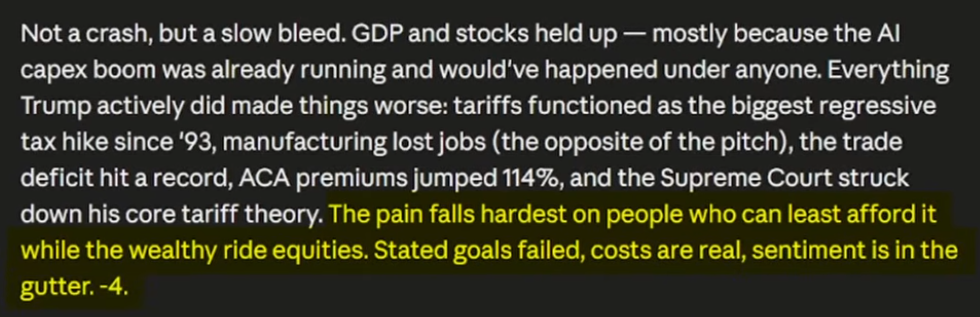
United Nations vote/statement about Russia’s strikes on Ukraine
On August 24, 2026, 50 countries backed a UN statement calling on Russia to agree to an immediate and unconditional ceasefire and resume peace negotiations.
The United States did not join that statement.
The US sided with Russia!!
The UN has separately documented extensive Russian missile and drone attacks on Ukrainian civilian and energy infrastructure.
Ukrain was asked by Trump to stop the drones going to Moskow in Russia as well!!
CIA Director John Ratcliffe made a rare, previously undisclosed visit to Moscow on August 25, 2026, for talks with senior Russian intelligence officials. The visit was confirmed by the Kremlin on August 26.
Here are the key facts:
Ratcliffe met with Russian intelligence counterparts, not with Russian President Vladimir Putin. Kremlin spokesman Dmitry Peskov said Putin was briefed on the discussions afterward.
Neither the CIA nor the White House disclosed the purpose of the trip before it occurred, and the specific topics discussed have not been made public.
President Donald Trump described the visit as “semi-routine” and said it was not about a potential Russian test of NATO or sanctions on Iran. He suggested it might help efforts to end the war in Ukraine, but gave no further details.
Multiple news organizations reported that the United States asked Ukraine to avoid long-range strikes near Moscow while the U.S. delegation was present, apparently as a security precaution.
The visit is notable because:
It is the first publicly known trip to Moscow by a sitting CIA director since November 2021, when William Burns traveled there to warn Russian officials before the full-scale invasion of Ukraine.High-level intelligence contacts between the U.S. and Russia are uncommon but have continued at times even when broader diplomatic relations are strained.
At this point, the exact agenda and any agreements resulting from the meetings have not been publicly disclosed, so much of the public discussion about the trip’s purpose.
.
Republicans Quietly Slash Funding for Dolly Parton’s Children’s Book Charity
If condolence tweets were checks, Dolly’s charity would be fully funded. Country music icon and philanthropist Dolly Parton died yesterday at the age of 80 after a brief battle with cancer. Republican lawmakers around the country spent the day posting tributes, calling her a national treasure and praising her generosity. Trump even ordered all flags to fly at half-staff in her honor. In a terrible bit of timing, multiple reports this week revealed that Republican lawmakers have been gutting public funding for her Imagination Library, a nonprofit that sends free books to children. Indiana ended the program last year after it lost all state funding. Missouri cut its state allocation for the Imagination Library from $6 million to $2 million and froze enrollment July 1. Since its beginnings, the Imagination Library has delivered more than 300 million books. The organization vowed to uphold Parton’s legacy, which is more than can be said for the legislators who spent yesterday tweeting about what she meant to them.
FBI Letter Claims Trump Sold Young Women to Epstein and the Saudis
Trump has been bragging about his business deals with the Saudis for years, but this is probably not the one he had in mind.
A handwritten letter allegedly submitted to the FBI reportedly names Trump as being involved in the sale of young women to Jeffrey Epstein and a Saudi trafficking network. The letter, posted by the DOJ potentially without the intended redactions, contains a passage in which the writer claims to have testimony placing Trump in that role.
A separate handwritten note alleges that Trump asked whether a young woman was pregnant and whether she was using drugs, and complained about losing money when women became pregnant. The note also reportedly references whether a baby could be sold and states that “the Saudis like the religious ones.”
Judge Emmet Sullivan, overseeing a lawsuit brought by journalist Katie Phang, has repeatedly ordered the DOJ to explain why it cannot redact the handwritten interview notes and release them publicly. The DOJ claimed the notes could not be produced because of “technical limitations,” which is a strange way to admit no one in the government knows what a Sharpie is.
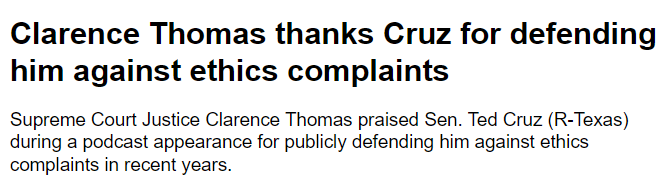
Video of a fight between Trump and Melania
A video of the couple shows Mrs. Trump leaning in to say something to the president and he appears to listen closely. Mrs. Trump then waits for a response from him. She then replied to him, holding up two fingers.
Speaking to the Mirror, professional lip reader Jeremy Freeman explained that, their exchange was partially blocked in places, but he thinks that the chat began with her saying: “That’s the problem, people react.”
The lip reader said that Trump replied: “We’ll knock it off.”
The First Lady said, in what he saw as a “snappy” tone: “Are you?”
The next section was blocking their lips, but Mrs. Trump can be seen saying at one point, “It happened two times.”
Trump replied: “I know.”
Mrs. Trump finished saying, “I can’t take any more.”
The footage went viral on X as insiders desperately tried to figure out whether the debate was about news around top Trump aide Natalie Harp.
After Mrs. Trump walked away, Harp was then seen walking over to the president briefly.
A total fold by the USA on Iran
On Monday, following a press conference in which Treasury Secretary Scott Bessent discussed the ramifications of President Donald Trump’s much-touted “Economic D-Day” approach to Iran, a leading war analyst delivered a grim assessment of what he heard: it was “a total fold by the USA.” This is according to distinguished professor of strategic studies Phillips O’Brien, whose bestselling book War and Power explores the historical basis upon which wars have been won and lost across time.
Just before Bessent took the podium, in which it was expected he would reveal the sanctions and other measures that would be involved in the administration’s plan for waging economic warfare against Iran, O’Brien had posted, “We are about to witness a fascinating moment. If the U.S. is serious about sanctioning those doing business with Iran, they will first and foremost have to hit China. If Bessent comes out and does not promise to go after China, it will be a total fold.”
But Bessent did not mention sanctions against China — an ally of Iran’s that has provided the country with weapons for its war against the U.S., and that many experts say has been the main beneficiary of the war. In fact, Bessent didn’t offer many specifics about who would be targeted with sanctions at all. While he asserted that the U.S. would “sever every economic lifeline” for Iran, his conference was short on details, and according to the New York Times, he even “acknowledged that it was more of a warning shot than anything as concrete as the invasion to liberate Europe during World War II.” As the Times noted, “It was not clear what the United States could do to further disrupt Iran’s flailing economy without inflaming tensions with China, the world’s largest buyer of Iranian oil.”
“For now we have our answer from Bessent’s press conference,” O’Brien posted in its wake. “A total fold by the USA. They turned an economic D-Day against Iran into a sanction Little Bighorn for the USA.”
The Battle of the Little Bighorn – also known as Custer’s Last Stand – was an 1876 battle between U.S. and Native American forces that ended in a decisive loss on the part of the former. Led by General George Custer, the U.S. strategy going into the fight was famously plagued with errors.
The Trump administration’s strategy has been similarly error-prone, resulting in an intractable conflict that has repeatedly been called a “forever war.” Trump decided to launch the war under the assumption that the regime would fall immediately. Then when the conflict dragged on, Trump was unable to secure military support from allies he’d spent his entire term alienating. He miscalculated previously unknown limits on American military might and armaments, and has been forced to withdraw resources from other theaters to make up the losses, handing a major gift to Chinese ambitions in the West Pacific. But perhaps most disastrously, he ignored warnings that Iran would close the Strait of Hormuz, which would be a catastrophe for the global economy – and has been.
“We are giving everyone the opportunity to remedy bad behavior,” Bessent told reporters during the conference. “Why would I want to blow up the global financial system?”
“Today’s humiliation by the U.S. government in refusing to sanction China over its deep business dealings with Iran proves one golden rule,” noted O’Brien afterwards. “The Trump administration will only take action to hurt democratic allies, never dictatorships/authoritarians.”
Trump wants a “better look” to new aircraft carriers. Even though that is horrible.
Aircraft carriers have been redesigned to avoid plane crahes by having them land at an angle, and the superstructure is moved back. In the old design any angle to the right used to kill pilots. The new design allows a margin for error.
This is the current design that saves lives:

Secret White House bunker undercuts Trump’s ballroom lawsuit, ex-officials say
The White House already has a nuclear-proof facility buried deep underground and built in secret after 9/11.
The facility, which was secretly completed during the Obama administration, can house dozens of people for up to multiple weeks, two former officials said. It’s buried more than 60 feet underneath the White House complex and built to withstand a nuclear blast, two of the officials said, ensuring the president and his team have a secure command center to run the country in times of extreme duress.
The bunker’s existence, the former officials said, undercuts the Trump administration’s emerging legal argument in the ongoing lawsuit over the $600 million ballroom complex’s construction: that the facility must be completed due to its significance for U.S. national security.
After asserting in court last year that the secure portion of the project could be carried out independently of the ballroom, the administration has reversed its argument.
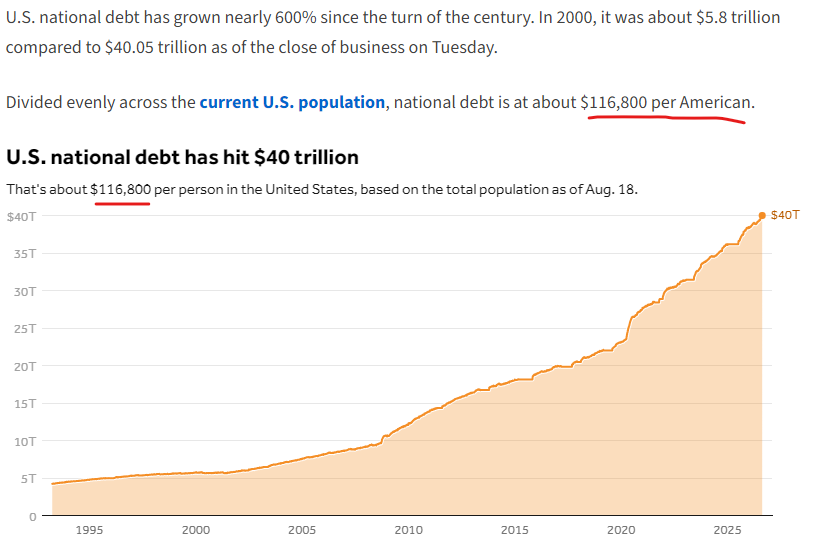
We each now owe $116,800 – our national debt interest is more than our military budget!
CAPTCHA
If you are not familiar with the term CAPTCHA, you might recognize it as the test used by websites to make sure that you are human and not a robot. While clicking a box or selecting a picture is simple for a human, it’s extremely hard for a machine. What does the term CAPTCHA stand for? ‘Completely Automated Public Turing test to tell Computers and Humans Apart’. The name contains a reference to the Turing test —a method used to check if machines can behave like humans— and the acronym also functions as a portmanteau of ‘capture’ and ‘gotcha’.
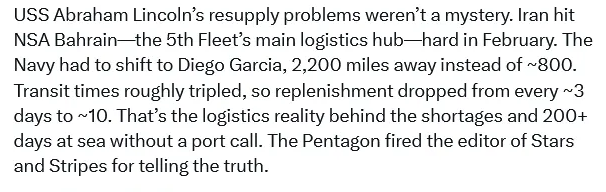
Trump’s visa ban on 75 countries struck down by federal judge
A federal judge said the indefinite pause, which affected nationals of countries in every corner of the globe, ran afoul of antidiscrimination protections.
The Trump administration must resume processing visas for people from 75 countries that the government deemed likely to become a “public charge,” a federal judge in New York ruled Friday, curbing one of the latest efforts to restrict legal immigration pathways to the United States.
The halt to visa processing began in January, affecting dozens of countries in every corner of the globe. It was meant to limit visas for people the government said would probably rely on public benefits for their basic needs, long a complaint from President Donald Trump.
But U.S. District Judge Jeannette Vargas, an appointee of President Joe Biden, ruled that the policy “represents a direct abrogation” of consular officers’ exclusive, congressionally granted authority to determine if someone is eligible for a visa.
Vargas also said the nationality-based visa ban, which applied to all nationals of the 75 countries no matter their income or economic status, ignores antidiscrimination protections in federal immigration law.

- Israel receives a standing U.S. security commitment of about $3.8 billion per year — $3.3 billion in military financing plus $500 million for missile defense — under the current 2019–2028 agreement. Since the Gaza war began, Israel has also received tens of billions in additional U.S. military assistance.
- Puerto Rico, by contrast, is a U.S. territory and its residents are U.S. citizens, yet it has historically had less political power in Congress than states. That matters enormously when competing for federal attention and funding.
- After Hurricane Maria, Puerto Rico’s recovery was famously slow and contentious. Trump’s administration claimed enormous amounts had been provided, but FactCheck.org found that the often-cited $91 billion figure was misleading; FEMA payments actually totaled about $11.2 billion at the point examined in 2018.
- Research examining the federal response to Hurricanes Harvey, Irma and Maria found significant disparities in the disaster response, including differences affecting Puerto Rico.

Miller was a real hero, the flattop was burning but he came to the aid. Thrump does not deserve to have a name on any boat.



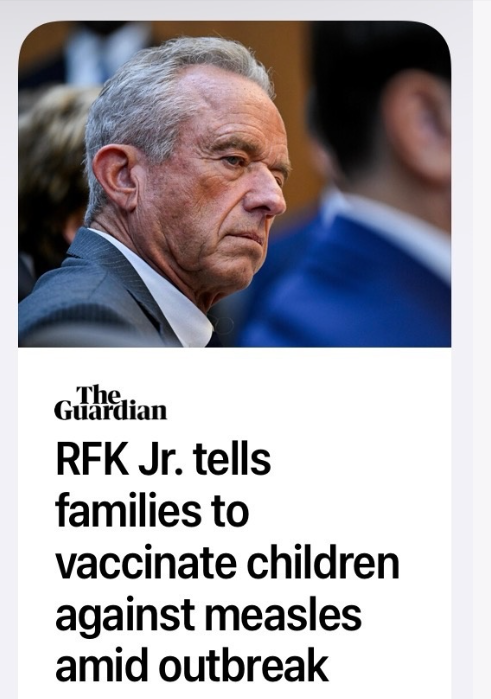
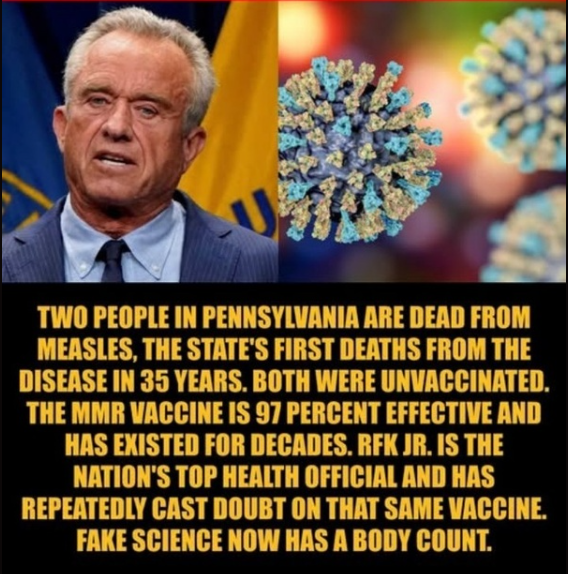
RFK jr on Measles
In 2021, Kennedy wrote in a foreword to a book by founded, that “American and global consumers Children’s Health Defense, the group he of measles vaccines” have been “misled by the pharmaceutical industry and their captured government agency allies into believing that measles is a deadly disease and that measles vaccines are necessary, safe, and effective.”
“The Measles Book explodes this propaganda,” he continued, saying that the book would “reveal a disease that is rarely life threatening and a vaccine that is largely unnecessary but which carries real risks for the children mandated to take them.” He said the benefits of the vaccine had been “exaggerated,” a statement he had also made in September 2019 in a post on the CHD website. More recently, in a March 2025 Fox News interview, Kennedy wrongly said that the MMR vaccine’s effectiveness “wanes about 4.5% per year,” claiming that this was a reason for measles outbreaks, along with people not being vaccinated.
In the CNN interview, when pressed by Bash to look into the camera and tell parents to vaccinate their kids for measles, “because it is safe and it will help them save their children’s lives,” as Bash put it, Kennedy said: “A measles vaccine is effective. It stops measles in about 97% of the cases. People should get vaccinated.”
Kennedy didn’t say the vaccine was safe, but the CDC states on a webpage last updated in April: “The MMR vaccine is very safe.” Yet, another CDC webpage about autism, modified by Kennedy last year, casts doubt on the robust evidence that the MMR vaccine isn’t linked to autism. How stupid.
August 19, 2026
Heather Cox Richards
The political world has been consumed over the past few days with a Republican meltdown about Trump’s aide Natalie Harp.
The story began when Democratic Georgia senator Jon Ossoff said at an event for his reelection campaign on Sunday that Trump does not appear to want to do the job of the presidency. Ossoff added: “He golfs and trades stocks. See, he doesn’t want to do the job. He wants to build his ballroom and travel with Natalie on their apparently defenseless flying palace gifted by the emir of Qatar.” That was it. That was all he said.
On Monday, CNN reporter Kristen Holmes asked Trump to respond to Ossoff’s comment. Trump first referred to Ossoff as Pee-wee Herman, a child-man film character created by late actor Paul Reubens, then defended the ballroom and attacked the reporter. Later, as Scott Nover of the Washington Post reported, the White House rapid response team took to social media to call Holmes a “disgraceful, humiliating embarrassment to her alleged profession.”
Then, in an unusual escalation, the account targeted Holmes’s children, posting: “Someday, your children will come across your disgusting and inhumane question. They will be sickened and embarrassed to have a parent be so callous and vindictive. It’s quite troubling.”
You could almost feel the palpable relief that the White House might be able to gin up a controversy that could rally the base, one that, for the first time in a long time, didn’t automatically show the president or the administration in a bad light. Undermining Ossoff, whose speeches have been a particularly sharp thorn in the administration’s side lately, appeared to be icing on the cake.
Certainly the call went out to right-wing media figures to pile on to the idea that Ossoff was making a sexist attack on Harp. Megyn Kelly posted that Ossoff “was clearly implying that Trump is having an affair w/his staffer,” and Michael Knowles wrote: “Every time I see a woman at work, I just know she’s sleeping with her boss! Am I right? Anyway, am I the new Obama yet?” White House spokesperson Steven Cheung wrote: “Jon Jackoff has to be the biggest cuck loser in politics,” and Newt Gingrich posted: “Jon Ossoff owes Natalie Harp a personal apology for having smeared her.”
Matt Royer of the Democratic National Committee Youth Council noted: “The word “affair” was never uttered, and yet apparently every single conservative talking head in the world heard it anyway, so what does that tell you?” He added: “Never have I seen a more exquisite example of the Streisand Effect where someone’s supporters fall over themselves to basically accuse them of adultery when it wasn’t even brought up.”
Commandeering the news cycle with manufactured outrage distracted attention from other issues Ossoff did call attention to in the same sentence. Ossoff called out Trump’s apparent stock manipulation, an issue Trump highlighted recently when he sold early access to his Truth Social posts for as much as $100,000 a month. It has been widely reported that investors appear to be making a killing by anticipating Trump’s posts as they make markets go up or down.
An investigation by Casey Tolan and Isabelle Chapman of CNN published on July 16 found that Trump himself “made at least 44 stock purchases of 21 different companies within a week before he posted a complimentary Truth Social message about the firms, their executives or their products.”
“He’s selling faster access to his tweets, and then you can bet on the markets,” comedian Shane Gillis recently told popular podcaster Joe Rogan, “It’s literally insider trading.” Rogan, whose support for Trump in 2024 was important to his victory, responded: “Wait a minute, is that real? How is that legal? Who’s telling him this is a good idea? $100K to get early tweets? That’s literally crazy. He’s just on a grab.”
As Matthew Chapman of RawStory reported, the two went on to discuss Trump’s involvement with cryptocurrency. “This government has done some (expletive) that no government has ever done before and one of them is the crypto stuff,” Rogan said. “The crypto stuff is nuts. Trump has made billions in crypto. Then you got his sons and his sons are involved in these weird business deals, and there’s a lot of money flowing around that you could dig in and start arresting people.”
Attacking Ossoff for allegedly smearing Harp also shifted attention from Trump’s ballroom, which is enormously unpopular and which is in the news as Trump has appealed to the Supreme Court to override lower courts’ rulings that he does not have the authority to build such a structure without the permission of Congress. Even Republican members of Congress seem reluctant to grant such permission, as it highlights Trump’s grabs for luxury while Americans are hurting under high gas and grocery prices caused by Trump’s tariff wars and war on Iran.
Recently, New York Times journalist Maggie Haberman, who with Jonathan Swan wrote about Trump’s second administration in Regime Change, has told podcasters Ezra Klein and Axios’s Mike Allen that Trump spends about “70%” of his time working on his Washington, D.C. projects. “He is spending a huge amount of energy, mental and otherwise, on these renovation projects, beautification projects around Washington, and then monuments to self,” Haberman told Allen.
She described a visit with Trump seventeen days into the Iran war in which “[i]t was very clear what his mind was on while we were there. And what it was not really on was the war.” “You would think that on the 17th day of the war that he would have maps of the Middle East or maps of troop deployments—who knows,” Haberman said. “He picks up these pictures, and [they’re] of maple trees. And he says: ‘I am choosing maple trees for the White House. I am good at picking trees.’ I’m paraphrasing here, but that is pretty much what he said.”
Recent news reports tie the lack of supplies on the U.S.S. Abraham Lincoln to Iran’s damaging strike on the only U.S. naval base in the Middle East, known as Naval Support Activity Bahrain, in the first weeks of the war. Trump has downplayed the poor conditions aboard the vessel, infuriating the families of the sailors.
He continues to downplay the flailing of his administration in Iran, as well, as Iranian forces continue to control the Strait of Hormuz. When asked today about the strait, he told reporters: “Last night we had a lot of boats come through, we have possession, complete control of the strait, I mean, outside of nuisance value—and there is nuisance value when they shoot a drone every once in a while, but and not everybody’s going to go through. But they come through. And over the last couple of weeks, we had a lot of oil coming in, a lot of oil. It’s not gonna be perfect, but it’s a lot of oil coming in, a lot. In fact, people are amazed.”
Scott Waldman of Politico reported on Monday that while an average of almost 140 ships a day traversed the strait before the war, last Sunday only 3 did.
The Harp story also has taken oxygen from increasing pushback against the Trump administration. Yesterday ABC and its parent corporation, The Walt Disney Company, launched a federal lawsuit against the Federal Communications Commission (FCC), saying the Trump administration violated their free speech rights. The lawsuit claims that administration officials tried to do Trump’s bidding by launching investigations and challenging broadcast licenses because Trump didn’t like their talk show opinions, news coverage, and late-night comedians.
As David Folkenflik of NPR noted, the lawsuit began with the words: “Government censorship is deeply un-American.”
This is a one-eighty for ABC. In 2024 it agreed to donate $16 million to Trump’s presidential library to settle a lawsuit Trump brought over the assertion by George Stephanopoulos that Trump had been found liable for raping writer E. Jean Carroll. In fact, Trump had been found liable for sexual abuse, and the judge said that while what he did fell under the common definition of rape, New York state law had a very precise definition that his actions didn’t fit.
The settlement made ABC one of the first to settle with Trump. That money seems to have disappeared, and there is currently a congressional investigation into where it, along with almost $50 million more from similar settlements, has gone.
FCC chair Brendan Carr seemed to back away from previous threats, saying that ABC and Disney were acting too hastily and that the FCC has not yet decided whether to renew the licenses. “Ultimately,” he said, “they’re going to get a fair shake before the agency.”
Jeremy Barr of The Guardian shed light on the issue today when he reported on new documents obtained thanks to a Freedom of Information Act (FOIA) request and a lawsuit from Democracy Forward showing that Carr has been working closely with the White House and right-wing media. In addition to talking and meeting with White House officials, Carr has been working with the Fox News Channel and the chair of the right-wing Sinclair Broadcast Group.
There is also the uncomfortable fact that the national debt passed a record $40 trillion yesterday, much sooner than expected. The U.S. is currently spending more than a trillion dollars a year to pay interest on the national debt, more than it spends on defense.
As Steven Rattner noted in the New York Times yesterday, Trump said in his 2024 campaign, “We’re going to grow like nobody’s ever grown before,” but in fact, the economy is slowing. He promised to bring the cost of gasoline below $2 a gallon; it is now above $4 a gallon.
In 2025, Trump said he would balance the federal budget, but in fact, thanks largely to his tax cuts for the wealthy and corporations, the deficit is growing. Also in 2025, Trump promised that his new tariffs would enable him both to cut taxes and to pay down the deficit; in fact, the national debt relative to gross domestic product (GDP) is about to break the record set during World War II.
Republican operatives appear to have thought that the Harp story could enable them to pivot to attack Ossoff and change the narrative, but it seems they miscalculated. Their attention to Ossoff’s statement that Trump would rather “travel with Natalie” has brought attention to the relationship between the 80-year-old president and the 35-year-old aide, who was once a host on the right-wing OAN network.
Maggie Haberman told MS NOW that for Trump, Harp “is sort of his binky, for lack of a better way of putting it, a comfort blanket.” She is the main buffer between Trump and the outside world, filtering the information the president sees, setting up meetings and passing along messages, writing social media posts, and printing out articles praising Trump.
In their book, Haberman and Swan wrote that Harp leaves “adoring letters” to Trump in “private spaces,” saying things like: “you are all that matters to me.” CNN’s Holmes reported that Harp is “physically close to Trump at all hours of the day” and that Harp once jumped into the trunk of an SUV to stay close to Trump after being told there was no room for her in the vehicle.
The renewed scrutiny of Harp has turned up the story that for more than a year, she refused to get a routine security clearance to work at the White House. A national security official expressed concern to Jake Traylor and Jacqueline Alemany of MS NOW that Harp has more access to sensitive information than nearly all of the other White House officials.
When Trump left a decoy Air Force One airplane for a smaller plane in early July, he left behind cabinet secretaries but brought Harp with him.

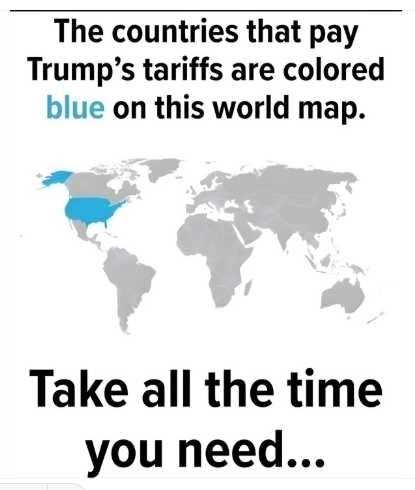
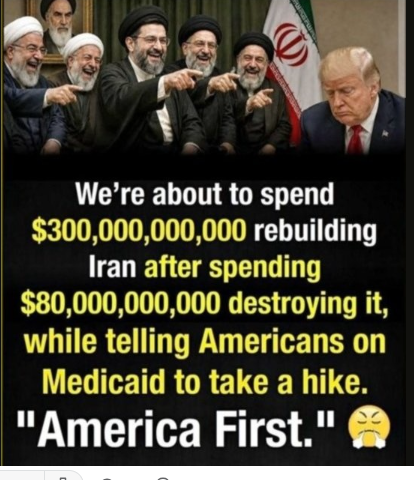

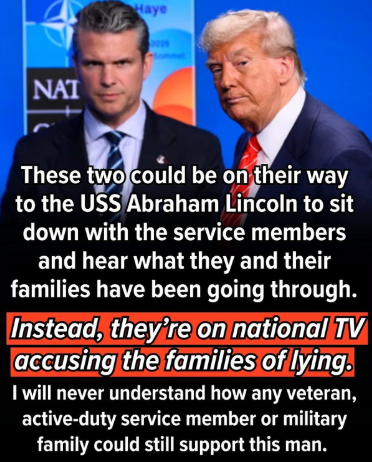
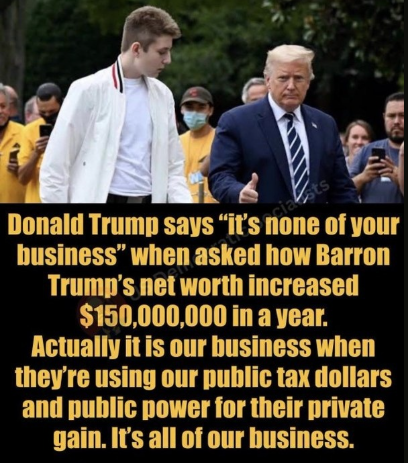
This Australian’s response to Trump’s rant that “NATO does nothing for America” is absolutely devastating:
“Mate. You run a country where 600,000 homeless people will sleep on the streets tonight.
A country where 40% of adults can’t cover a $400 emergency without borrowing money.
A country where insulin costs more than a car payment, and people ration it just to stay alive.
A country where medical debt is the number one cause of bankruptcy.
A country where women die in hospital parking lots because doctors are too afraid of abortion laws to treat miscarriages.
You imprison more of your own citizens than any country on Earth.
More than China. More than Russia. More than North Korea.
In the land of the free, 2 million people sit in cages, and a quarter of them haven’t even been convicted of anything.
They’re simply too poor to afford bail.
Your life expectancy is declining. You’re the only developed nation where that’s happening.
Your infant mortality rate is worse than Cuba’s.
Your children practice active shooter drills between math and English classes while you sell defense stocks to your friends.
Your minimum wage hasn’t changed in 15 years.
Your teachers work two jobs, your veterans sleep under bridges, and you just spent a trillion dollars flattening a country that never attacked you.
And now a convicted criminal — found liable for sexual abuse, defending a pedophile, sleeping with a porn star, and running the biggest dumpster-fire campaign since the Taliban — is thanking you for yet another disaster.
And you call Greenland badly governed?
Greenland has universal healthcare. Free education. One of the lowest incarceration rates in the world.
Nobody there goes bankrupt because they got sick. Nobody dies in a waiting room because insurance refused treatment.
‘NATO wasn’t there when we needed them.’
When exactly was that, champ?
September 11?
Because NATO invoked Article 5 for the first and only time in history FOR YOU.
Soldiers from dozens of countries deployed, fought, bled, and died in Afghanistan FOR YOU.
Australia wasn’t even in NATO, and we still showed up. For twenty years.
And then you left at 2 a.m. without telling anyone and left everybody else to clean up the mess.
You don’t care that a great nation is being terrorized by your friend, and you haven’t shown it a single ounce of sympathy.
So maybe before calling other countries badly governed, take a look at your own backyard, you aluminum siding salesman with a spray tan.
The only thing badly managed in this picture is your damn mouth.
And you still dare to lecture the rest of the world?”
Trump wants a “better look” to new aircraft carriers. Even though that is horrible.
Aircraft carriers have been redesigned to avoid plane crahes by having them land at an angle, and the superstructure is moved back. In the old design any angle to the right used to kill pilots. The new design allows a margin for error.
Trump has directed the Navy to go back to the old design because he likes it better. This will cost a billion in redesign cost and cost lives!

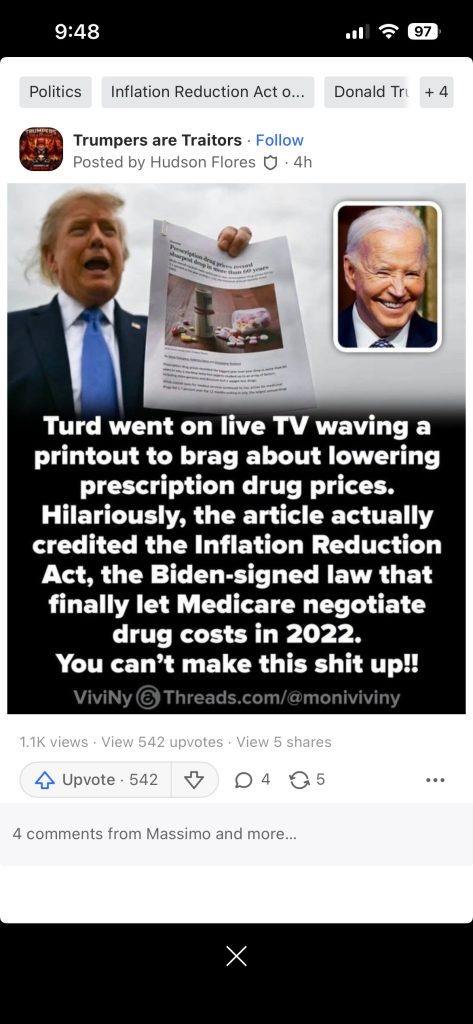


‘Very special stone’: Trump unveils another White House construction project
US President Donald Trump signs a piece of stone at the construction site of a helipad on the South Lawn of the White House in Washington, DC, on August 19, 2026.
President Donald Trump unveiled a new White House construction project Wednesday, issuing an impromptu invitation to reporters to join him on the South Lawn and tour the replacement of the White House driveway as well as progress made on his new helipad.
During the tour, an animated Trump highlighted his personal attention in the projects with painstaking attention to details theoretically far below his pay grade: the placement of stanchions, the radial cut of granite, the elimination of potholes. The tour concluded with him signing a giant slab of granite that he said would be “flipped” and laid into the helipad.
But first, he detailed another project — previously unannounced — that was already finished.
“This was always asphalt, which is very basic, not appropriate for a great house — for a great place like the White House,” Trump said over the clanging noise of construction, gesturing at the surface he was walking on. The driveway has been redone, he added, with a California-mined white granite he described as a “very special stone.”
Trump also suggested he had been involved in the decision earlier this month to disassemble progress made on his helipad.
Construction on the landing zone began shortly after his UFC fight in June, but CNN observed the dismantling of the stone weeks later. The White House has previously declined to provide an explanation for the changes, but the president said Wednesday he was unhappy with its slope.
“I felt it was too much slope. It’s a slope for the rain, but I felt it was too much slope,” Trump said, announcing that it was now “dead flat.”
Later addressing a group of workers, Trump said, “Sorry to take an extra week-and-a-half, but lifting it up was one of the best things we’ve ever done, lifting it up, right? I’m sure you didn’t like that.”
The president guided the press toward an opening in a fence around the helipad, pausing the tour to direct attention to updates to the White House facade, where he said paint had been stripped and redone.
“If you take a look at the stone, look how perfect the stone is,” he said, adding he’s “very proud to do it.”
He stopped the tour again before reaching the unfinished helipad, touting the fresh topsoil and grass.
“If you’re grass, you’re very happy,” he said.
Trump’s favorite White House project — construction on his 90,000-square-foot ballroom — was not a stop on the tour, but the president still brought it up repeatedly. His administration has taken the project to the Supreme Court, arguing the structure and state-of-the-art bunker facility that would be housed underneath is a matter of national security. Recently, he and the White House have tried to emphasize that argument by referring to the ballroom as the “military complex.”
Trump downplayed any concerns that the nation’s highest court would rule against him and potentially halt construction, saying he “can’t imagine it happening.”
Construction has been progressing rapidly on the ballroom, with a 250-person crew working 20-hour days, seven days per week, according to a court filing submitted earlier this month. The filing put the complex at “65% complete in its entirety.”
The president continued along his granite path, joining construction workers in neon vests and hard hats atop the new carved granite helipad emblazoned with the presidential seal, which he compared to his restoration of the Wollman Rink in Central Park. He signed the back of a carved image of an eagle that will soon be placed inside the seal.
Trump’s tour of the ongoing projects, his second such impromptu excursion with reporters this year, underscored how central construction is to how he views his presidential legacy.
“One thing I know how to do is build. … I love construction, I love seeing things properly taken care of,” he said, adding that the projects “will be here long after we’re gone.”
A recent review from Politifact found that in 2026, the president has spent significant time talking about those projects during public remarks — more than any other topic, except for his winning the war with Iran.
Trump also offered a holistic vision for how the new projects would be utilized when the White House welcomes dignitaries for state visits.
“Without even having to go into the White House, they get out of the car on the beautiful new roadway. They get out of the car and they walk down this path onto that [helipad], and they can have cocktails and everything outside of the White House, and then they go into the ballroom,” he said.
.
Trump Maps Hormuz as US Territory
President Trump escalated his claim to the Strait of Hormuz on Tuesday, posting a map that labels the waterway “new US territory” and announcing that no talks with Iran are taking place or scheduled.
Trump says the strait has been cleared of Iranian mines and is open, and that America already controls the waterway through its naval blockade. “I like the idea of declaring it a territory,” he told reporters.
The same day, a ship sailing out of the strait was struck by an unknown projectile that hit its engine room and resulted in one crew casualty, maritime monitors said. Only six ships crossed Monday. The strait is effectully closed.
WSJ unmasks Trump’s desperate move to hide latest major embarrassment in Iran
President Donald Trump’s recent decision to pull back American military support for South Korea may just be an attempt to “change the subject” from his ongoing failure to wrap up the Iran war.
“President Trump is nothing if not impulsive, and his latest brainstorm is to rekindle his courtship of North Korean dictator Kim Jong Un,” The Wall Street Journal editorial board wrote on Monday. “He announced Sunday evening on—where else?—social media that he had ordered the Pentagon to ‘substantially reduce’ U.S. military exercises with South Korea that were set to begin on Monday.”
The editorial board added that Trump says he has a “very good relationship” with Kim Jong Un and criticized him for saying that the military exercises “send a signal that is totally inappropriate and hostile, to a Country that, as long as Donald J. Trump has been President, has been unthreatening and respectful.”
“To the contrary, pulling back from the exercises sends a message of weakening deterrence and readiness against a regime that has a history of threats and aggression against the South,” the Journal argued. “The North had protested, as usual, ahead of the routine exercises, and Mr. Trump’s order is an act of appeasement toward Mr. Kim.”
It continued, “Mr. Trump might be trying to change the subject from the stalemate with Iran over the Strait of Hormuz. Or he might be trying to appease Mr. Kim at a moment when U.S. weapons stocks and deployments are stretched.”
Ultimately they expressed worry that as a result of Trump’s pulling back from South Korea, “China may not use this opportunity to move against Taiwan, but it has been ratcheting up its aggressive moves against Taiwan, Japan and the Philippines in the East and South China Seas.”
The Journal is not alone among conservatives in slamming Trump’s decision toward South Korea. Miles Taylor, Trump’s Deputy Chief of Staff in the Department of Homeland Security during his first term,
“Start with Korea,” Taylor argued on Monday. “On Sunday, Trump ordered the Pentagon to ‘substantially reduce’ our joint military exercises with South Korea, complaining that our ally wouldn’t join his war with Iran and insisting the drills send a signal that is ‘inappropriate and hostile’ to our friends in North Korea, which he called ‘unthreatening and respectful.’ Ah yes, Mr. President, they are so ‘unthreatening’ that during your first term we had to urgently plan for the possibility that the hermit kingdom might launch a nuclear attack on the continental United States because Kim Jong Un was so ‘respectful.’”
He concluded, “By the way, Trump announced America’s pull-back from its longtime ally days after North Korea launched a ballistic missile in a show of force against the South.”
Taylor was joined by a foreign policy expert from a top think tank.
“It is equally true that America’s partners should expect the global hegemony to act predictably in its own interests,” Michael Sobolik, a Senior Fellow in Indo-Pacific Studies at the American Foreign Policy Council (AFPC), posted on X. “Regardless of Seoul’s behavior, Washington benefits when Pyongyang is hemmed in and deterred from adventurism and belligerence. More broadly, America’s interests demand that North Korea never unify the peninsula. For these reasons alone, military exercises with South Korea should persist.”
Similarly conservative MS NOW host Joe Scarborough denounced Trump for sending “love letters” to North Korean dictator Kim Jong Un, a man the former Republican lawmaker characterized as the “worst, most repressive tyrant on the face of the earth.”
As far back as his first term, observers have worried that Trump is too close to the North Korean despot.
“When I was in North Korea [President] Kim Jong-il, the father of the current president there, said that he didn’t have any problems with us having our troops in South Korea,” Secretary of State Madeleine Albright told this journalist for Salon in 2019.
She concluded, “I do think that what is worrisome to me is, in an effort to be flattered by Kim Jong-un, that he gives away something that might have a longer term effect for the next administration.”
The ‘Swiss cheese’ legal trick Trump is using to hide his secrets
Who says Donald Trump is expecting election magic (or interference) to forestall trouble from the mid-term voting that looks likely to flip at least one house of Congress?
Last week, he had the Justice Department’s Office of Legal Counsel (OLC) put out a new opinion arguing that Trump can assert executive privilege over communications with “personal advisors” even if they do not work at the White House or within the government at all.
Of course, that is a preemptive interpretation that would broaden the number of people President Trump could try to shield from the inevitable flood of congressional investigations that a Democratic majority in either the House or Senate would launch if successful in November.
As a matter of public policy, it conforms to the Trump standard for delay and resist to any inquiries about what Team Trump is doing about war and peace, economics and tariffs, immigration, environment, health and government and budgets. As a matter of law, “The legal opinion has more holes in it than a slice of Swiss cheese,” Charles Tiefer, a professor emeritus at the University of Baltimore School of Law, told Talking Points Memo. “It’s clearly a devious tactic to try to cover up the investigations into Trump’s corruption before they even get started.”
Trump makes no secret that he prefers to talk with corporate leaders about economic policy than he does, say, U.S. intelligence sources or domestic policy staffers, particularly if those corporate officers throw million-buck donations his way.
It is also clear from congressional hearings that Cabinet members feel absolutely no public responsibility to discuss controversial topics from vaccine policy to war decision-making and regularly turn questions into opportunities to attack the patriotism of the congress member or senator who sounds at all critical.
The Trump mantra is to love Trump and what he orders without question about substance or process, about legalities or Constitutionality, because the Trump ends always, er, trump the means.
Clear Message to Back Off
The Justice Department opinion is not “binding,” but that it nonetheless signals the Trump administration is thinking about how to respond to pending investigations.
In a political season in which voters are turning out in droves to tell sitting officials that they are wrong, that Trump policies are worsening their lives, this is a signal that Trump, armed with an immunity from criminal investigations decision from the Supreme Court, simply does not think he should be questioned ever.
Any number of congress members have told administration officials to hold on to notes and documents in issues ranging from handling of the Jeffrey Epstein Files to decision-making about launching strikes against small boats in the Caribbean.
Trump’s strategies for eluding Congress to act unilaterally, strategies that are failing systematically before the courts over tariffs and various aspects of mass deportation policies, seem ripe targets two months before the elections.
Traditionally, the president may assert executive privilege over communications only with executive branch staff. But the Justice’s Legal Counsel office argues that Trump could seek and get from those outside the government, adding that they merit protection. “Without a promise of confidentiality, the President’s ability to ‘decide and act quickly’ on matters of unrivaled importance would be seriously hindered.”
Even this opinion suggested that Trump could only assert executive privilege for discussions with outside advisers who are “limited to communications ‘in performance of (official) responsibilities,’ and made ‘in the process of shaping policies and making decisions.’”
This is the same OLC that in April decided the White House should not have to comply with the Presidential Records Act, which mandates the broad preservation of White House records, including communications between staff – or retain his myriad posts on his own Truth Social outlet. The next month, a federal judge ordered the Trump administration to comply with existing records law.
Attorney General Launch
Todd Blanche’s first week as a confirmed attorney general got off to a bad start amid the obvious criticisms that even his first speech to Justice Department prosecutors was rife with embarrassing contradiction between what was said and what he has done.
Blanche promised a Justice Department marked by integrity, impartiality and respect for the rule of law, only to unleash an avalanche of public response to underscore that his record as acting attorney general has been the opposite. He has not only allowed but invited White House interference in an “independent” Justice, saying aloud that Trump should refer criminal prosecutions of those in his political way.
On Sunday, Blanche declined to say that he would always act independently of White House control but claimed during an interview that President Trump has “never” demanded he prosecute specific people – clearly a excusing statement for Trump’s demanded prosecutions of former FBI director James Comey, New York Attorney General Letitia James and even the former Olympic canoeist who picked up a piece of floating paint in the reflecting pools.
Blanche has shown that he is willing to sign off on prosecutions without first seeking evidence of wrongdoing, that he sees judges who rule against Justice as radical leftists, that the department is better off having lost 16,000 prosecutors and turning Civil Rights and antitrust enforcement upside-down.
Trump is talking openly about renewing the so-called anti-weaponization fund under different auspices to reward those convicted over Jan. 6, 2021, crimes, including those who attacked police officers – even as Blanche was talking about Justice “backing the blue” entirely.
Of course, as a member of Trump’s inner circle, Blanche, Trump’s former personal lawyer, no longer needs an special opinion about being a “private advisor” to claim executive privilege. Blanche is a pending co-conspirator to undercutting the Constitution.
Experts fume as Trump’s ‘sleaziest’ grift explodes to ‘gargantuan’ problem
Multiple experts sounded the alarm about President Donald Trump and his family’s “sleaziest” second-term grift, warning a New York Times writer that it is exploding into a “blatant and gargantuan” problem.
In a new piece published Tuesday morning, Thomas Edsall dove into Trump and his family’s much-discussed cryptocurrency dealings, which have been widely derided as the most disastrously and obviously corrupt facet of his many post-reelection grifts. They are certainly his most profitable, with recent financial disclosures revealing that crypto business alone netted Trump at least over $1 billion in 2025.
Edsall, for his part, wrote that this crypto business “exemplifies all of the sleaziest aspects of the president’s code of conduct.”
“It is almost certainly unconstitutional and may well be illegal,” Edsall argued. “Estimates vary, but according to a cryptocurrency analytics firm reported on in The Times, the Trumps made at least $1.4 billion, and their investors, lost nearly $4 billion from purchases of Trump-linked crypto. These purchases have — let’s say — coincided with pardons, dropped investigations and favorable regulatory decisions. This crypto scheme is central to President Trump’s personal agenda: to use his office to vastly increase his and his family’s fortune.”
Edsall also spoke to various experts well-versed in the modern cryptocurrency landscape who raised serious alarms about the dangers of Trump’s dealings. Molly White, an independent analyst behind the “Citation Needed” newsletter, was among the first names most people suggested to him.
“I do think Trump’s dealings are both illegal and unconstitutional,” White explained. “While it’s challenging to definitively prove a quid pro quo, the sheer number of times an individual or company has supported Trump’s campaign or invested in his crypto businesses and then quickly enjoyed favorable policy treatment or regulatory relief is so long it’s hard to believe it’s all coincidence. The deals with the U.A.E. and the business with Justin Sun are particularly fishy. There should be serious investigations into all of this, whether under the foreign emoluments clause or 18 USC §201, and Trump should face both impeachment and criminal consequences.”
Eswar Prasad, a professor of International Trade Policy at Cornell University and a senior fellow at the Brookings Institution, also spoke to Edsall for the piece, and called Trump’s crypto ventures “a blatant and gargantuan conflict of interest.”
“Trump’s explicit boosterism of the crypto industry, which has given the industry greater legitimacy along with lax regulation, has gone hand in hand with the Trump family’s extensive financial entanglements with the cryptocurrency ecosystem,” Prasad said. “Trump and his family have hardly been shy about cozying up to crypto tycoons and have been quite brazen in their pay-for-play approach to this sector. Crypto executives willing to provide financial support to the Trump family’s crypto-related ventures have received access to the president and top officials, favorable regulatory rulings and even pardons when convicted of crimes.
“It is surreal,” he added, “to have the Trump family not only profiting off a financial venture that features glaring conflicts of interest but doing so in a way that blocks other investors from sharing in the gains. The extensive conflicts of interest and the asymmetric treatment of other investors make this a staggering violation of basic norms that ought to govern the actions of holders of any public office, let alone the presidency of the United States.”
Nicholas Weaver, a senior research scientist at Berkeley’s International Computer Science Institute, succinctly summed up why Trump’s crypto dealings are explicitly harmful to other investors in the space.
“Everything in cryptocurrency is zero-sum at best and negative-sum in most of the cases, so every $ ‘made’ by someone comes at someone else’s expense,” he wrote.
Judge smashes Trump’s ‘unlawful’ $1 billion FBI headquarters scheme
A federal judge dealt a crushing blow to Donald Trump on Monday, permanently blocking his administration’s “unlawful” attempt to hijack over $1 billion and cancel the FBI’s planned move to Maryland.
The ruling is a major victory for Maryland and Prince George’s County officials. They fought the administration’s July 2025 plot to scrap a decade-old plan to build a massive new FBI headquarters in Greenbelt, Maryland. Trump had instead tried to squeeze the law enforcement agency into a smaller footprint at the Ronald Reagan Building in downtown D.C.
In a scathing opinion, the federal judge struck down the Trump administration’s relocation plan and blocked the FBI from redirecting the half-billion dollars in funds. The judge ruled that Trump did not have the authority to unilaterally alter the plan, stating he legally needed congressional approval to shift the money away.
“Maryland and Prince George’s County committed more than a decade of work to earn the FBI headquarters and pledged hundreds of millions of dollars,” Maryland Attorney General Anthony Brown said in a statement celebrating the decision. “By blocking the Trump Administration’s unlawful attempt to move the FBI to the Reagan Building and divert the funds Congress set aside for this project, the Court has cleared the path back to Greenbelt.”
The battle over the aging, crumbling J. Edgar Hoover Building has been brewing since 2011. The Greenbelt site was chosen because it met strict Senate requirements, including close proximity to a Metro station.
The Trump administration tried to claim moving to D.C. and spreading agents across the country was a “cost-effective” measure. However, critics saw the abrupt shift as a political maneuver.
Following the courtroom defeat, Trump’s FBI issued a defiant, highly politicized statement to 7News. They attacked the ruling and insulted local officials, claiming the bureau would “not be deterred” by “sycophants seeking to undermine the work of this FBI.”
“The court has chosen to impermissibly intervene for political reasons,” the FBI statement ranted. “This FBI is mission focused and will continue the best course of action to meet the needs of law enforcement.”
Federal officials are expected to appeal the ruling as they try to salvage Trump’s blocked directive.
The saga surrounding the FBI headquarters has been plagued by political drama for years. Critics previously accused Trump of canceling a suburban relocation plan during his first term to prevent a rival commercial developer from buying the current downtown site and competing with his nearby Trump International Hotel. When the Biden administration later revived the Maryland plan, it faced intense pushback from FBI Director Christopher Wray, who openly favored a site in Virginia. The ongoing tug-of-war highlights deep structural tensions between local economic interests, congressional spending authority, and an executive branch determined to centralize control over federal law enforcement.
Donald Trump’s push for U.S. influence in Greenland has sparked a major dispute
after a Trump-linked oil company was formally warned by Greenlandic authorities for unauthorized drilling preparations in August 2026.
Unauthorized Drilling Dispute
The Incident: A Texas-based firm named Greenland Energy moved a barge and containers of drilling equipment onto Greenland’s eastern coast without required local permits.
Greenland sparks back
Speaking alongside Danish Prime Minister Mette Frederiksen in Copenhagen, Prime Minister Nielsen outlined Greenland’s absolute red lines:The Choice for Denmark: Nielsen stated,
“If we have to choose between the USA and Denmark here and now, we choose Denmark. We choose NATO, the Kingdom of Denmark and the EU.”
Rejection of Ownership: He emphasized that Greenland is not for sale, noting, “Greenland does not want to be owned by the United States. Greenland does not want to be governed by the United States. Greenland does not want to be part of the United States.”
Call for Sovereignty: In subsequent updates, Nielsen reiterated that Greenland’s sovereignty and territorial integrity must be fully respected during any international negotiation.
“Tucker Carlson has kept his 2026 Trump Bashing Tour rolling” “Flamboyantly Corrupt” a “Weak Man”, “Incapable of leading the US”
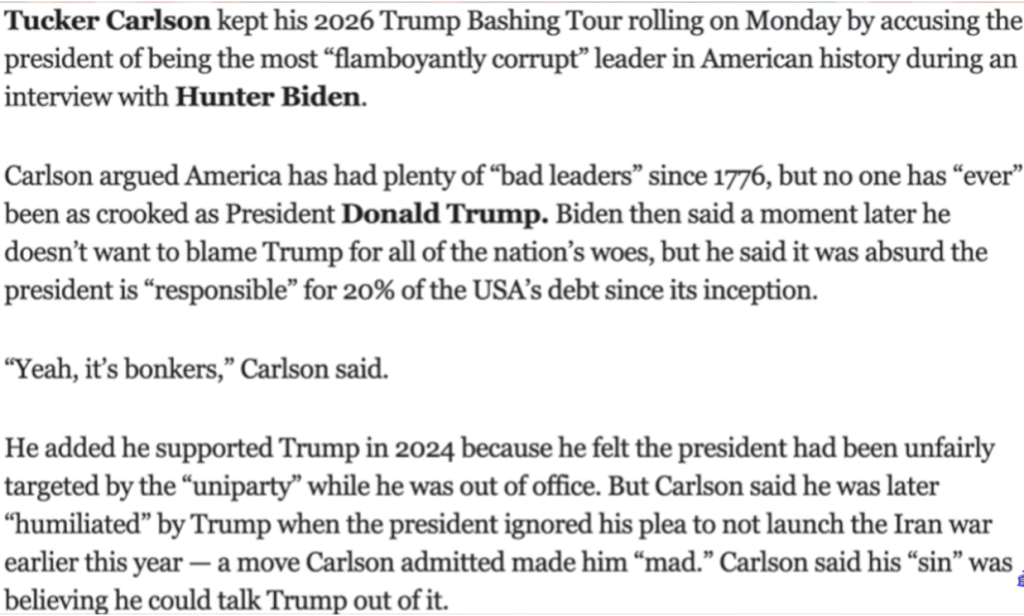

How do you caption this? Bedminster golfing.

Yes — the photo itself appears to be real, not an AI-generated image.
I found current reporting identifying the vehicle as a U.S. Army AN/TWQ-1 Avenger short-range air-defense system, deployed at Trump National Golf Club Bedminster, New Jersey, while President Trump was golfing. Recent reporting says the White House confirmed the authenticity of the photographs.
A few details in your image line up:
- The vehicle is a Humvee-mounted Avenger, carrying Stinger missiles.
- The concertina/razor wire around the position is real.
- The people around it appear to be working on the defensive perimeter.
- This is not a Patriot missile launcher; it’s a much smaller, short-range air-defense system intended primarily for aircraft, helicopters, cruise missiles and drones.
- The unusual setting—an air-defense vehicle sitting beside a golf course—is what makes the photograph look almost surreal.
So if the claim accompanying the picture was “Trump was golfing with an Avenger air-defense system deployed nearby,” that claim is genuine.

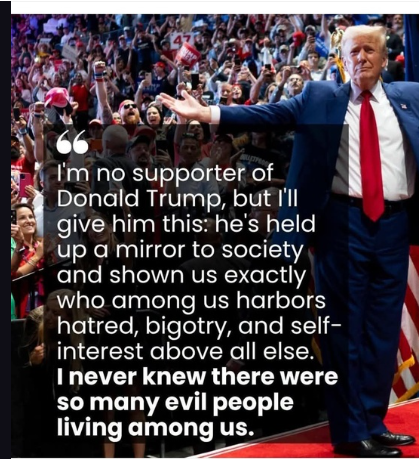
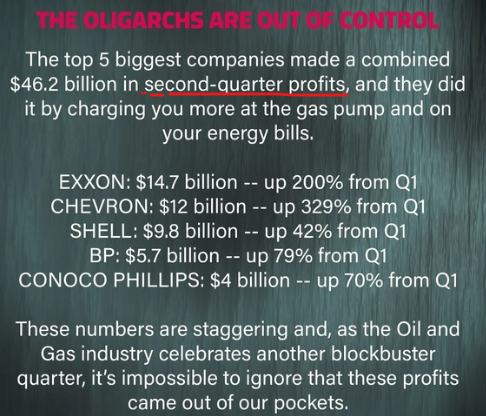
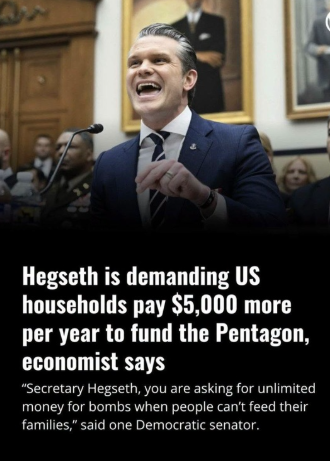
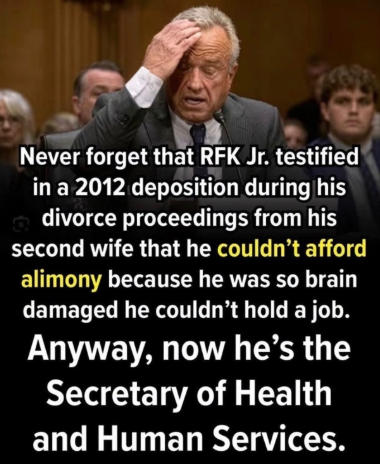

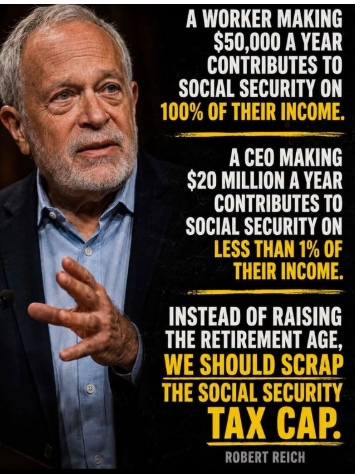

Trump fired all the professionals in every agency in the Federal government and the military. This included the people in the military and support agencies who understand military logistics.
We’ve seen a lot. We’ve agreed with wars, disagreed with wars, served in the military, served in civil service, but never, have we seen anyone stupid enough to fire the professionals needed for the government, regardless of the political persuasion, to function.
The elected person with the business degree should not call the shots on disease control, other than to make sure the professionals have what they need. The function of leadership is to make sure that the people you are responsible for have what they need, so they can make policy happen for leadership. Oh, lets buy a plumbing company, fire all the plumbers and hire the third string from the local newspaper and put them in plumbing trucks. What could possibly go wrong?
Everything that Trump has done since his re-squat in the White House has failed. Except for stealing trillions and breaking things, of course. He’s great at killing innocent people and stealing everything, he has a crowbar for the stuff that’s nailed down.
So here we are, at the mercy of the Republicans who either want to be the last one at the well or are cowards, enabling Trump and his goons, at the expense of the American people.
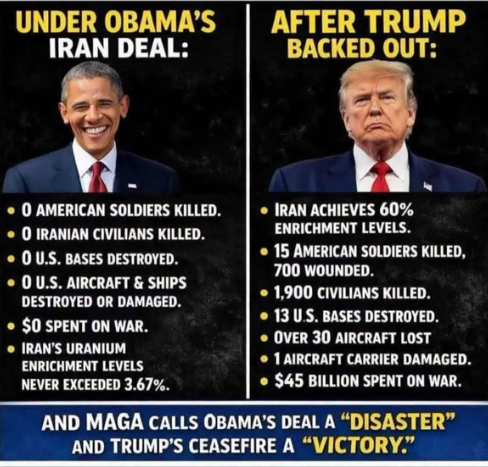
Katie Phang Turns Up the Heat on Todd Blanche in Epstein Files Lawsuit
Katie Phang is turning up the pressure on Todd Blanche, accusing Donald Trump’s attorney general of deliberately dragging his feet in her lawsuit seeking Epstein-related records from the Justice Department.
In a blistering new court filing, Phang’s lawyers argue that Blanche missed the deadline to respond to the lawsuit and say there is “no question” that he is in default.
Phang is not asking Judge Emmet Sullivan to hand her an automatic victory. Instead, she is willing to give Blanche a short extension to respond. But her attorneys are making one thing clear: the delays need to end.
Blanche was required to answer the complaint by June 26. He failed to do so, arguing that there was no reason to respond while Phang’s request for a preliminary injunction remained unresolved.
The problem with that argument, according to Phang’s team, is that the judge had already granted the injunction more than a month earlier.
On August 8, Phang asked the court to compel Blanche to finally respond. Blanche instead requested that the judge retroactively suspend the missed deadline and give him another 60 days.
Phang’s attorneys called the request another attempt to delay the case.
“Defendant’s request lacks any legal basis, and it also has no basis in reality. The Attorney General is obviously trying to delay this case, and this Court should not condone his tactics.”
The lawsuit also seeks records covered by the Epstein Files Transparency Act. Phang’s lawyers argue that the DOJ has yet to provide redacted versions of certain FBI interview notes, release a required redaction log, or demonstrate that it has begun reviewing and producing relevant foreign-language materials.
They further accuse the government of failing to provide documentation ordered by the court to support claims that certain withheld names belonged to Epstein victims.
Blanche had previously sought a 60-day stay while the Justice Department considered appealing the preliminary injunction. Judge Sullivan rejected that request. Phang’s lawyers now argue that the latest request amounts to an attempt to obtain essentially the same delay through another route.
Now the dispute is heading back to court.
Judge Sullivan has scheduled a Thursday status conference to address the DOJ’s alleged noncompliance. Phang’s team is expected to push for the outstanding disputes to be resolved and for Blanche to be ordered to answer the complaint so the case can proceed.
The message from Phang’s side is blunt: Congress passed a law requiring disclosure, a federal judge issued an order enforcing it, and the government missed a court deadline.
For Phang, the solution is straightforward: stop delaying, answer the complaint, produce the required records, and comply with the court’s orders.

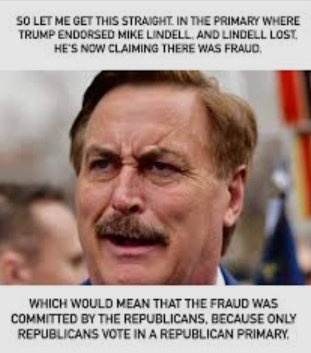



Trump went to military school, but he failed to learn anything. We have lost the Iran war due to Iran destroying our logistical base and disrupting US logistics, and all Trump can do is talk about his hair and the gorgeous girls that throw themselves at him at the White House, (and paint anything gold that does not move.).
And now he is inserting himself into the design of aircraft carriers. Anyone knowledgeable about those craft know that the location of the control canter needs to be aft so planes do not run into it, and the steam launchers are history. But Trump has directed the military to move the command center where it is in the way and demanded his demented steam catapults back. He has no idea, and it is not his billions of dollars he is wasting, and his son’s life he is putting in jeopardy.

An army cannot function without good logistics.
Napoleon was particularly dependent on logistics during his campaigns. His armies often lived partly off the land, but as they moved farther from their supply sources, keeping their soldiers fed became an enormous problem.
A modern version might be: “An army fights on its logistics.”
Iran has it right, they destroyed the US supplies, now the US supplies need to come from 2,200 miles away and they are limited in quantities at best. Iran figures it cn outlast the huge US military by cutting off their supplies nd have done so.
Another sign of lack of empathy
Democrats quickly seized on the strain facing the U.S. military.
Rep. Jason Crow accused President Trump of not caring about service members or their families after the president rejected claims that the Lincoln’s deployment had gone on too long.
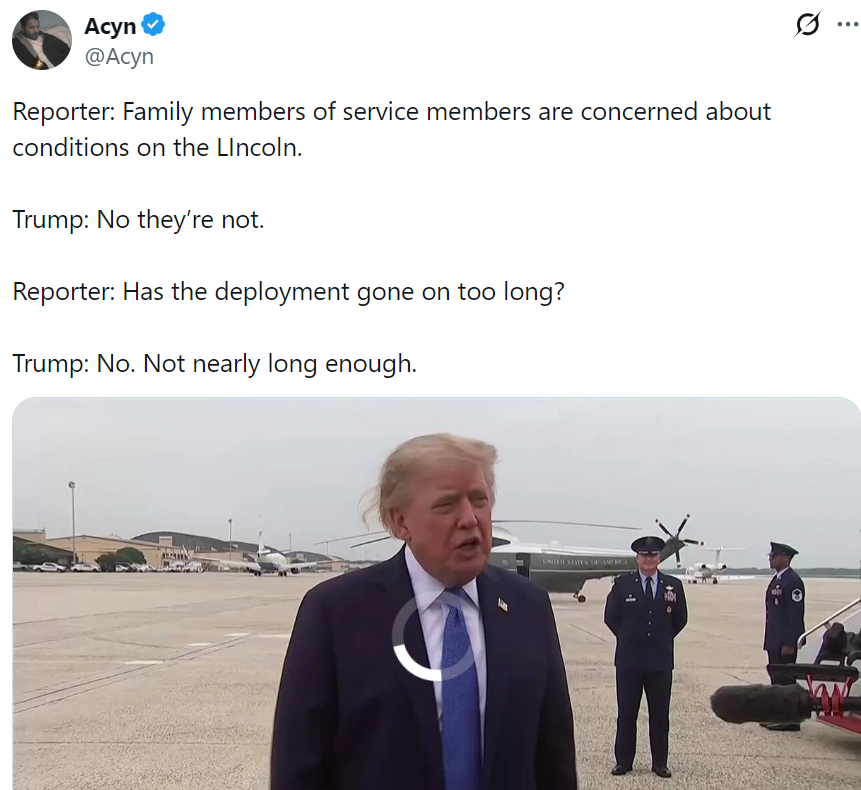
Questions about deployment length and conditions aboard the carrier deserve direct answers, not flippant answers.
Richard Angwin
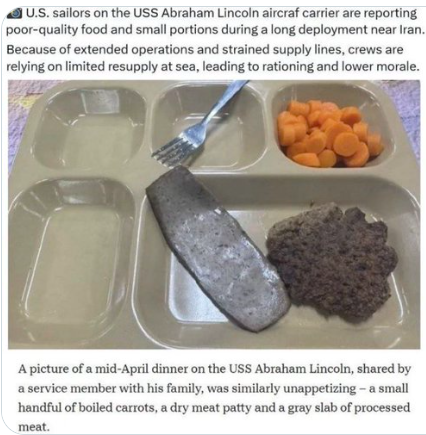
Navy Carrier’s Problems Are Tied to Attacks on U.S. Base Early in War
The aircraft carrier U.S.S. Abraham Lincoln’s supply problems began soon after the first day of the war, as Iranian missiles and attack drones fell on a Navy base in Bahrain.
The Iranian attack, retaliation for the U.S.-Israeli assault on Tehran, destroyed much of the base. And as it went up in smoke, so did a major logistics hub that the Navy has relied on for decades.
The Navy needed a Plan B to continue feeding the sailors working around the clock to keep warplanes flying strike missions, and later to maintain a blockade of Iran’s ports.
With the threat of Iranian attacks at other ports in the region, the Pentagon looked to a base under British command on the island of Diego Garcia as its supply hub, which is south of the Maldives and roughly 2,200 miles from where two aircraft carrier strike groups have been operating in the Gulf of Oman.
The loss of the hub in Bahrain has contributed to a host of reported problems on carriers supporting operations against Iran, as Democratic senators raise concerns about the Lincoln’s 5,000 sailors and their nearly nine-month deployment.
Senator Richard Blumenthal, Democrat of Connecticut, said in a letter to Defense Secretary Pete Hegseth that the reported problems included shortages of basic supplies and the deteriorating mental health of its crew members.
The Lincoln’s replacement is the Japan-based carrier U.S.S. George Washington, which earlier this week was heading west through the Strait of Malacca in Indonesian waters en route to the Middle East.
Another carrier, the U.S.S. George H.W. Bush, has been operating in the Middle East for months since deploying from Norfolk on March 31.
When asked if the carrier deployments were too long, the president said, “No, no, no, not nearly long enough.”
Mr. Hegseth had a similar response on Thursday when a reporter asked how long the United States could maintain its blockade of the Strait of Hormuz.
“We can hold it as long as we need to, indefinitely,” he replied.
At the war’s outset, Keir Starmer, then the British prime minister, denied the Pentagon access to Diego Garcia for use in the operation against Iran. That decision drew Mr. Trump’s ire, and Mr. Starmer ultimately relented on March 1, granting the U.S. military access to the island for what he described as a “specific and limited defensive purpose.”
A U.S. military official, who spoke on the condition of anonymity to discuss sensitive logistics, said the Navy began using Diego Garcia as the main shipment point shortly after the Navy’s base in Bahrain was heavily damaged.
The use of Diego Garcia as the Navy’s new logistics hub may explain why Iran fired two medium-range ballistic missiles at the island on March 20.
One of the missiles fell into the Indian Ocean short of its target. A Navy warship shot down the other.
The San Diego-based Lincoln has been at sea for nearly nine months without what the Navy calls a “liberty port” — where sailors can get off the ship for a few days.
Bahrain is one of the two ports where U.S. aircraft carriers in the region have typically moored so their crews can get some downtime. The other, the Emirati port of Fujairah on the Gulf of Oman, is also well within the range of Iranian missiles.
The Trump administration relied on yet another carrier, the U.S.S. Gerald R. Ford, in the Caribbean for its pressure campaign against Venezuela and later extended its deployment to the Middle East to launch airstrikes against Iran. So far the war has seen the commitment of a significant portion of the Navy’s fleet of aircraft carriers, which will go down to 10 with the expected retirement of U.S.S. Nimitz next year.
While six months is the typical length of a Navy deployment at sea in peacetime, some carriers have done far longer stretches following the Sept. 11 attacks. The Ford’s 326-day deployment, however, broke the record for the longest by a carrier since the Vietnam War.
But in that war, carriers assigned to Yankee Station, a section of the Pacific off the coast of Vietnam, would often head to the Navy base at Subic Bay, Philippines — a short two-day transit away — where sailors could take a break from running nonstop flight operations and the ship could load up on ordnance, food, fuel and other necessary supplies.
By tradition and Navy regulation, the commanding officer of a warship can request a “beer day” for their crews when they have been at sea for 45 straight days or longer. Given the Lincoln’s time at sea, the crew would have been eligible for five beer days already.
A spokesman for the U.S. Fifth Fleet, which covers naval operations in region and would authorize beer days, did not immediately respond to a request for comment on Friday about whether any of the ships participating in the Iran war had requested them.
In an interview, Representative Mike Levin, Democrat of California, said that his constituents included sailors aboard the Lincoln, and that their family members had reached out to express their concerns about the deployment.
“It gets back to that big picture, which is: What is the mission here?” Mr. Levin said. “That’s what the families want to know.”
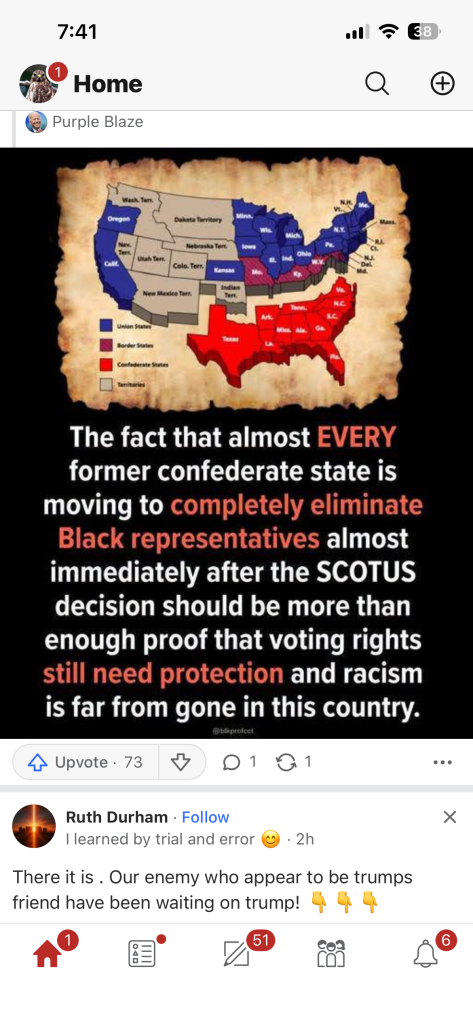



Another sign of Insanity
President said he may soon declare the Strait of Hormuz a territory of the United States.
President Trump Suggests Historic New Status For Strait Of Hormuz
President Trump just floated a move that would completely rewrite the fight over one of the most important waterways on Earth.
Speaking Friday in Garden City, New York, the president said he may soon declare the Strait of Hormuz a territory of the United States.
It was a remarkable line, even by the standards of a war that has repeatedly broken old assumptions about American power in the Middle East.
President Trump said Iran is being “very badly defeated” and argued that the United States already controls which vessels can pass through the strait.
He then warned that more ships could be destroyed if they attempt to challenge the blockade.
The president’s language sounded partly light, but the military posture behind it is anything but a joke.
The Associated Press reports that President Trump made the statement while discussing the war with Iran and the extraordinary deployment of the USS Abraham Lincoln. The carrier has been supporting U.S. operations for more than 260 days, with the USS George Washington expected to move into the region as its replacement.
The report also notes that Defense Secretary Pete Hegseth has rejected claims that conditions aboard the Lincoln were being inaccurately portrayed. U.S. Central Command has pushed back as well, while Navy officials say they have not observed an increase in suicidal thoughts or attempts aboard the carrier.
Meanwhile, the United States has reimposed a blockade on Iranian ports in the Strait of Hormuz, and Hegseth says American forces can maintain that pressure for as long as necessary.
This report captures the military posture behind President Trump’s new declaration:
Another black mark
Golden age for diarrhea and white-collar crime.
DONALD TRUMP PROMISED Americans a new golden age. Unfortunately, it turns out to be a golden age for diarrhea and white-collar crime.
Biological, social, and financial parasites are all flourishing, because the Trump administration has destroyed the institutional capacity necessary to detect and eradicate them.
In the latest (non-GI-related) development, the Department of the Treasury announced this week that it would destroy the government’s registry of shell-company ownership. This is an anti-corruption database that Treasury is by law required to maintain, so that law enforcement can more easily “follow the money” when investigating crimes.
Even worse, the Trump administration will also destroy all the data it has already collected, so that no future presidential administration or local police department can use it, either.
“It’s like Trump ordering the deletion of the FBI’s entire fingerprint database,” former congressman Tom Malinowski (D-N.J.), a champion of the 2021 law that created the corporate registry, told The Bulwark.
They’re effectively salting the earth, so that sex traffickers, scam artists, drug lords, money-launderers, and tax cheats can roam free not only through the end of Trump’s time in office but long after he’s out, too.<hr/ >
It is always something Trump wants to stop that would improve our lives.
Trump cancels Biden-era bid to speed power line construction
The Trump administration is canceling a Biden-era effort to speed up power line construction in parts of Pennsylvania, Colorado, New Mexico, Oklahoma, Nebraska and the Dakotas.
The Energy Department announced this week that it would not move forward with designating three areas as National Interest Electric Transmission Corridors, a move that could get them federal help to speed up power line build-out.
The Biden administration identified three corridors to be part of the program: parts of Lake Erie and Pennsylvania; parts of Colorado, New Mexico and Oklahoma; and parts of North Dakota, South Dakota, Nebraska and five Native American reservations.
Designating power lines in these areas as being in the national interest would have allowed federal regulators to issue permits to approve them if states do not act quickly enough or deny them permission to build.
While electricity from various power sources including fossil fuels, nuclear and renewables are carried by power lines, a significant amount of new energy coming on to the grid is renewable and building out power lines could be crucial for getting new green power online.
Environmental advocates slammed the move to cancel the designation as being bad for the nation’s electric grid and potentially driving up power costs.
“Building long-distance transmission lines is one of the best ways to lower costs and secure and upgrade our grid — and strengthening our grid is wildly popular, too. Pulling the plug on these long-planned transmission corridors will pull the rug out from under billions of dollars in investments and tens of thousands of jobs for hardworking families,” Matthew Davis, vice president of federal policy at the League of Conservation Voters, said in a written statement.
Good news
Automatic Tariff Refunds Coming To These FL Residents:
FL shoppers who bought goods from overseas vendors last year should expect to see automatic tariff refunds hit their bank accounts soon.
FL shoppers who bought goods from overseas vendors last year should expect to see automatic tariff refunds hit their bank accounts soon.
FL shoppers who bought goods from overseas vendors last year should expect to see automatic tariff refunds hit their bank accounts soon. (Shutterstock)
Floridians who bought something from an overseas vendor last year should check their bank accounts.
Shippers, including FedEx and UPS, that acted as customs brokers for imported packages and received tariff refunds from the U.S. government have started to pass on those refunds to the customers who originally paid the tariffs.
The refunds to consumers are the last step in a months-long process that kicked off in February when the Supreme Court struck down sweeping tariffs implemented by President Donald Trump in March 2025 under the 1977 International Emergency Economic Powers Act on goods from almost every country. The court ordered the government to return the tariffs it collected.
How Big Are Refunds?
So far, about $100 billion in tariffs have been refunded to companies that paid them under a system set up by U.S. Customs and Border Protection.
That doesn’t mean Americans will get anywhere close to what they paid in tariffs, since most were paid indirectly. In 2025, the Trump tariffs amounted to an average tax increase of $1,000 per U.S. household, according to the Tax Foundation, a Washington, D.C., group that studies taxes.
But some consumers are getting some of what they paid directly back from shippers, including UPS, DHL, and FedEx.
The refunds are being rolled out in phases based on what date they were paid. Shippers have said they’ll return the refunds on a rolling basis as they receive them.
Tariff refunds from shippers will be directly refunded to credit cards or bank accounts.
Most big overseas retailers paid the tariffs themselves and passed them along to retailers with a line item in their invoice that was part of the total bill, or indirectly by raising prices. But some smaller sellers left the tariff to be paid when it reached the United States. In those cases, shippers paid the bill and charged the recipient of the package.
What Are Shippers Doing?
FedEx said it has begun the process of issuing $800 million in tariff refunds it received from the government back to the customers that paid them. Customers don’t need to apply to receive their refund, but they can enter tracking numbers for purchased items into a portal on the FedEx website to see whether or not they are due a refund.
UPS said it had paid $5 billion in tariffs on behalf of clients as of April and was initiating government refund applications. The company initially requested $500 million in reimbursement, noting that clients can anticipate receiving their refunds within one to three months after Treasury funds are distributed.
DHL similarly said that it has filed claims for almost all eligible shipments where it served as the importer of record and is returning the refunds it has received.
“The volume and pace of refunds continue to depend on CBP’s processing of claims,” DHL said in a statement.
What Are Retailers Doing?
Major retailers mostly plan to use tariff refunds to lower prices rather than issue direct consumer refunds, as most indirectly passed on tariff costs or absorbed them.
Amazon received $600 million in tariff refunds last quarter. CFO Brian Olsavsky stated that while Amazon rarely acts as the importer of record, it will automatically refund customers in limited cases where specific import charges were directly passed on, using remaining refunds to lower prices.
Other large retailers report similar strategies. Best Buy expects to use refunds to offer customer value, while Costco plans to return passed-on tariffs “in some form,” depending on refund timing, amounts, and ongoing litigation.
So this proves that Trump saying US does not pay the tariffs was a LIE
New aircraft carrier going to Middle East amid questions over conditions on USS Abraham Lincoln
The U.S. is sending a new aircraft carrier to the Middle East amid reports of poor conditions aboard the USS Abraham Lincoln, which has been long deployed to the theater in support of the war against Iran.
Not a smrt move, with their logistics limited to coming from 2,200 miles away and limited, it will not be long before they have more problems. Adding another 5000 mouths to feed!!
Source: WJXT
Florida-based company recalls nearly 30,000 pounds of raw beef imported without federal inspection
https://share.google/
ICE plans to outfit officers with gloves that deliver electric shock
The Department of Homeland Security plans to equip ICE agents with gloves that emit electric shocks to use on uncooperative people in the field, according to a notice posted on its acquisition system.
August 12, 2026 at 3:10 p.m. EDT
Federal vaccine recommendations have not changed yet.
But the bottom line is that federal vaccine recommendations have not changed yet.
Implementing Trump’s directives would require a lengthy administrative process and probably a legal battle, even as Trump has privately urged his deputies to move faster.
“An executive order is not an automatic change to the schedule, because that’s not the legal way it’s done,” said Dorit Reiss, a professor at the University of California College of the Law at San Francisco whose research focuses on public health law.
States, not the federal government, generally set vaccination requirements for school attendance.
Another try
While he said Tuesday the $1.7M fund as previously constituted was dead, Blanche said he and the president would support congressional legislation on the matter.
“The president feels very strongly, as do I, that there were people who were victims of a Department of Justice that was absolutely weaponized, and he feels very strongly that he would want to make them whole, as do I,” the attorney general added.
CFI Responds to Trump Executive Order on Childhood Vaccines
On Monday, President Donald Trump signed an executive order reducing the number of federally recommended childhood vaccines and advancing his “long-held but discredited theory that childhood shots should be spaced out into separate medical visits.” As an organization committed to promoting evidence-based science in public policymaking, the Center for Inquiry (CFI) publicly denounced the executive order, which ignores decades of research showing childhood vaccines are both safe and effective.
CFI President and CEO Robyn Blumner said: “There are very few people less qualified than Robert F. Kennedy Jr. to be making decisions about vaccine policy. Donald Trump is at the top of that very short list.”
Blumner continued: “This new executive order is just the latest example of the administration’s complete disregard—and overt hostility toward—evidence-based science. Public health policy should be based on rigorous science backed by data, not the personal beliefs and suspicions of one highly unqualified individual.”
The assassination threat was relayed by the Israeli government to the CIA, where analysts did not view the intelligence as compelling and conveyed that skepticism to Trump administration officials, one of the officials said.
You have:
- Plane A: the new Qatari 747, which is not a hardened presidential aircraft like Air Force One and does not have the same publicly known defensive capabilities. Trump hurried to accept it, apparently eager to show off his new presidential plane.
- Plane B: the older, hardened Air Force One—designed specifically to protect the president—but it isn’t Trump’s new toy.
- Plane C: a military aircraft that no one would expect the president to be aboard. He could disappear into it without attracting the same attention.
Then there is a threat. The Secret Service decides to make Trump disappear, almost like a three-card Monte trick, and move him and aides secretly onto Plane C.
But as the pilots, press and staff were not told in advance, they could have been left behind without knowing that the president had already been moved to safety and take other means to get home. But Trump is whisked away.
Then, when asked about leaving the staff behind, Trump doesn’t appear particularly concerned about them. His focus is on himself. And his statement that he was in even more danger than those who were left behind is especially revealing: if the threat was directed at the president, moving him to a military aircraft would presumably make him safer, while those left behind would still be exposed to whatever threat prompted the evacuation.
The whole episode reinforces the impression that the story, in Trump’s telling, has to be about him.
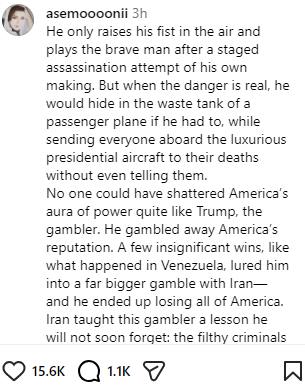
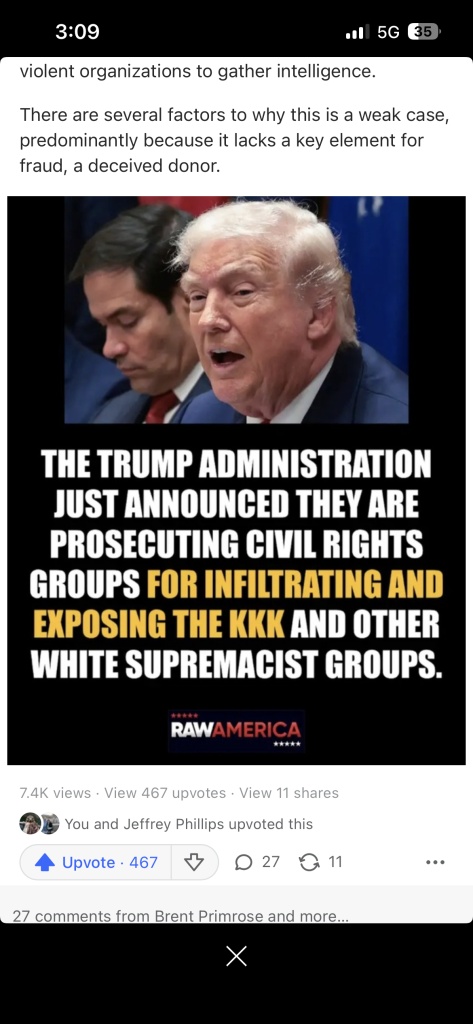

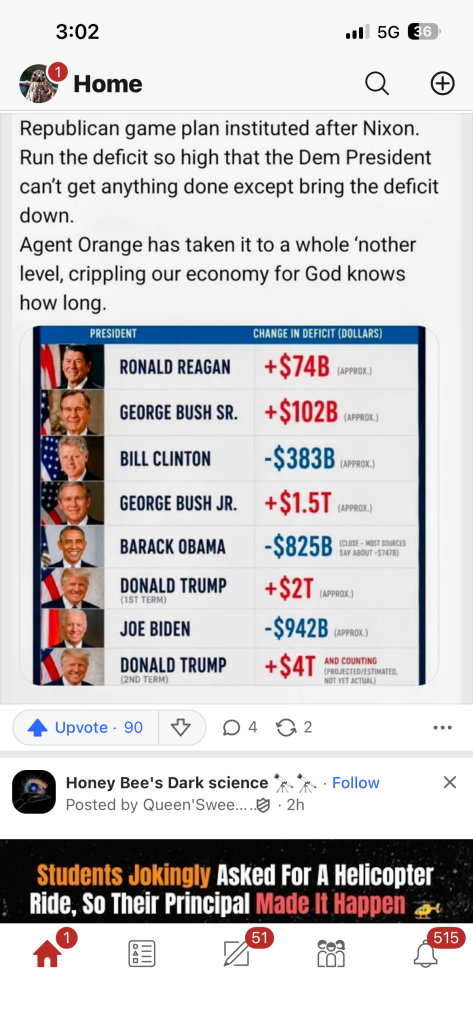



August 10, 2026
Today, though, Trump’s war on Iran is demanding a resolution, and it is crystal clear that the Iranians believe they are in a position to dictate terms to the United States.
Iran and Oman have been negotiating terms for travel through the Strait of Hormuz, which runs between the two countries. Iran closed the strait when Trump and Israeli prime minister Benjamin Netanyahu initiated strikes against Iran on February 28, 2026. Before the war, more than 20% of the world’s shipborne oil and even more than that of its shipborne fertilizer traveled through the strait, and their loss has dramatically impacted the global economy. Farmers around the world are having trouble obtaining fertilizer, and the price of oil—and the corresponding price of gasoline and diesel—have jumped dramatically.
On Saturday, Iranian officials laid out a series of demands the U.S. must meet before they will reopen the strait. They say the U.S. must lift the naval blockade of Iranian ports and withdraw the U.S. military, “permanently end the war against Iran and Iran’s allies in Lebanon, Gaza, Yemen, and Iraq,” and “never threaten nor insult Iran in any language,” essentially gagging Trump. They want an end to sanctions on Iran and the release of frozen Iranian assets. And they want reparations. All up front, as conditions for reopening the strait.
In the past, sanctions relief and the release of frozen assets were made conditional on an end to Iran’s nuclear program. Now such a negotiation doesn’t even appear to be on the table. And Iran is asserting its right to control traffic through the Strait of Hormuz, a chokepoint for global trade. Tolls on ships using the strait would provide significant funding for the Iranian regime.
Foreign policy scholar and diplomat Philip Gordon, who served in the Biden White House, wrote: “U.S. acceptance of Iranian control over the Strait of Hormuz is an extraordinary outcome only made conceivable by an administration that squandered legitimacy, alienated allies, attempted regime change in a war it had not adequately prepared for and that is being forced to accept a catastrophic outcome without viable alternatives.”
He suggested that “in other circumstances Iran’s closure of [the] Strait by brazenly attacking maritime traffic and neighbors’ civilian infrastructure would likely have justified and led to a united, global response—like the U.S.-led naval escort mission during the Iran-Iraq war, the global coalition that reversed Iraq’s invasion of Kuwait in 1991, the multinational naval force enforcing UN sanctions in the Gulf in the 1990s, or the UN Security Council sanctions on the Iranian nuclear program in the 2010s—that led to the JCPOA.”
“Instead,” he wrote, “[the] US and other countries are now being forced to accept an outcome that would have been unthinkable before the war but seems to have become unavoidable because of it.”
Yesterday Trump told Barak Ravid of Axios, “We are low-keying it,” explaining: “We are only semi-negotiating with them. We are just watching Iran with its huge inflation and the fact they have no money.” He stressed that Iran’s in an economic crisis and that since oil prices have come down slightly in the U.S., gas prices have eased enough to provide some relief to consumers.
“It will work out,” Trump told Ravid. “It always works out. It’s like a chess game.”
But Trump’s mood had changed by today. At 12:31, he claimed Iranian negotiators had never before mentioned reparations for the damage done to Iran during the five month conflict, although the Memorandum of Understanding he signed on June 17 clearly calls for the establishment of a $300 billion fund for Iran’s reconstruction and economic development, suggesting either that Trump has forgotten what was in the agreement or didn’t know.
Trump posted: “I am likewise demanding compensation from Iran, for all of the people that they have killed and gravely wounded with their roadside bombs and many conflicts, for which they are famous…. I have instructed my representatives to put this firmly into any, and all, future negotiations.” An hour later, he added: “Also,…Iran should be responsible for the damages and death caused to the people of Lebanon, Syria, Yemen, and Gaza!”
Later, when a reporter asked Trump when he thought the Strait of Hormuz would open, he answered: “Well, it’s open now…. It’s open now. Look, the only one that has control of the Strait of Hormuz right now is the United States Navy.”
Iran apparently wants its part of the agreement up front because it doesn’t trust Trump to follow through once the strait is reopened, and there is reason to doubt that he will—or can—deliver on his promises. Yesterday, Netanyahu openly rejected the plan that Trump announced as a done deal less than two weeks ago to end the fighting in Gaza.
On July 30, Trump posted that his “Board of Peace reached a HISTORIC agreement for the COMPLETE DISARMAMENT of Hamas and all other armed groups in Gaza” in exchange for the withdrawal of Israeli forces there. “This is a monumental step toward lasting PEACE and SECURITY,” Trump wrote. “One year ago there was a violent raging war, humanitarian crisis and hostages kept in brutal captivity,” he wrote, but now there was a “historic breakthrough.” “CONGRATULATIONS TO ALL ON THIS AMAZING DEVELOPMENT, THAT EVERYBODY SAID COULD NEVER BE ACHIEVED!” he wrote.
At the time, Netanyahu expressed skepticism, but today he openly broke with Trump. When asked about the rejection, the White House told reporters to talk to the Board of Peace.
While much of the focus of the media has been on Trump’s bumbling in the Middle East, the administration has been busy working to reshape Latin American countries into right-wing protectorates of the United States. In Colombia’s recent election, Trump endorsed a right-wing millionaire lawyer who had never before run for office, Abelardo de la Espriella. De la Espriella holds both U.S. and Colombian citizenship and is a Republican who supports Trump.
De la Espriella won a close election, and as soon as he took office, replacing the leftist
Gustavo Petro, the U.S. pledged $1 billion in assistance to Colombia, “as part of a security package to support President (Abelardo) de la Esprilla’s administration in achieving our shared goals,” the White House said.
Tyler Pager, Julian E. Barnes, and Frances Robles of the New York Times reported on August 7 that the administration has been looking for a similarly cooperative leader for Cuba. In a search for “more regime alteration than regime change,” they write, the administration has “pressed its spy agencies to identify someone in the mold of Delcy Rodríguez, who became Venezuela’s interim president after U.S. forces captured the previous leader, Nicolás Maduro, in January. U.S. officials viewed Ms. Rodríguez as a pragmatist who could seamlessly assume power and would be willing to work closely with them,” the journalists report.
The plan appears to be to get Cuba to open its economy to private enterprise including U.S. businesses, buy oil from the U.S., and push out the Russian and Chinese intelligence operatives there. The U.S. Central Intelligence Agency, Pager, Barnes, and Robles note, has secretly established a Cuba task force.
Their New York Times colleague Adam Entous reported on August 5 that the task force includes “case officers who recruit and manage spies, intelligence analysts, officers who conduct cyberoperations and officers who specialize in covert influence operations.” Sources told Entous that the plan appeared intended to create rifts among those in Cuba’s political elite to enable the rise of leaders willing to agree to Trump’s demands.
Trump’s assumption of control over Venezuela seems to have been the model for attempts to take over other countries. Last September the Trump administration began strikes against small boats in the Caribbean and eastern Pacific that Trump claimed—without evidence—were being operated by narcoterrorists from Venezuela. Then the U.S. began to seize vessels allegedly carrying sanctioned Venezuelan oil. On January 3, 2026, in a nighttime raid, the Trump administration conducted airstrikes in Venezuela and removed Venezuela’s president Nicolás Maduro and his wife, Cilia Flores, taking them to New York to face federal narcoterrorism and drug-trafficking charges.
Although opponents of Maduro, who had seized power after losing a presidential election, cheered the raid in the belief that Trump would help them put opposition candidate Edmundo González in power—exiled opposition leader María Corina Machado gave Trump her Nobel Peace Prize medal after the raid in an apparent attempt to create good will—in fact the administration supported Maduro’s vice president, Delcy Rodríguez. On January 5 it formally recognized her as Venezuela’s head of state.
Venezuela’s high court disagreed. It called Maduro’s absence a “kidnapping” and determined that under the country’s constitution, Rodríguez could act as president for 90 days, a period the National Assembly could extend for another 90 days. But if Maduro didn’t return after either 90 or 180 days, the absence must be considered permanent. At that point, the constitution requires elections to be held in 30 days.
When Rodríguez’s first 90 days were over, there was no public announcement that the National Assembly, which is controlled by her political party, had extended her acting presidency. July 3 marked 180 days since Maduro’s kidnapping.
As Antonio María Delgado of the Miami Herald reported, in late July the U.S. Department of Justice asked the U.S. District Court for the Southern District of Florida to dismiss a lawsuit filed by three Americans against Rodríguez accusing the Maduro government, which was well known for human rights abuses, of torture. The Justice Department called for the dismissal on the grounds that Rodríguez is entitled to immunity as Venezuela’s head of state, thus underscoring that Trump intends for her to run the country. Delgado called it an “extraordinary step.”
Negotiations are underway for a new election, but opposition leader Machado has been excluded from them. On August 6, seven Democratic senators led by Adam Schiff (D-CA) wrote to Secretary of State Marco Rubio, reiterating that Rodríguez is still the acting president rather than the head of state,and putting the administration on notice that its “increased support of the same officials who contributed to the Venezuelan government’s lengthy and well-documented record of human rights abuses and violations is alarming, and we urge the State Department to re-commit to its long-standing practice of calling attention to human rights violations committed by the Venezuelan regime and exerting pressure on regime officials to end these abuses.”
An exclusive story tonight by Dan Lamothe, John Hudson, Andrew Ba Tran, and Joyce Sohyun Lee in the Washington Post revealed the utter cowardice behind Trump’s authoritarian aspirations.
Leaving Türkiye on July 8 after the NATO summit, the day after he had renewed strikes on Iran, Trump made a show of switching from the newly outfitted plane given to the U.S. by Qatar to an older plane that had served as Air Force One before Trump got the Qatari jet. The journalists who were traveling with the president and some of the White House staff moved with the president to the older plane for the leg of the trip that would take them to Britain.
But the journalists report that Trump and some of his aides secretly left the older plane in a container lowered into an airport catering truck and were transferred to a smaller plane for the trip. There had apparently been credible Iranian threats against Trump’s life, and so officials turned to a plan to hide him, even from senior U.S. officials. To do so, they left the journalists and staff on the plane that would use the Air Force One call sign, turning them into a decoy for an Iranian strike. White House staffers instructed journalists to lower their shades when they entered the plane.
Trump secretly reboarded the bigger plane in Britain and was filmed coming down its stairs, suggesting he had been on the flight. Then he boarded the Qatari jet, along with the press pool and the staffers who had been on Air Force One, for the trip from Türkiye. On the flight, Trump briefly spoke to reporters, who asked why they had been asked to lower their window shades on the previous flight.
It was “because you’re probably on a dangerous flight because of the sleaze bags that we have to deal with,” Trump said. He added that there are threats against his life “all the time” and that “I’m number one on their list, before you. But if I go, you go. Right?” “Perhaps someday you want to change professions.”
Bluesky national security commenter Angry Staffer wrote: “So, I completely understand secreting POTUS away from a credible assassination attempt. But leaving the entire Air Force One crew, press pool, etc. to play decoy is some sick shit.”


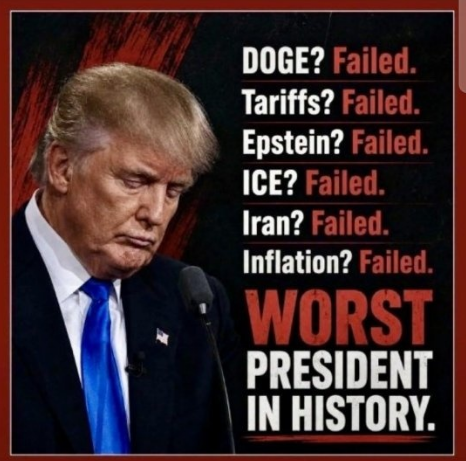

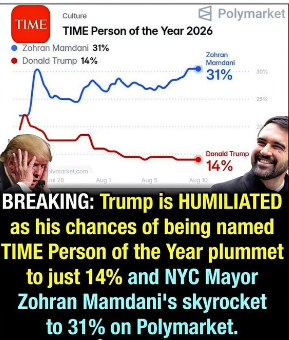
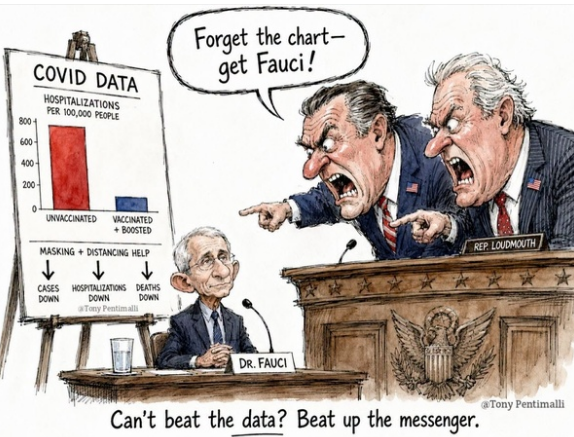
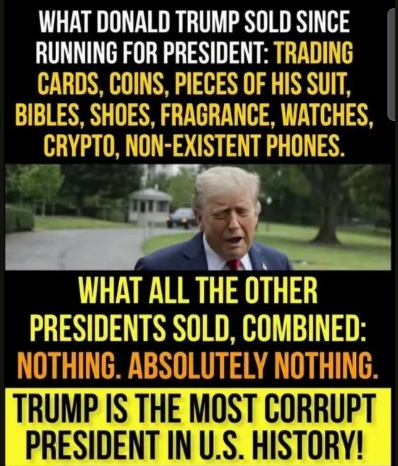
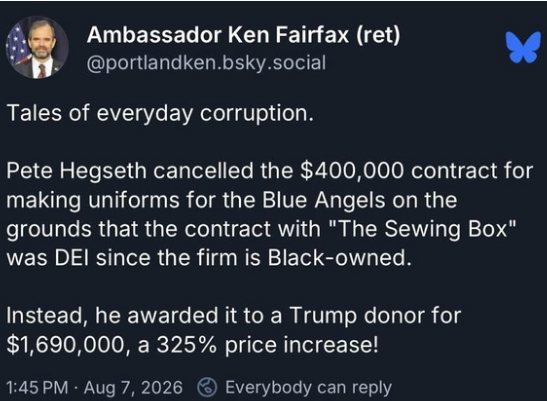
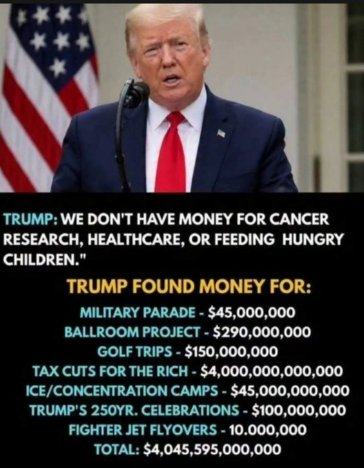

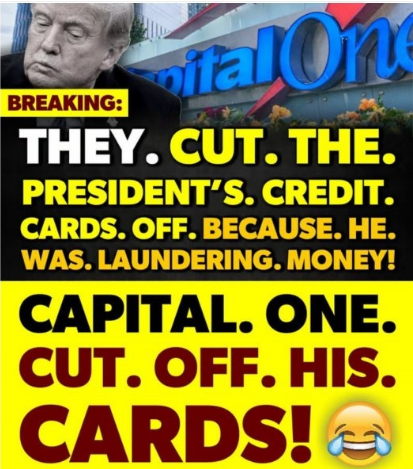
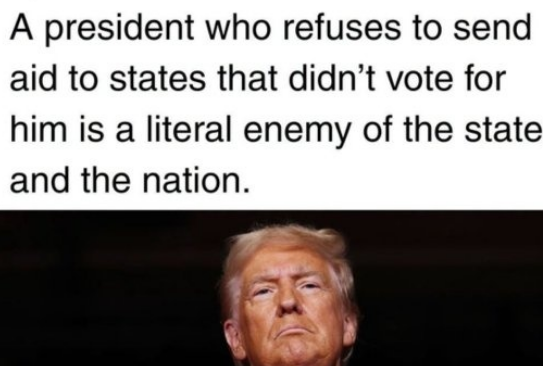
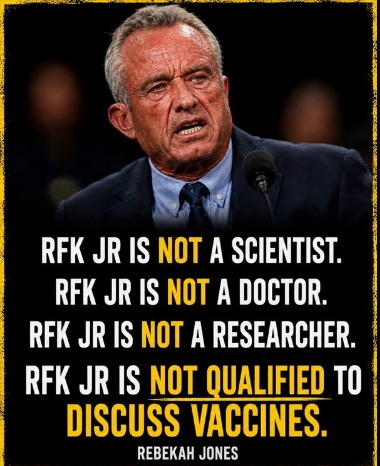



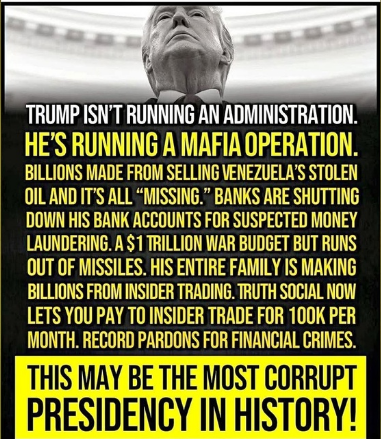
Over the past few weeks, President Donald Trump has made it clear that he will not take Supreme Court decisions as the final word on anything.
The president has introduced new tariffs, renewed efforts to fire Federal Reserve governor Lisa Cook and issued new executive orders to limit birthright citizenship. While some experts said the moves signal outright defiance of the high court, they nonetheless push the limits of the rulings that Trump lost earlier this summer.
“Without question, President Trump is challenging the bounds of the court’s opinions,” particularly regarding Cook’s firing and birthright citizenship, said Richard Lazarus, a law professor at Harvard University.
The high court’s opinion affirming that nearly everyone born in the United States is a citizen does not allow Trump to create exceptions like the ones set out in his recent executive orders. ThoseTrump orders say children are ineligible for birthright citizenship if born to “alien enemies,” foreign terrorists, foreign lobbyists or people who fraudulently request tourist visas in order to give birth in the U.S.
In signing the orders, Trump referred to the Supreme Court decision on birthright citizenship, saying, “We’re ending it a different way.”
As for Cook, the justices ruled that she deserved notice and a chance to respond before being fired, and Trump’s latest move seeks to provide that. The White House sent a letter to Cook last week renewing the threat to fire her, giving her 21 days to respond and directing her to submit any response to the White House by Aug. 26.
“The Supreme Court’s ruling on the Cook case required notice and an opportunity for a hearing in considering whether the president should take certain adverse employment actions,” Bis added. “The president’s notice sent to Fed. Governor Cook offers exactly that within the precise structure enunciated by the Court.”
Still, Trump’s underlying rationale for dismissing Cook — that she engaged in mortgage fraud — remains unproved, and she has not been charged. While the renewed push to fire her does not “repudiate” the Supreme Court’s opinion, Lazarus said, it “certainly confronts it by challenging its limits.”
Trump is not the first president to look for ways around adverse Supreme Court rulings. Most recently, when President Joe Biden’s plan to forgive student loan debt was struck down by the Supreme Court, Biden within hours announced a separate plan to forgive the debt.
Two decades earlier, President George W. Bush wrestled with the court over procedures for detainees seeking freedom from the military prison at Guantánamo Bay, Cuba.
But such instances appear to be historical exceptions rather than the rule, said David Super, a professor at Georgetown Law.
“Most presidents treated Supreme Court rulings as dispositive of the issues involved rather than as technical documents to be evaded,” Super said.
That includes an earlier version of Trump. During his first term, the president was more willing to accept losses at the Supreme Court and move on, Super said. He cited rulings against Trump’s efforts to end the Deferred Action for Childhood Arrivals (DACA) program and to add a question on citizenship status to the 2020 Census.
“The second-term President Trump appears to have much less regard for the other branches of the federal government than the first-term one did,” Super said.
Similarly, the Trump administration last month imposed new tariffs on U.S. imports from 60 economies under an authority different from the one the Supreme Court rejected in February. The new duties, imposed under Section 301 of the Trade Act of 1974, purport to penalize countries that fail to curb imports produced by forced labor.
President Donald Trump’s political movement, Make America Great Again (MAGA), heavily relies on Christian nationalists
who ignore the Founding Fathers’ secularism to argue the United States was founded as an explicitly Christian country. Yet according to a groundbreaking new report, Christian nationalists are engaging in self-dealing on a massive scale — and through connections with American government entities.
“Ballrooms, slush funds, jumbo jets. Worship services in the Pentagon, electioneering in churches, the Ten Commandments in schools,” reported Zeteo’s Lauren Windsor on Wednesday based on over a year’s worth of reporting. “Conflicts of interest and Christian nationalism have been hallmarks of Donald Trump’s second presidency. The epic flood of corruption swamping Washington isn’t just overwhelming American politics – it’s also obscuring the grift occurring in red states across the country, as officials work to put public investment funds under the control of their friends at Christian finance firms.”
Windsor added, “A major conduit for that corruption is the State Financial Officers Foundation (SFOF), a small but powerful nonprofit that convenes Republican state treasurers and auditors, right-wing activists, and Christian finance executives to strategize over how to defeat liberals and weaponize state treasuries against allegedly woke corporations, while steering state treasury money to their ideological allies. Much of their “War on Woke” consists of boosting the fossil fuel industry and crushing efforts to mitigate climate change, under the notion that corporate safeguards are bad business.”
Although Windsor’s report briefly mentioned the state of affairs in Kentucky, she focused on Alaska, including a character named Derek Kreifels.
“Derek Kreifels was the CEO of the State Financial Officers Foundation for more than a decade,” Windsor wrote. “He resigned from this role in the fall of 2024, but he remains an SFOF board member, and his wife serves as one of its top executives. Now, Kreifels is lobbying SFOF treasurers to put public retirees’ savings and other funds they oversee into faith-aligned financial products and services offered by his firm, Prospr Aligned, and its affiliates in the Christian finance industry.”
Windsor added, “Kreifels’s firm has already won business from the Kentucky auditor’s office, which is led by a member of the State Financial Officers Foundation’s leadership team, as I can report for the first time. Another state Kreifels has targeted heavily is Alaska, where he has friends in former Revenue Commissioner and ex-SFOF Vice Chair Adam Crum and Alaska Permanent Fund Chair Jason Brune.”
She also said that in an interview with her in Anchorage last year, “Brune defended Crum and his collaboration with Kreifels as efforts to promote resource extraction in the Arctic – arguing that he and Crum, as members of the governor’s cabinet, ‘are pimping for the state.'”
Describing one event, Windsor reported that “in the weeks leading up to the event, SFOF honored Crum, naming him its vice chair for 2025, and Kreifels announced he was resigning as CEO to embark on a private business venture he would soon reveal.
She added, “‘I have been called to a new mission,’ Kreifels declared. The Anchorage summit presented great synergies for Kreifels. He could, using nonprofit money, convene right-wing finance officials and industry executives who lobby them – while lobbying those officials himself on the services offered by his new business venture and celebrating his tenure at SFOF with friends and family in an exotic locale. According to emails from Kreifels that I obtained, SFOF covered travel costs for public officials and their staff.”
The State Financial Officers Foundation has also helped support Kreifels’s private business ventures. According to state travel disclosures, SFOF paid for at least one treasurer’s travel to the New York Stock Exchange launch party for Prospr’s Alaska investment fund, reports Windsor, adding that SFOF also arranged for a special speaker: longtime ally Paul Atkins, who as chairman of the Trump Securities and Exchange Commission regulates the Prospr fund.”
IRS rules prohibit self-dealing and private benefit from nonprofit money, Windsor said.remains speculative.