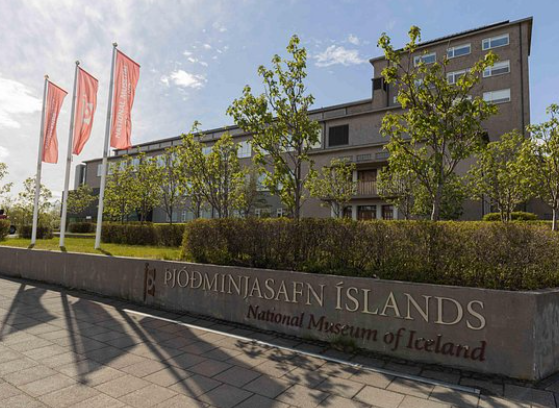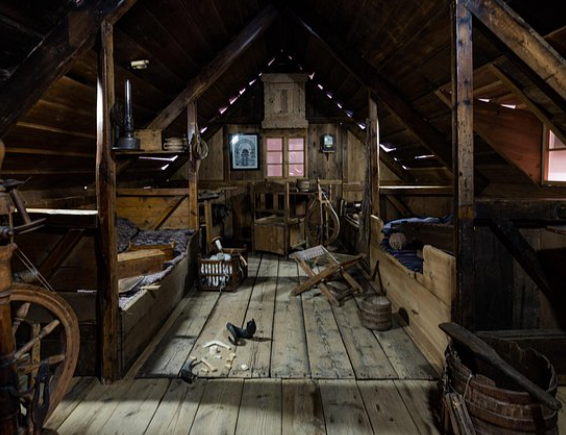
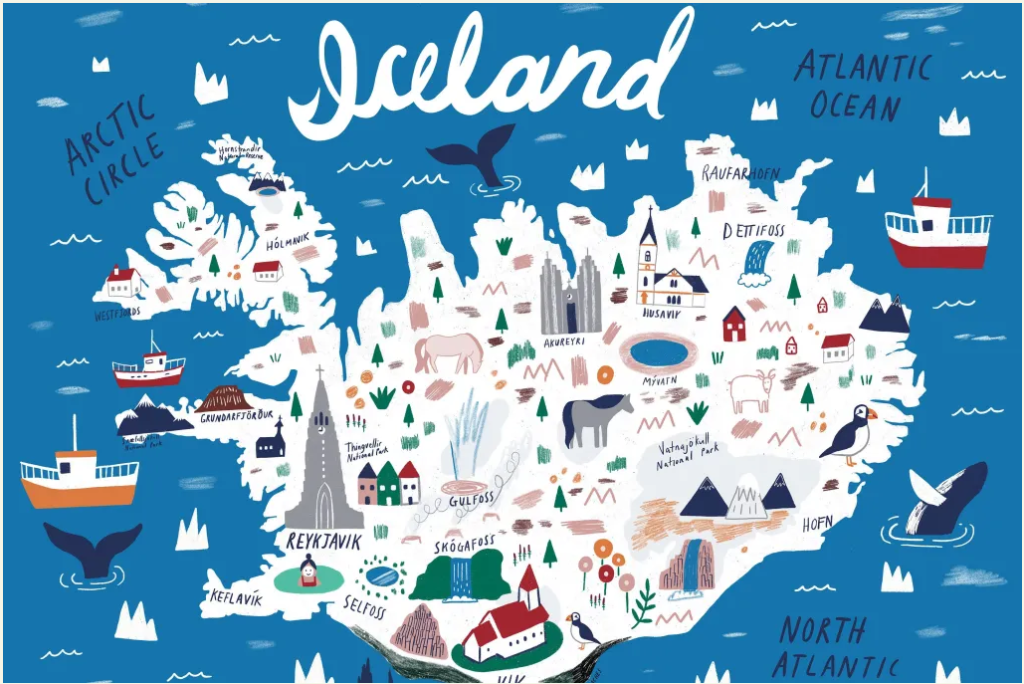
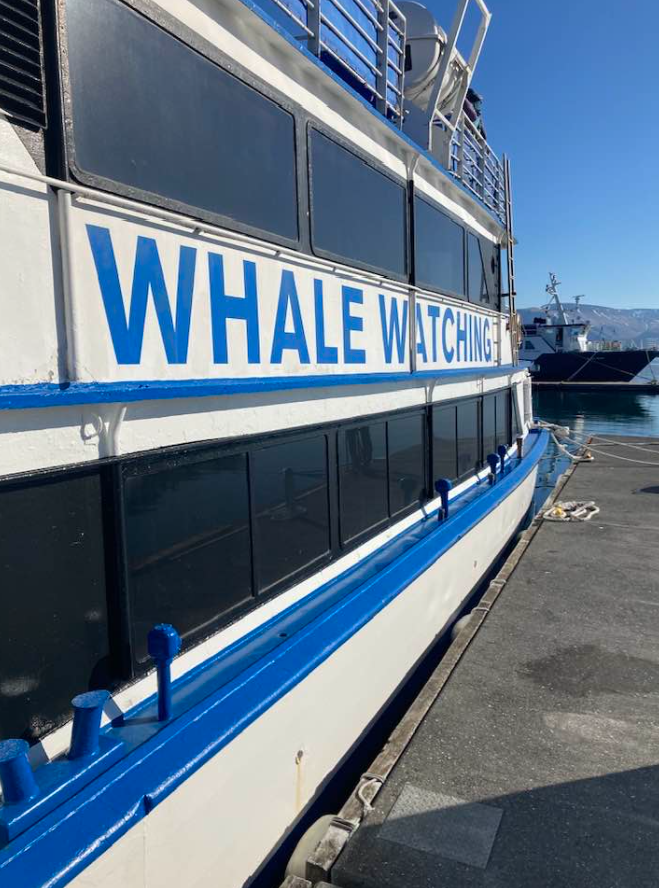
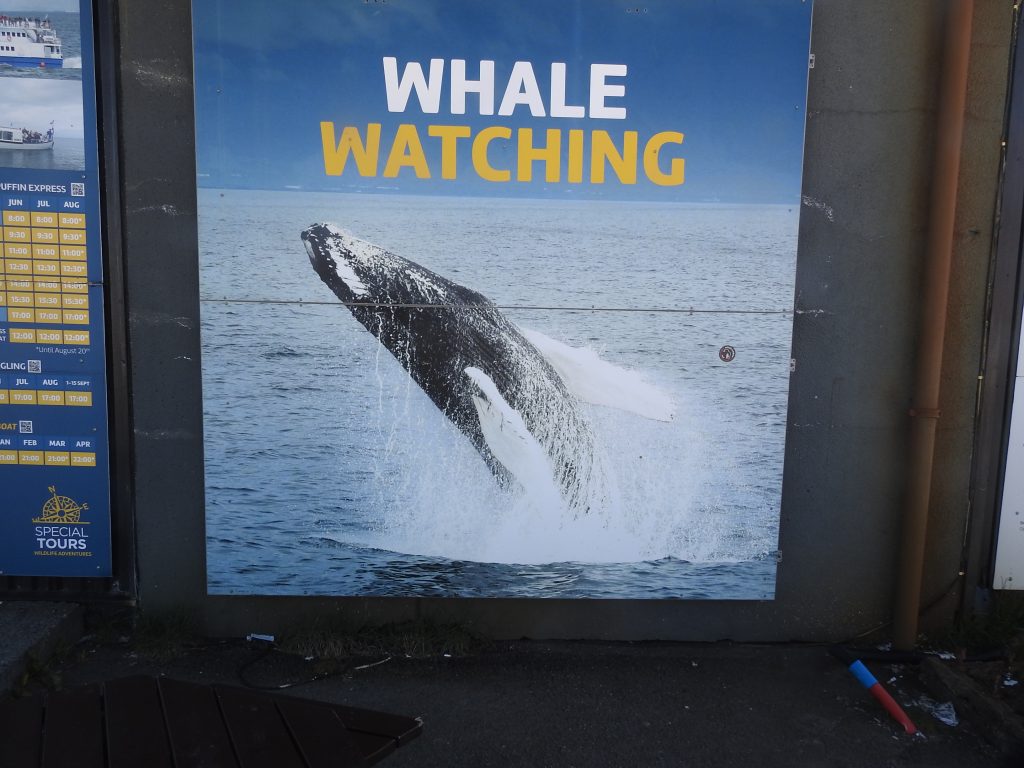
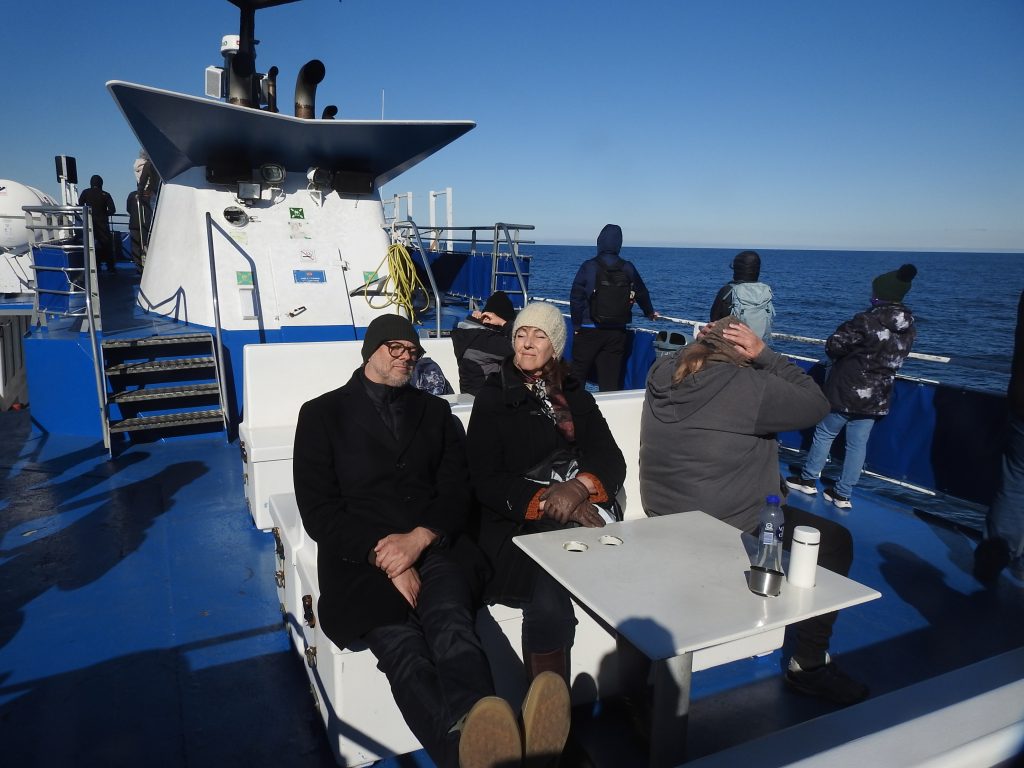

Today (5-20-2026) we started out with a trip on a boat to go see the whales! Then a small boat to see the puffins. Then off to Volcano Express and finally the National Museum of Iceland.
Birds watching for whales.
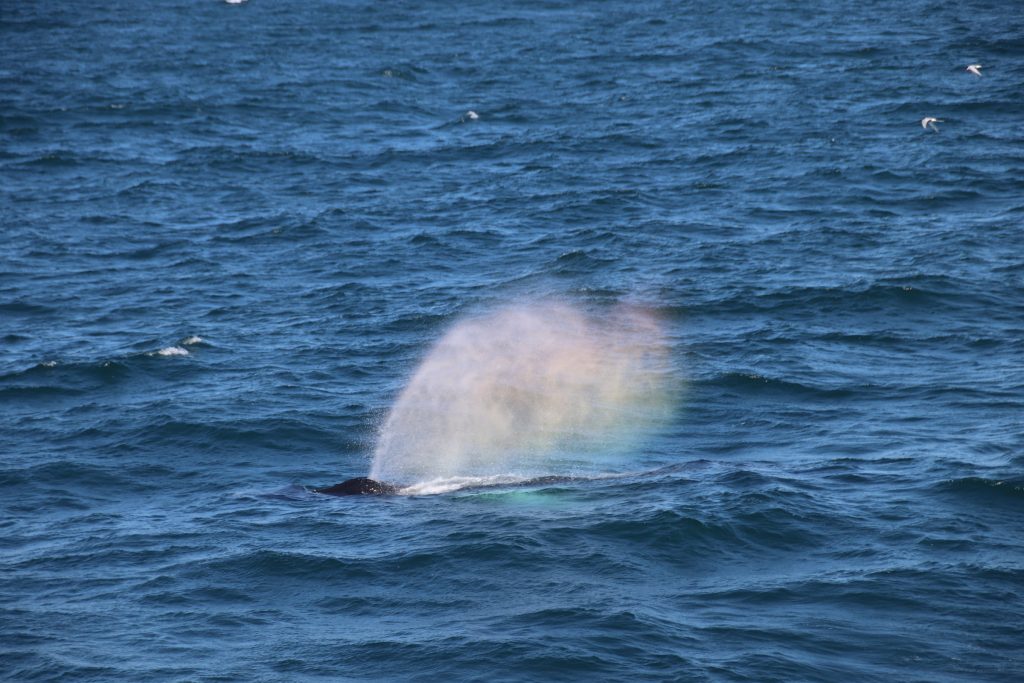
This is a humpback whale (Megaptera novaeangliae) mid-dive. You can tell by:
- The distinctive rounded dorsal fin with a small hump — classic humpback profile
- The smooth, dark back arching above the surface, the classic “hump” shape the species is named for
- The white water churning around it as it descends
The whale appears to be sounding (diving deep), which is when they’re often most photogenic — the back arches dramatically before the flukes (tail) lift out of the water.
Humpbacks are known for their acrobatics, complex songs, and impressive migrations — some travel up to 16,000 miles round trip between feeding and breeding grounds.
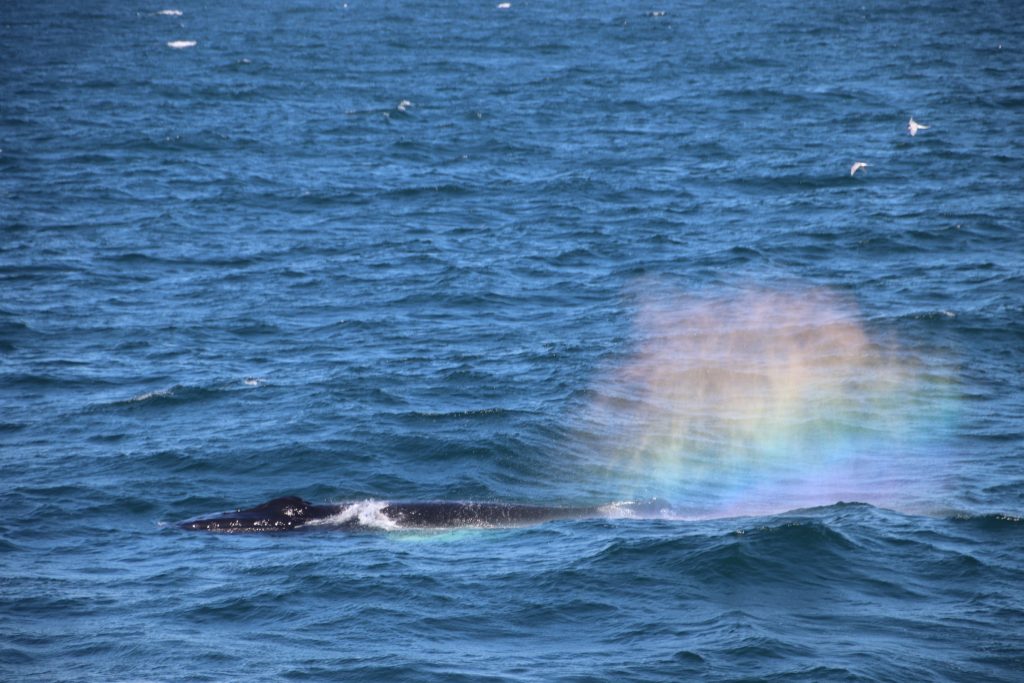
You’ve captured a rainbow blow — sunlight refracting through the whale’s spout at just the right angle to create a prismatic arc. These are genuinely rare to photograph!
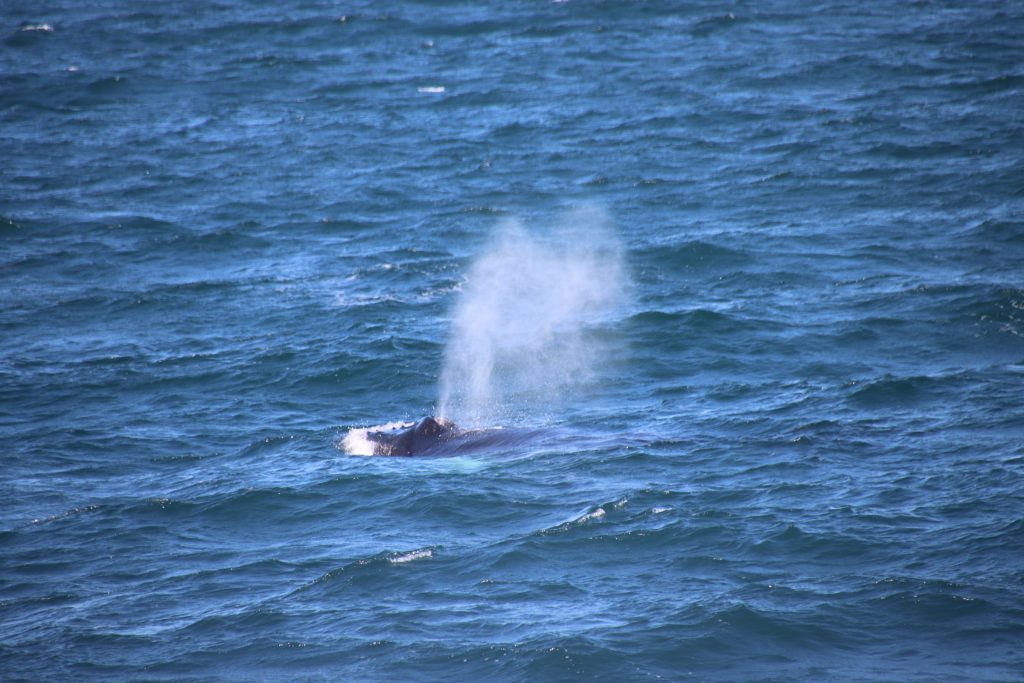
This is almost certainly the same humpback whale, showing:
- The blow (spout) — humpbacks produce a distinctive bushy, column-shaped blow up to 10 feet tall, which matches what’s visible here
- The dark back low in the water, same profile as your first shot
- The rainbow effect caused by tiny water droplets in the mist acting like a prism
Fun facts about whale blows:
- The spray is mostly water vapor and mucus from the lungs, not seawater
- Each species has a recognizable blow shape — humpbacks are broad and bushy, blue whales shoot a tall narrow column (~30 ft!), sperm whales blow at a forward angle
- Scientists can actually collect blow samples by drone to analyze whale health and DNA
The fact that you got both a clean dive shot and a rainbow blow suggests you had a fantastic extended surface encounter. These are keepers!
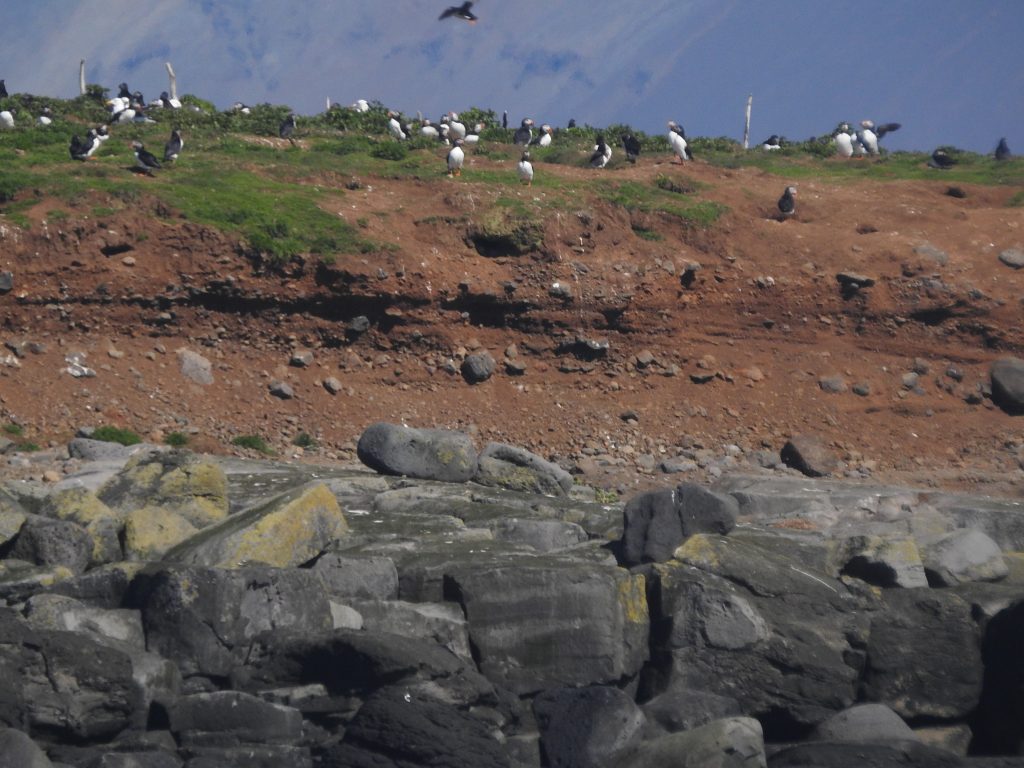
After returning from the whale watching we went on a smaller boat to check out the PUFFINS!
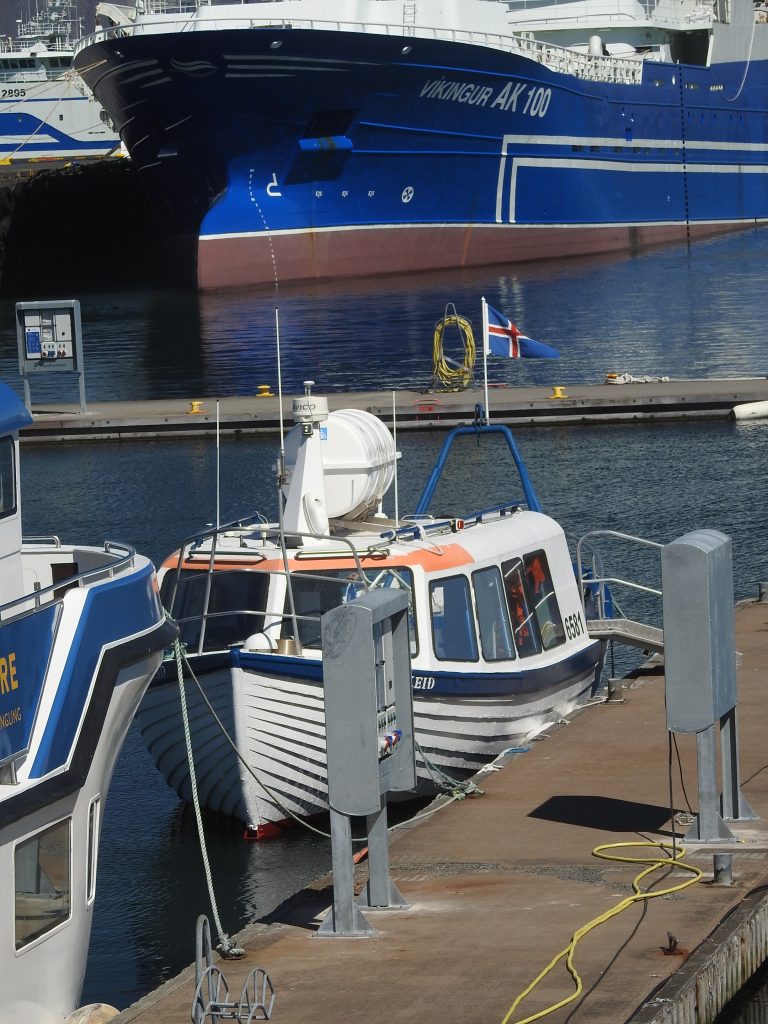
What a charming little vessel! This looks like a small passenger ferry or tour boat, likely the one you took out for that puffin watching trip!
What stands out:
- White hull with orange and blue accent stripes — classic workboat/ferry livery, often used for visibility at sea
- Enclosed wheelhouse/cabin with wraparound windows — practical for colder, windier coastal waters
- Life raft canister mounted on top (the white cylinder) — required safety equipment for passenger vessels
- Registration number visible on the bow (“E…” something)
- Moored at a dock with cleats and lines — looks like a well-maintained harbor berth
The setting:
The dock style, muted light, and boat design feel very Northern European or British — possibly Scotland, Iceland, Norway, or Ireland. The puffin sightings would align well with those waters this time of year!
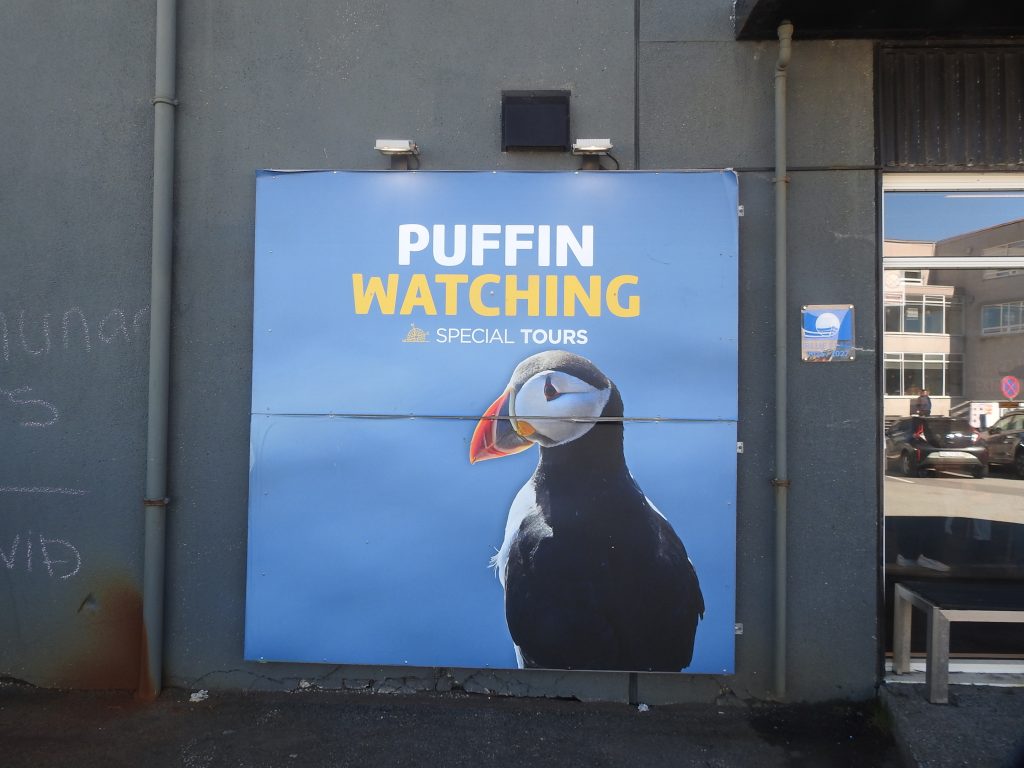
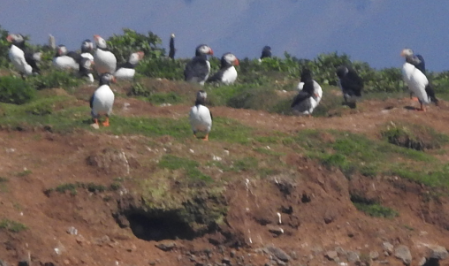
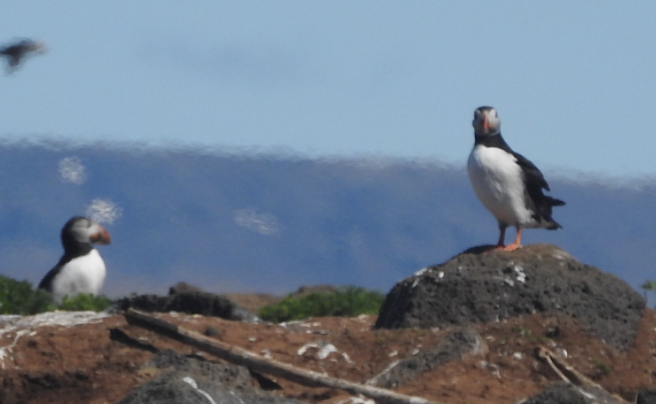
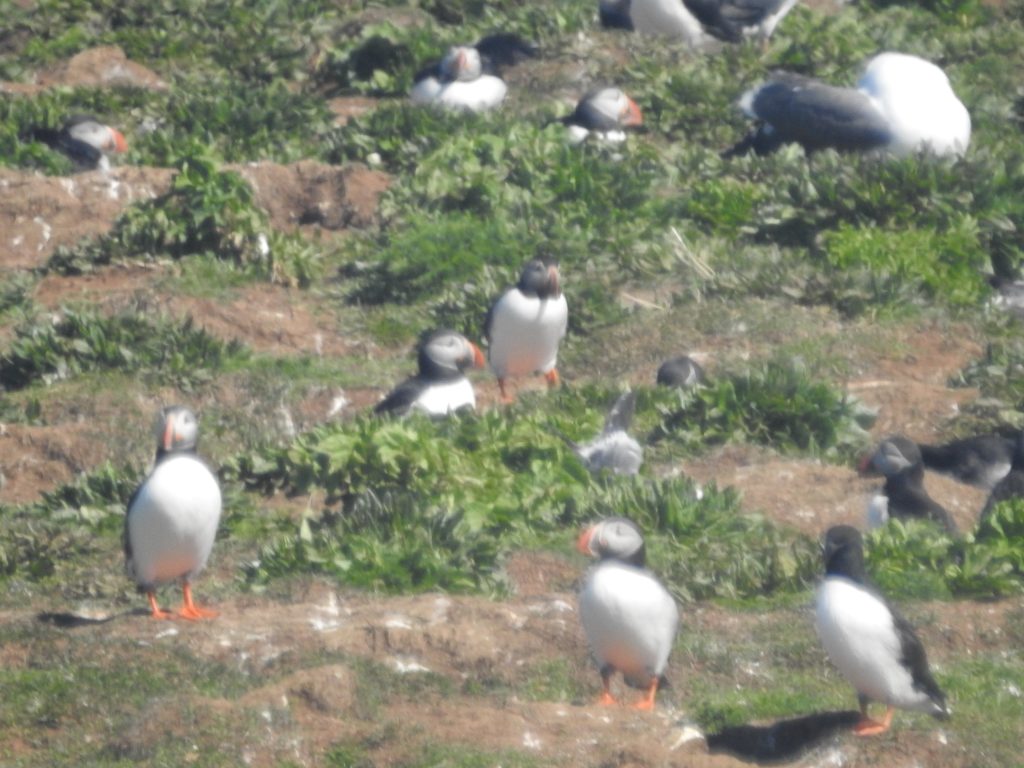
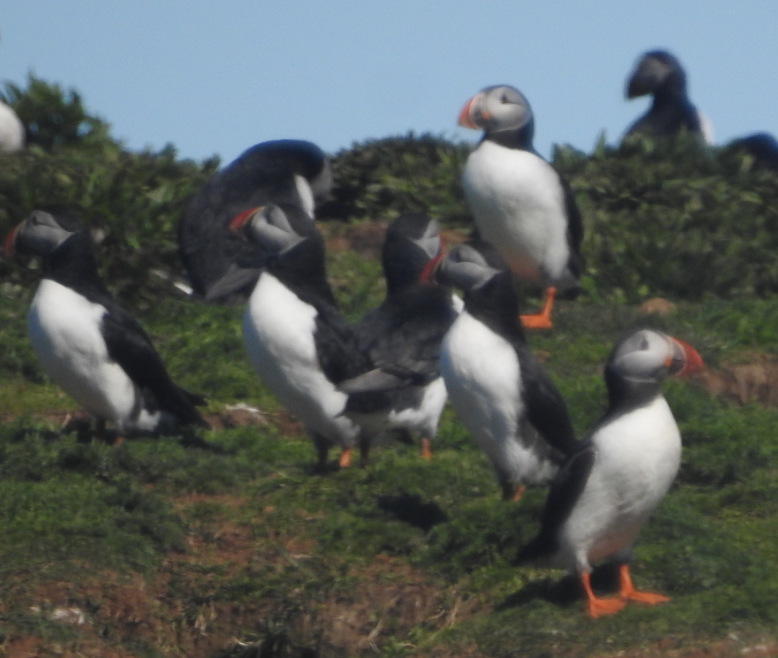
Puffins are generally 10 to 13 inches (25 to 33 cm) long and weigh between 11 to 19 ounces (many less than a pound!).
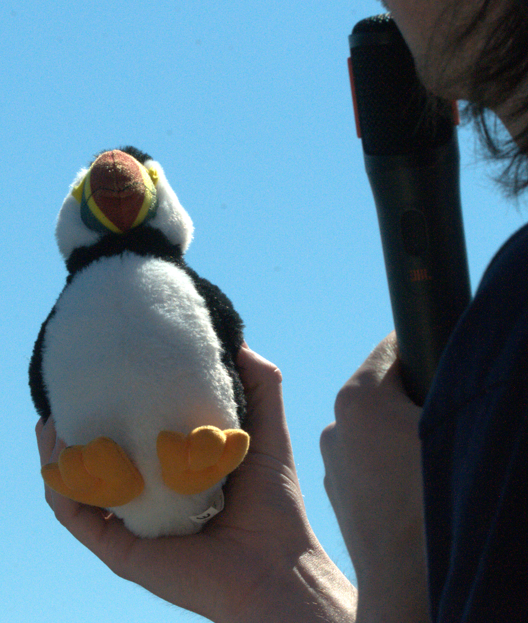
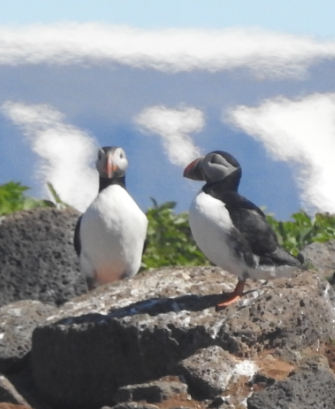
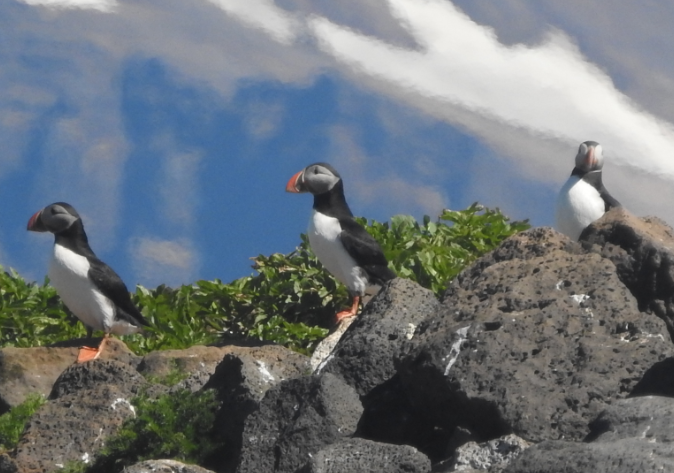
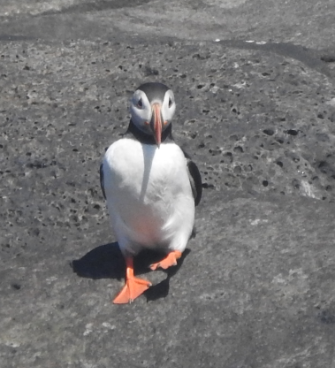
Atlantic Puffin (Fratercula arctica) — and a great close-up! You can clearly see:
- The iconic large, colorful bill — orange, blue-grey, and yellow — which is only this bright during breeding season
- Black and white plumage
- Those bright orange feet
- The distinctive white face with that almost comical expression
They’re one of the most beloved seabirds, often called “sea parrots” because of that bill. They’re surprisingly small in person — about the size of a football/pigeon.
Given the volcanic-looking dark rock in the background, this looks like it could be Iceland — one of the best places in the world to see puffins up close. They’re remarkably unbothered by people there, which would explain how you got so close!
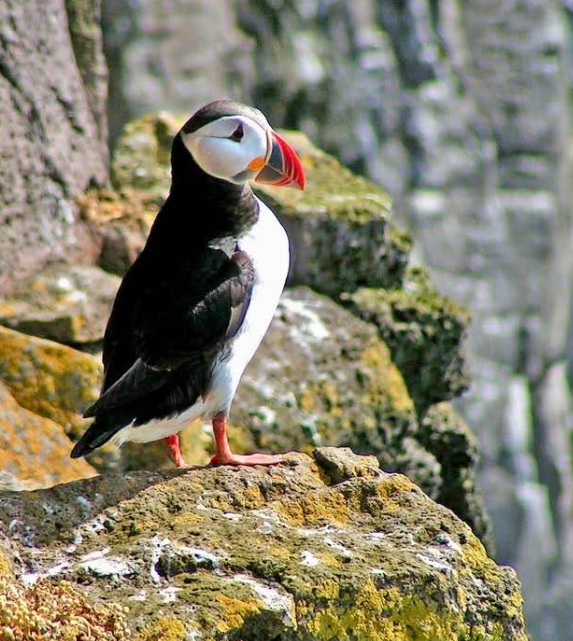
A professional photo:
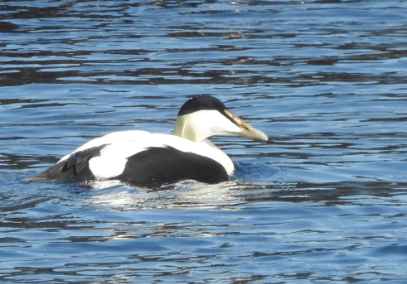
Common Eider (Somateria mollissima) — a male in breeding plumage. The telltale signs are:
- Black and white body with that distinctive pattern
- Pale yellowish-green on the neck/nape
- The characteristic sloping, wedge-shaped bill that runs up into the forehead in a straight line — very distinctive for eiders
- Black cap on the head
Eiders are large sea ducks, and the males are quite striking. They’re common along northern coastlines and are famous for their incredibly soft down feathers, historically harvested for insulation.
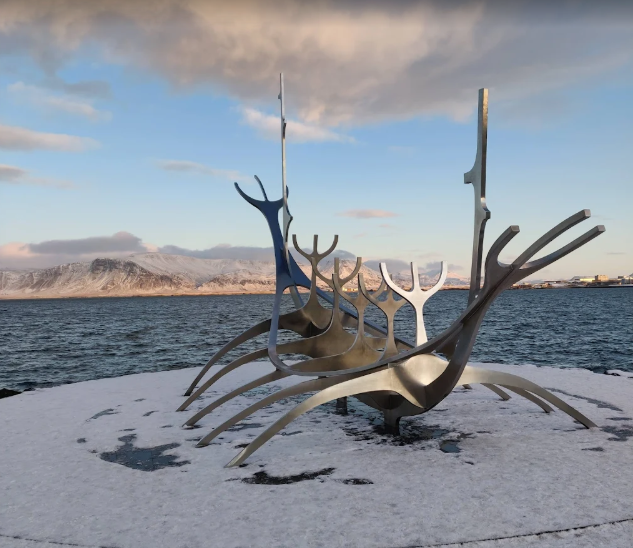
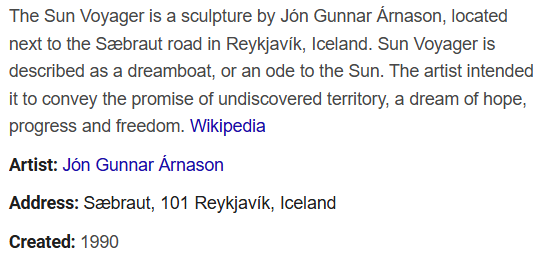
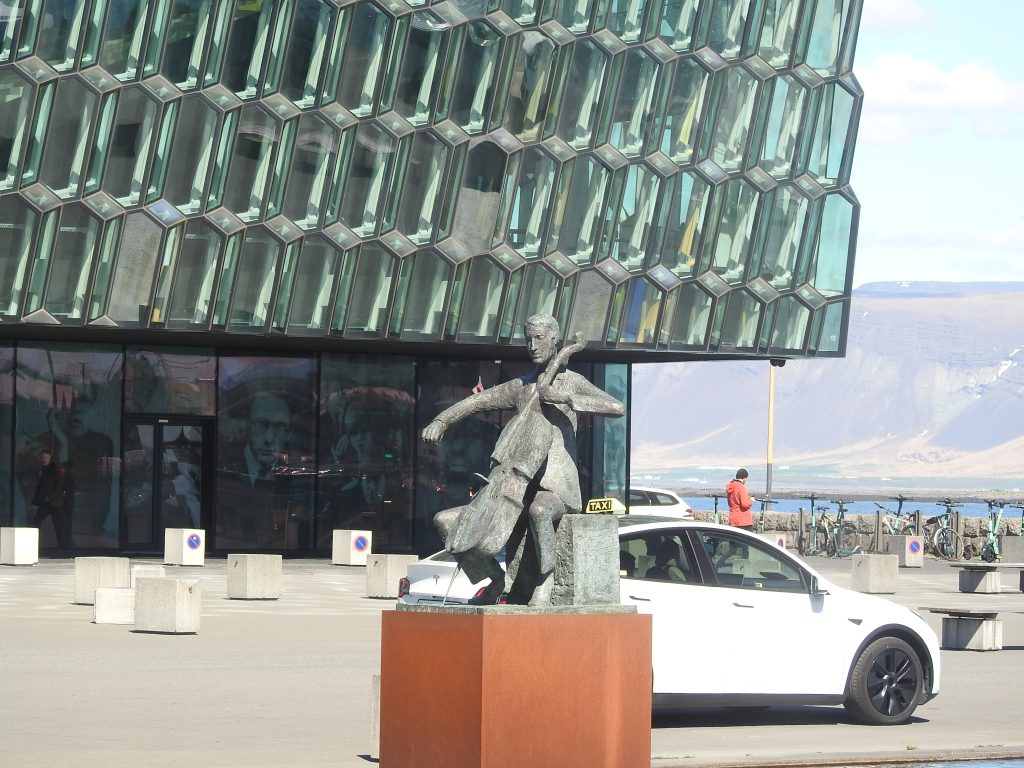
Off to the right is this sculpture:
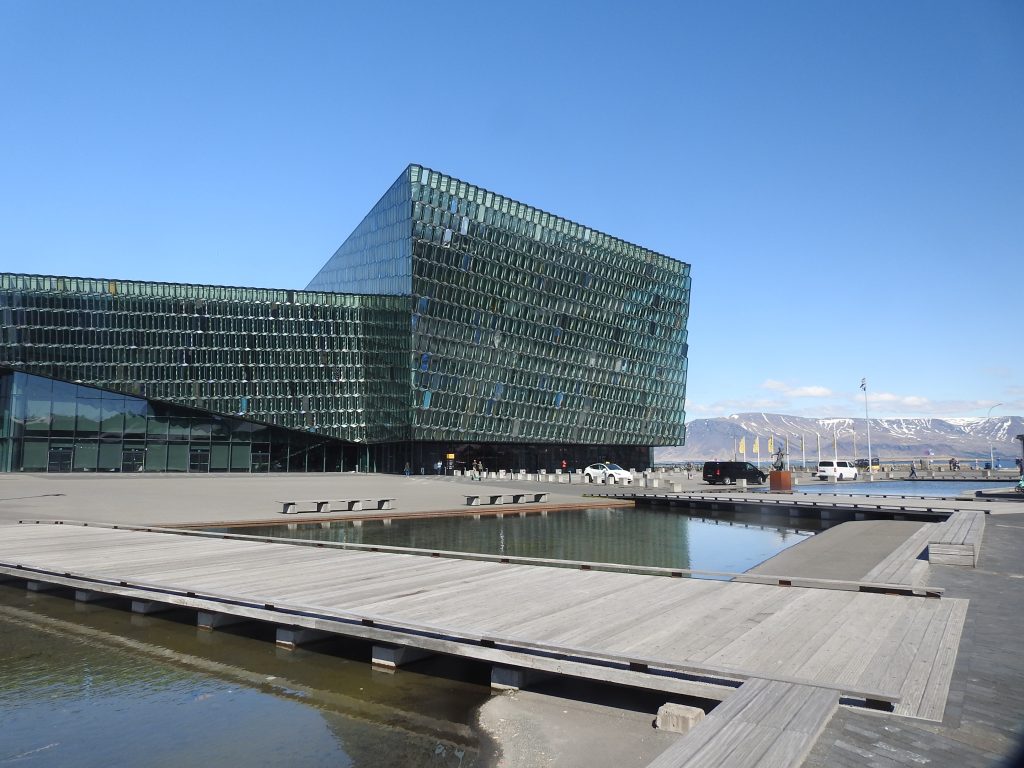
Concert hall:
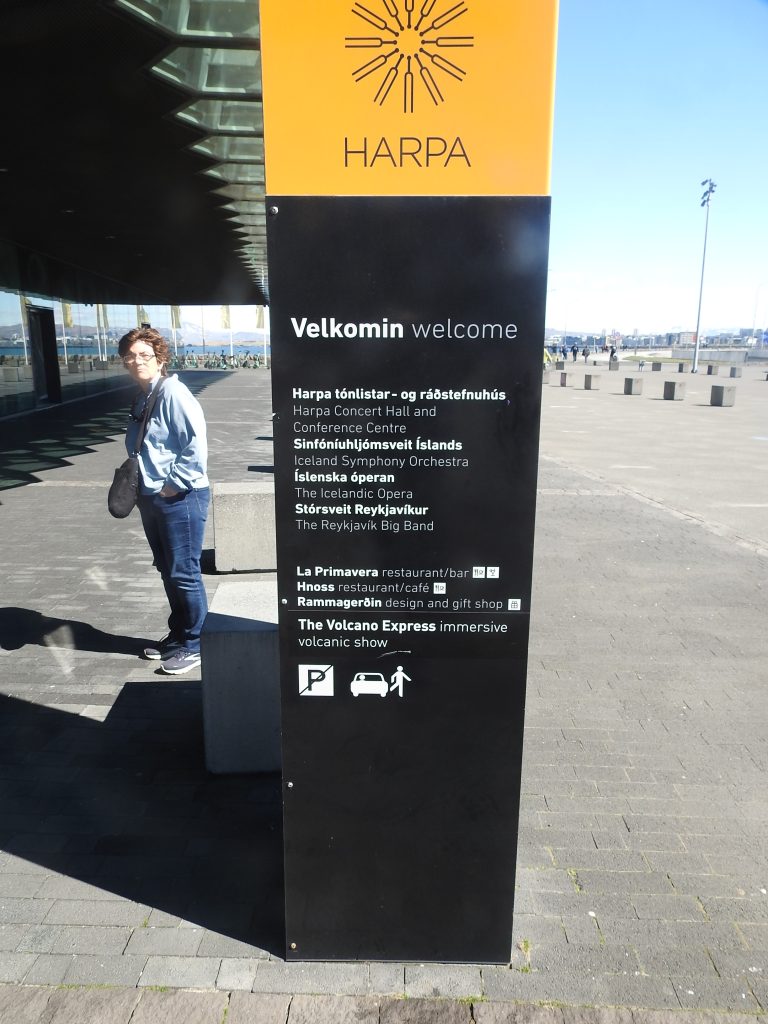
After our boat rides we went to the Harpa Concert Hall in Reykjavík — one of the most iconic buildings in Iceland. It’s unmistakable with its stunning geometric glass facade designed to reflect and play with light, resembling basalt columns (a very Icelandic touch!).
A few things that make Harpa special:
- The facade was designed by artist Olafur Eliasson in collaboration with the architectural firm Henning Larsen
- It opened in 2011 and won the EU Prize for Contemporary Architecture
- It sits right on the Reykjavík harbor, which you can see with the snow-capped mountains across the fjord in the background
- It houses the Iceland Symphony Orchestra and the Icelandic Opera
What a beautiful day you had for it — that blue sky and the snowy mountains in the background make for a stunning backdrop.
Two floors down is the Volcano Express!
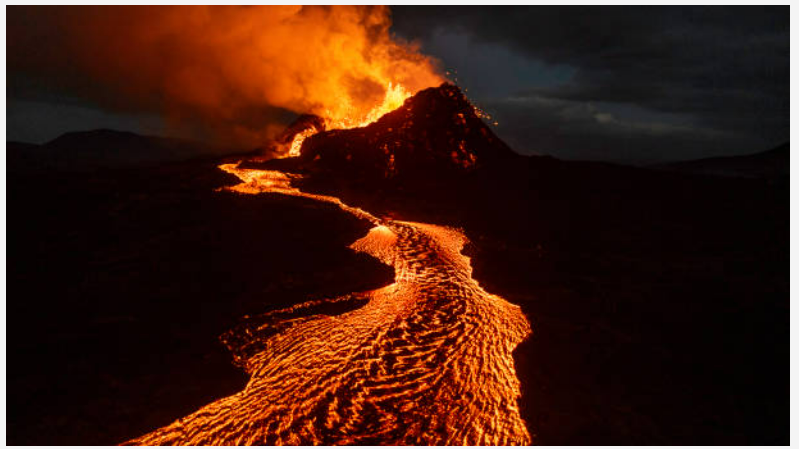
This shows an active volcanic eruption in Iceland, given the characteristic flat lava fields and the style of eruption.
Here’s what’s happening in the photo:
- The eruption vent at the center-top is fountaining molten lava high into the air, creating a glowing orange and yellow plume against the dark night sky
- A lava river flows directly toward the camera in a mesmerizing, winding channel — the textured, rope-like surface is classic pāhoehoe lava, which forms a wrinkled skin as the outer layer cools while molten rock continues flowing beneath
- The dark landscape surrounding it has already been covered by cooled, solidified lava from earlier flows
- The smoke and ash cloud billowing above adds to the apocalyptic atmosphere
The lava river creates a natural leading line from foreground to the eruption source, giving a powerful sense of scale and depth. This is from the Reykjanes Peninsula eruptions that Iceland has experienced in recent years (2021–2024), which produced some of the most photogenic lava flows in recent memory.
The temperature of flowing lava like this is typically between 700–1,200°C (1,300–2,200°F).
A show no one should miss!! AWESOME!!!! It cost $24 per person but it is worth it!
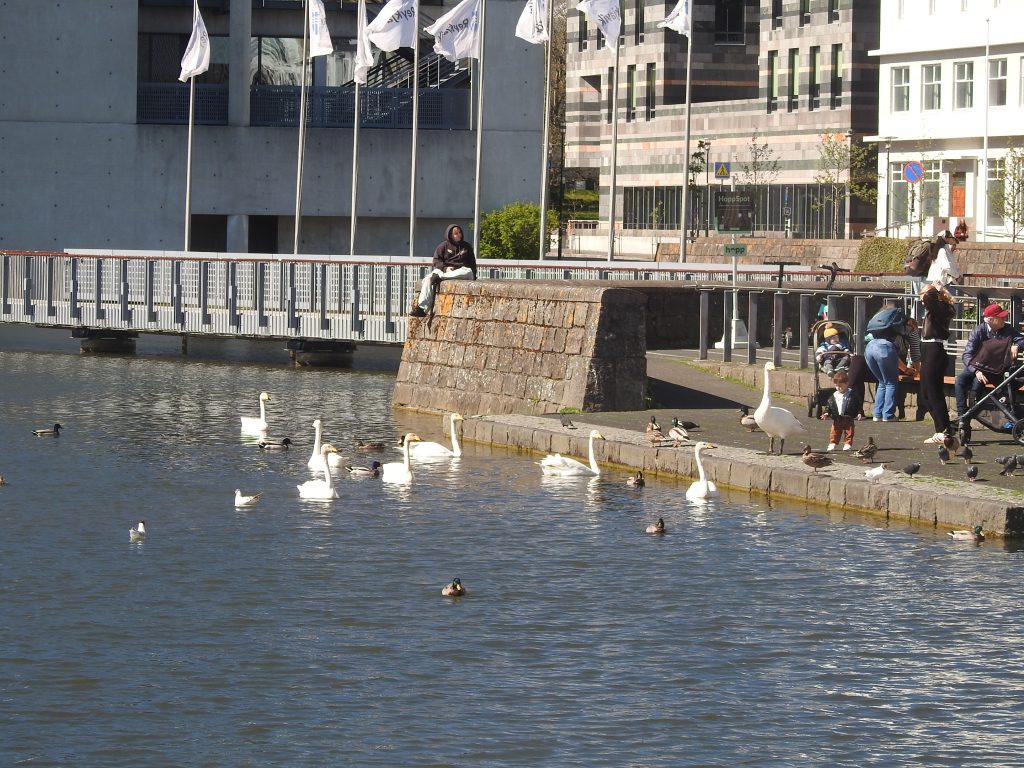
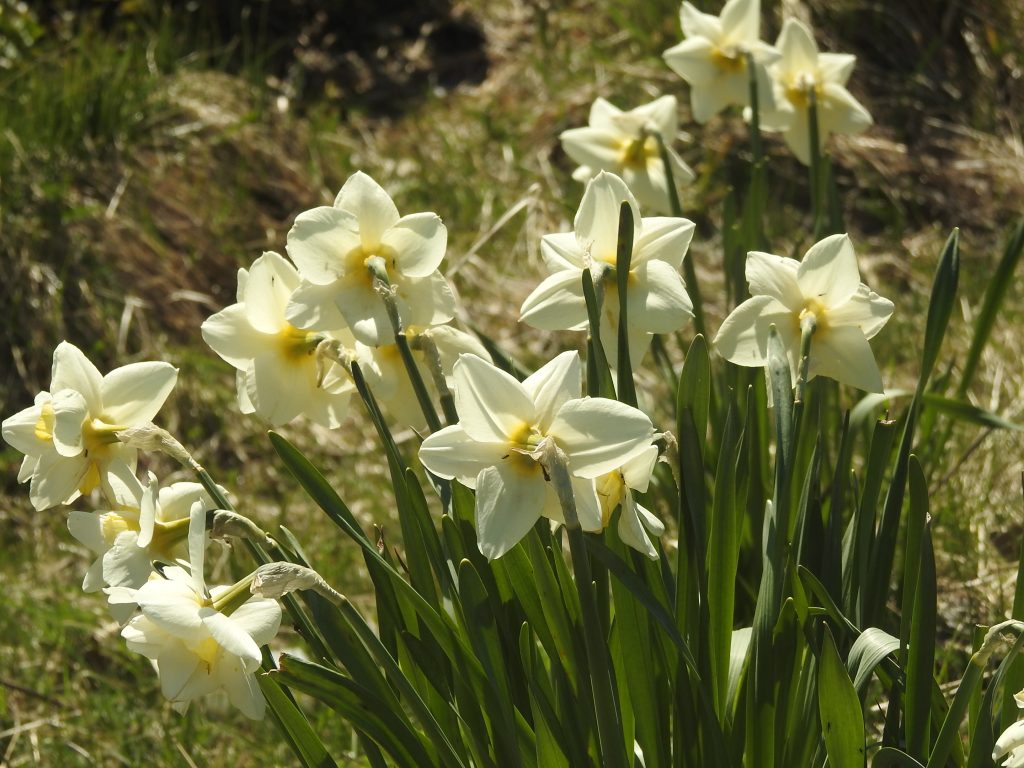
We wlked from there to H&M shopping center to get me some underwear as I had lost mine on our trip. Then on to the museum – passing flowers and the City Hall on the way.
While walking we found a small store downtown where I found a knit cap to replace the hat that I had lost. In most places a hat cost #75 to $100, but I found one there for $15!
Lamb burger for dinner.
I ate half and had the other half for breakfast the next morning! Two burgers, one beer, $80.91.