5- 21-2026 We took the South Coast Tour – Wide falls, cave, glacier, and narrow falls with grotto.
Iceland’s South Coast is a breathtaking region, the second most visited area. It is packed with incredible landmarks and scenic wonders that will captivate you. This diverse landscape has been the backdrop for many legendary sagas and holds a deep history, from the early settlement period to modern times.
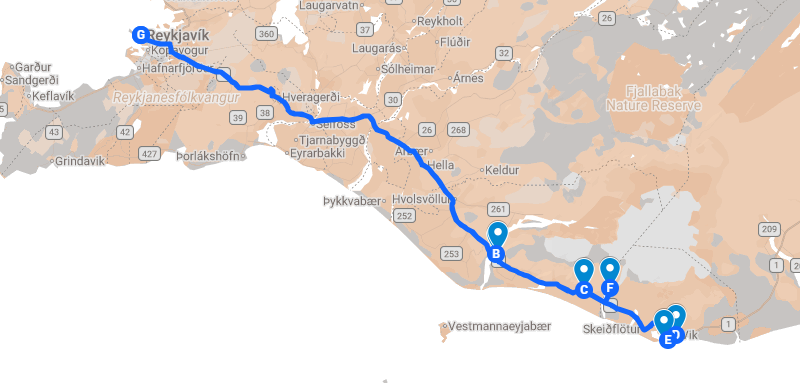
The Viking Trail leads us out of Reykjavik towards the prominent agricultural towns of Selfoss and Hvollsvöllur. As we venture further south, the characteristic lowland vistas give way to more mountainous landscapes and soon the ice caps come into view. Glaciers, farmlands and volcanoes await the camera lens on the one side – whilst out to sea, the Westman Islands shimmer seductively on the horizon.
We were off on another bus tour.
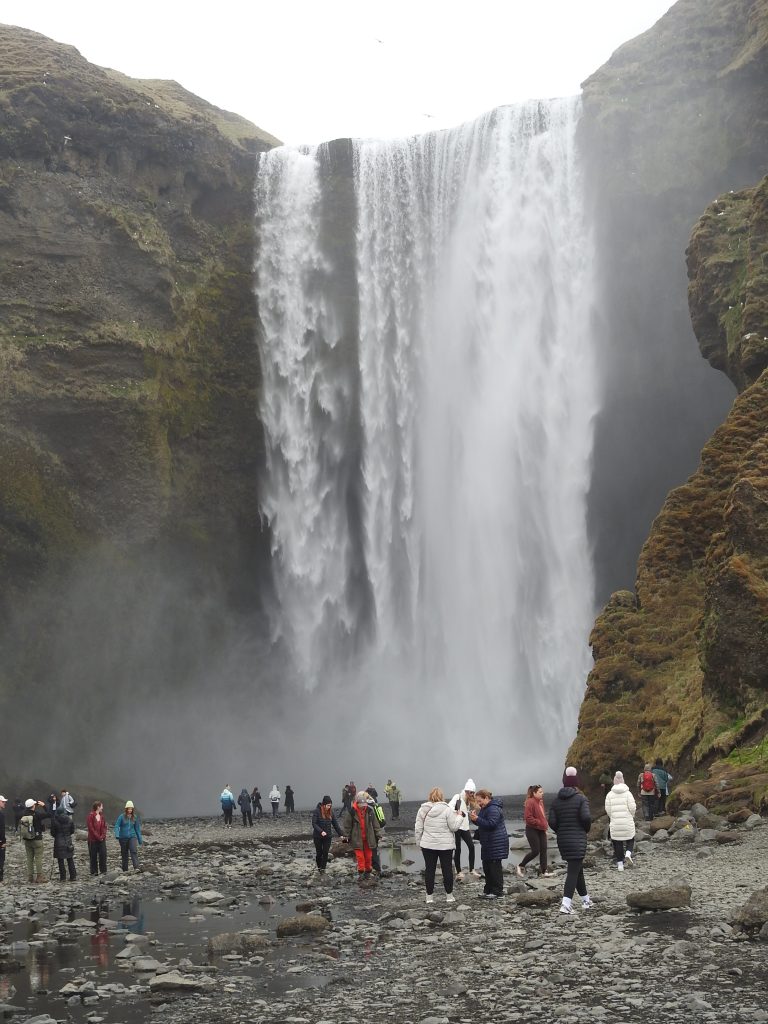
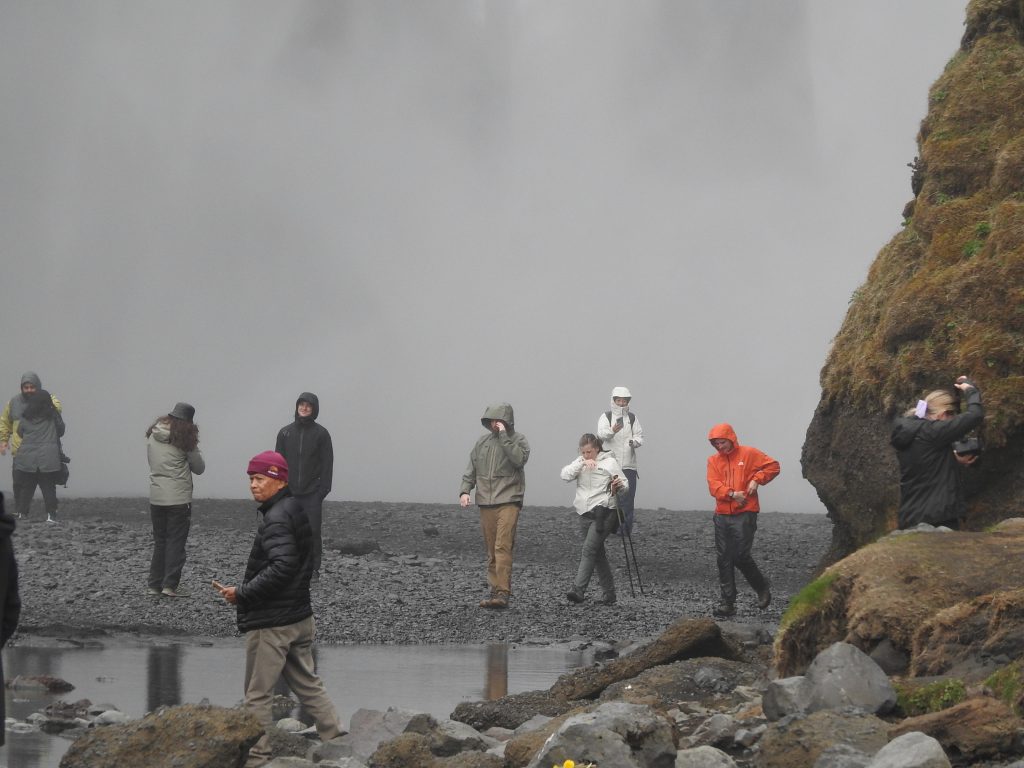
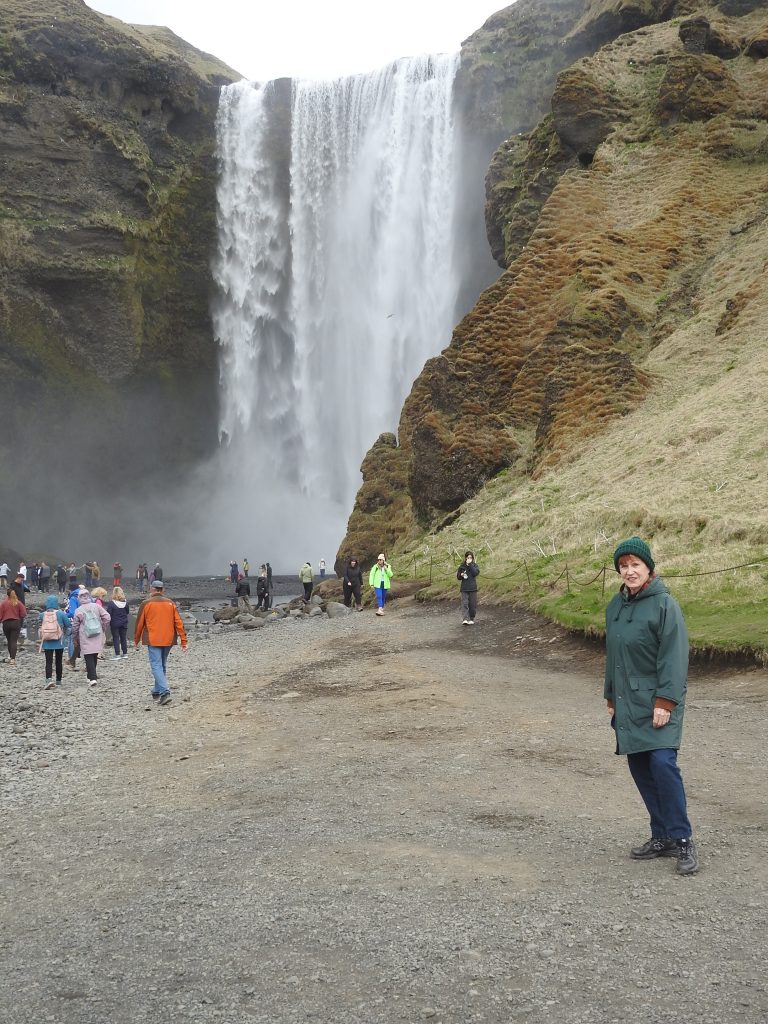
Skógafoss — one of Iceland’s most spectacular and famous waterfalls! It’s instantly recognizable from its:
- Perfectly straight, wide curtain of water dropping about 60 meters (200 feet)
- The way it falls off a sheer cliff edge in a single dramatic plunge
- The rocky black basalt base where visitors can walk right up to it
- That characteristic mist cloud that soaks everyone who gets close
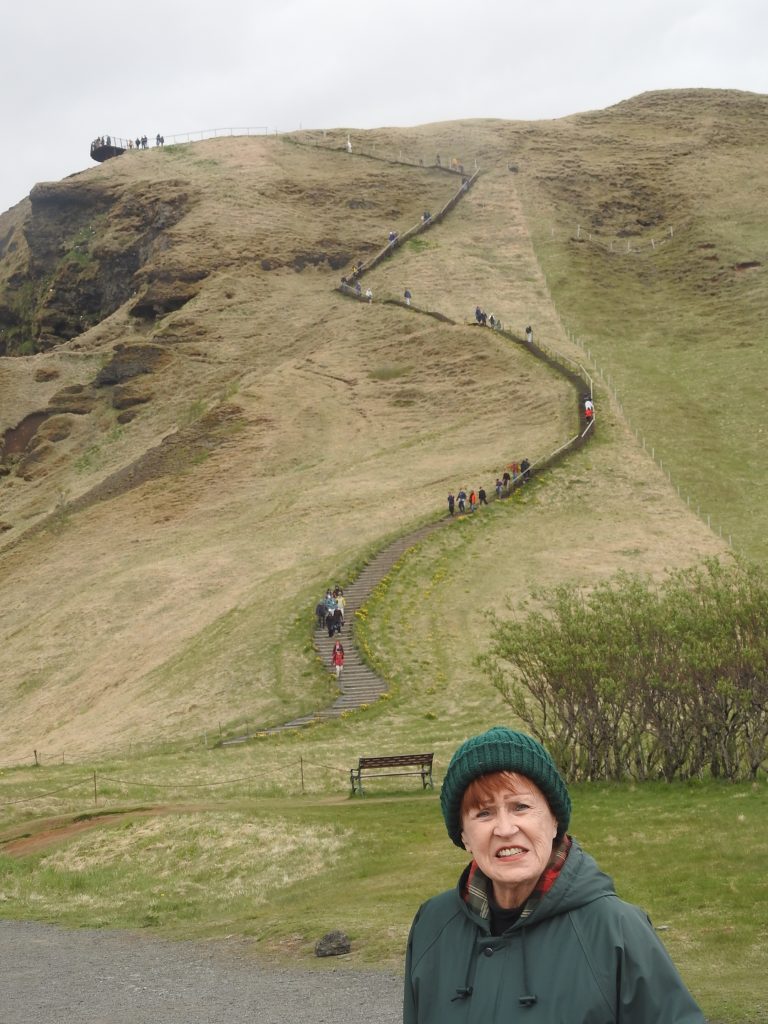
The people in the foreground give great scale — it’s absolutely massive. You can also see the trail on the right side that takes you up to the top and connects to the Fimmvörðuháls trail.
Skógafoss sits on the south coast along the Ring Road, so it sounds like you definitely ventured beyond Reykjavík! It’s one of those waterfalls that photos never quite do justice — the mist and the roar of it are something else in person.
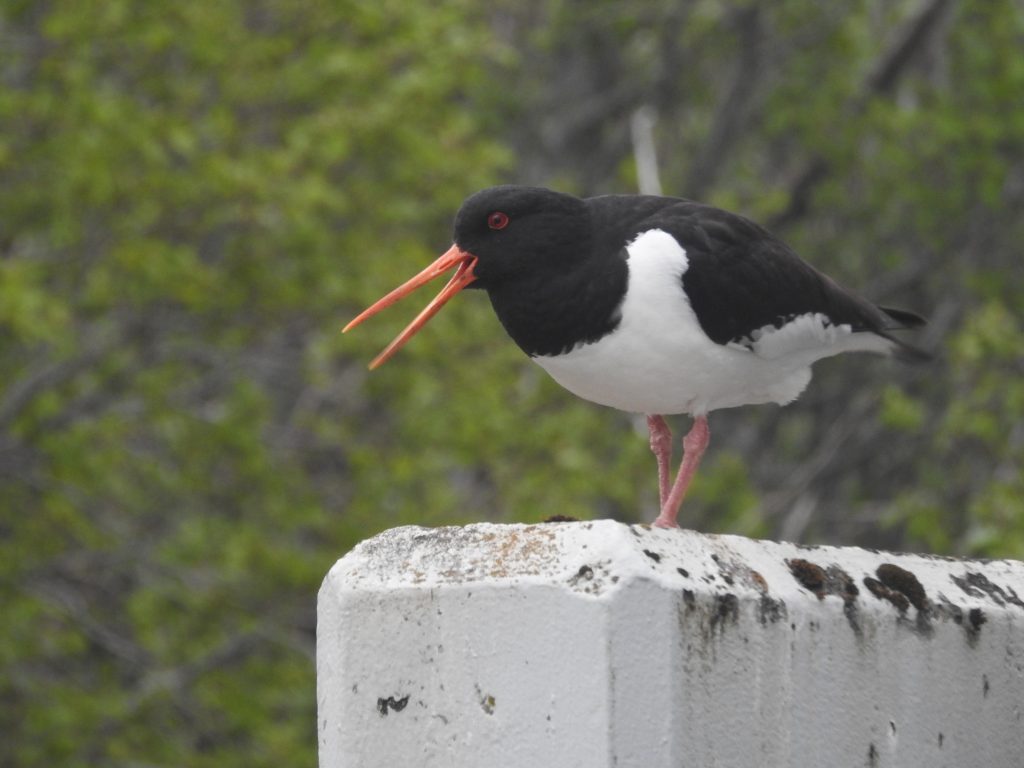
Eurasian Oystercatcher (Haematopus ostralegus) — and it’s clearly having a lot to say! You can see all the classic field marks perfectly:
- That long, vivid orange-red bill, open mid-call
- Striking red eye with an orange eye-ring
- Clean black and white plumage
- Pink legs
Oystercatchers are famously loud and vocal — one of the most distinctive calls in the shorebird world, a piercing kleep kleep kleep that carries a long way. This one looks like it’s in full complaint mode!
They’re extremely common in Iceland and are actually one of the harbingers of spring there — Icelanders get excited when the oystercatchers return. Locally they’re called “tjaldur” and hold a special place in Icelandic culture, almost like an unofficial national bird.
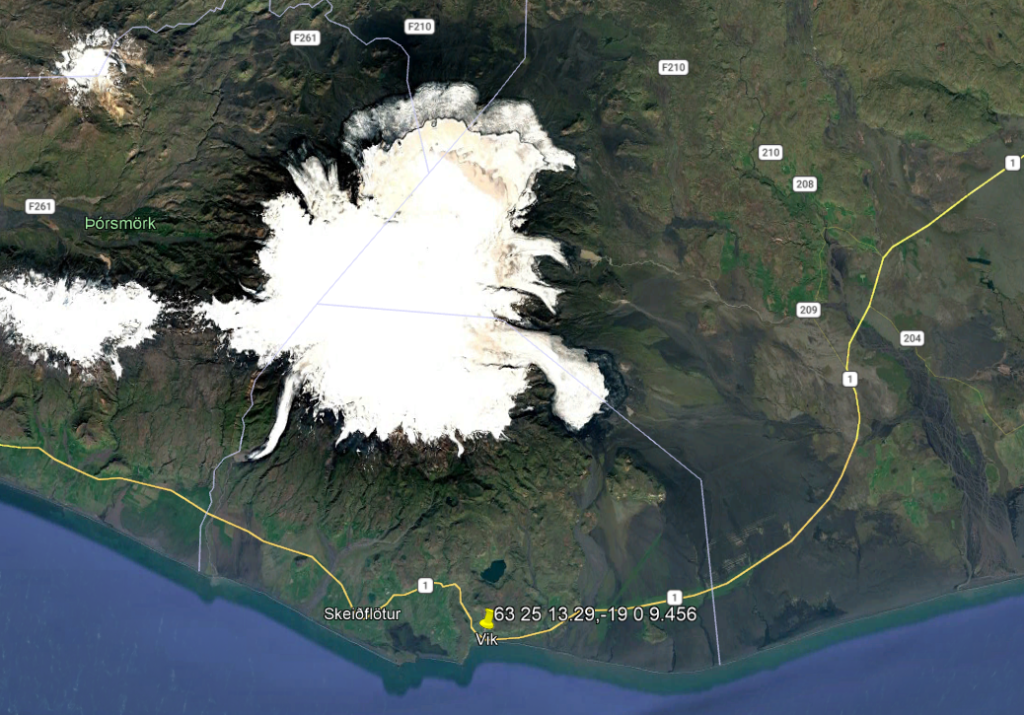
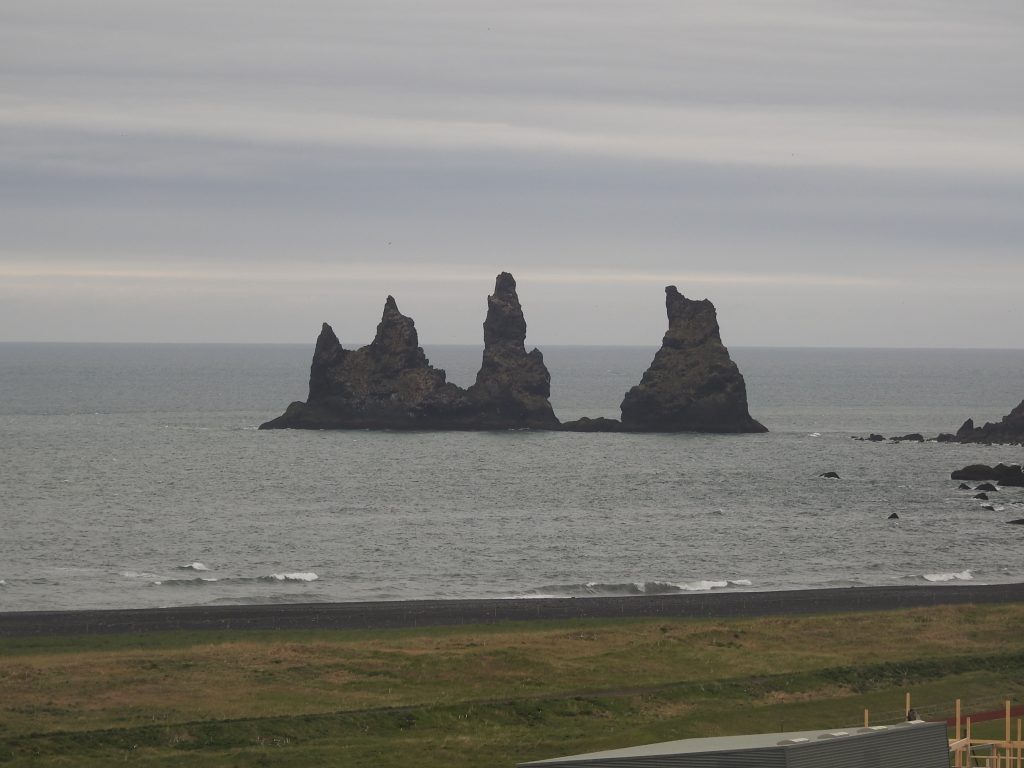
Reynisdrangar sea stacks — one of Iceland’s most iconic coastal landmarks, viewed from Vík í Mýrdal, the southernmost village in Iceland!
According to Icelandic folklore, these dramatic basalt pillars rising from the North Atlantic are actually trolls that were caught out at sea and turned to stone by the sunrise — and looking at their jagged, almost humanoid silhouettes against a moody grey sky, it’s easy to see how that legend took hold!
A few things that make this spot special:
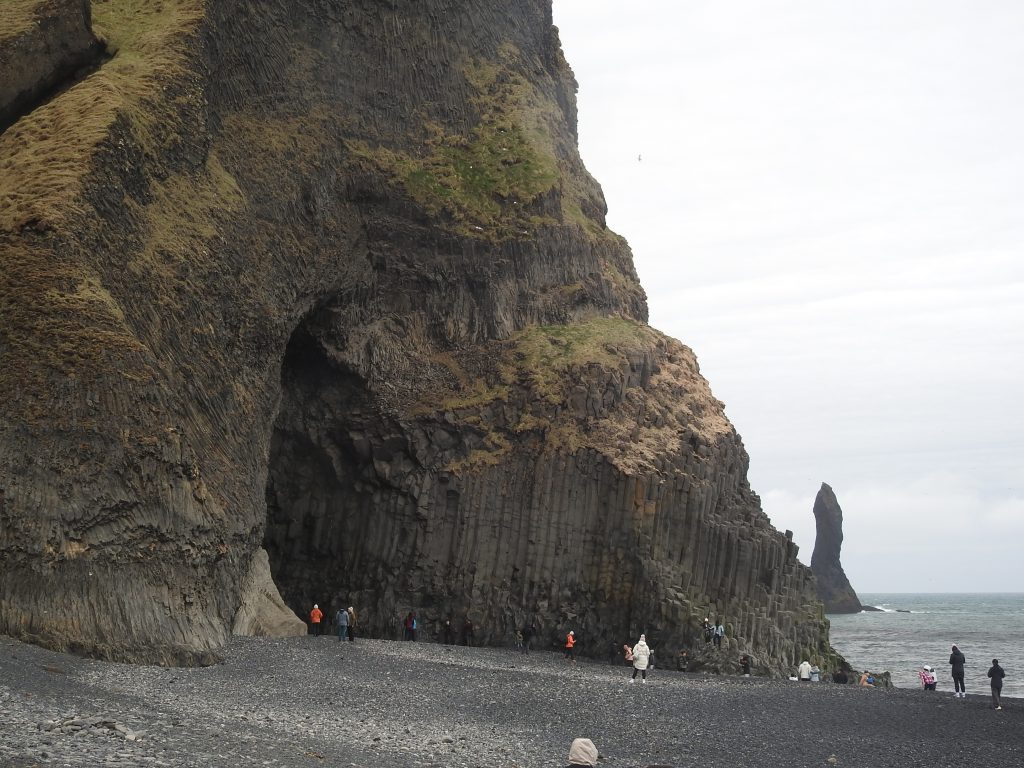
- The black sand beach at Vík (Reynisfjara) is considered one of the most beautiful beaches in the world
- The stacks are home to thousands of nesting seabirds — puffins, guillemots, and fulmars — so you may have seen some of your puffins right here!
- The North Atlantic waves here are notoriously dangerous — sneaker waves have claimed lives, so rangers now keep visitors back from the shoreline
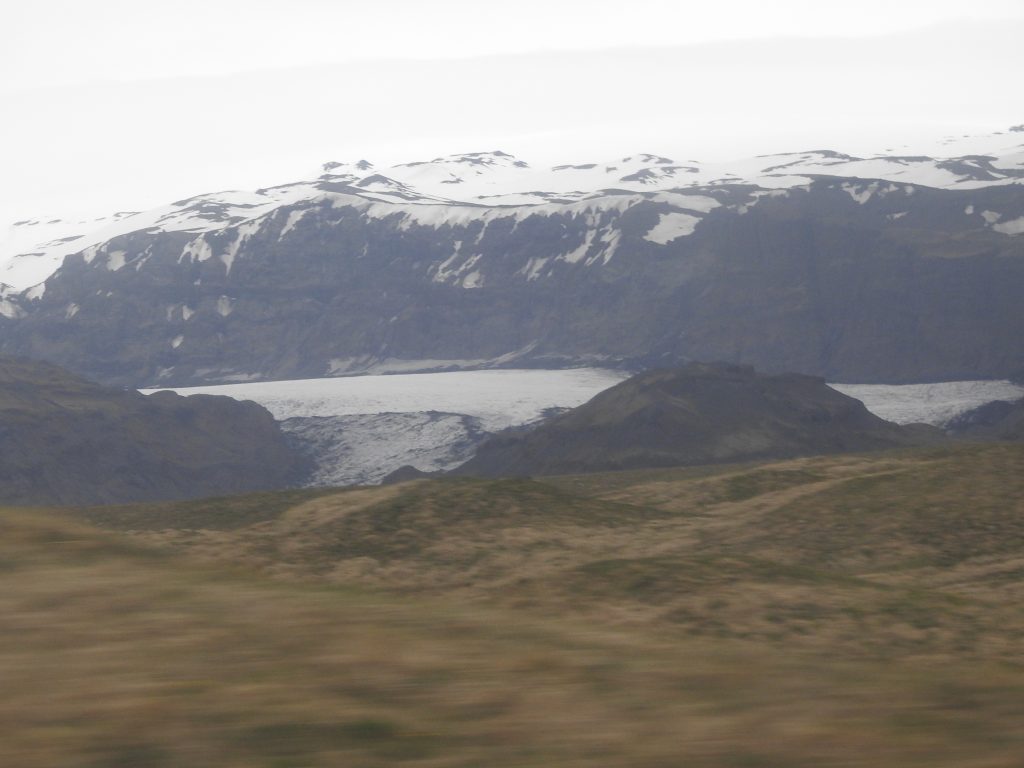
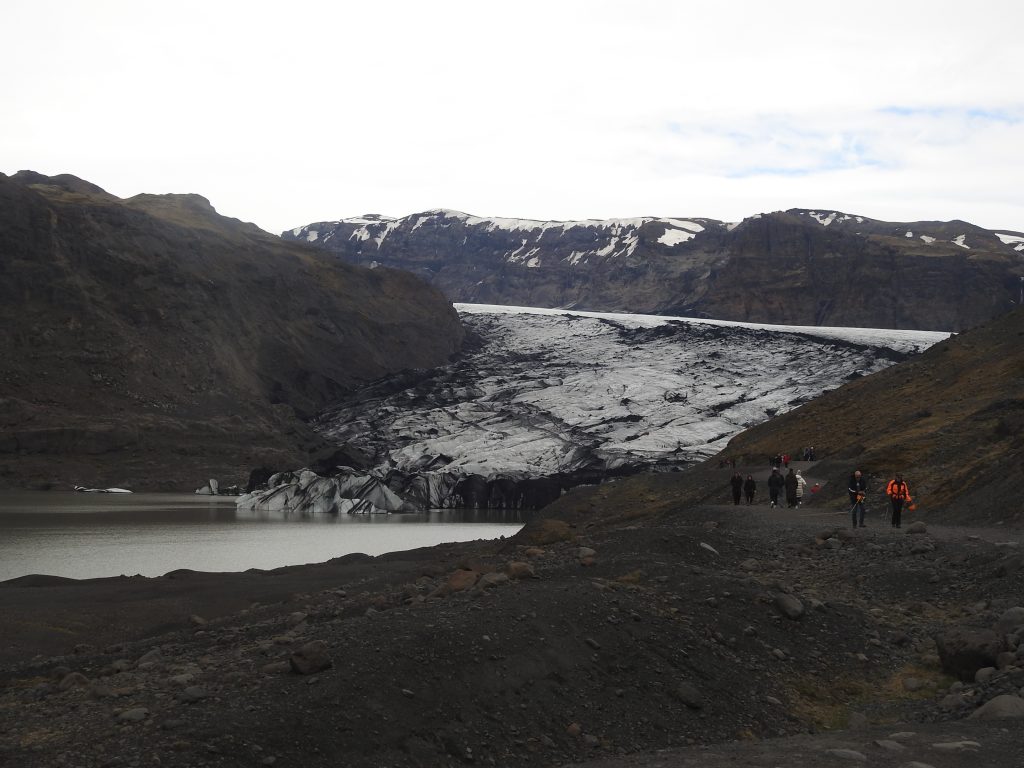
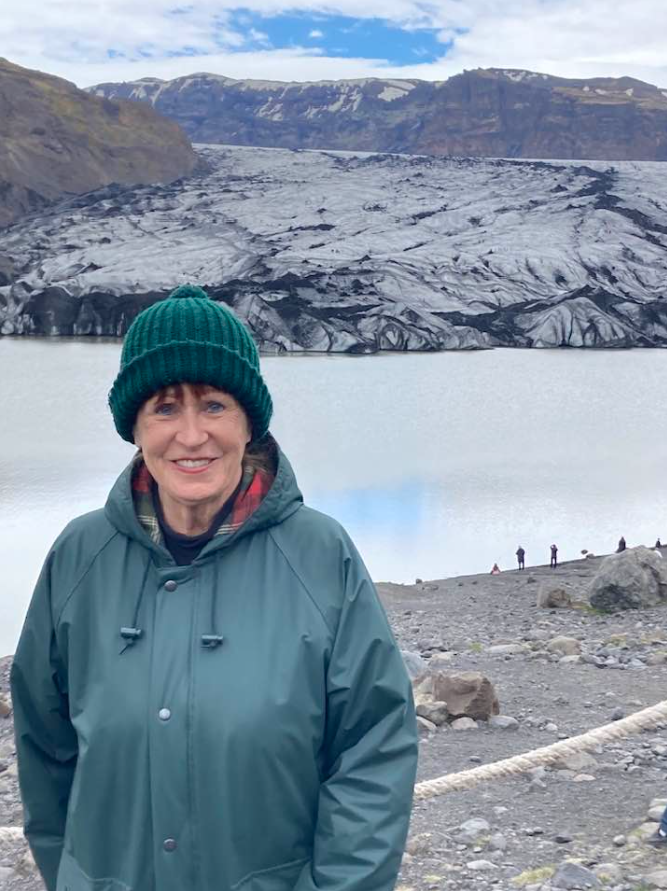
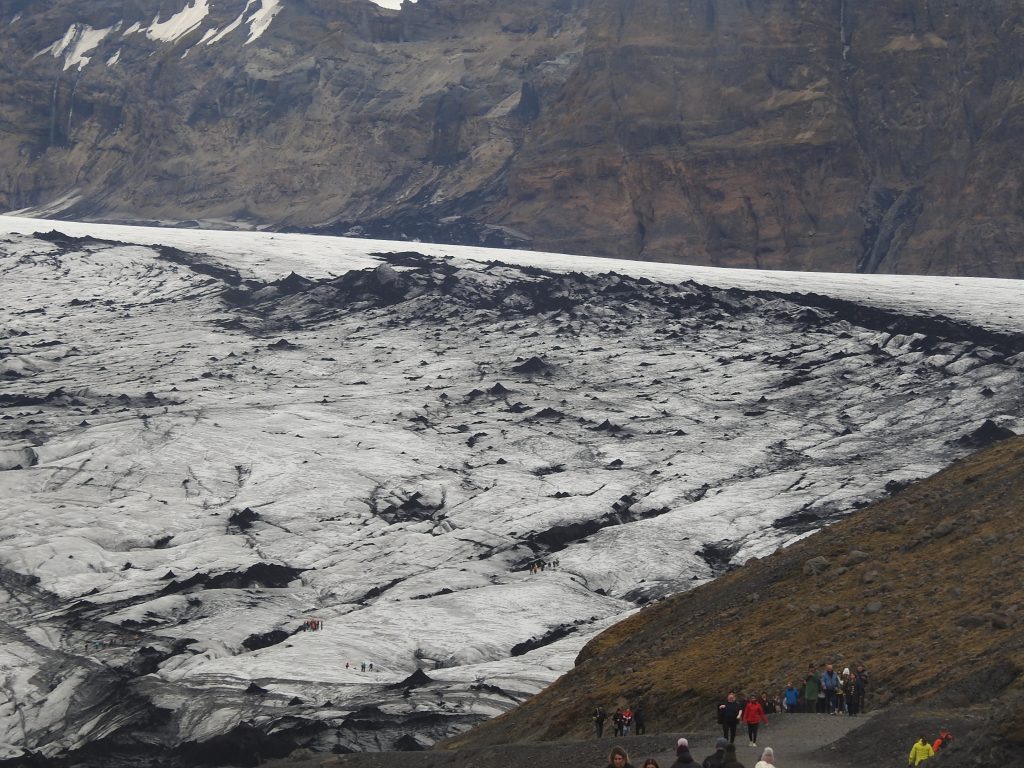
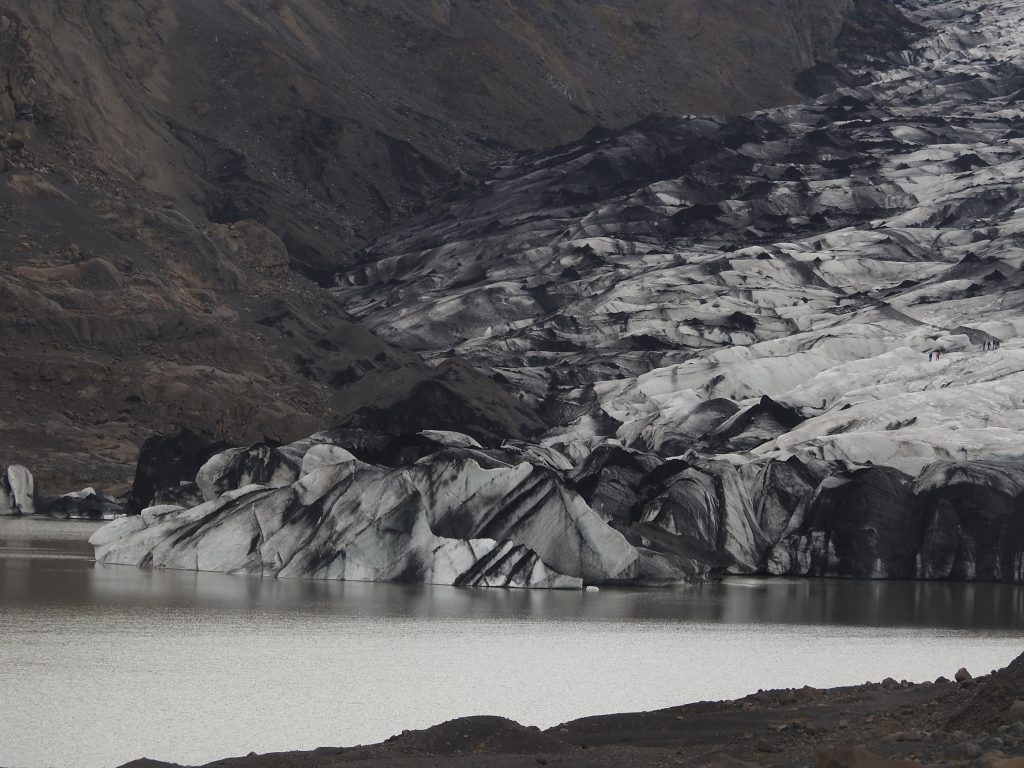
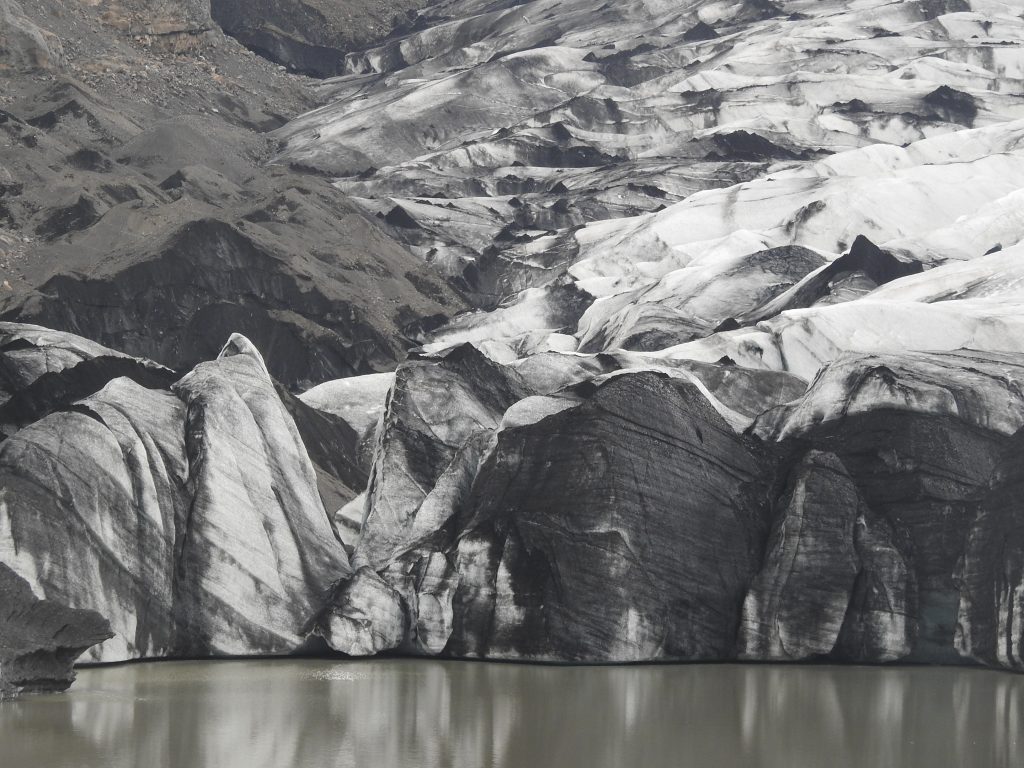
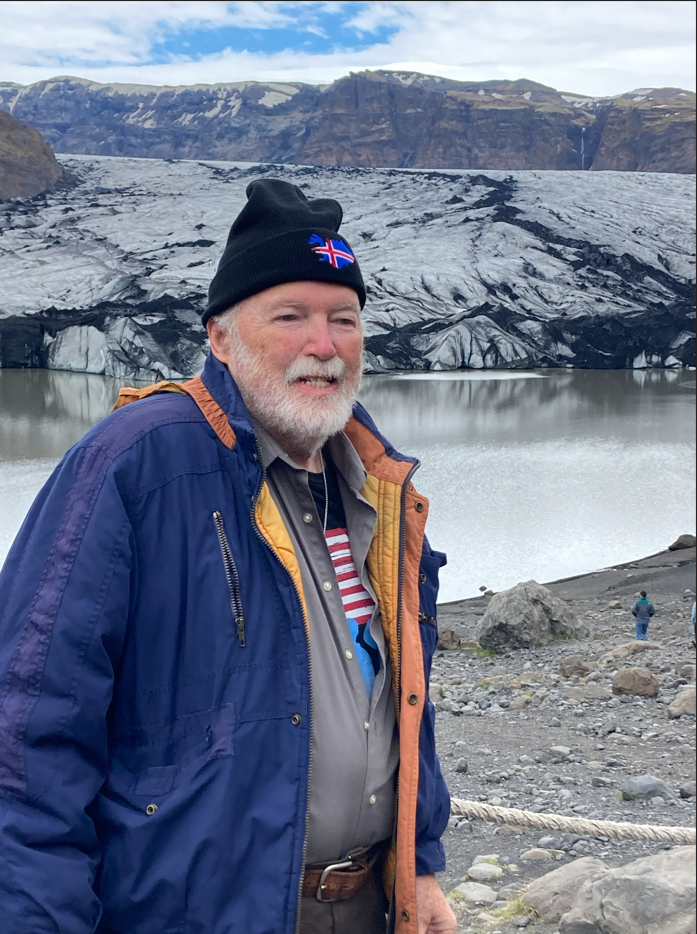
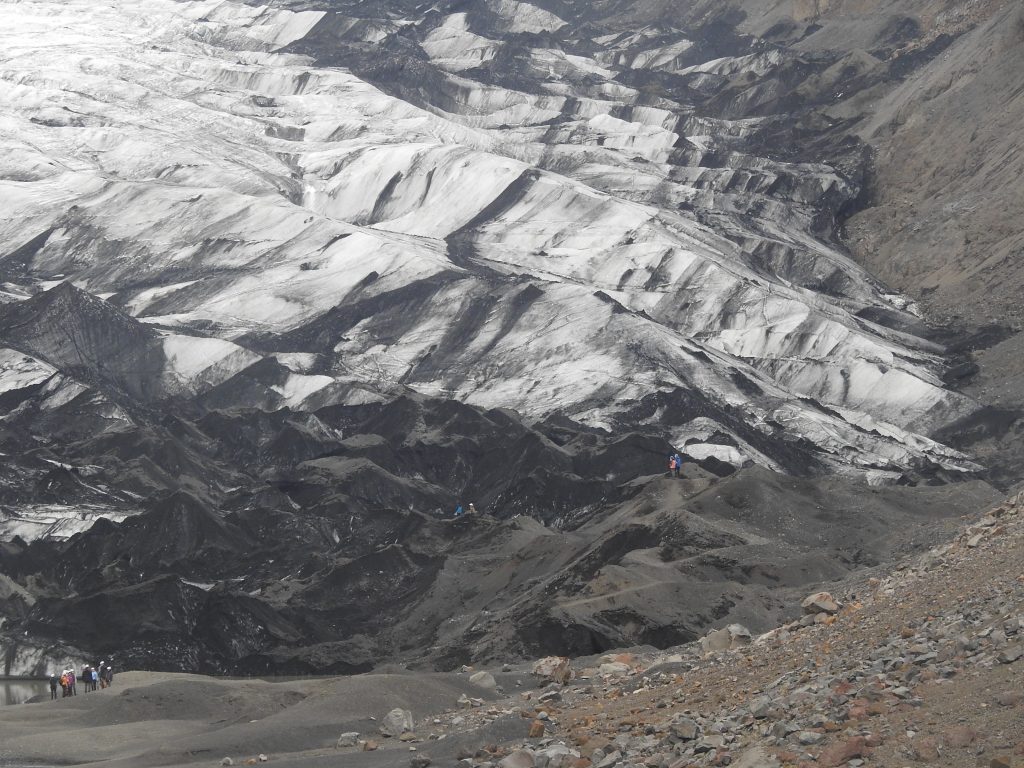
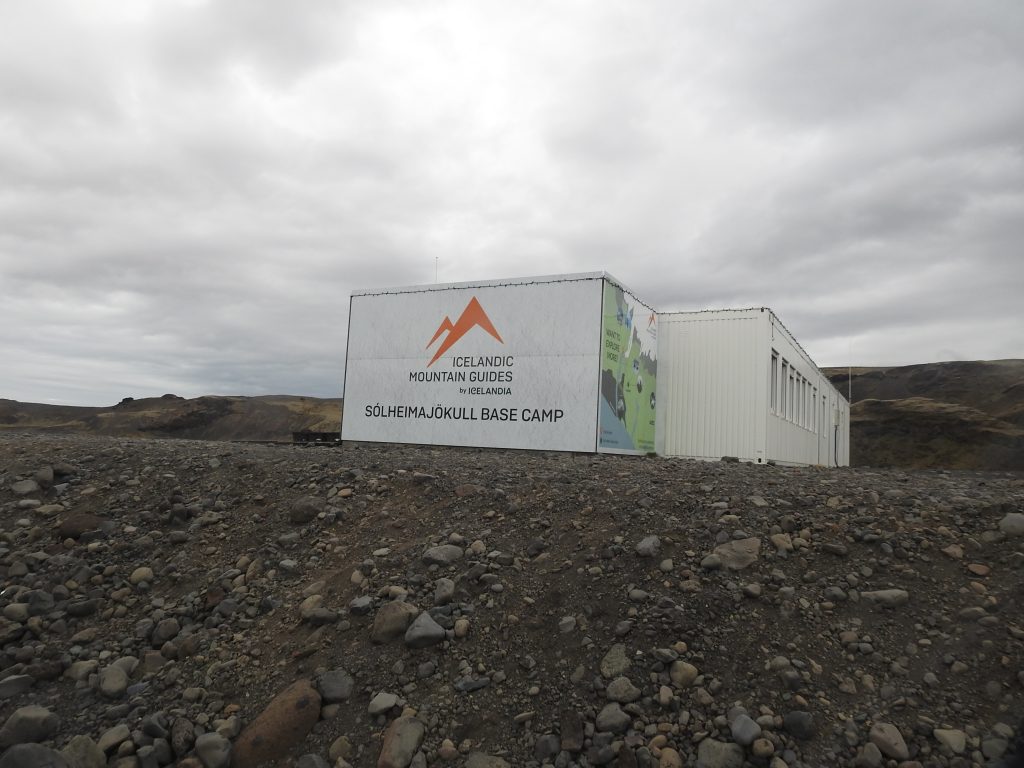
Sólheimajökull glacier — one of the most visited glacier tongues in Iceland, an outlet glacier of the massive Mýrdalsjökull ice cap (which sits atop the Katla volcano).
Several things stand out in this photo:
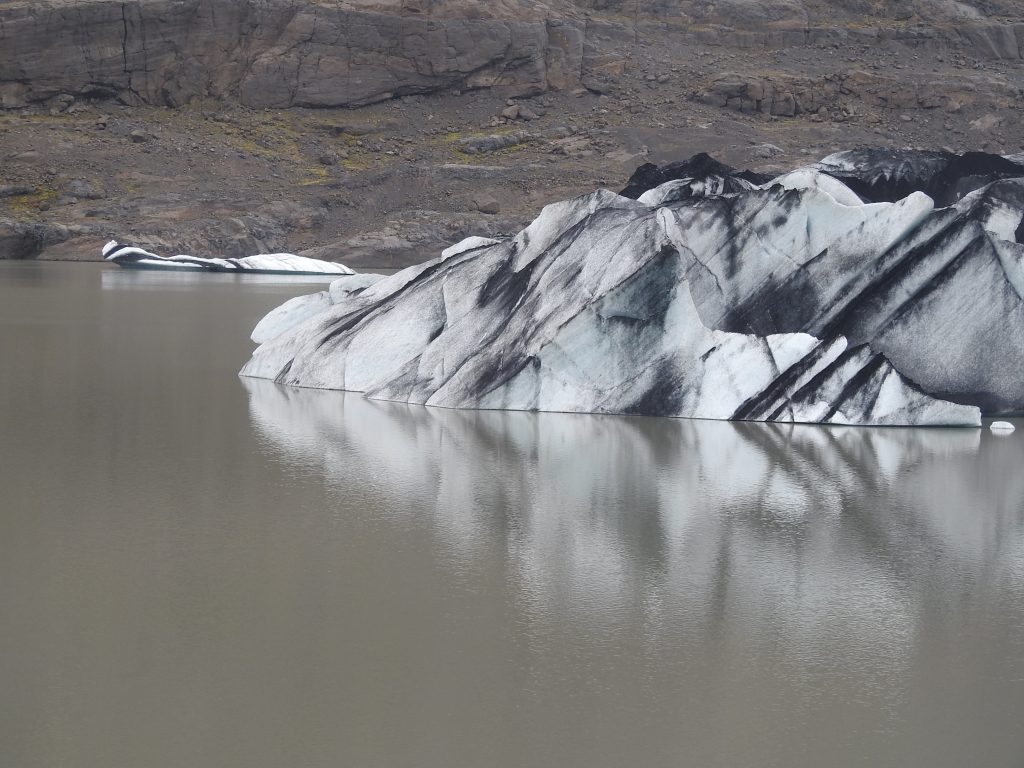
- The striking black streaking through the ice — that’s volcanic ash and debris from past eruptions, worked into the glacier over centuries
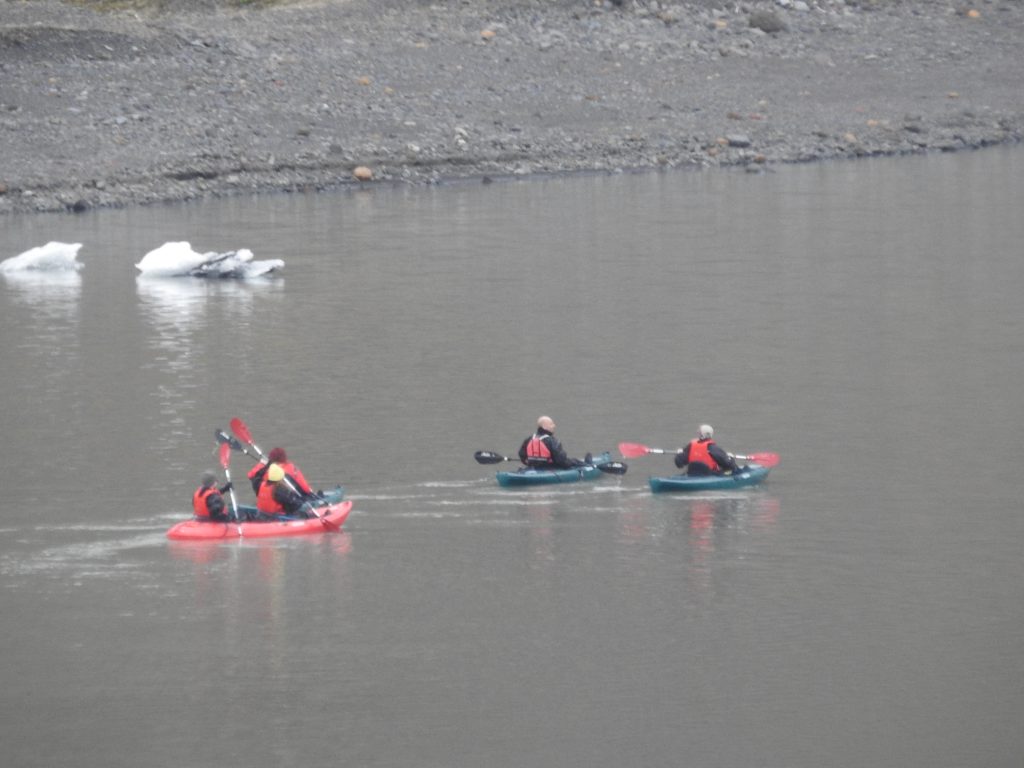
- The glacial lagoon at the terminus where the ice is actively calving into the water
- Visitors in orange gear on the right — those are glacier hiking groups, crampons and all, which is one of the most popular activities here
- The way the glacier flows down between the dark volcanic mountains is incredibly dramatic
Sólheimajökull is also a sobering place — it has retreated significantly in recent decades due to climate change, and markers along the path show where the glacier edge used to be. It’s a very visible, tangible demonstration of glacial retreat.
Small iceburgs in the water flowing from the glacier.
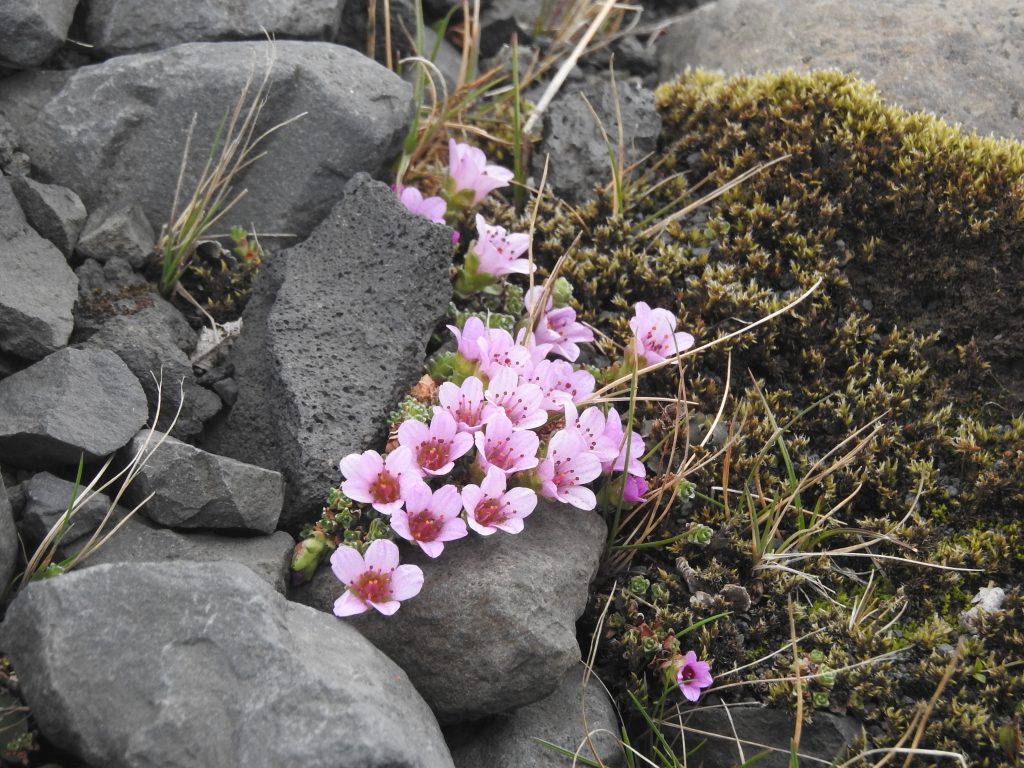
Those delicate pink flowers tucked among the volcanic rocks are almost certainly Mossy Saxifrage (Saxifraga hypnoides) or possibly Purple Saxifrage (Saxifraga oppositifolia) — both are classic Arctic/subarctic wildflowers and very common in Iceland.
The clues pointing to saxifrage:
- The cushion/mat-forming growth habit hugging the ground between rocks
- Those small, delicate 5-petaled pink flowers with contrasting red stamens
- Growing directly in rocky, inhospitable substrate — saxifrage literally means “rock breaker”
- The moss cushions alongside are a typical companion plant
What makes this photo so charming is the contrast — these tiny, fragile-looking blooms thriving in such a stark, harsh volcanic landscape. It’s a very Icelandic scene, that juxtaposition of delicacy and toughness.
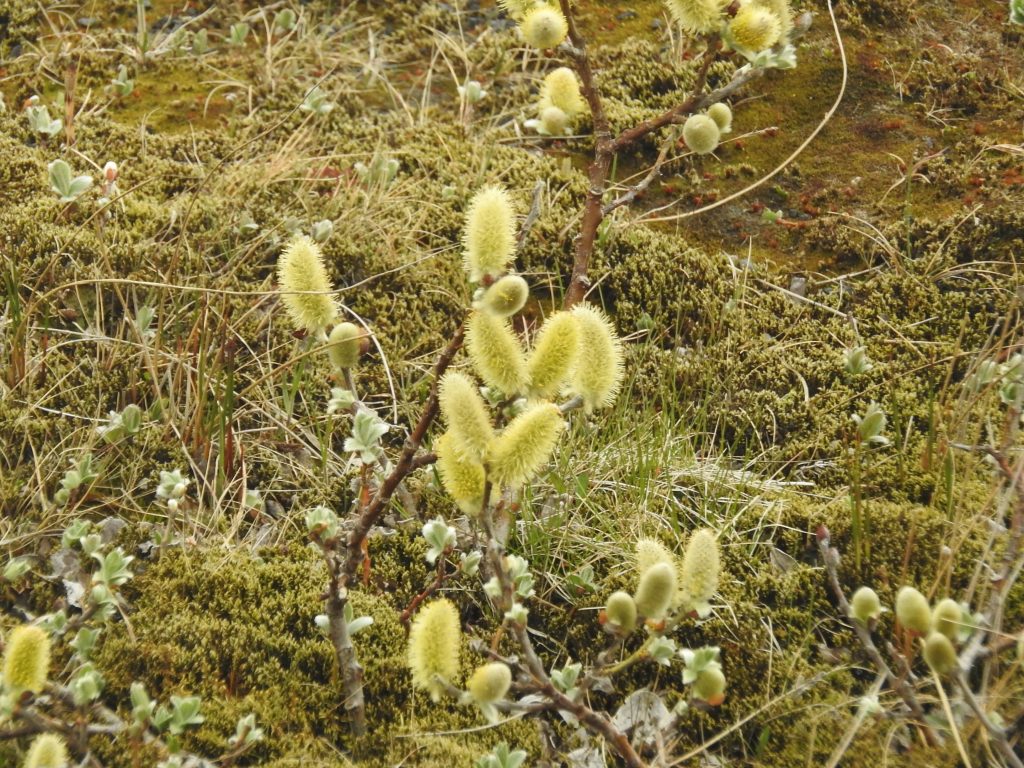
Those fuzzy yellow catkins are from a Dwarf Willow — most likely Salix lanata (Woolly Willow) or Salix caprea (Goat Willow), both common in Iceland. The catkins in the foreground are the male flowers, covered in those characteristic yellow pollen-bearing stamens giving them that soft, fuzzy appearance.
What makes this particularly interesting in an Icelandic context:
- Iceland’s willows are technically trees — but the harsh winds and climate keep them ground-hugging and tiny. There’s a famous Icelandic joke that if you get lost in an Icelandic forest, just stand up!
- The surrounding moss carpet is quintessentially Icelandic — that thick, spongy ground cover is everywhere
- You can also see what appear to be Dwarf Birch (Betula nana) stems with their small rounded leaves mixed in — another classic component of Iceland’s low shrubland
The whole scene captures Iceland’s early spring emergence beautifully — everything just waking up, the catkins freshly opened, moss greening up. Given the timing with everything else you photographed, you caught Iceland at a really lovely transitional moment.
Next we are off to another waterfall!
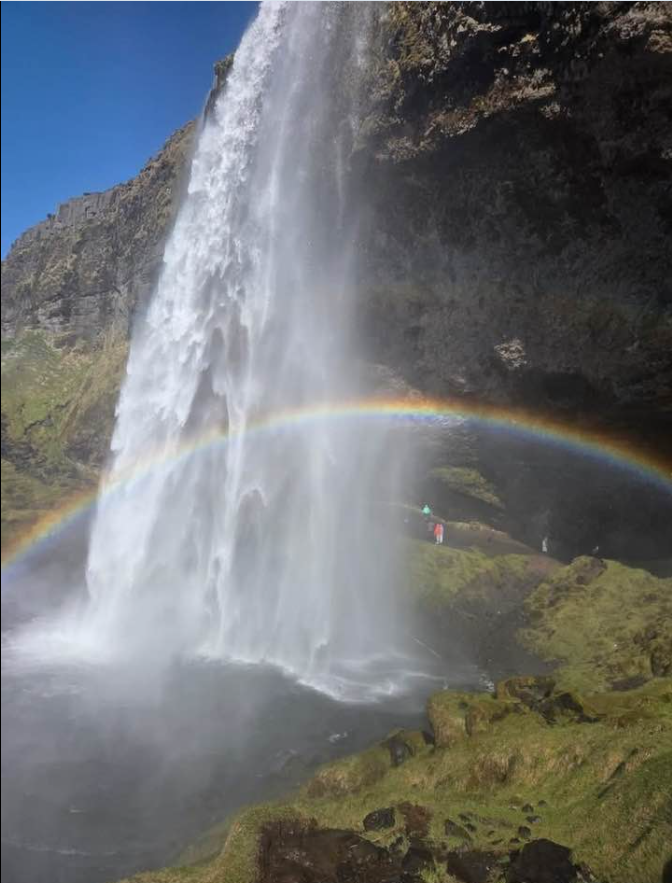
Seljalandsfoss — another south coast icon, and quite different from Skógafoss despite both being spectacular! The giveaway is that distinctive overhanging cliff with the cave/grotto behind the falls, and you can clearly see visitors walking along the path that goes behind the waterfall — one of the most unique experiences in Iceland.
What sets Seljalandsfoss apart:
- You can walk completely behind the curtain of water on a narrow path — getting absolutely soaked in the process!
- It drops about 200 feet off the old sea cliff — this entire area used to be coastline thousands of years ago
- Notice the smaller cascade on the left — that’s a secondary fall that appears when water levels are high
- The people at the base give wonderful scale — it’s enormous
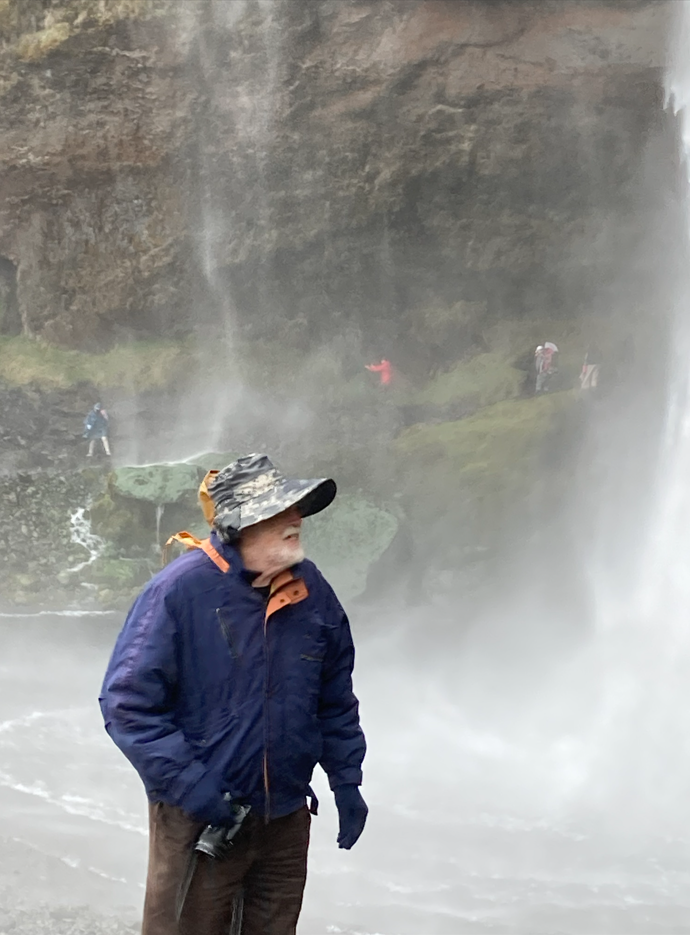
Behind the falls:




 Herrick Home Page