
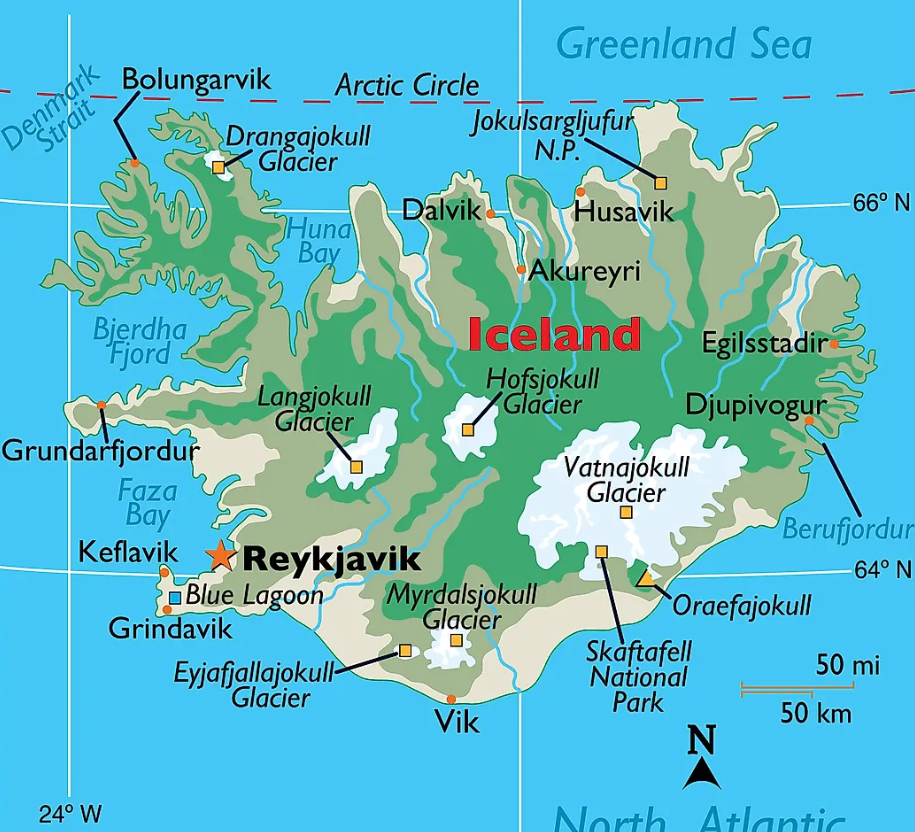
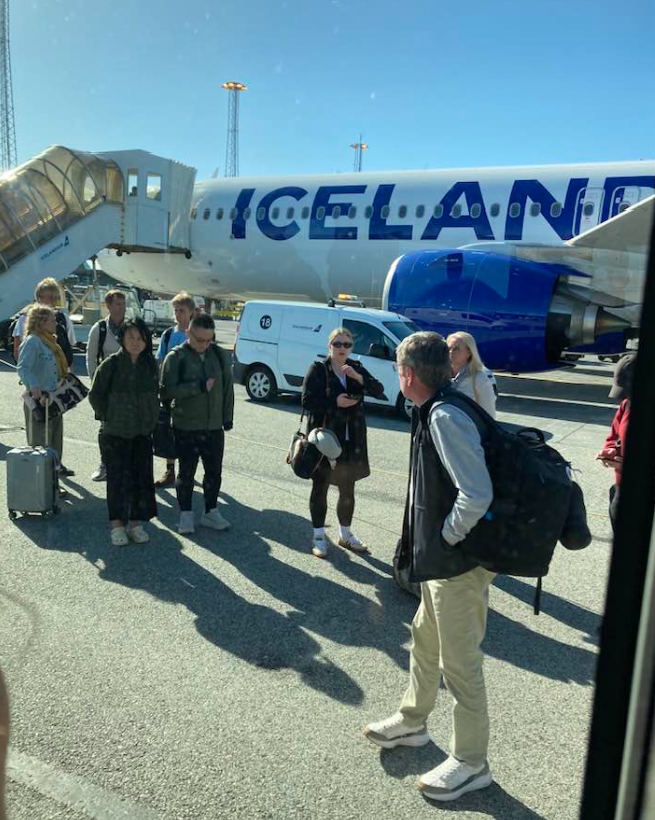
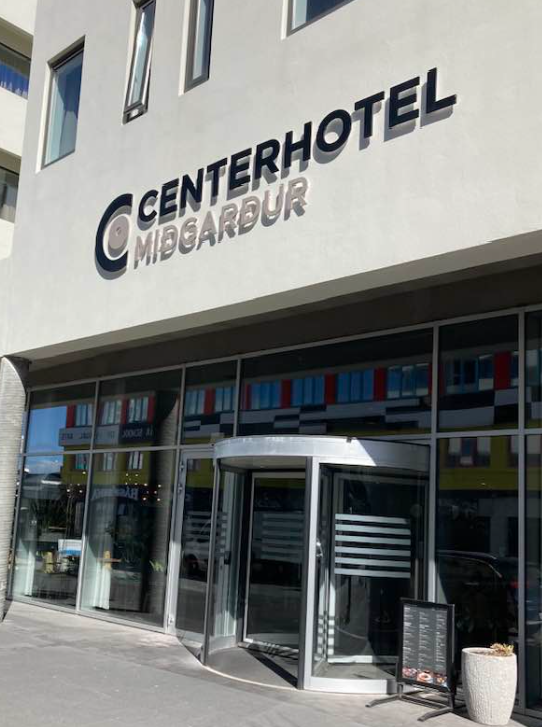
Eileen and I went off to Iceland May18 to 23, 2026. We flew Icelandair direct from Orlando to Reykjavik and took the one hour bus ride to the main bus station in the city. We then dragged our suitcases over the hill to the Center Hotel Midgardur. They gave us a very nice room with windows on two sides overlooking the city and the ocean!
The first thing we did – having arrived in the morning of a beautiful sunny and relatively warm day (in the 50’s) – was do our own city tour.
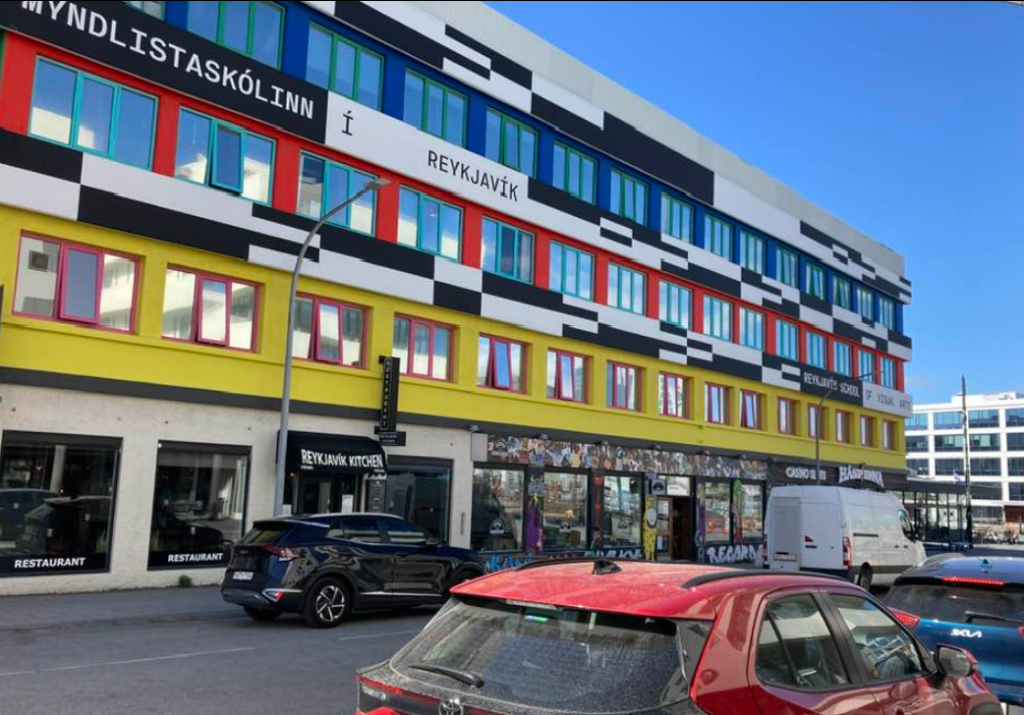
Across the street from our hotel was the Myndlistaskólinn í Reykjavík — the Reykjavík School of Visual Arts (as written on the facade in both Icelandic and English).
The building is hard to miss with its:
- Bold primary color blocks — yellow, red, blue, and black/white checkerboard patterns
- Very fitting design for an art school, essentially wearing its identity on its sleeve
- Ground floor housing several businesses including Reykjavík Kitchen restaurant (where we had a bowl of soup for $38 each)
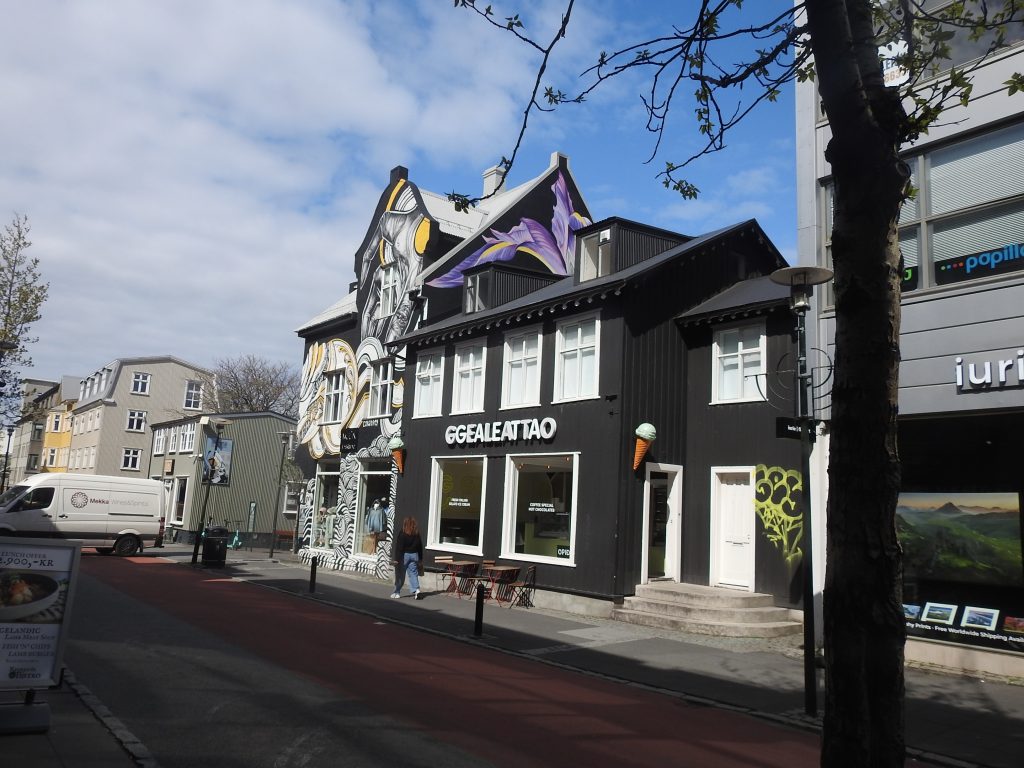
This is the Gaeta Gelato store on Laugavegur street in Reykjavik.
Location: The store is located at Laugavegur 23, 101 Reykjavík, Iceland.
Offerings: They serve freshly made Italian gelato crafted from Icelandic milk and Italian ingredients.
Hours: The establishment is open until 11:00 PM.
Features: The building features prominent black exterior siding and is decorated with large street art murals on the upper left side
NOTE: The sun is still up at 11PM, and almost all of the older buildings have corrugated metal siding since a fire years ago.
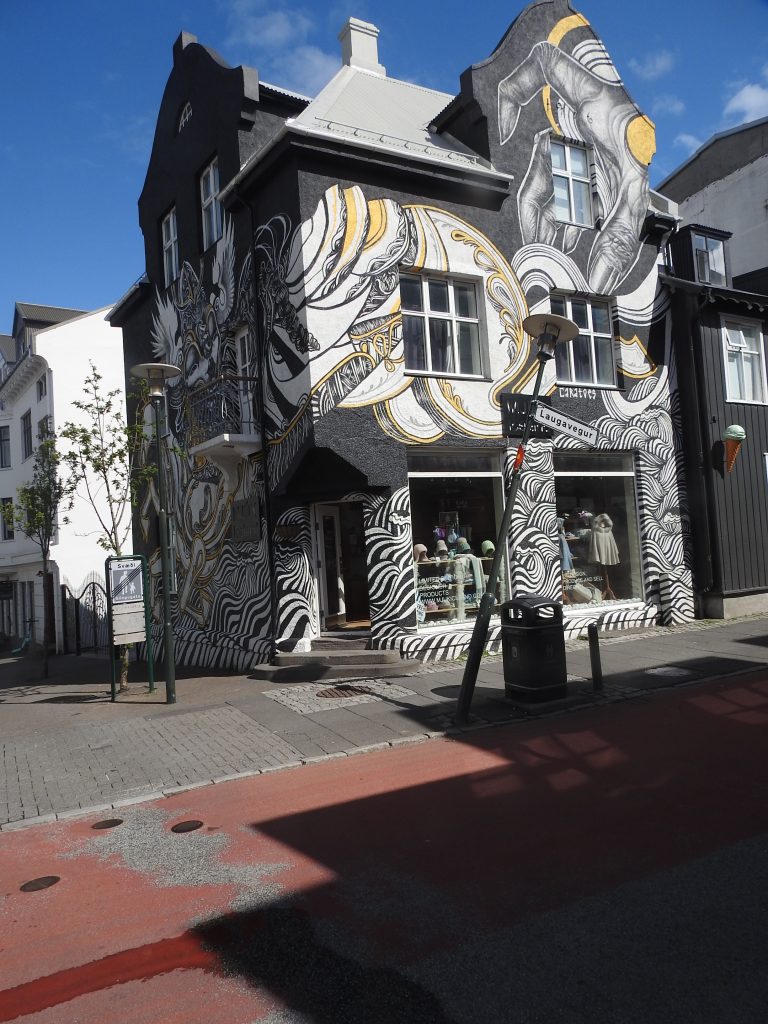
This is a building on Laugavegur, Reykjavík’s famous main shopping street — you can see the street sign in the image.
The building is covered in a bold, large-scale mural in black, white, and gold. The artwork features flowing, organic forms — swirling waves at the base, intricate floral/baroque-style scrollwork in the middle, and what appears to be a large hand or figure reaching down from the gabled roofline. The style blends street art with illustrative detail, giving it an almost Art Nouveau meets contemporary graffiti feel.
The ground floor is a boutique shop — the window display shows hats, coats, and knitwear, very typical of Icelandic wool goods shops. There’s a sign that seems to reference Icelandic design products.
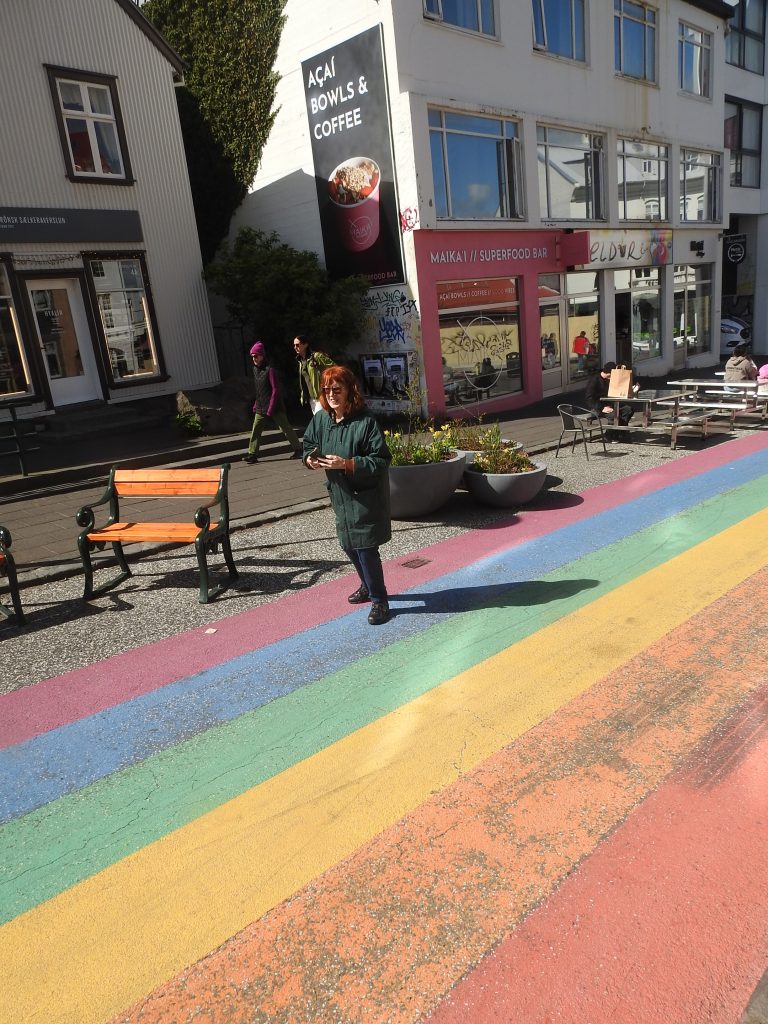
This is the famous Rainbow Road (Regnbogagatan) in downtown Reykjavík — one of the city’s most photographed spots.
The large rainbow painted all down the street is a symbol of Reykjavík’s strong LGBTQ+ inclusivity. Iceland has long been a progressive country on LGBTQ+ rights, and this rainbow street has become both a pride landmark and a popular tourist photo spot.
In the background you can see:
- Maika’i // Superfood Bar — an açaí bowls and coffee café, very popular with locals and tourists
- A shop called Hyalin on the left
- Outdoor café seating, flower planters, and a classic green park bench — all giving the street a lovely pedestrian-friendly feel
Eileen checking her phone, strolling right across the rainbow, makes for a very natural street photo. The bright sunshine and deep blue sky suggest this was taken on one of Iceland’s glorious summer days.
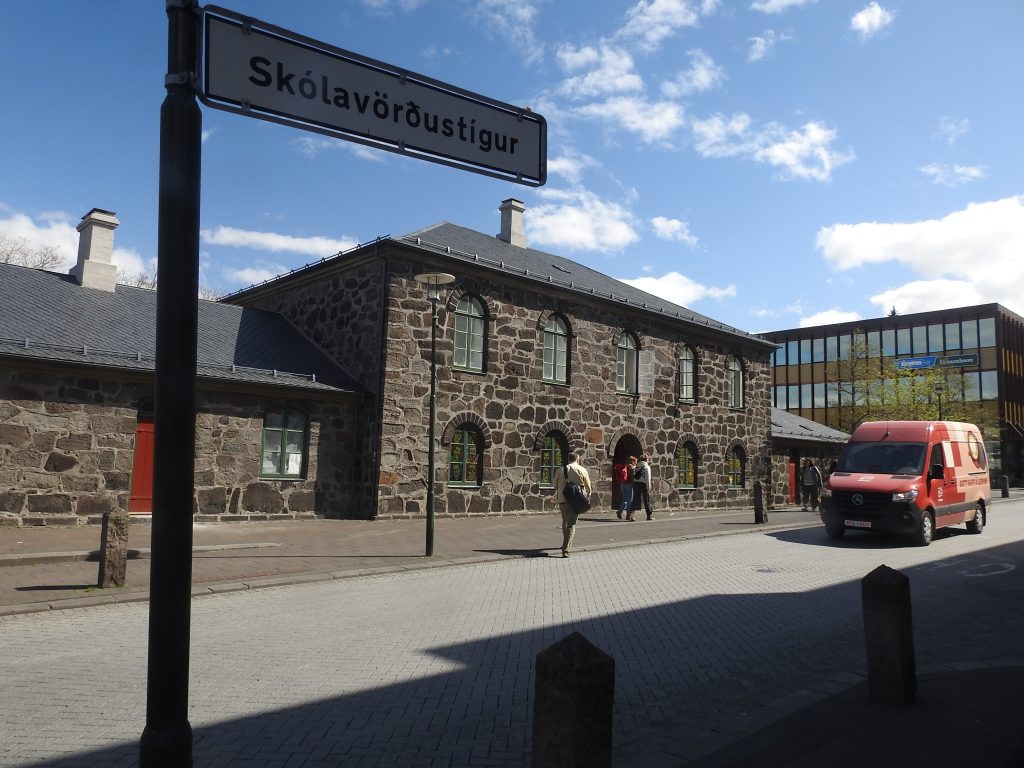
The street sign tells us exactly where we are — Skólavörðustígur, one of Reykjavík’s most beloved streets.
Skólavörðustígur runs uphill from Laugavegur straight to Hallgrímskirkja church, making it one of the most walked streets in the city. It’s known for its charming independent shops, galleries, and cafés.
The stone building in the photo is a beautiful example of older Reykjavík architecture — the rough-cut basalt/lava stone construction with arched windows is very characteristic of late 19th/early 20th century Icelandic institutional buildings. It has a solid, dignified appearance quite different from the colorful corrugated iron houses the city is also famous for. This looks like it could be part of the Menntaskólinn í Reykjavík (MR) complex — Iceland’s oldest secondary school, founded in 1056, whose historic stone buildings sit right on this street.
Behind it you can see a more modern glass-and-timber building, showing the mix of old and new that defines central Reykjavík.
The red Mercedes van on the right appears to be an Icelandic postal or delivery vehicle.
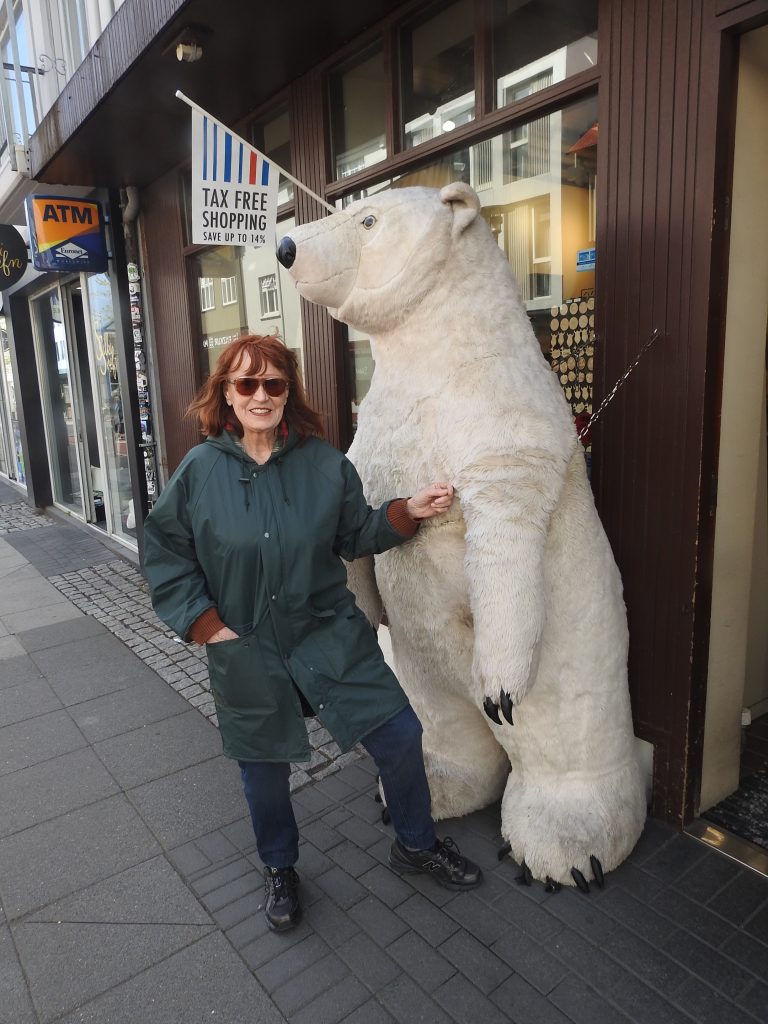
Eileen and a polar bear! Polar bears are not native to Iceland, but they occasionally arrive from Greenland, typically traveling on icebergs or swimming. These rare sightings are often due to environmental changes and can pose risks to both the bears and local communities.
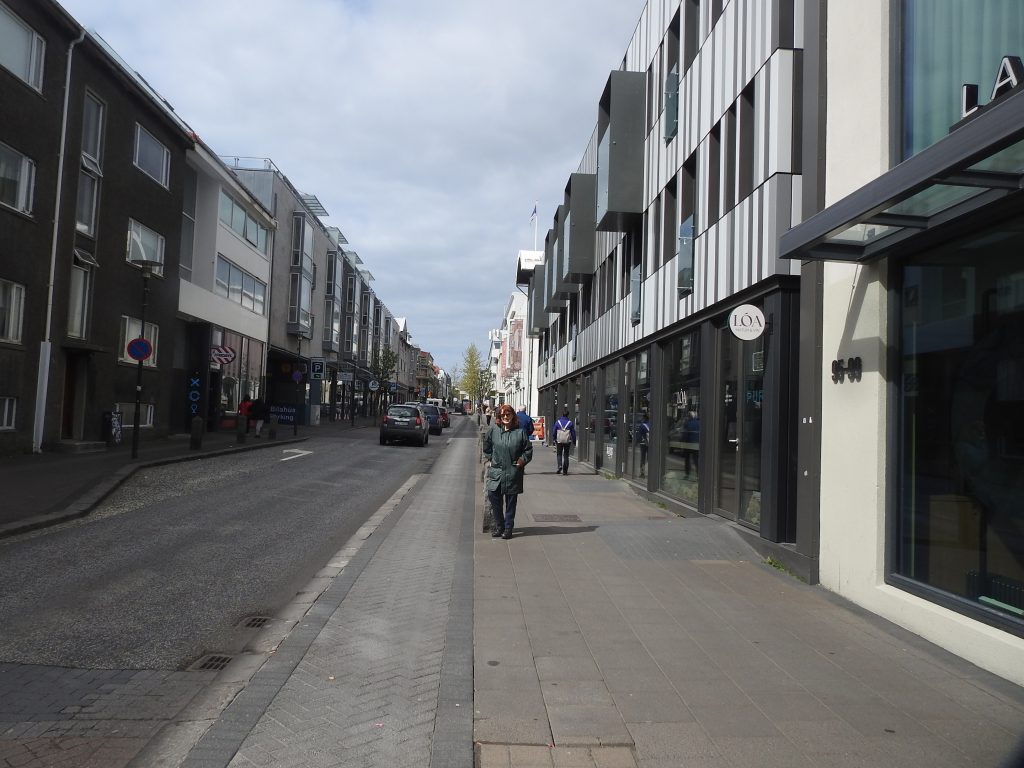
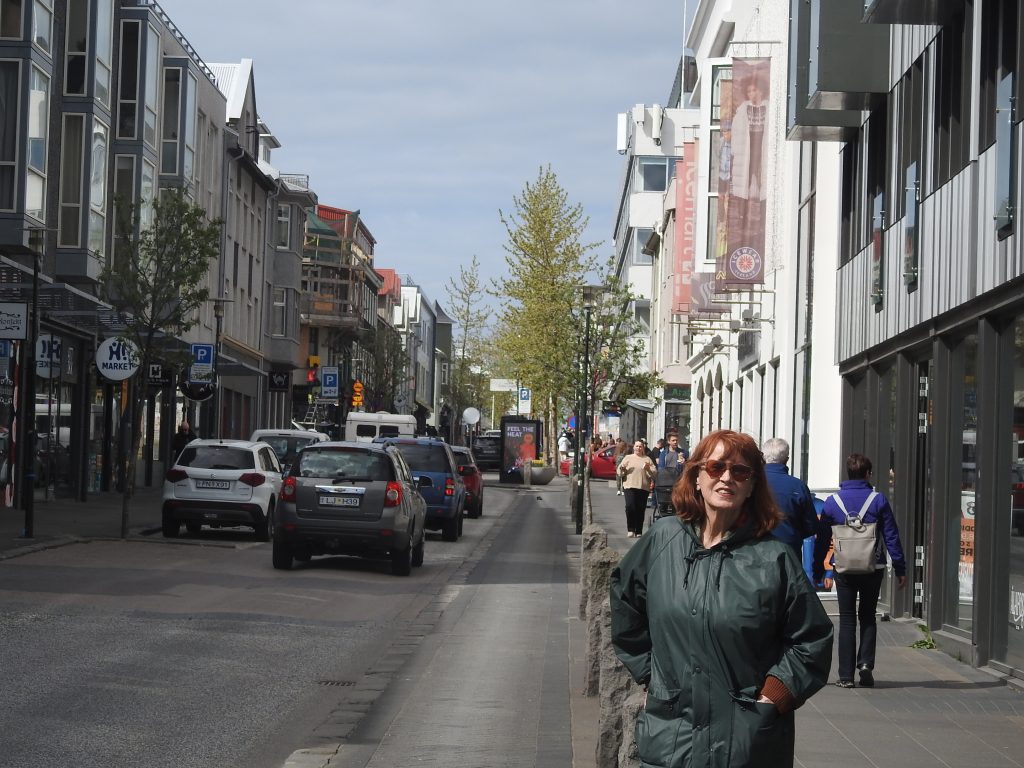
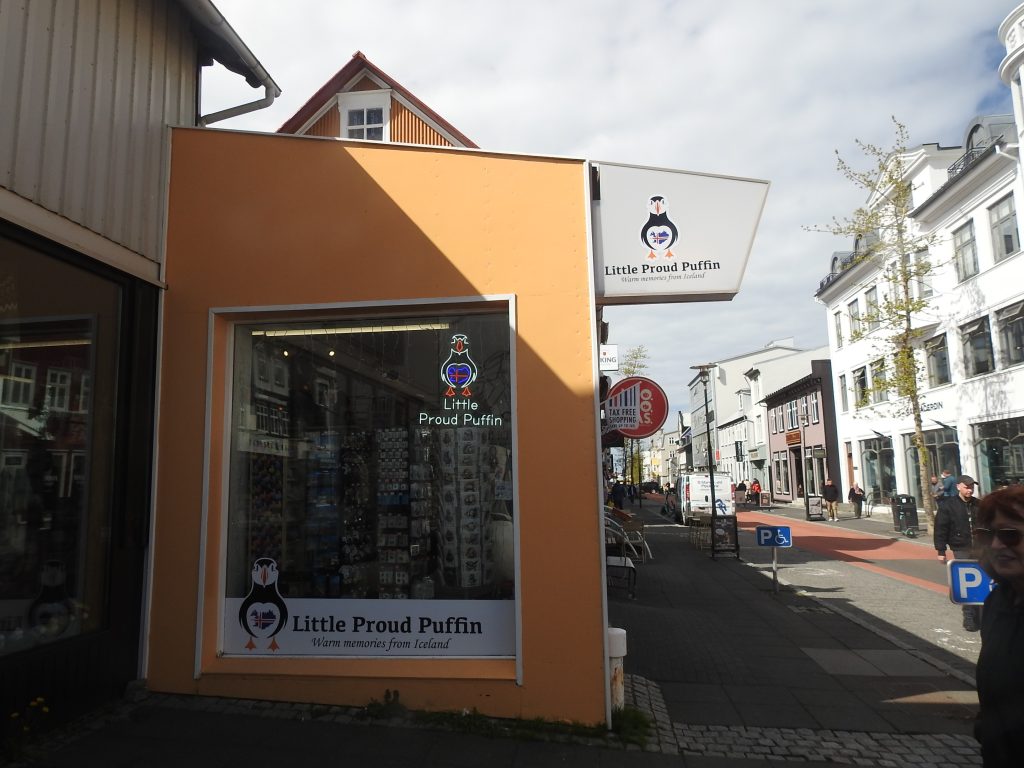
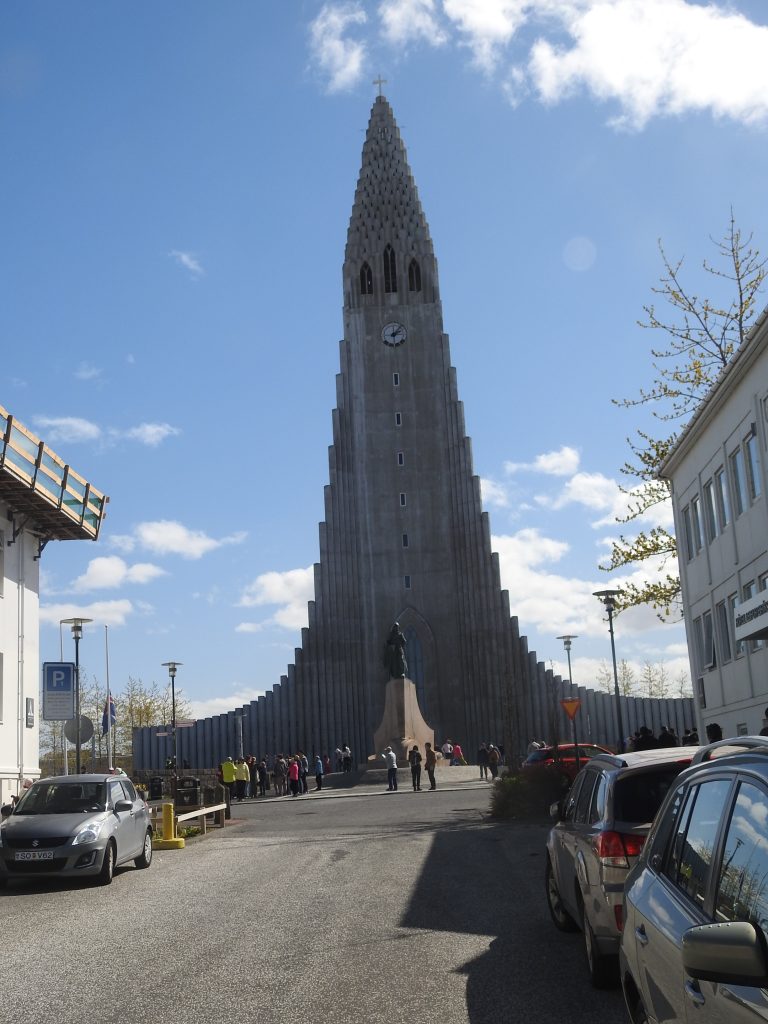
And there it is — Hallgrímskirkja, the iconic landmark that the street Skólavörðustígur leads straight up to!
This is without question Reykjavík’s most recognizable building and Iceland’s largest church. A few highlights:
The Architecture
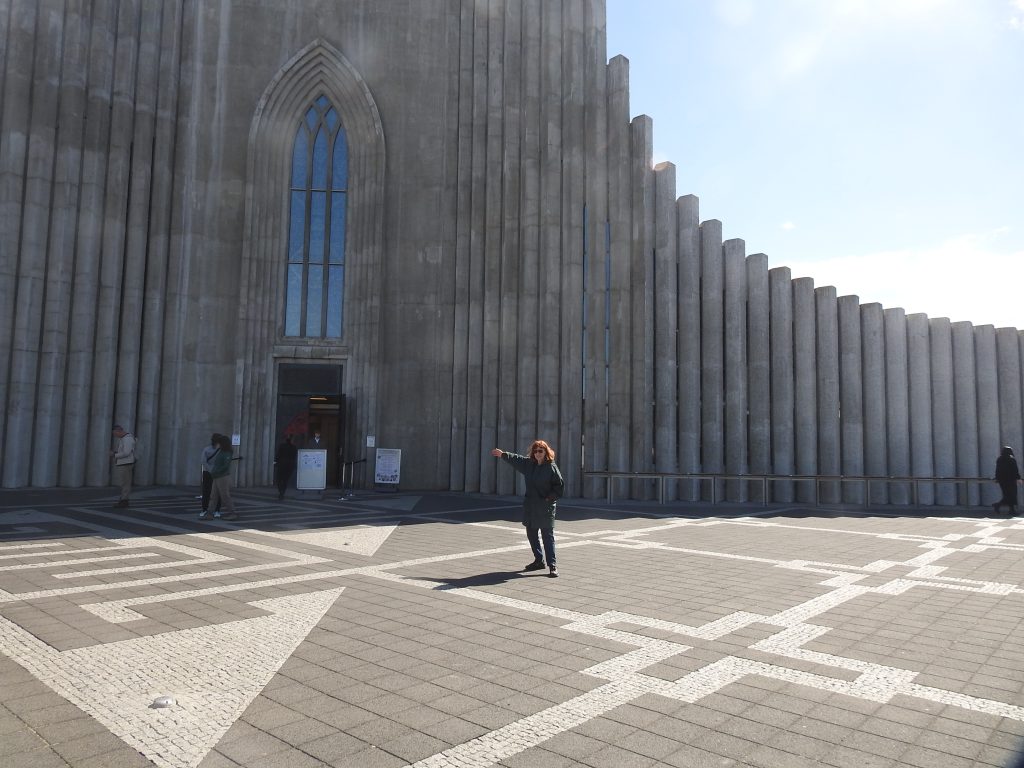
The stepped, columnar design was inspired by the basalt lava columns found throughout Iceland — most famously at Svartifoss waterfall. Designed by Guðjón Samúelsson, construction began in 1945 and took over 40 years to complete. The tower soars to 245 feet, making it visible from all over the city.
The Statue
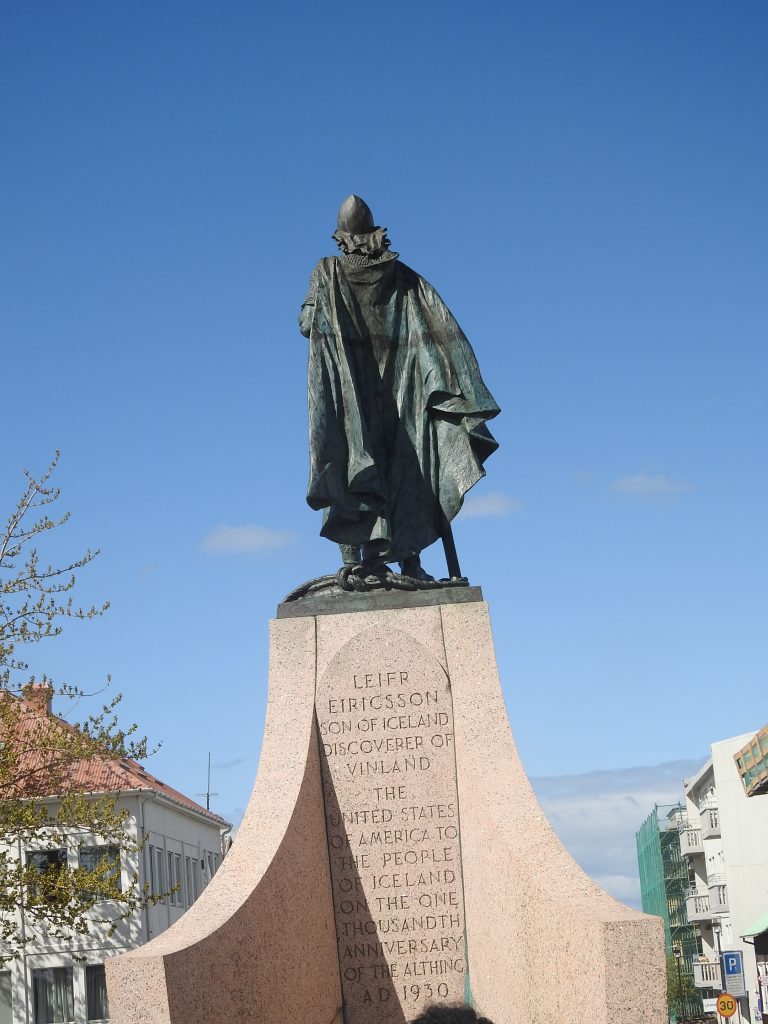
In front of the church stands the statue of Leifur Eiríksson (Leif Erikson), the Norse explorer credited with reaching North America around 1000 AD — nearly 500 years before Columbus. It was a gift from the United States to Iceland in 1930.
The Clock
You can clearly see the large clock face on the tower — a practical and beautiful detail on such a monumental structure.
The Crowd
There’s already a few tourists gathered at the base, which is very typical — the church is one of Iceland’s most visited attractions. Visitors usually can take an elevator up the tower for panoramic views over Reykjavík and the surrounding mountains and sea. Today there was a funeral and the church was closed.
The Statue
In front of the church stands the statue of Leifur Eiríksson (Leif Erikson), the Norse explorer credited with reaching North America around 1000 AD — nearly 500 years before Columbus. It was a gift from the United States to Iceland in 1930.
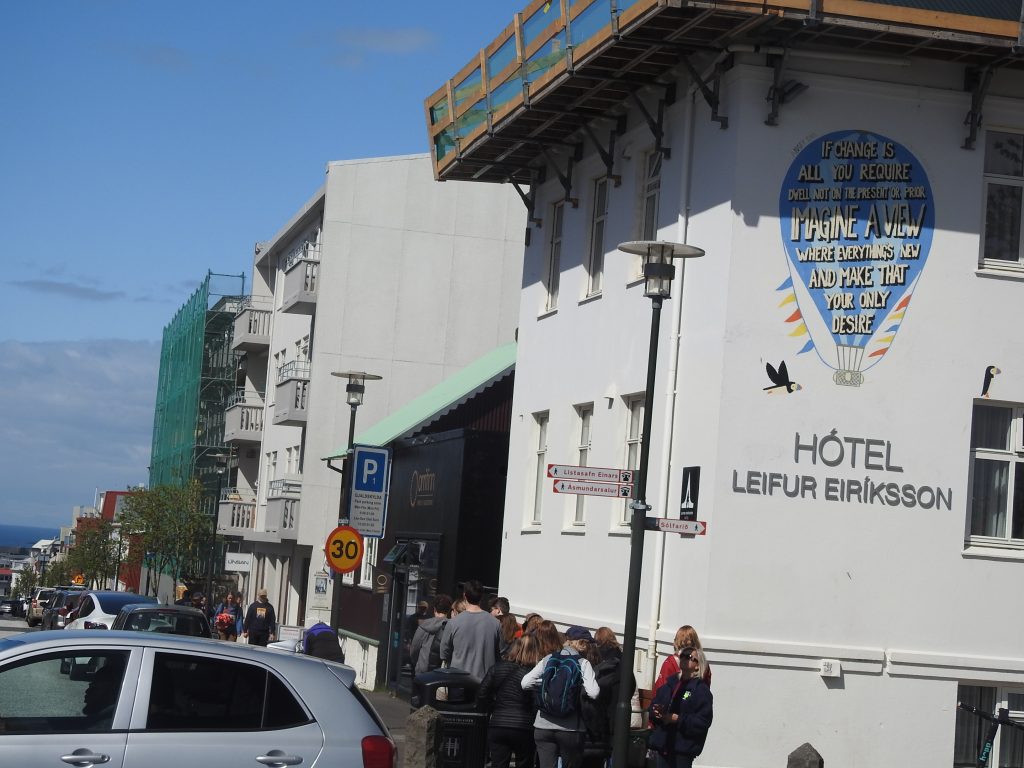
From there we walked toward City Hall.
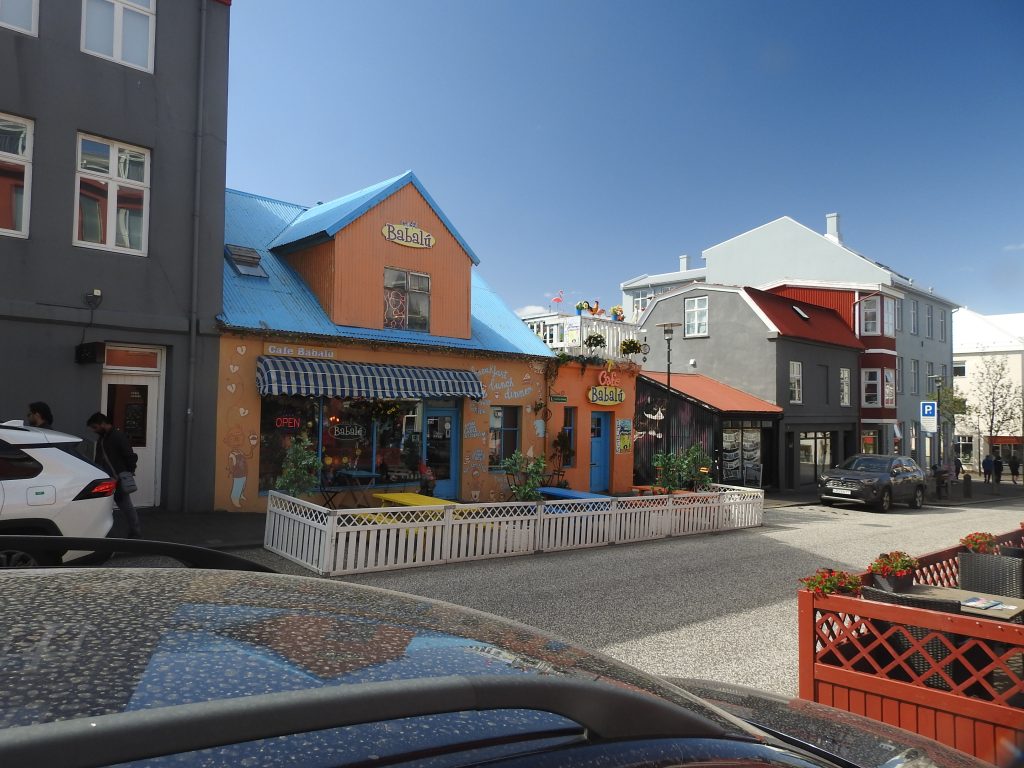
This is Café Babalú, one of the city’s most charming and recognizable spots.
It’s a beloved bohemian café known for:
- Its bright orange walls and sky-blue corrugated metal roof — instantly eye-catching among the more subdued neighboring buildings
- The rooftop terrace decorated with quirky figurines (you can spot the flamingo!)
- Serving breakfast, lunch, and dinner (as advertised on the facade)
- A cozy, eclectic interior popular with locals and tourists alike
It’s located on Skólavörðustígur, the main street that leads up toward the iconic Hallgrímskirkja church — one of Reykjavík’s most charming thoroughfares, lined with shops, galleries, and cafés.
The outdoor seating area with the white picket fence is a lovely touch for sunny Icelandic days like this one. We stopped in for coffee and tea. Prices are double or more than US prices.
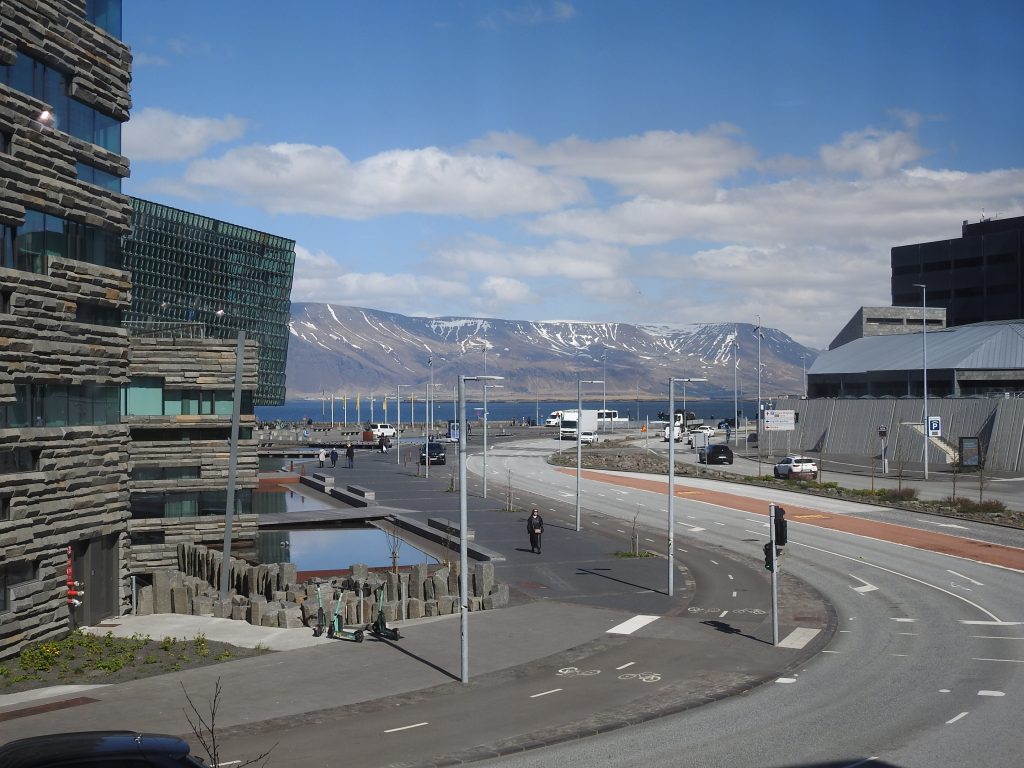
The Harpa Concert Hall area near the old harbour.
You can see several recognizable elements:
- Harpa Concert Hall on the left, with its distinctive geometric glass facade designed by Henning Larsen Architects and artist Olafur Eliasson
- The basalt column landscaping around a reflecting pool in the foreground, echoing Iceland’s volcanic geology, part of the building on the left side of the photo is Landsbankinn — one of Iceland’s major banks!
- Landsbankinn (The National Bank of Iceland) is one of the country’s largest and oldest banks
- The striking dark layered basalt stone facade with geometric glass is very fitting for a major financial institution’s headquarters
- Its location right next to Harpa in the harbour district is consistent with Reykjavík’s modern city center development
Landsbankinn has an interesting and dramatic history — it was one of the banks at the center of Iceland’s 2008 financial collapse, when it famously failed and was taken over by the government. It has since been restructured and continues operating as one of Iceland’s main banks.
- Faxaflói Bay in the background, with snow-capped mountains (likely Mt. Esja) across the water
- The harbour waterfront promenade
- A couple of Lime e-scooters parked near the entrance
The light, the snow on the mountains, and the leafless trees suggest this was taken in early spring — probably May. Beautiful clear day for Reykjavík!
Video of the City Hall and the Lake Tjornin with swans and ducks in the center of town
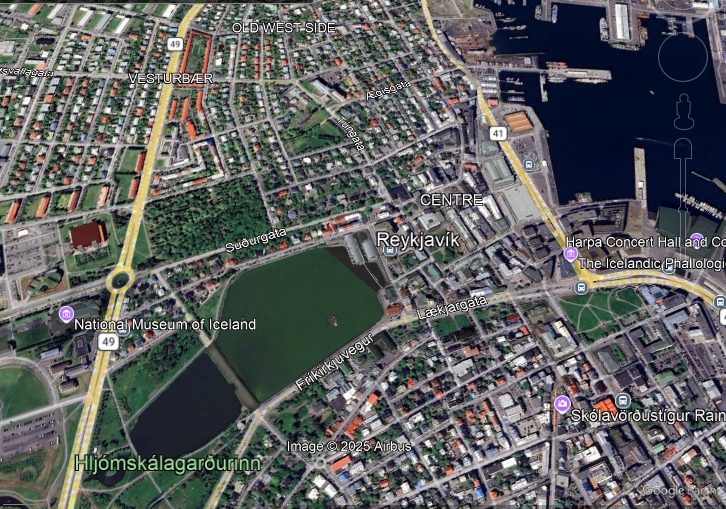
City Hall and the Lake Tjornin – from there we took a cab back to the hotel. $25 for a three km trip, but worth it!