Trump loves Russia
Many nations offered to send oil to Cuba, but Trump said no, he blockaded Cuba to force them to change the regime.
U.S. President Donald Trump has effectively blocked all oil shipments to Cuba in an attempt to pressure the government in Havana.
Separately, the U.S. temporarily eased sanctions on Russia to help improve the flow of oil that has been restricted by the U.S.-Israeli war with Iran.
In the meantime, the Russian ship Anatoly Kolodkin has been making its way to Cuba. The vessel departed from Russia’s Primorsk port carrying some 650,000 barrels of crude, LSEG ship-monitoring data also showed.
But now there is an exception, Russia is going to be allowed to sell oil to Cuba!
Karolying Leavitt thinks we had a regime change in Iran.
“Has it not? Their entire leadership has been killed. Wouldn’t you say there’s been a change in the regime”?
We made the regime worse.
We swapped out an 86-year-old hardline leader for a young hardline leader.
Regime change is NOT swapping out names.
It’s changing the goals, values, principles, laws and governance.
listen to Trump tell you what the Declaration of Independence means.
Trump:
of course you have the Declaration of Independence
Moran: What does it mean to you?
Trump:
Well, it means exactly what it says. It’s a declaration. It’s a declaration of unity and love. Respect, and it means a lot. And it’s something very special.
Hegseth injects combative Christianity into America’s military
by Ellen Mitchell – 03/29/26
During his briefing on the Iran war last week, Defense Secretary Pete Hegseth suggested that Americans take a knee and pray to Jesus for the success of U.S. forces in the Middle East. A few days later, he read out a sermon praying that “wicked souls” be “delivered to the eternal damnation” in the fight against Iran.
The defense secretary has increasingly used his bully pulpit to promote his combative, controversial brand of Christianity. While the Pentagon says Hegseth is embracing America’s proud history as a Christian nation, some experts and veterans worry that Hegseth’s move to inject the military with more explicitly religious sentiments threatens to divide America’s forces.
“I think it’s extremely concerning the way that he is operating. It’s concerning to me as a Christian, and it’s concerning to me as an American,” said Matthew Taylor, a visiting scholar at Georgetown University’s Berkley Center for Religion Peace and World Affairs.
“The ideological consolidation of the military is something that we have historically not wanted. We want the military to be diverse. We want the military representative of the American people,” he added.
Hegseth, who was deployed to Iraq and Afghanistan before becoming a Fox News host, has presided over prayer services in the building led by controversial Christian pastors, revamped the military’s Chaplain Corps, and official Defense Department social media posts often amplify ultra-conservative Christian views.
During press briefings on the ongoing U.S.-Israeli war in Iran, Hegseth has frequently invoked his faith in referencing the conflict. On March 10, one day after attending a dignified transfer at Dover Air Force Base, Del., he referenced Psalm 144 from the Bible.
“Blessed be the Lord, my rock, who trains my hands for war and my fingers for battle. He is my loving God and my fortress, my stronghold and my deliverer, my shield in whom I take refuge,” he said.
More recently, he has revamped the U.S. military’s Chaplain Corps, announcing Tuesday that the officers will no longer wear their rank insignia, instead displaying insignia that reflects their religious affiliation — part of two major changes to the group.
Service members’ spiritual health “is equally important” as their physical and mental health, Hegseth said in a video message, complaining that previous administrations infected the Chaplain Corps with “political correctness and secular humanism,” changing and watering down the role’s core functions “until they were viewed by many as nothing more than therapists.”
Prior to being tapped as Pentagon chief, Hegseth derided military efforts to promote diversity, equity and inclusion initiatives, labeling them as discriminatory ideologies that “turn off the young, patriotic, Christian men who have traditionally filled our ranks.”
Of the military’s 1.3 million active-duty troops, roughly 70 percent are Christian, according to 2019 Defense Department data.
In his first year at the Pentagon, Hegseth has enacted a policy that ban transgender troops, scrubbed diversity from the ranks, begun a review on whether women should serve in combat roles and even reevaluated the Defense Department’s more than 100-year partnership with Scouting America over its inclusion of female scouts.
At a highly unusual gathering of generals and admirals in September in Quantico, Va., he spoke of prayer, Jesus and “all precious souls made in the image and likeness of God” alongside plans for new fitness standards and a return to a warrior ethos.
This past spring, he began a monthly prayer service at the Pentagon, inviting such controversial figures as Doug Wilson — a self-described Christian nationalist pastor who has argued that women should be denied the right to vote — to deliver a sermon in the building’s auditorium.
The visit prompted complaints and outcry.
“Hegseth is using his official position to make his religion the official one of the Department of Defense using official facilities, communications channels and personnel,” Fred Wellman, an Army veteran running for Congress in Missouri, wrote on social platform X at the time. “This must end and must be investigated.”
Nancy Lacore, a retired Navy rear admiral running for Congress in South Carolina’s 1st District, said inviting Wilson “sends a clear and troubling message to our troops: not all of you belong. That is wrong, and it is not the military I served in—where diversity was our strength and unity was how we got the job done.”
Defense officials, however, have defended Wilson’s presence and other efforts by Hegseth to inject religion into the armed forces.
“Secretary Hegseth, along with millions of Americans, is a proud Christian and was glad to welcome Pastor Wilson to the Pentagon,” said Pentagon press secretary Kingsley Wilson.
“The Christian faith is woven deeply into the fabric of our nation,” she added. “Despite the Left’s efforts to remove our Christian heritage from our great nation, Secretary Hegseth is among those who embrace it.”
So far, the Pentagon chief has held at least 10 such attendance optional prayer services, with other invitees including Brooks Potteiger, the pastor of Hegseth’s church in Tennessee; Edward Graham, an evangelist who is the grandson of Billy Graham; and Chris Durkin, who leads a Southern Baptist congregation in New Jersey and with whom Hegseth has previously credited with his religious transformation.
Hegseth — now a congregant at one of the churches affiliated with Wilson’s Congregation of Reformed Evangelical Churches — on his personal account has reposted a CNN segment about the pastor with the quote “All of Christ for All of Life,” a slogan for embracing Christianity in every area of society, including government, culture, work and family.
Last month, he was the headline speaker for the National Religious Broadcasters (NRB) 2026 International Christian Media Convention, held last month in Nashville. The Pentagon’s “Rapid Response” X account posted 10 video clips of his talk, which plugged his monthly Christian prayer service, pushed anti-trans views and argued that the fabric of the country is “woven in the threads of Biblical principles.”
“Gone is godless and divisive DEI, gone is gender-bending equity and quotas, gone is climate change worship to a false God,” he declared in the Feb. 19 speech. “We are one military, one fighting force, one nation under God. We are not in woke we trust, we are in God we trust.”
The same messaging is also seen frequently on official Pentagon social media accounts.
In one video, posted to X in August, text from the Bible’s book of Psalms is stamped over scenes of fighter jets, rocket launches and combat troops: “I pursued my enemies and overtook them. I did not turn back till they were destroyed.”
In another from September, a phrase from the Bible’s book of Joshua plays atop video of military personnel completing outdoor training: “Be strong and of good courage. Do not be afraid, nor dismayed. For the Lord your God is with you, wherever you go.”
Hegseth quite literally wears his Christian faith on his sleeve, with a tattoo on his arm of the words “Deus Vult” or “God wills it” — a motto from the Crusades — as well as a tattoo on his chest depicting a Jerusalem Cross. Both are associated with extremists and the Christian right.
On Jan. 15, 2026, French President Emmanuel Macron said France was now providing two-thirds of Ukraine’s intelligence.
Ukrainian intelligence officials suspected the U.S. had leaked information to Russia, causing Ukraine to stop sharing intelligence with the U.S.
Shortly after, a rumor gained traction that Ukraine relied so heavily on French intelligence because Ukraine had allegedly given the U.S. false intelligence that the U.S. then leaked to Russia, uncovering the U.S. as an unreliable intelligence partner for Ukraine.
Pentagon prepares for weeks of ground operations in Iran, officials say, as thousands of U.S. troops arrive in Middle East
If President Donald Trump approves the plans, such an effort would mark a new phase of the war that could be significantly more dangerous to U.S. personnel than the first four weeks. Any potential ground operation would fall short of a full-scale invasion and could instead involve raids by a mixture of Special Operations forces and conventional infantry troops, said the officials.
Trump accidentally sabotaged his own party
REUTERS/Elizabeth Frantz
John Stoehr March 28, 2026
The Democrats in the Congress held the line and won. So far, that’s the story of the fight over the shutdown of the Department of Homeland Security (DHS).
The Republicans said no to two proposals for weeks, during which time airports nationwide descended into chaos. Employees at the Transportation Security Administration (TSA) were working without pay.
The mess was getting so messy that last weekend, Senate Republicans went to the president with a deal. The Democrats would fund all of DHS but not ICE. Airports would return to normal. The GOP would get a chance to secure ICE funding later. But Donald Trump said no. He said he would agree if the Democrats supported unrelated legislation called the SAVE Act.
But the president didn’t stop there with his unrealistic demands. To create what he believed was leverage over the Democrats, he dispatched ICE agents to airports around the country. It was reported that they were “assisting” the TSA, but in reality, Trump was trying to bully the Democrats, especially Chuck Schumer, into giving him everything he wanted.
Senate Democrats made clear their intention to restore order at airports by funding all of DHS, except for ICE.
Meanwhile, pressure was building, especially on the president. His remedy of sending ICE agents to “assist” the TSA was transparently bogus as ICE agents stood around doing nothing in full view of people waiting in line for hours.
Until Thursday, the Senate Republicans could still plausibly blame Schumer and the Democrats, but all such plausibility went out the window last night after Trump claimed for himself imaginary emergency powers to fund the TSA without the Congress.
No one seems to know what he was talking about. Executive orders claiming the authority to pay for things without an act of Congress would not only be illegal and unconstitutional but “anti-constitutional,” said Josh Chafetz, a law professor at Georgetown. “They strike at the core of one of the principles that allows our entire constitutional order to function.”
But before anyone had a chance to figure out what Trump was saying, or whether to debate it, Senate Majority Leader John Thune, in the wee hours of Friday morning, brought a bill to fund DHS, but not ICE. It passed by voice vote, according to the Post, “with only a handful of senators in the chamber.” Chuck Schumer stood firm and won. The bill is now in the House.
Schumer did not get the ICE reforms that the Democrats wanted, including a ban on agents wearing masks and a requirement that they follow warrants signed by a judge, not an official in the administration. But forcing the Senate Republicans to cave is a victory when Senate Democrats usually cave.
For over a year, Schumer has been the subject of intense scrutiny by the Democratic base. Many liberals expected Schumer to surrender again. Yet he didn’t.
But if there’s newfound strength in the Democrats, it’s because there’s newfound weakness in the Republicans, especially the president. By deciding to go it alone – again – and declaring for himself the authority to pay TSA workers on his own, he was met immediately with the question of why, if he could do it by himself the whole time, he didn’t from the start.
In effect, he sabotaged his own party’s negotiating position. Thune could have kept blaming the Senate Democrats for the airport chaos. He might have worn Chuck Schumer down, and perhaps he would have succeeded. He will never know, however, because the leader of his party threw away what little leverage he had. And without it, the House Republican leadership can do little but complain about the fact that the Senate Democrats didn’t cave.
Indeed, the House Republicans are experiencing what can only be called disarray. Speaker Mike Johnson rejected the Senate bill, calling it “a joke.” He said the House would vote on its own DHS funding bill. He said there’s only one party that’s treating Americans like “pawns.”
An hour later, the AP reported that Trump signed the executive order claiming for himself the authority to pay TSA workers. While that is dubious, legally and constitutionally, it still raises the question: if Donald Trump has the power to do this now, why didn’t he use it back then? If he had the power, why make Thune and Johnson jump through hoops?
Someone is treating someone like pawns and those someones are Trump and the Republicans. (Whether TSA workers are actually paid appears to be an open question.)
But Trump’s weak bargaining power has deeper roots. As I mentioned in Tuesday’s edition, his decision to dispatch ICE agents to airports was a strongman’s decision – if the Congress can’t fix the problem, he’ll fix it himself. But doing so not only made the problem worse. It revealed the strongman’s impotence. ICE agents mostly stood around doing nothing.
At the same time, his decision made clear to a class of Americans that is not usually exposed to the consequences of politics – affluent white people – that they will feel the consequences of politics given enough time. Elect a man who believes that every problem requires him to “be strong” and get a president who is so incompetent that he sabotages his own party.
Kremlin has outlawed the “ideology of childlessness.”
As Russian men die off and Russian women give birth less often, the country faces a “demographic crisis,” so the Kremlin has outlawed the “ideology of childlessness.” Russia’s Health Ministry has approved updated guidelines for doctors:
The women’s edition of a medical-history questionnaire should inquire into the patient’s reproductive plans. And if she isn’t planning to reproduce, the guidelines say, she should be sent to therapy “for the purpose of fostering positive attitudes toward childbirth.”
(AC/Moscow Times, London Times) …If Russian women don’t have kids, who is Putin going to send to die in Ukraine 18 years from now?
high price of gasoline
Economists say the high price of gasoline is because refineries base their pricing for gasoline on the cost to replace their inventory of foreign crude (Despite producing significant amounts of light sweet crude, many U.S. refineries are traditionally configured for heavier, more sour imported crude), so costs for gas stations go up immediately. But when the price of oil drops, they don’t lower the cost of their gasoline until they have refined all the sour crude they have already purchased.
This often leads to accusations of price gouging — not just from you but from lawmakers, too. But legislation to combat that has failed in the past because of “concerns they will discourage U.S. firms from ramping up production when it’s needed most, further constricting supply and leading to even greater shortages.”
Gas prices are expected to continue climbing over the next few days, and consumer sentiment is falling, The Post reported yesterday. The global benchmark price for a barrel of crude oil was above $112 yesterday — up 50 percent from last month.
Houthis enter missile fray as Israel hits nuke sites
2026-03-28 HKT 16:32
Iranian media reported Israeli strikes on Friday on three Iranian nuclear facilities and two steel plants, with officials saying there was no radioactive release.
Gulf countries and Israel came under missile fire and Israeli forces struck Iran’s nuclear sites on Saturday as the Middle East conflict raged into a second month.
In a sign that the conflict may be expanding further, Israel’s military said air defenses responded to a missile launched from Yemen – the first since the start of the war on February 28 and after threats from Iran’s Houthi allies to launch attacks.
The conflict, which began a month ago to the day, showed no sign of ending, with Israel announcing fresh strikes on Tehran and reports of around 10 intense blasts and a plume of black smoke.
Emirati authorities said debris from a missile interception started fires at an Abu Dhabi industrial zone, injuring five Indian nationals.
Saudi Arabia said it had intercepted a missile and several drones, and Bahrain said a blaze caused by the “Iranian aggression” had been brought under control.
In Israel, repeated air raid sirens sent people to shelters, including in Tel Aviv where a man was killed and two others wounded, and in the country’s north, where media reported a simultaneous attack from Iran and its Lebanese ally Hezbollah.
An Iranian missile and drone attack on the Prince Sultan Air Base in Saudi Arabia wounded at least 12 American soldiers, two of them seriously, according to The New York Times and The Wall Street Journal, citing unidentified officials.
G7 foreign ministers, meeting near Paris, expressed the “absolute necessity to permanently restore safe and toll-free freedom of navigation” in the Strait of Hormuz, which has been in a state of near closure as a result of Iranian and called for “an immediate cessation of attacks against civilians and civilian infrastructure”.
Israel confirmed it had struck the Khondab heavy water complex and a uranium processing plant in Ardakan, while the UN nuclear watchdog said Iran had informed it of another strike on the Bushehr nuclear power plant.
Iran’s Foreign Minister Abbas Araghchi threatened retaliation “for Israeli crimes” in a post on X, saying the attacks contradicted Trump’s “extended deadline for diplomacy” while the country’s Revolutionary Guards warned they would strike industrial sites across the region, having earlier issued similar warnings for US military bases and hotels hosting American troops.
Yemen’s Houthi rebels had warned on Friday they would join the war if US-Israeli attacks on ally Iran continued or if more countries joined the conflict.
The Houthis have in the past attacked shipping in the Red Sea in response to regional conflicts, but had so far not intervened in the latest war. “We affirm that our fingers are on the trigger for direct military intervention,” the group said in a statement. (AFP)
Update: Israel’s military said it intercepted a missile launched from Yemen toward Israel early Saturday, the first time it had faced fire from that country. The Iranian-backed Houthi rebels claimed responsibility for the attack, which calls into question whether the rebel group backed by Tehran will again target commercial shipping traveling through the Red Sea corridor.
Hello, Boomer? It’s me, Zoomer!
Haters like to say Gen Z can’t make phone calls, but a very wholesome phone experiment is forging friendships between Zoomers and Boomers living thousands of miles apart. Researchers recently stuck a payphone on the street near Boston University, no doubt confusing Gen Z students who’d never seen one in the wild. There’s only one number this phone dials, and it connects to a Nevada nursing home. Total strangers can pick up the phone and start chatting with someone 50 years their senior. What a lovely way to bridge generational divides and teach the youths about extinct methods of telecommunication.
https://www.cnn.com/2026/03/20/us/video/call-a-boomer-to-fight-loneliness-digvid-vrtc
England
It has been announced that the Future Homes Standard (FHS) will mandate that most new homes built from 2028 must include on-site renewable energy generation as standard.
While it has been on the cards for some time, the government has now published details of its FHS, moving new regulatory requirements from policy into implementation.
Under the FHS, all new homes – with some exceptions such as high-rise buildings – must include on-site renewables, mainly rooftop solar, along with low-carbon heating such as heat pumps and heat networks.
This higher standard for new homes will come into force from 2028, a year later than anticipated.
As outlined in the updated planning requirements, developers will need to install solar panels equivalent in size to at least 40% of the building’s floor area. Where this is not possible, a “reasonable” amount of solar must be installed. There is some flexibility with this, however, such as homes with excessive overhead tree cover.
According to the government, these new measures could save households up to £830 a year on energy bills, compared with a standard home with an EPC rating of C. These new homes are also expected to create at least 75% less carbon emissions than those built to 2013 standards.
As part of the drive “to end dependence on fossil fuel markets and accelerate the drive for clean, homegrown power”, the government has also announced the roll-out of “plug-in” solar panels. Popular in other European countries such as Germany, these low-cost, portable panels can be placed on balconies or terraces and plugged into a mains socket to generate electricity for the home’s electrical system.
The government says it is working with retailers including Lidl and Amazon, alongside manufacturers such as EcoFlow, to bring these devices to the UK market “within months”.
Energy secretary Ed Miliband said: “The Iran war has once again shown our drive for clean power is essential for our energy security so we can escape the grip of fossil fuel markets we don’t control.
“Whether through solar panels fitted as standard on new homes or making it possible for people to purchase plug-in solar in shops, we are determined to roll out clean power so we can give our country energy sovereignty.”
Housing secretary Steve Reed said: “As we make the switch to clean, homegrown energy, today’s standard is what the future of housing can and should look like. Not only will these changes protect hardworking families from shocks abroad, they will also slash hundreds of pounds off their energy bills every year.”
By this winter, the government is also set to launch a new initiative that will enable energy companies to offer discounted energy bills to customers on windy days. This is to prevent the default practice of curtailment. The volume of power available from wind turbines is sometimes curtailed (reduced or switched off at source) due to limited grid capacity to transfer the power. As such, generators are instructed by the system operator to turn down or switch off their output. According to a report published in January 2026, over 12 Terawatt hours of renewable power was curtailed in 2025.
The government says it will look to bring forward new legislation to ensure more of this clean energy is passed on as discounted electricity to homeowners predominantly in Scotland and the east of England. This would also be a more cost-effective option compared to turning turbines off.
All these new announcements have been largely welcomed by industry. Greg Jackson, founder and CEO of Octopus Energy, said that since the conflict in the Middle East began, Octopus has seen interest in solar shoot up by 50%. He said the FHS will enable homes to “produce and use their own electricity, and cut their bills further by selling the excess back to us”.
Chris Norbury, chief executive of E.ON UK, said: “Cutting red tape on plug-in solar is an encouraging move and we will help ensure it works alongside, or as part of, whole-home solutions that genuinely empower people to take control of their energy use and cut bills.”
However, the pressure that all these new renewable technologies will put on the electricity grid is a concern for some. Dr Jon Hiscock, strategic advisor at Fundamentals, part of EA Technology, which specialises in intelligent grid voltage control, said: “Expanding rooftop and plug-in solar alongside clean heating will increase pressure on local electricity networks, with homes both generating and consuming electricity in response to the same conditions. These systems were never designed for that level of dynamic, two-way flow.
“If this policy is to succeed, the focus must go beyond what is installed in homes to how the grid is operated. Making better use of existing infrastructure through active voltage control can reduce bills and unlock capacity, while improving flexibility and resilience. Scaling clean power will only work if the network beneath it is ready to support it.”
Meanwhile, Luke Osborne, technical director of Electrical Safety First, offers some sage warnings about plug-in solar panels and the risk they pose to household circuits. He said: “While the risk remains low, without wiring regulation changes and under certain conditions plug-in solar PV systems connected to standard household sockets can cause overheating or impair the operation of protective devices such as residual current devices ( Ground Fault Circuit Interrupter (GFCI)) in a property.
“We are pleased to see the government intends to address these issues, and we believe new safety standards should be introduced rapidly to ensure households can safely enjoy the benefits of plug-in solar.”

Diabetes: There’s an app for that
Sam Glassenberg’s daughter was diagnosed with diabetes when she was 5, and Glassenberg felt totally unprepared for the whirlwind of medical information he’d need to internalize to keep her healthy. So he turned diabetes management into a game, literally, with “Level One,” a video game he designed that looks like “Candy Crush” but teaches players of all ages how to manage their diagnosis. Who knew it was possible to gamify dosing insulin and tracking ketones? It’s worked so far for Glassenberg’s daughter, who’s now 11 and thriving.
Even as a Stanford-trained computer science engineer, Glassenberg found it confusing and frustrating, especially with the high stakes involved.
“It’s ridiculous,” he said. “It’s horrible because for those first few months, you’re learning through play, but that play is trial-and-error on your own kid.”
So, he did what game designers do best. He built a video game — called “Level One: A Diabetes Game” — a free mobile app that has had about 50,000 downloads since its launch last April.
Meet Moon Mascot ‘Rise,’ the zero-g indicator for NASA’s Artemis II mission

https://www.wapt.com/article/moon-mascot-rise-artemis-ii-zero-g-indicator/70871597
Abbreviations
Even everyday abbreviations may boggle the mind: For example, why is “pound” abbreviated as “lb”? Maybe you memorized the term in school, or maybe one day you asked the deli manager what that “LB” on the sticker meant, but it’s not an easy one to decipher on its own, because the word and its abbreviation don’t share a single letter. There is an answer as to why it’s shortened that way, though, and it dates back to ancient Rome.
The Romans used a basic unit of weight called a libra (~0.722 pounds), derived from the Latin for “scale” or “balance.” Libra pondo is a Latin phrase that translates to “a pound by weight.” When these terms reached Britain, they became the standard for weighing gold and silver. The abbreviation “lb” is a shortening of libra that was carried over to the English word “pound.” The British currency is also called the pound, and the £ symbol represents libra.
Another concept worth mentioning is the Roman uncia, a Latin word that translates to “one-twelfth.” It was used by the Romans as a unit of measurement for one-twelfth of a libra, and it became the inspiration for the English word “ounce.” So, where did that “z” in the abbreviation “oz” come from? On the journey from Latin to English, there was a detour with the Italian word onza.
President Donald Trump is toying with renaming one of the world’s most critical shipping routes after—who else—himself.
Speaking at an investor forum in Miami on Friday night, Trump casually referred to the Strait of Hormuz as the “Strait of Trump,” before quickly correcting himself, then insisting it wasn’t a slip.
“Excuse me, I’m so sorry. Such a terrible mistake,” he told the crowd.
Donald Trump stands on stage at a lecture with his arms stretched out.
Speaking at an investor forum in Miami on Friday, Trump casually referred to the Strait of Hormuz as the “Strait of Trump.”
“The Fake News will say, ‘He accidentally said.’ No, there’s no accidents with me.”
The remark drew laughs in the room, but behind the scenes, it’s not entirely a joke.
Trump has reportedly privately floated renaming the waterway the “Strait of America,” or even after himself, if the U.S. succeeds in wresting control of it from Iran, according to The New York Post.
Moscow Goes (Digitally) Dark
Russia has suffered hundreds of thousands of casualties since Putin’s invasion of Ukraine, and lost much of its influence in the region. This month, the capital went weeks without Internet
By Andrew Ryvkin
March 28, 2026
Moskvichka, a lifestyle publication run by one of the Kremlin’s most notorious propagandists, Kristina Potupchik, just published a review of Ava, a new restaurant overlooking Red Square that serves crab doughnuts, a scallop-and-strawberry salad, and a white-chocolate-and-sour-cream cake wrapped in edible gold. What the magazine failed to mention is that the view from Ava has changed drastically in the last couple of weeks.
F.S.O. (Russia’s secret service) officers in full military gear are stationed around the Kremlin. A masked gunman is perched on Lenin’s tomb. First-time diners who have trouble finding the restaurant will have to ask directions from the drivers of armored cars and pickups with mounted guns that have recently appeared on every road leading to the Kremlin. Because, for three weeks, the Russian capital has had no mobile Internet or G.P.S. Here, Google Maps—along with every other app that needs an Internet connection—is nothing but a blank screen.
Russia is an advanced consumer economy—if you can afford it. After Putin’s invasion of Ukraine, the government went to extraordinary lengths to keep a semblance of normalcy in major cities, especially in the capital. Moscow had high-tech trains running on time, spotless streets, and, importantly, a modern digital economy. One could still get the latest iPhone, spend the winter in Thailand, and party like—and because—there was no tomorrow.
Sweeping mobile-Internet shutdowns were introduced as a defensive measure against Ukrainian drones.
Now Moscow is entering a fundamentally different phase of the war—even as the battlefield in Ukraine remains relatively unchanged. For more than a year, Ukraine has been conducting a long-range-strike campaign against Russian oil and military infrastructures. The most spectacular operation of the war, Spiderweb, connected Ukrainian drones to Russian cellular networks, enabling a live feed from airfields where Russia’s strategic bombers were located. Kyiv watched in real time as the drones destroyed roughly a third of its adversary’s nuclear-capable fleet. As a defensive measure, sweeping mobile-Internet shutdowns were introduced across Russia—with the exception of major cities. The lack of a cellular signal was supposed to render the drones incapable of striking their targets. Judging by the fact that Russia is still being bombed every day, Ukraine has found a way.
The Russian authorities kept the Internet switched off anyway, although they “white-listed” key resources that would remain accessible. Essentially, it’s an even more restrictive version of the Great Chinese Firewall: only a handful of banking, carsharing, and state apps are allowed to access the Internet. Telegram, Russia’s most popular messaging app after WhatsApp, was also blocked by the Kremlin in favor of the state-backed platform Max, which, not incidentally, is completely accessible to Russian security services.
Here, Google Maps—along with every other app that needs an Internet connection—is nothing but a blank screen.
“This course is tied to Putin’s vision of ‘digital sovereignty’: [having] your own social network, your own messenger, your own video-hosting platform,” says Andrey Zakharov, an investigative journalist specializing in the country’s digital sphere. With Russia being Russia, it’s no surprise that a large part of this “national Internet” belongs to Putin through his nephew, the oligarch Mikhail Shelomov, as one of Zakharov’s investigations has shown.
Ironically, Russia’s command-and-control structures suffered a massive blow when SpaceX turned off the country’s Starlink terminals and the Kremlin blocked Telegram, which its troops used to coordinate. Even the Ministry of Defense considers Max an insecure means of communication for the military, and there’s talk of unblocking Telegram on the front lines only.
Having seen the president of Venezuela captured and the supreme leader of Iran killed, Vladimir Putin feels anything but safe.
Putin’s personal paranoia may also be a major factor. The F.S.O. is, essentially, an army created to protect one man. Its assets are stationed specifically to defend the Kremlin and Putin’s many dachas, and the security perimeter around these sites keeps expanding; Putin’s Black Sea residence now has a two-mile no-go zone around it. Having seen the leader of Venezuela captured and the leader of Iran killed, Putin feels anything but safe—even with the U.S. offering Russia major concessions to end the war in Ukraine.
There are other reasons Putin might be afraid for his life. It is painfully clear that Russia is not going to win the war in Ukraine—a “three-day special military operation” that is now entering its fourth year. Formerly neutral Sweden and Finland have joined NATO. Central Asian states, traditionally dependent on Moscow but increasingly wary of their belligerent neighbor to the north, are fostering their own relations with the U.S. and China. Aleksandr Lukashenko, the dictator of Belarus and Russia’s No. 1 ally, is holding separate talks with the U.S., and even a visit to Mar-a-Lago seems to be in the works. The Russian economy is entering a recession as Western sanctions finally begin to take their toll. And Russians know who’s to blame. The expanding security perimeters and the F.S.O. on Lenin’s tomb may be there to protect Putin not from some Ukrainian drone but from his own people.
On Monday, without any explanation, cellular services came back online in Moscow. Messengers are still inaccessible, and Russians are forced to use a variety of V.P.N.’s (rerouting apps) to access Telegram and a host of other services that were previously available. No one knows when the next Internet shutdown is coming. “The decisions are being made by one not especially rational person,” says Andrey Pertsev, a political commentator with the independent Russian outlet Meduza. “The security services have long wanted to block everything.”
Russians are not revolting, even though, for the first time in years, even newspapers loyal to the Kremlin are openly voicing their discontent on social media, not to mention multiple pro-war bloggers. But things are not going to get better, and Moscow, with its immaculate roads, delivery services, and scallop-and-strawberry salads, is not going back to normal—at least not while Putin is around.

Heather Cox Richardson
Mar 27, 2026
In an interview with Reuters on Monday, Singapore’s minister for foreign affairs, Dr. Vivian Balakrishnan, put in bald language the change in the world order instigated by President Donald J. Trump.
“For 80 years,” Balakrishnan explained, “the US was the underwriter for a system of globalisation based on UN Charter principles, multilateralism, territorial integrity, sovereign equality.” That system “heralded an unprecedented and unique period of global prosperity and peace. Of course there were exceptions. And of course, the Cold War was still in effect for at least half of the last 80 years. But generally, for those of us who were non-communists, who ran open economies, who provided first world infrastructure, together with a hardworking disciplined people, we had unprecedented opportunities.
“The story of Singapore, with a per capita GDP of 500 US dollars in 1965. Now, [it is] somewhere between 80,000 to 90,000 US dollars. It would not have happened if it had not been for this unprecedented period, basically Pax Americana and then turbocharged by the reform and opening of China for decades. It has been unprecedented. It has been great for many of us. In fact, I will say, for all of us, if you look back 80 years.
“But now, whether you like it or not, objectively, this period has ended…. Basically, the underwriter of this world order has now become a revisionist power, and some people would even say a disruptor. But the larger point is that the erosion of norms, processes, and institutions that underpinned a remarkable period of peace and prosperity; that foundation has gone.”
In its place, as scholar of authoritarianism Timothy Snyder said to me in a YouTube conversation yesterday, Trump is aligning himself with international oligarchs like Russia’s Vladimir Putin, Hungary’s Viktor Orbán, Saudi Arabia’s Mohammad bin Salman (MBS), and China’s Xi Jinping. Because of his position as the president of the United States of America, this means he is aligning the United States of America with this oligarchical axis as well, abandoning the country’s democratic principles and traditional allies.
On February 28, Michael Birnbaum, John Hudson, Karen DeYoung, Natalie Allison, and Souad Mekhennet of the Washington Post reported that Trump initially launched the strikes on Iran at the urging of MBS and Israel’s prime minister Benjamin Netanyahu, despite the assessment of U.S. intelligence that Iran did not pose an imminent threat to the U.S. and would not for at least a decade. Both countries see Iran as a threat to their power and want it weakened. Netanyahu has been eager to get rid of the Iranian regime for decades and has urged previous U.S. presidents to attack without success.
On Tuesday, March 24, Julian E. Barnes, Tyler Pager, and Eric Schmitt of the New York Times reported that MBS sees a “historic opportunity” to remake the Middle East and so has been pushing Trump to continue his war against Iran. MBS, the journalists report, has urged Trump to use troops to seize Iran’s energy infrastructure and drive the regime out of power. He has assured Trump that the jump in oil prices will be temporary, although most observers disagree.
Judd Legum of Popular Information notes that the Saudi Public Investment Fund (PIF) controlled by MBS invested $2 billion in the private equity firm of Trump’s son-in-law Jared Kushner, one of Trump’s volunteer Iran negotiators, before the war. A report by Democrats on the Senate Finance Committee and House Oversight Committee released on March 19 says that “since 2021, Mr. Kushner has collected more than $110 million from the government of Saudi Arabia for investment management services that have reaped little to no return.”
The fallout from the Iran war has also benefited Russia’s Vladimir Putin. Despite reports that Russia is aiding Iran in the fight, the Trump administration dropped sanctions on Russian oil that was already at sea, giving Russia an injection of up to $10 billion a month into its cash-strapped war effort against Ukraine.
Today Trump reposted Russian propaganda claiming that Ukraine discussed funneling money to Biden’s reelection campaign. Also today, four Russian lawmakers arrived in Washington, D.C., for the first such visit since Russia invaded Ukraine in 2022 to talk with lawmakers and officials, “part of the normalization of relations with the United States of America,” as one of the Russians told the Russian press.
Trump declared he was determined to achieve peace between Russia and Ukraine, but this week, according to Ukraine president Volodymyr Zelensky, administration officials said the U.S. would not guarantee Ukraine’s security unless Ukraine withdraws from its own land in Donbas. Ceding the region to Russia would essentially give Putin what he launched the war to grab. It is the same region that was at stake in 2016, when Russian operatives told Trump’s 2016 campaign manager they would help Trump’s presidential candidacy if he would look the other way as Putin installed a puppet over the region.
This afternoon, Noah Robertson and Ellen Francis of the Washington Post reported that the Pentagon is considering diverting weapons intended for Ukraine to the Middle East. They also noted that on Monday, Pentagon officials told Congress that it was going to divert about $750 million in funding provided by NATO countries for Ukraine to restock military weapons in the U.S. instead. About allocating weapons, Trump told the reporters, “we do that all the time. We have them in other countries, like in Germany and all over Europe. Sometimes we take from one and we use for another.”
Last week, the U.S. eased sanctions on banks in Russia’s ally Belarus, and today Trump announced he would ease further sanctions on Belarus to try to get fertilizer into the U.S. since Iran’s closure of the Strait of Hormuz has stopped the transportation of about 20% of the world’s fertilizer. Also today, Belarus’s president Alexander Lukashenko signed a treaty with another of Putin’s allies, North Korea’s president Kim Jong Un, announcing a “fundamentally new stage” of the relationship between the two countries as they “oppose undue pressure on Belarus from the West.” Both Belarus and North Korea support Russia in its war on Ukraine.
Trump has openly endorsed Orbán for reelection in Hungary’s April 12 elections, posting on social media yesterday: “Relations between Hungary and the United States have reached new heights of cooperation and spectacular achievement under my Administration, thanks largely to Prime Minister Orbán. I look forward to continuing working closely with him so that both of our Countries can further advance this tremendous path to SUCCESS and cooperation.” Urging Hungarians to vote for Orbán, Trump continued: “He is a true friend, fighter, and WINNER, and has my Complete and Total Endorsement.… I AM WITH HIM ALL THE WAY!”
The framers of the Constitution tried to set up a system that would make it impossible for a president to go to war for private interests or the benefit of other countries, establishing that Congress alone can declare war. The framers wanted the American people to weigh in on whether they wanted to dedicate their lives and their fortunes to a war.
But Trump simply began the Iran war without consultation with Congress, and administration officials have refused to appear at hearings, instead briefing Congress behind closed doors. At an annual fundraising dinner for Republican members of Congress, Trump appeared to acknowledge he was violating the Constitution. He spoke of the “tremendous success” of what he called his “military operation” in Iran. He continued: “I won’t use the word war ’cause they say if you use the word war, that’s maybe not a good thing to do. They don’t like the word war because you are supposed to get approval. So I will use the word military operation.”
Now, as the war costs at least $1-2 billion a day and Trump’s declarations fluctuate wildly from saying the war is over to suggesting he is considering deploying ground troops to posting this morning that Iranian negotiators “better get serious soon, before it is too late, because once that happens, there is NO TURNING BACK, and it won’t be pretty!” even Republicans are starting to have misgivings. The war has pushed Trump’s approval rating down to just 36%, while a new Reuters poll shows that only 25% of Americans approve of how Trump is handling the cost of living. Today the stock market, which has generally trended downward since the invasion, dropped sharply as traders apparently recognized that the cost of oil is not coming down anytime soon.
Yesterday, after a classified briefing, House Armed Services Committee chair Mike Rogers (R-AL), who backed the Iran strikes, told reporters that Congress members “want to know more about what’s going on, what the options are, and why they’re being considered,” adding, “And we’re just not getting enough answers on those questions.” Chair of the Senate Armed Services Committee Roger Wicker (R-MS) commented: “I can see why he might have said that.”
In an in-depth interview with Hunter Walker and Josh Kovensky of Talking Points Memo yesterday, Representative Joe Morelle (D-NY), who sits on the House Appropriations Committee, explained how Trump’s Iran incursion has become a “mess” for the president. The administration has suggested it is going to ask for $200 billion for the war, and Morelle noted that we are already closing in on $30 billion in spending on it and that“when you consider all the things that Trump rejects or the Republicans reject as too costly, the fact that they have now spent $30 billion in effectively the span of a month without even talking to Congress about this expenditure is really somewhat staggering.”
Morelle noted that even if the White House or the Pentagon did start to provide specifics, “I’m not sure it would matter anyway because the president changes his mind so frequently. He might say something and literally without exaggeration, a half hour later say something completely different, or even sometimes within the same press conference, give two wildly different answers.”
Morelle told Walker and Kovensky: “They fight us on things that will help American families be able to pursue dreams, take care of the food, housing, and healthcare needs of millions of families that they can’t afford”—precisely the things that, as Minister Balakrishnan noted, the post–World War II international order enabled people around the world to attain. “But,” Morelle said, “they can go into an ill-conceived military action that has neither the support of Congress nor the support of American families, which has no clear objectives, shifting goals, and has alienated our allies and made us less safe.”
TACO Trump #234
Trump Backs Section 702 Reauthorization After Once Calling To ‘KILL FISA’
The president is much more concerned about the law’s potential now that he’s in charge of the government wielding it.
For the world there is no longer any such thing as American credibility
In the years after Barack Obama’s presidency, it became an article of faith that one of his central errors in foreign policy was the Syria “red line.” He had said he would attack Syria if it used chemical weapons — but when evidence emerged that it had used those weapons, he pushed the question of intervention to Congress, which declined to act.
“A disaster,” Donald Trump called it at the time. A cause of “generational and reputational damage,” said then-Sen. Marco Rubio (R-Florida). Part of “an incoherent maze” of foreign policy, Pete Hegseth argued a few years later. In ignoring a red line that he had drawn, Sen. Lindsey Graham (R-South Carolina) explained, Obama had risked squandering American credibility around the world.
Obama’s red line flip flop looks like the model of careful policymaking compared to what we have witnessed since the Iran war began. Last week, President Trump posted on social media that “If Iran doesn’t FULLY OPEN, WITHOUT THREAT, the Strait of Hormuz, within 48 HOURS from this exact point in time, the United States of America will hit and obliterate their various POWER PLANTS, STARTING WITH THE BIGGEST ONE FIRST.”
The rest of the story is well known. Iran refused to be cowed by this threat and continued its attacks and its closure of the strait. Trump’s response? To quickly climb down and announce that he had postponed any action on energy infrastructure for five days, claiming that — suddenly, overnight — Iran and the U.S. had been engaged in “productive conversations” toward a “complete and total resolution of our hostilities in the Middle East.” The Iranians denied any such talks were taking place. Now Trump says he’s extending the pause by another week and a half.
It is by now clear that Trump is being graded on a curve. When he says he will raise tariffs to 130 percent or that he will blow up Iran’s biggest gas field or that “the war is very complete, pretty much” none of these statements mean much. They could be actual American policies or not, or they could stand as policy for a day or a week after which they will change. After saying that the war was pretty much complete, that same day Trump asserted that “we haven’t won enough” and that “we’ll not relent until the enemy is totally and decisively defeated.” He’s said that he agreed to negotiate with Iran’s leaders but then couldn’t because they keep getting killed — though it is of course his own military (and Israel’s) which is doing the killing. All clear?
Trump’s supporters claim this incoherence is strategic genius, that he is keeping people off guard. Except that policy seems to change for a variety of reasons: Maybe the stock market falls, or maybe the target country lavishes praise on Trump and gives him a gold bar. Trump’s superpower is that he is flexible enough to turn on a dime and has a base that will accept anything he proposes. Once unalterably opposed to Middle Eastern wars, many of his MAGA followers now believe in this Middle Eastern war with the zeal of converts. And while Trump has made clear that he would like to end the hostilities, the problem this time, unlike with tariffs, is that he cannot stop what he started. Iran gets a vote. And it is currently voting to keep fighting, calculating that though weakened, it has enough military power to do damage to the world economy, thereby inflicting pain on the U.S.
For the world there is no longer any such thing as American credibility, just a strange reality television show in which the main actor swerves, bobs and weaves his way through crises, hoping that what he says today will solve the crisis caused by what he said yesterday. The day before he threatened to obliterate Iran’s power plants, Trump had claimed that the US was considering “winding down” its military operations against Iran and implied that protecting the Strait of Hormuz was not his problem and could be dealt with by other nations whose imports passed through the strait. At another point, he said he didn’t need any other country’s help. Businessmen used to rail against previous administrations because of policy uncertainty. Now they line up to praise Trump as his carnival of chaos roils markets almost every week.
Trump has gotten used to playing with the U.S.’s massive power, punishing those who don’t bend the knee and rewarding those who do. In doing this, he is squandering credibility built up over decades to extract short-term goodies — sometimes to the benefit of his own family’s business interests. But in Iran he seems to have come up against an adversary that won’t play by his rules.
Trump loves to make up stuff (LIE)
At a Cabinet meeting on Thursday, President Donald Trump told a lengthy story about negotiating the creation of a personalized Sharpie pen. The only problem: the company that produces Sharpies denies it ever happened.
Theoretically, Trump’s tall tale was an attempt to prove his skill at saving money. It started with complaints about cost overruns tied to the renovation of the Federal Reserve building, but then the pen he was holding caught his attention, and it was tangent time.
“This pen is an interesting example,” before relating a presumably improvised story in which he called “the guy” and told him, “I’d like to use your pen, but I can’t have a great thing with a big S on it saying Sharpie as I’m signing a $1 trillion airplane contract to buy brand new fighter jets.”
“The guy,” said the President, offered to provide personalized black pens with “the White House” written in gold free of charge, until Trump insisted on paying $5 a pen.
Setting aside that this story does not, in fact, prove Trump’s thrift — were it authentic, he would have successfully negotiated the price up from free to $5 — it also turned out that it simply wasn’t true. According to a spokesperson from the manufacturer of Sharpie, “We don’t have any information about the conversation described.”
So with another Trump whopper in the news, here are five of his biggest and most baffling lies from the past several years.
1. “They’re eating the dogs.”
Who can forget when, at a presidential debate against Kamala <ahref=”https://www.rawstory.com/tag/white-house” target=”_blank” rel=”noopener”>Harris, Trump claimed that immigrants in Springfield, Ohio, were eating the city’s pets? Apparently voters forgot, and fast, because they elected him president shortly thereafter.
2. Wind energy is “driving whales crazy.”
Earlier this week, the Trump Administration agreed to pay nearly $1 billion to stop the construction of wind farms off the U.S. coast. He’s given all manner of justifications for his hatred of wind turbines over the years, but arguably the most nonsensical is his assertion about their effect on whales.
3. Impossible drug prices.
Over the past year, Trump has frequently claimed that his administration would cut drug prices by “900, 600, 500, 1,200” percent, and many other numbers. These numbers are, of course, impossible because math doesn’t work that way. If drug prices were reduced by 100%, they’d be free, and anything more than that, and they’d be paying you to take them.
4. His uncle knew the Unabomber.
Last year, Trump boasted that his Uncle John was a professor of Unabomber Ted Kaczynski at MIT, but it was quickly pointed out that that couldn’t be possible. First off, Kaczynski never went to MIT. Second, Uncle John died in 1985, and Kaczynski wasn’t revealed to be the Unabomber until 1996, so there was no way Unk could have spoken to Trump about the terrorist a decade before he was found to be one.
5. He warned us all about Osama bin Laden.
Just recently, Trump brought back a lie he’s told before: that the book he published in 2000 contained a warning that Osama bin Laden was going to commit a major attack. “I wrote it in a book. You can even check — about a year before the World Trade Center came down.” Indeed you can check, and people have, finding no such prediction.
Trump is TACO again, now 10 days!
A good start to my feelings:
Https://www.facebook.com/share/v/1AuJTeRjps/?mibextid=wwXIfr
Trump just threatened to commit a crime
Trump just threatened to commit a crime — and nobody stopped him
Kevin Lamarque
Sabrina Haake March 26, 2026 | 06:38AM ET
On March 21, at 7:44 pm, Trump threatened to “obliterate” Iran’s power plants if Iran didn’t reopen the Strait of Hormuz within 48 hours. He posted his threat on social media (so transparent! so strong!), promising that if Iran didn’t open the Strait “within 48 HOURS from this exact point in time,” the U.S. “will hit and obliterate” their power plants. And, because the world is his subordinate, he thanked it for its attention to this matter.
Iran relies on 130 thermal plants across the country for more than 95% of its electricity. Targeting all those plants would be a war crime. Intentionally bombing any non-military infrastructure essential to the survival of civilians, like power plants, is a violation of international humanitarian law.
Why? Because when power plants collapse, water pumping and desalination stations stop functioning. With no water, civilians die from dehydration and organ failure, some within days, some within hours. Children and the elderly die first. When hospitals lose power, life-support machines shut down, and surgeries are cancelled. Food production and distribution also collapse without power. Amnesty International observed that, “By threatening such strikes, (Trump was) effectively indicating willingness to plunge an entire country into darkness, and to potentially deprive its people of their human rights to life, water, food, healthcare and adequate standard of living, and to subject them to severe pain and suffering.”
🚨🚨 IRAN JUST THREATENED UKRAINE 🚨🚨🚨
Not the Middle East. Not a military base in Iraq. Not Israel.
UKRAINE.
A country already 3 years deep in a war with Russia — already bleeding, already broken — just became a “legitimate target” for IRAN.
Let that sink in.
💀 Iran says Ukraine helped Israel shoot down Iranian drones
💀 So a country fighting for its OWN survival helped an ally defend THEIR survival
💀 And Iran’s response? Declare every inch of Ukrainian territory fair game for strikes.
But here’s the part nobody is connecting:
⚠️ Iran and Russia have a military cooperation pact
⚠️ Iran has been supplying Russia with Shahed drones TO USE AGAINST Ukraine
⚠️ Now Iran is threatening to strike Ukraine DIRECTLY
⚠️ Russia is already bombing Ukraine from the north, east, and south
⚠️ Iran just offered to open a threat from the SOUTHEAST
They’re showing you Iran lashing out at everyone.
They’re NOT showing you that this isn’t random — it’s COORDINATED.
→ Russia wants Ukraine destroyed
→ Iran has been helping Russia destroy Ukraine for 3 years with drones
→ Now Iran has a “reason” to threaten Ukraine directly
→ Ukraine is forced to split its attention between TWO hostile nations
→ NATO is forced to split resources between TWO theaters of war
→ And that’s EXACTLY what both Russia and Iran want
One country fighting one war is survivable.
One country fighting two wars against two allies who WANT the same outcome?
That’s not a war. That’s an execution.
Prepare accordingly. 🚨🚨🚨
Among the classified records taken to Mar-a-Lago by President Trump were documents so sensitive that one had been distributed to just six people, while another set was relevant to his business interests.
The disclosure, made to the House Judiciary Committee as part of its investigation into the probes into Trump, offers new details about the types of records the president took with him to Florida after losing the 2020 election.
The public is still barred from seeing former special counsel Jack Smith’s report surrounding the investigation that prompted him to bring Espionage Act charges against Trump after 300 documents with classified markings were discovered at his Florida estate.
The files shared with Congress include a January 2023 memo of work on Smith’s team. Senate Judiciary Chair Chuck Grassley (R-Iowa) also shared them on Tuesday.
In it, agents are seen discussing the need to secure permission to show the classified documents at trial, arguing that Trump’s business interest in the documents indicates his motive, while the closely held documents show the highly sensitive nature of the materials. The memo does not provide further specifics about the contents of the classified documents.
“Most damning is what these documents, cherry-picked by your own DOJ for disclosure, show about President Trump’s conduct,” Raskin wrote in a letter to Attorney General Pam Bondi, going to quote from the memo from Smith’s team.
The “FBI has also found that certain classified documents President Trump improperly retained ‘would be pertinent to certain business interests.’ DOJ prosecutors further assessed that these ‘classified documents pertinent to his business interests’ established ‘a motive for retaining them,” Raskin wrote.
“The memorandum further specifies that the disclosure of these documents represented ‘an aggravated potential harm to national security.’ The prosecutors also wrote that these were ‘highly sensitive documents—the type of documents that only presidents and officials with the most sensitive authority have.’ One ‘particularly sensitive document was accessible by only 6? people, including the president.’”
At another point in the memo, prosecutors discuss Trump showing a classified map to passengers traveling with him aboard a flight, including his now chief of staff Susie Wiles.
According to the panel’s Democrats, it’s possible the Justice Department disclosure may violate an order from U.S. District Court Judge Aileen Cannon, who sided with Trump in barring the release of Smith’s report.
Cannon’s order barred Bondi from sharing the report or “any information or conclusions” from it.
Great, now we are going to have to breath SMOG
TRUMP is an idiot
US suspends anti-smog fuel rules in bid to ease pump prices
By Jarrett Renshaw
March 25, 2026
High gasoline prices at a Mobil station in West Hollywood
A gas pump is inserted inside an Audi vehicle at a Mobil gas station in Beverly Boulevard in West Hollywood, California, U.S., March 10, 2022. REUTERS/Bing Guan/File Photo Purchase Licensing Rights, opens new tab
HOUSTON, March 25 (Reuters) – President Donald Trump’s administration announced on Wednesday it will temporarily suspend federal anti-smog regulations on seasonal gasoline blends to combat higher pump prices since the start of the war on Iran.
The move by the Environmental Protection Agency will allow retailers to sell less expensive formulations of gasoline, including mixtures that include 15% ethanol – known as E15 – that are typically not permitted during warmer months.
Iran dismisses US ceasefire proposal: State news agency
by Max Rego – 03/25/26 7:52 AM ET
Iran has dismissed an initial 15-point ceasefire proposal from the United States, according to the state-run Fars news agency.
“Iran does not accept a ceasefire,” an “informed person” told the outlet. “Basically, it is not logical to enter into such a process with those who violate the agreement.”
Pakistani officials confirmed Wednesday that the Islamic Republic had received the proposal, according to The Associated Press.
The Iranian military launched more strikes on Israel and the Persian Gulf region overnight, including an attack that sparked a massive fire at Kuwait International Airport.
Pakistani officials told the outlet that the peace plan centered on sanctions relief, civilian nuclear cooperation, missile limits, a rollback of Iran’s nuclear program and monitoring by the International Atomic Energy Agency (IAEA).
It also includes opening up shipping access through the Strait of Hormuz. Since U.S.-Israeli strikes began on Feb. 28, Iran has significantly limited vessels traveling through the key passageway used to transport oil, resulting in an increase in global energy prices.
President Trump said Monday that previously threatened U.S. strikes on Iranian energy infrastructure would not occur for five days after “productive conversations” with Tehran. He also told reporters that same day that U.S. envoys Steve Witkoff and Jared Kushner spoke with their Iranian counterparts on Sunday.
On Tuesday, the president told reporters that he, Vice President Vance and Secretary of State Marco Rubio, in addition to Witkoff and Kushner, are also involved in negotiations with Iran.
Even amid the alleged talks, the Pentagon is preparing to deploy roughly 2,000 soldiers from the U.S. Army’s 82nd Airborne Division to the Middle East, a source familiar with the matter told The Hill on Tuesday.
Mohammad Bagher Ghalibaf, the speaker of the Iranian parliament, earlier this week denied that negotiations between Tehran and Washington were taking place.
“No negotiations have been held with the US, and [fake news] is used to manipulate the financial and oil markets and escape the quagmire in which the US and Israel are trapped,” he wrote on the social platform X.
Western powers were unable to secure shipping in the Red Sea. Hormuz will be harder
By Lisa Baertlein and Jonathan Saul
March 25
Summary
Red Sea efforts failed despite billions spent and military involvement
Iran’s military capabilities surpass those of the Houthis
High stakes for global oil supply and energy prices
The Western allies trying to negotiate a way to protect the Strait of Hormuz for energy shipping face a stark reality: a similar effort in the Red Sea that started years earlier cost billions of dollars and ultimately failed against Yemen’s Houthis.
The costly Red Sea experience – four ships sunk, more than $1 billion in weapons expended, and a route that the shipping industry still largely avoids – looms over the more complex Strait of Hormuz, the shipping artery used by roughly a fifth of global oil and liquefied natural gas supply and now blocked by Iran, a more formidable adversary than the Houthis.
Iran’s threats to the strait and its attacks on energy infrastructure in nearby Gulf nations have sent oil prices soaring in the worst disruption to oil and gas supplies in history. Absent the strait’s reopening, shortages will become more acute, threatening higher costs for energy, food and numerous other products worldwide.
“There is no substitute for the Strait of Hormuz,” Kuwait Petroleum CEO Sheikh Nawaf Saud Al-Sabah said in a fiery video call streamed to the CERAWeek energy conference in Houston on Tuesday. “It is the world’s strait, under international law and practical reality.”
U.N. Security Council members on Tuesday were negotiating resolutions for protecting the strait, with some nations, such as Bahrain, taking a forceful stance that would authorize the use of “all necessary means” to protect the strait – which could mean the use of force.
Advertisement · Scroll to continue
Reuters interviewed 19 security and maritime experts who described the myriad challenges facing the U.S. and its allies in protecting the strait. Iran has far more advanced military forces than the Houthis, an arsenal of cheap drones, floating mines, and missiles, and easy access from its steep mountainous coast to the narrow waterway.
“Defending convoy operations in the Strait of Hormuz is significantly more challenging than in the Red Sea,” said retired Rear Admiral Mark Montgomery, who in 1988 was involved in U.S. tanker escorts through the Strait of Hormuz during the Iran-Iraq war.
That’s a big concern for U.S. President Donald Trump as he seeks to justify the Iran war ahead of the November midterm elections to inflation-weary American voters now facing gasoline at nearly $4 a gallon. The spike in energy prices is not expected to fully reverse until the waterway opens, analysts said.
Trump has been noncommittal about U.S. involvement, first saying the U.S. Navy will escort ships when needed, then more recently saying other nations should lead the effort. Iran has blocked most ships from the maritime chokepoint since joint U.S.-Israeli attacks on Iran began February 28.
Iran is considering a proposal to levy fees on vessels that want to use the strait, a Iranian lawmaker told state media last week.
THE HORMUZ QUAGMIRE
The U.S. mission to protect Red Sea shipping from the Houthis launched in December 2023, with European nations joining in with their own operation a few months later. The allies shot down hundreds of drones and missiles, but the Houthis still sank four ships between 2024 and 2025. Shippers now largely avoid the passageway, once home to 12% of world trade, opting for a much longer voyage around the Horn of Africa.

Global trade is in danger of losing steam
Global trade is in danger of losing steam due to the U.S. and Israeli war with Iran, the World Trade Organization warns.
Growth in world trade in goods will grow just 1.9% this year, down from 4.6% growth in 2025 and could slow even more if the Middle East conflict keeps energy prices high and disrupts global transport, according to a WTO report.
If oil and liquefied natural gas prices remain high throughout 2026, growth of global trade in goods could drop to as little as 1.4%, while a prolonged blockade of the Strait of Hormuz by Iran, choking one-third of fertilizer urea imports, risks hitting major producers like India, Thailand, Brazil, fueling food security risks, the WTO says.
But even as the flow of Middle Eastern oil remains restricted, new trade lanes are opening. Australia and the European Union have finally inked a free trade deal after eight years of negotiations, removing tariffs on almost all goods and annoying both farmers on both sides. Here are the highlights of the deal.
The deal follows intensified talks amid sharply higher U.S. tariffs under the Trump administration and growing worries about China’s dominant position in rare earths and other critical minerals. The two sides also agreed to deepen security and defense cooperation.
While Australian agricultural exports like beef and sheep meat will get looser EU tariff rate quotas, Australian farmers criticized the pact, calling the access “subpar.” For their part, French farmers say the quotas are too generous.
The deal shows how trade patterns constantly shift, sometimes in surprising ways. In 2025, Italy was the only major EU economy to post a significant increase in exports to the U.S., despite President Donald Trump’s tariffs. Italy’s strong performance was fueled by companies front-loading shipments to get ahead of tariffs that kicked in on August 1.
However, the report noted that Italy’s higher exposure to non-EU markets could be a vulnerability as the global trade environment becomes more unstable.
Showing how high-level trade dynamics have a real impact, Canadian discount store Dollarama is preparing for muted consumer spending, forecasting fiscal 2027 sales that are largely below Wall Street estimates. Dollarama’s weak outlook follows similar forecasts from U.S. stores Dollar Tree and Dollar General, as particularly lower-income shoppers are becoming more cautious about non-essential spending. Due to high gasoline cost principaly.
ICE without masks at the Airport
Trump deployed ICE agents to major airports on March 23 amid mounting TSA callouts and travel delays. Their usual masked presence — often associated with aggressive sweeps of pedestrians in cities like Minneapolis — gave the public a rare, unfiltered look at the men and women actually behind the mask.
‘She’s Gonna Take Them All Down’: Kristi Noem Reportedly Pulled Melania Trump Into Luxury Jet Scandal in Desperate Bid to Save Her Job — Now Allies Are Bracing for What She Might Do Next
“You know I’m a big believer that they should be able to wear masks when they go and hunt down, you know, murderers, criminals, and others, but for purposes of the airport, I requested that they take off the masks,” Trump told reporters on Mar. 23.
“I don’t like it for the airport, and I believe they are willing to do that,” the president explained, noting, “I think it’s a very appropriate look when they’re out in the street.”
The enforcement officers have been terrorizing figures, often seen obscuring their faces from view by wearing black balaclavas. The moment the masks came off, something shifted — and it wasn’t just their appearance. Footage from inside major airports shows ICE agents who once moved with quiet authority now turning away from cameras. The contrast hasn’t gone unnoticed, with viewers pointing out how different the energy feels now that their faces are visible. It’s raising a question that keeps popping up across social media: what are they trying so hard not to be seen doing?
At New York’s John F. Kennedy Airport, clips show agents rushing through terminals, flashing lights at cameras, pulling their ball caps down to hide their eyes, and some changing their path to avoid media. Still, their faces are increasingly being exposed, and countless people are thrilled about it.
Related video: Trump throws wrench in DHS shutdown talks with Dems amid TSA chaos (The Mirror US)
“No masks we know who you are now!!! Run baby run,” an IG Threads user wrote. Someone else commented, “This is a Joke. They’re standing around airports, getting twice the pay with bonuses while TSA employees haven’t been paid in months.” A third person joked, “Lol. They all look out of shape and broke.”
TSA has not been paid since the partial government shutdown began on Feb. 14. Lawmakers have been unable to agree on a funding bill. People ribbing an overweight ICE agent making a run for the bathroom were more jovial in their reactions.
A second man was seen speed walking toward the bathroom while keeping his gray baseball cap down and holding his collar.
They wrote remarks like, “That dude was running to TSA cafeteria heard there was free Pizza, only explanation.” Another individual blasted, “Scardycats!! Why you running away that you don’t want to be seen? Like what are you hiding?”
Another video shows a black man with dreadlocks pretending to be on the phone. He repeatedly yelled, “Stop following us, please. “Stop following us, please. Have a good day, have a good day, fellas,” encouraged the people following him with a camera to back off.
Roughly a month after the shutdown, Trump dismissed Homeland Security Secretary Kristi Noem amid scrutiny over agency practices, while critics blamed him for unrest in Minneapolis and “creating chaos” at Hartsfield-Jackson Atlanta Airport, prompting Mayor Andre Dickens to confirm ICE’s deployment.
“Don’t even bother traveling right now,” said one woman in a video circulating on Threads.
The shift from masked authority to visible hesitation isn’t new in Trump’s orbit, where image control often takes center stage.
It’s the same playbook critics pointed to when Defense Secretary Pete Hegseth’s team reportedly barred photographers from after “unflattering” images from a March 2 briefing surfaced online. Hegseth didn’t like what he saw, and since photographers have been kept out of two briefings on March 4 and March 10.
Pentagon press secretary Kingsley Wilson released a statement with new rules, stating that, “In order to use space in the Pentagon Briefing Room effectively, we are allowing one representative per news outlet if uncredentialed, excluding pool.”
“Photographs from the briefings are immediately released online for the public and press to use. If that hurts the business model for certain news outlets, then they should consider applying for a Pentagon press credential.”
His boss has shown sensitivity to how he appears on camera after blasting photographers during the Jan. 6 GOP retreat at the Kennedy Center. “Make me look thin for a change, Doug,” Trump said, calling out “fake news” photojournalist Doug Mills, who was present in the room. “You’re making me look a little big and heavy; I’m not happy about it.”
Now, with ICE agents stepping into the spotlight without masks, the reaction suggests something has shifted — and not entirely as intended.
‘This Is a Joke’: Trump’s Knee-Jerk Reaction Sparks New Airport Chaos He Didn’t Account For — and It’s Sure to Have the White House Scrambling
DOJ ‘screwup’ proves incompetence is sinking ‘thousands of criminal cases’: ex-prosecutor
March 18, 2026.
Thomas Kika March 24, 2026 | 02:00PM ET
President Donald Trump’s Justice Department is rife with “turmoil and incompetence” that is “jeopardizing thousands of criminal cases,” according to one ex-federal prosecutor, who called a recent “screwup” in a New Jersey criminal trial a “microcosm” for the deterioration of the agency.
Gregory J. Wallace previously worked as a federal prosecutor during the administrations of Jimmy Carter and Ronald Reagan, notably taking part in the ABSCAM case that saw six members of the House and one Senator indicted for taking bribes from a fictitious company. Writing for The Hill on Tuesday, Wallace put a spotlight on a recent child sexual abuse case in New Jersey, where a judge ripped apart Trump’s assistant U.S. attorney for the state after he entered a “lenient” plea deal, despite the presence of “shocking” photographic evidence.
At the recent sentencing hearing, District Judge Zahid Quraishi, a Biden appointee, grilled Assistant U.S. Attorney Daniel Rosenblum about the deal, which prompted Rosenblum to admit that “he had finalized the binding plea agreement with the defendant’s lawyer without waiting for the FBI to complete its forensic analysis.”
“How did this screwup happen?” Quraishi pressed, adding, “How did you execute a plea agreement without knowing all the evidence on the device only later to find out” about the heinous photographic evidence linked to the case.
The judge pressed further, asking Rosenblum, “Who is currently running the U.S. Attorney’s Office?” The assistant attorney struggled to answer, prompting an outburst from another federal prosecutor, which saw him get escorted out of the room by security. Quraishi, who previously served in the U.S. Attorney’s Office for New Jersey, ripped the lawyers one more time, saying that it took generations of hard work to build up their office’s credibility, and “Your generation destroyed it within a year.”
The sentencing was postponed, leaving the defendant to await their fate in jail without bail.
“Ordinarily, a federal court sentencing pursuant to a plea agreement is a pre-packaged, check-the-boxes sort of exercise,” Wallace wrote. “Federal sentencing guidelines even provide the judge with a structured framework for determining the appropriate punishment. It’s really hard to mess it up.”
He continued: “But that’s what the New Jersey U.S. attorney’s office managed to do in a recent sentencing hearing in U.S. v. Villafane… The hearing was a microcosm of the turmoil and incompetence in Attorney General Pam Bondi’s Justice Department that is alienating federal judges and jeopardizing thousands of criminal cases.”
“The Intern in Charge”: Meet the 22-Year-Old Political Appointment Trump’s Team Picked to Lead Terrorism Prevention
When Thomas Fugate graduated from college last year with a degree in politics, he celebrated in a social media post about the exciting opportunities that lay beyond campus life in Texas. “Onward and upward!” he wrote, with an emoji of a rocket shooting into space.
His career blastoff came quickly. A year after graduation, the 22-year-old with no apparent national security expertise is now a Department of Homeland Security official overseeing the government’s main hub for terrorism prevention, including an $18 million grant program intended to help communities combat violent extremism.
The White House appointed Fugate, a former Trump campaign worker who interned at the hard-right Heritage Foundation, to a Homeland Security role that was expanded to include the Center for Prevention Programs and Partnerships. Known as CP3, the office has led nationwide efforts to prevent hate-fueled attacks, school shootings and other forms of targeted violence.
Fugate’s appointment is the latest shock for an office that has been decimated since President Donald Trump returned to the White House and began remaking national security to give it a laser focus on immigration.
President Donald Trump is finding that “all doors have shut”
As the global impacts of the war on Iran have spiraled beyond his control, President Donald Trump is finding that “all doors have shut” when it comes to military support from allies, says the i Paper.
While an increasingly “isolated and enraged” Trump has sought help handling the situation at the Strait of Hormuz — the closure of which has sent oil prices skyrocketing and shocked markets around the world — European leaders have been frank with their response to his requests.
“It’s not our war,” declared Kaja Kallas, the European Union’s top diplomat, at a recent summit on whether the EU should become militarily involved. United Kingdom Prime Minister Keir Starmer echoed her sentiments, saying the UK would not be drawn into “a wider war.”
“COWARDS,” responded Trump, calling NATO a “PAPER TIGER” while insisting that the endeavor would be nothing more than “a simple military maneuver.” He also posted a video of the British version of Saturday Night Live mocking Starmer.
His response is hardly surprising, as it is part of a protracted campaign he’s waged over the course of his presidencies. “Trump has often insulted European leaders,” notes the i Paper, “humiliating them not only at a personal level but also diminishing them in the eyes of their people.”
If Trump hoped to bully allied leaders into entering the war, his efforts have had the exact opposite effect.
“Not one but all doors have shut,” said Grégoire Roos, director for Europe, Russia and Eurasia at the international affairs think tank Chatham House, explaining that Britain and the EU were “relatively united” in their opposition to the war.
Some of that hesitancy has been influenced by previous experiences following the U.S into conflict. In 2003, when countries like the U.K. and Spain sent troops into Iraq to support American efforts, not only was the war itself a disaster, but countries that became involved faced terrorist reprisals as a consequence.
Now, American allies are skeptical of following the U.S. into another Middle Eastern quagmire, regardless of Trump’s bullying tactics.
While leaders across the Atlantic have previously tended to be more deferential to Trump out of hopes of avoiding his weaponized trade policies, their “newfound ability to stand up to the U.S. President” has emerged from the realization that he is going to attack them economically regardless. According to the i Paper, “It indicates a broader shift in strategy for Europe, which until recently was focused on trying to flatter Trump.”
With allies turning their backs on him, for i Paper, it appears he has pushed them too far
Defense Secretary Pete Hegseth and Joint Chiefs of Staff Chair Gen. Dan Caine were “disappointed” by the idea of a U.S.-negotiated ceasefire with Iran, President Trump said Tuesday.
Hegseth and Caine were “the only two people that were quite disappointed” the U.S.-Israeli war against Tehran may soon come to an end, Trump said in the Oval Office following the swearing in of Homeland Security Secretary Markwayne Mullin. |
The ICE Cowboy on a Mission from God
Markwayne Mullin, the Oklahoma Senator replacing Kristi Noem as Homeland Security, has so far not played dress-up like his predecessor. But he does like to put on the armor of God. He has been an enthusiastic attender at City Elders, a group in Tulsa, Oklahoma, whose founder Jesse Leon Rodgers, preaches that some people are “anointed” to lead. Just not Democrats or Muslims, and obviously nobody who supports abortion. “People say, ‘Separation of church and state.’ Get out of here with that nonsense,” Rodgers declared in a November 2024 video seen by The Swamp. Jesse Leon Rodgers has made other high-profile alliances, and boasted on his social media of posing with Trump in 2017. (Facebook) “That’s ungodly. That’s carnal… The church is supposed to speak into and hold accountable, and pray for and install and anoint people into government.” Sources say Muller didn’t just drop by at City Elders out of curiosity. He’s been a repeat presence at City Elders events, praising the group’s mission to get “godly” people elected, sharing stories about violently threatening a teenage boy dating his daughter, and talking up his controversial mission to save Americans trapped in Afghanistan after the U.S. pulled out of the country. Now, critics warn, he’s about to advance City Elders’ far-right agenda at DHS, following in the footsteps of Pete Hegseth, who recently invited misogynist pastor Doug Wilson to a Pentagon prayer meeting and now invokes Bible verses into his briefings on the Iran war. “Putting in an extremist nationalist viewpoint in this seat of power that will oversee security for our country, and very specifically, enforcement of that security, should alarm us all,” Reverend Shannon Fleck, the executive director of progressive Christian group Faithful America. Mullin, of course, has the blessing of the man upstairs. Not that one, we mean Trump. Although he isn’t above an appeal to heaven. The president doesn’t just want Congress to pass the SAVE America Act for him—he wants them to “do it for Jesus.”
Judge says Pentagon’s Anthropic ban looks like ‘attempt to cripple’ company
A federal judge in California hammered the Pentagon on Tuesday for its decision to label Anthropic a supply chain risk, signaling skepticism over what she described as a “troubling” move from the federal government. Lin added she is specifically concerned about whether the AI company is “being punished for criticizing the government’s contracting position.”
Anthropic accused the Trump administration of retaliating against the company for what it believes are “protected viewpoints” regarding how its AI technology can safely and reliably be used.
“What is troubling to me about these reactions is that they don’t really seem to be tailored to the national security concern,” Lin said. “If the worry is about the integrity of the operational chain of command, DOW [Department of War] could just stop using Claude. It looks like defendants went further than that because they were trying to punish Anthropic.”
Trump’s having TACOs again.
I listened to a former defense official yesterday talk about the Don’s ultimatum, giving a strict time frame to either open up the straight or he’ll take out their energy plants. Now he’s moved it to five days. Every time he makes specific demands and reneges he loses credibility. And adversaries take note. They have to reason to trust him on anything. His people really need to take away his keyboard–he’s damaging his own plans–if he ever had any.
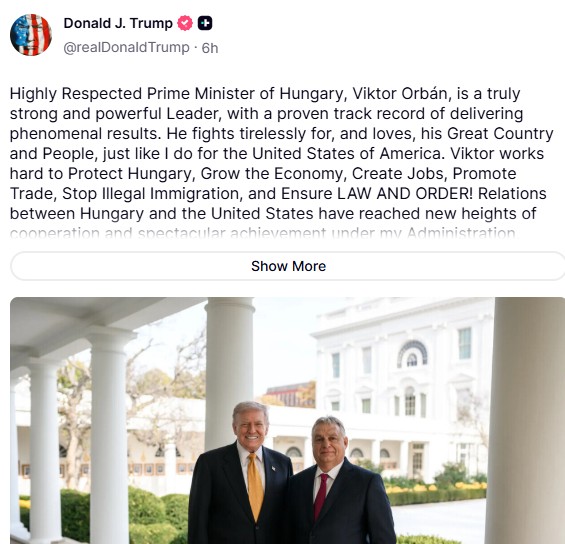
Trump’s hero Orbán: The Art of Eroding a Democracy
In 2010, Hungarian Prime Minister Viktor Orbán came to power. Since then, he and his party, Fidesz, have systematically dismantled the country’s legal system and changed the election system to ensure future election victories. It is becoming harder and harder to criticize the government’s actions due to increasing restrictions by the government on the freedoms for media and civil society. It is not surprising that Fidesz won two-thirds of the seats in parliament 2014 and 2018, despite receiving less than 50 per cent of the votes in the 2014 and 2018 parliamentary elections.
A Rigged Election System
Testimonies from 170 ballot counters indicate that the ruling party gaining its narrow “super-majority” through “a combination of fraud and a rigged election system”. According to the organisation Unhack Democracy, this includes vote buying, “importing” of voters from neighbouring countries, uncertainties regarding the number of voters, election website malfunctions, tampering of votes from abroad, and election software systems built by people close to Fidesz that do not work.
Allocation of State Resources to the Ruling Party
Another way in which Orbán and Fidesz systematically undermine the democratic process in Hungary is by abusing their power to distribute state resources to themselves. International observers from the OSCE-ODIHR, Office for Democratic Institutions and Human Rights, have noted a clear overlap of state resources and Fidesz resources in connection to the elections in the country, making it difficult for other parties to run for power on fair terms.
Shrinking Space for a Political Discussion
Orbán’s xenophobic rhetoric and discrediting of free media do not leave much room for an open democratic political debate. As a voter, it is not easy to make an informed decision about who should rule the country.
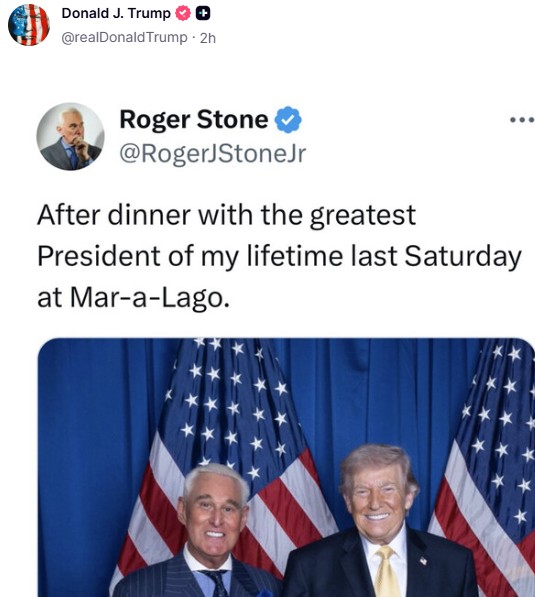
Another hero of Trump
On Friday, President Trump announced he was commuting the three-year prison sentence of Stone.
Stone was convicted by a federal jury of seven felonies, five counts of lying to Congress, and one each of witness tampering and obstructing a congressional investigation, all part of the investigation into how he and the Trump campaign got a hold of e-mails about Hillary Clinton that investigators found were part of a Russian attempt to sway the election.
Remember when being a grandparent meant sitting in a rocking chair watching grandchildren play?
Today’s grandparents are hiking with teenagers, playing soccer, and taking grandkids on adventure vacations that require genuine physical fitness.
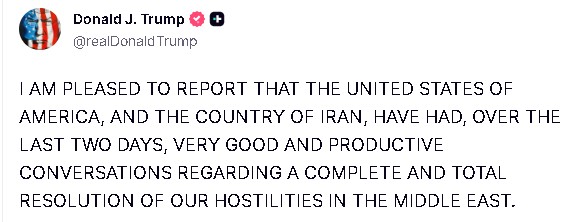
Iran says that that is a lie. They are not in discussions, they hold all the cards! Trump used this to goose the markets and earn millions.
Trump (WAG THE DOG) decided Iran presented an “imminent threat” and nobody else
By all accounts, Donald Trump had all the intelligence he needed to make a wise decision about whether or not to invade Iran.If his anti-war National Intelligence Director, Tulsi Gabbard, is to be believed, she advised him of the dangers. His Vice President, J.D. Vance, urged caution, and General Dan Caine, the chairman of the Joint Chiefs of Staff, had concerns. But he rushed in anyway. It was Trump who decided Iran presented an “imminent threat” and nobody else. At least, that’s what his Cabinet keeps telling us. But despite his protestations, all is not going well. Gas prices are rising, the Strait of Hormuz remains blocked, and people keep dying. The president canceled this month’s planned trip to China for five or six weeks to focus on his war. A superpower summit with China is of crucial importance to the world in a time of great turmoil, much of it created by Trump. Instead, he spends the weekend at Mar-a-Lago, playing a round of golf, and starts the week paying tribute to his troops in… Memphis. (Actually, the tributes were almost all for the commander in chief, as Trump and Hegseth bragged about National Guard troops keeping the peace in an American city.) And then the president took a tour of Graceland. Surely this is a time when America is craving leadership.
Of the 181 American citizens that the Trump administration has accused of attacking federal ICE and Border Patrol officers, close to half have never been charged, and none have been convicted at trial. But the public charges alone have caused them significant harm.
The investigation
The Journal’s team analyzed more than 200 videos associated with allegations of assault against ICE and Border Patrol agents, using both police body camera footage and bystander recordings from social media. Many of the videos cast doubt on the federal government’s claims that agents were assaulted.
The Journal also reviewed more than 100,000 posts on X, posts made in the last year by accounts linked to government agencies and senior government officials.
Each time the government identified a person on a post, the Journal tracked that case through the legal system to see what charges were brought, under what statute, whether the charges were later modified, and what happened to the person in the case.
One of the cases they investigated was that of Sydney Lori Reid, a 44-year-old veterinary assistant in D.C. and a U.S. citizen.
In July, Reid went to a jail to witness an immigration enforcement action. Federal officers had gone there to arrest two migrant men, and Reid said she felt a duty to document it.
As Reid began videotaping, an agent grabbed her and pinned her to a wall. Reid was then surrounded by several federal law enforcement officials. One of them was an FBI agent wearing a face covering and an FBI vest. Two others were ICE officers, dressed in plain clothes, plaid shirts, and khaki pants.
Reid was handcuffed and told she was being arrested for interfering with their operation. Videos reviewed by Critchfield and her team cast doubt on the agents’ claims.
Reid was then placed in a government vehicle and transferred to federal custody. Like many American citizens who wind up in the crosshairs of DHS, she was accused of assault.
The government alleges she assaulted an FBI agent on the basis of scrapes on the agent’s hands, but the scrapes occurred in the process of putting handcuffs on Reid.
The government later charged Reid with felony assault of a federal official, a charge punishable with up to 20 years in prison — a serious federal charge that’s being applied far more broadly now than at any time in recent history.
When Reid was being arrested, she dropped her phone, but the phone was still recording. An agent picked up the phone and put it into the same vehicle that she was riding in on her way to detention.
One officer says: “We’re at the D.C. jail. We’re at the D.C. jail. We have an agitator in custody for …”
Reid was handcuffed in the backseat. You can hear agents going back and forth about exactly how Reid had assaulted them. First, it was a raised knee, then an elbow.
Another officer: “Yeah, it appeared that there was an elbow that was … When she was resisting, but she definitely interfered. So we have interfering and I’m going to get …”
One of the ICE agents called her a stupid female as he was talking to a colleague: “Hey brother, are you good? I have to return to 1D and process this stupid female now that I f—— don’t want to process her.”
Reid was held by federal authorities for roughly two days. She wasn’t allowed to make a phone call during that time.
In the aftermath of her arrest, prosecutors tried to indict her, but that needed to be done through a grand jury, and the grand jury declined to indict her. They tried again before another grand jury, which also declined to indict her. Then they went back to a third grand jury, which declined to indict her.
This is almost unheard of. It showed both the resistance from the public to charge her based on the evidence and the government’s determination to bring charges in this case.
Prosecutors ultimately charged Reid with misdemeanor assault of an officer, a lesser offense that doesn’t require going through a grand jury. Reid was acquitted of that misdemeanor charge at trial.
The Trump Administration’s Strategy
Critchfield and her Journal team found that the push to charge more people for assaulting federal officers — as happened to Reid — is an administration-wide strategy.
Attorney General Pam Bondi and her Department of Justice have pledged to prosecute these cases aggressively. From the very beginning of Bondi’s tenure, starting on her first day in office, she issued a flurry of memos, including one that encouraged prosecutors to aggressively investigate any instances of violence against law enforcement or obstruction of law enforcement.
Gregory Bovino, then the head of Border Patrol, directed his agents to arrest anyone who touched them. “Arrest as many people that touch you as you want to. Those are the general orders all the way to the top, everybody f—— gets it if they touch you. You hear what I’m saying?”
In addition to an increasing number of prosecutions, the Department of Homeland Security has been using social media to exaggerate these alleged attacks, often with a warning to the public: “Don’t be like this person. If you behave in this way, we will come for you.” And they have posted people’s pictures and their full names, seeking to make an example out of these people even before they’re convicted of a crime.
This happened to Reid. A week after she was arrested, her mug shot and name went up on the official ICE account on X, along with the fact that she’s based in Washington, D.C., and a post that said, “Assault an officer or agent get arrested. It’s not rocket science.”
ICE also publicly alleged that Reid assaulted federal agents on behalf of two alleged international gang members.
The Purpose of This Strategy
The Journal’s investigation makes clear that the purpose of this strategy has been to intimidate and silence Americans who might otherwise protest what ICE and Border Patrol are doing.
ICE publicly describes many of these protesters as rioters, agitators, thugs, and terrorists.
Here’s Vice President JD Vance speaking of Renee Good’s death:
“I can believe that her death is a tragedy while also recognizing that it’s a tragedy of her own making and a tragedy of the far left who has marshaled an entire movement, a lunatic fringe against our law enforcement officers.”
And here’s then-DHS Secretary Kristi Noem on the death of Alex Pretti:
“This individual who came with weapons and ammunition to stop a law enforcement operation of federal law enforcement officers committed an act of domestic terrorism, that’s the facts.”
Renee Good was in her car when she was killed. Critchfield and her team found that federal government officials have accused 32 U.S. citizens of intentionally using their vehicles as weapons. DHS considers a vehicle to be a deadly weapon, justifying the use of force. Of those 32 drivers, only one pleaded guilty to an assault charge. Three had their cases dismissed; the rest were never charged.
The Journal investigation found that in most cases where citizens were accused by the government, the outcome was similar to Reid’s.
181 citizens were accused by the government on X of attacking federal officers, but close to half of them were never even charged at all. When people were charged, more often than not, the cases fell apart. Either they were acquitted or found not guilty at trial.
Fifteen people mentioned in government posts pleaded guilty before going to trial. Ten of whom pleaded guilty for lesser offenses than what the government initially charged them with.
Videos have often played major roles in contradicting the government’s case. Critchfield and her team viewed videos that repeatedly cast doubt on the government’s allegations. Protesters were often called violent rioters or professional agitators and accused of making physical contact in some way with agents, but video footage often showed immigration agents being the first to lay their hands on demonstrators.
The Journal found that most of the government’s assault allegations against American protesters posted on X were unsubstantiated. Even federal prosecutors themselves acknowledged that in some cases, the evidence to back up these charges wasn’t there.
Federal prosecutors across the nation told Critchfield and her team that they are facing intense pressure to charge demonstrators and bystanders with crimes even when video evidence contradicts what officers initially claimed about what occurred, or in situations where they wouldn’t normally pursue federal charges.
The costs to those who are arrested are substantial. Even in cases where the person is exonerated, they must still deal with posting bail, securing defense attorneys, and taking days off from work to appear in court. In more extreme cases, people are doxed online and face death threats.
Reid says she’s been more hesitant about engaging in political speech, even though, as she put it, “Those are our rights as U.S. citizens and they’re being stifled.”
Conclusions
The Journal’s investigation concluded that:
“U.S. citizens are caught in the crosshairs of an aggressive government campaign to detain and demonize detractors, including by calling them terrorists, rioters, and agitators. The Department of Homeland Security, which was created in 2002 to protect Americans, has turned its force against U.S. citizens.”
By putting a public bull’s-eye on Americans whom the government accuses of assault, the Journal also found that the Trump administration is chilling First Amendment expression:
“People who had been accused publicly by the federal government of assaulting federal officers … are less likely to participate in protests and less likely to put themselves in situations where their name might be tracked…. There is a real pressure to crack down and send a message to people who the government views as perceived dissenters, even if video contradicts what agents have initially claimed happened.”
Friday’s press gaggle.
At 12:03 PM, President Trump told reporters he wanted a ceasefire with Iran.
At 12:05 he declared victory.
At 12:07 he announced he was sending Marines.
At 12:08 he said no boots on the ground.
At 12:11 he said he did not want a ceasefire.
At 12:16 he declared victory again.
At 12:17 he asked for a ceasefire.
At 12:23 he told NATO they were cowards.
At 12:29 he said Iran was begging for a ceasefire.
At 12:31 he said everything was perfect.
At 12:36 he said $500 oil was a good thing.
At 12:37 he demanded Iran open Hormuz.
At 12:39 he said Hormuz was never closed.
At 12:41 he said the US was not at war with Iran.
At 12:42 he declared victory in Iran.
Not as rosy as Trump says!
At least 16 aircraft have been shot down or crashed, including 10 Reaper drones, three F-15s and a KC-135 tanker, Bloomberg reported. Five other KC-135s were reportedly damaged by an Iranian missile strike on an airfield in Saudi Arabia, and an American F-35 fighter jet was forced to make an emergency landing after a combat mission on Thursday in the Middle East. In contrast, during the 2011 U.S. military intervention in Libya, another large-scale air campaign, there were just three reported combat losses over four months. A Reaper can cost upwards of $56.5 million apiece($565M), F-15s can go for $90 million to $97 million($300m), and KC-135s are worth $70 million to $80 million($400m). The F-35 is the most costly, coming in at $90 million to $100 million per plane.(Total more than a BILLION dollars in three weeks!) U.S. forces are also experiencing wear and tear on their ships, with the largest aircraft carrier, the USS Gerald R. Ford, arriving in Crete, Greece, on Monday for repairs after a March 12 fire onboard injured two sailors and damaged some 100 beds. The ship was also reportedly having issues with its toilet system. “We saw last year that about a quarter of the Navy’s deployed service fleet went to the Western Hemisphere for Venezuela operations, and now I’m seeing numbers of over 40 percent of deployed Navy ships for Iran operations. That stuff takes a toll. It’s wear and tear,” Jones said. “We see that with what’s happened to the Gerald Ford — the fire in the main laundry room — and some of the other maintenance problems that have led to the emergency creep,” he added. Washington’s munitions stockpiles also have taken a hit, with shortages in precision, high-end munitions and interceptors becoming more likely the longer the war continues. American forces are expending a significant amount of Terminal High Altitude Area Defense and Patriot interceptors, the Advanced Medium-Range Air-to-Air Missile, Tomahawks and ship-launched missiles. Trump in early March insisted that U.S. munitions stockpiles of medium- and upper-medium-grade weapons have “never been higher or better,” and that he was told the armed forces “have a virtually unlimited supply of these weapons.” Katherine Thompson, a former Trump administration official and now a senior fellow at the Cato Institute, was skeptical of these claims, telling The Hill, “I would be most curious to understand what the definition they’re using in terms of what stockpiles they’re talking about, because I think that context matters.” She added that depleted munitions stockpiles are one of the most significant, long-term effects of the war, given that such weaponry cannot quickly be replaced. Washington’s weapons cache already took a hit during the Biden administration when the U.S. sent billions of dollars’ worth of lethal aid to help Ukraine in its war with Russia. “The Trump administration unfortunately inherited a really crappy situation when it comes to the state of our munitions stockpiles, and just overall U.S. readiness to engage in a conflict like Iran, or even to do any of the other priorities that the Trump administration has stated are top of mind for them,” Thompson said. “But then we took the step of entering this war of choice and knowing the risks on our stockpiles and munitions writ large, and knowing what we would have to do to defend the region, and also not having solved the replenishment problems.”That could spell trouble should the U.S. get drawn into another conflict, with China, for example, should Beijing make good on its threats and look to take Taiwan while Washington is otherwise occupied in Iran. “I’m very concerned that because of the choices we’ve made … that we would be prepared to back up a deterrence by denial, or to win in the event that we got drawn into conflict over Taiwan, if the Chinese decide to make a move here,” Thompson said.
Our leaders are going nuts
Former Joe Rogan Guest Selected by RFK Jr to Advise on Vaccines Once Claimed People Were ‘Hypnotized’ to Believe COVID-19 Reports
Published Jun 12, 2025 10:49 AM EDT By M.B. Mack
Health Secretary Robert F. Kennedy Jr. has appointed eight new members to a federal vaccine advisory panel, including Dr. Robert Malone, a controversial figure who once claimed people were “hypnotized” into believing official COVID-19 guidance.
On Wednesday, Kennedy announced the new slate for the Advisory Committee on Immunization Practices (ACIP) on an X post. The panel advises both the CDC and HHS on vaccine policy.
According to Kennedy, all eight appointees are committed to requiring robust safety and efficacy data before recommending any new vaccines. Among the group is Malone, a former researcher involved in early mRNA studies who gained notoriety for his 2021 appearance on The Joe Rogan Experience.
In the episode, he likened COVID-19 health messaging to mass hypnosis and made comparisons between vaccine mandates and Nazi-era medical experiments—comments that drew widespread backlash from public health experts.
Following the episode, over 250 healthcare professionals signed an open letter urging Spotify to address what they called the podcast’s promotion of COVID-19 misinformation, according to the Daily Beast. Malone has since defended his remarks, claiming that labeling dissent as misinformation is a tactic used to discredit legitimate debate.
The other new ACIP members include Dr. Martin Kulldorff, known for opposing pandemic restrictions, and several researchers and physicians with backgrounds in public health and epidemiology. The committee’s next meeting is scheduled for June 25.<hr><p>
The Interior Department agreed to pay $1 billion to stop wind farm construction.
Our money going to stop a great thing!!
What to know: The Trump administration agreed to pay French energy firm TotalEnergies $1 billion to stop building two wind farms off the coast of New York and North Carolina.
TotalEnergies won bids for leases on the two projects during the Biden administration. As part of the new deal, they will invest the project funds into fossil fuels.
When an we get rid of him?
Trump is in trouble
A decade ago, Trump lambasted Barack Obama for giving Iran a sizable amount of money in exchange for nuclear and prisoner concessions, but now, in an attempt to slow rising gas prices, he’s lifted sanctions on Iranian oil that have been in place for 50 years, which will allow the country to raise some $14 billion. As Senator Chris Murphy (D-CT) said, “We’re literally putting money into the pockets of the very nations that we are fighting right now. We’ve never seen this level of incompetence in war-making in this country’s history.”
At the same time, Trump has worked his way into a corner where extracting the U.S. from the war under favorable terms appears increasingly impossible. Monday he touted supposed negotiations with Iran, but Iran says such talks are entirely fictitious.
As former Defense Secretary and Central Intelligence Agency director Leon Panetta said, “He tends to be naive about how things can happen. If he says it and keeps saying it, there’s always a hope that what he says will come true. But that’s what kids do. It’s not what presidents do.”
This is all happening as Trump becomes increasingly embroiled in a corruption scandal at the Department of Homeland Security, in which it is becoming apparent that not only did the president’s cronies improperly leverage their positions for financial gain, but that Trump himself seemed to have some awareness of it. In an attempt to distract from that, Richardson points out, he posted a rant about Democrats, saying that their refusal to move forward with disputed DHS funding has forced him to send ICE agents to airports “where they will do Security like no one has ever seen before … with heavy emphasis on those from Somalia.”
The list goes on from there. Posting that he’s “glad” Robert Mueller died. Cracking a Pearl Harbor joke in front of the Japanese Prime Minister. Posting that “the greatest enemy America has is the Radical Left, Highly Incompetent, Democrat Party,” shortly after a story came out about a Bureau of Prisons staff shredding “suspicious” amounts of documents in the wake of Jeffrey Epstein’s death. (A stunning new investigation from Julie K. Brown and Claire Healy in the Miami Herald reveals that in the days following Jeffrey Epstein’s death inside a Manhattan federal jail, bags and bags of documents were shredded and hauled out of the facility—and no one can fully explain why.)
With the war in Iran, the implications of Trump’s floundering have become global. As he thrashes for a way out, it’s becoming increasingly clear that, as Phil Gordon, former White House coordinator for the Middle East, put it, the president’s increasingly “desperate” behavior comes from a “recognition of the situation Trump’s own actions have created and the lack of available alternatives for dealing with it.”
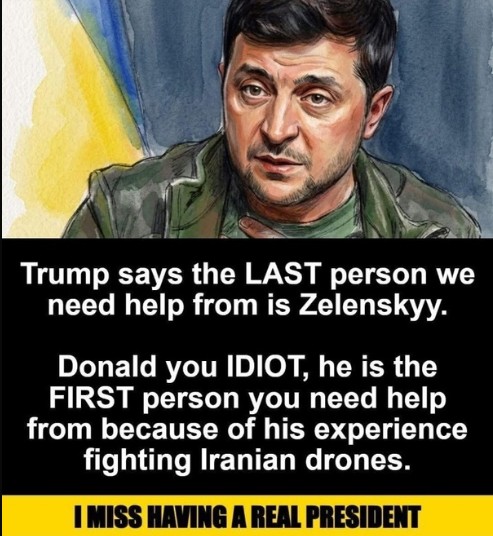
Trump has created more pollution
Most of the world has seen natural gas prices surge due to disruptions from the Iran war. Tehran has retaliated by largely closing off the Strait of Hormuz, through which 20% of the world’s liquified natural gas flow. Iran also attacked Qatar’s Ras Laffan Industrial City, damaging two LNG production trains that will impact about 17% of the country’s LNG exports—and repairs may take up to five years. While most LNG from the Middle East goes to Asia, the supply shock will ripple through global markets as Asia and Europe compete for the remaining gas. European benchmark gas futures jumped as much as 35% on Thursday to about 70 euros per megawatt hour, or more than $20 per million BTUs, double their prewar levels. The latest price spike comes at a sensitive time for Europe. After heating demand drew down gas inventories during winter, countries must now restock supplies this summer. In Asia, the situation is so dire that countries have already started looking ways to ration energy, such as implementing four-day workweeks and working from home. A prolonged closure of the Strait of Hormuz could send LNG spot prices in Asia above $30 per million BTUs in the summer from $26 this spring, analysts told Bloomberg. And if it remains shut in six months, the price could even top $40.Some countries in Asia are even turning to coal to generate electricity, returning to their 2022 playbook. The Thai government, for example, has already ordered coal-fired power plants to operate at full capacity. Utilities in Bangladesh have also boosted their coal consumption. South Korea and Taiwan, which produce much of the world’s semiconductors, have signaled they are preparing to rely more on coal. “Asia is in full price competition, with any country that can switch from gas to coal doing so,” Henning Gloystein, a managing director for energy at Eurasia Group, New York Times.China has now entered the Iran–US conflict.
Two ships from Iran’s shipping line IRISL — Shabdis and Berzin have departed from Gaolan Port in China, and it is being claimed that they may be carrying chemicals that can later be used to produce rocket and missile fuel.
However, these ships leaving China will have to pass through the same region of the Indian Ocean where, on March 4, 2026, a US submarine sank the Iranian warship IRIS Dena.
In such a situation, if the United States attempts to stop this supply coming from China, the challenge will directly involve China.
If that happens, China could completely halt the supply of rare earth minerals, which would make it difficult for the US to manufacture intercepting missiles.
And if the ships successfully reach Iran, the Iran–US conflict will continue, but incresed in intensity.
In other words, no matter what happens, China is positioned to benefit either way and Trump is destined to be challenged.
President Trump Gives Iran 48 Hours to Open Strait of Hormuz — Or U.S. Will OBLITERATE Power Plants
NOTE it is not closed, Iran is letting friendly ships pass.
IRGC response : Strait of Hormuz will be ‘closed’ if power plants targeted
In a statement broadcast by Iranian media, the Islamic Revolutionary Guard Corps (IRGC) says it will “completely close” the Strait of Hormuz if the US targets Iranian energy infrastructure.
Maybe by sinking a ship in the channel?
Resolute Desk
HMS Resolute was a barque-rigged ship of the British Royal Navy, specially outfitted for Arctic exploration. Resolute became trapped in the ice searching for Franklin’s lost expedition and was abandoned in 1854. Recovered by an American whaler, she was returned to Queen Victoria in 1856.
Timbers from the ship were later used to construct the Resolute desk which was presented to the President of the United States and is currently located in the White House Oval Office. The design was a gift to Rutherford B. Hayes from Queen Victoria in 1880.
DIMPLES
If the dimples on a golf ball reduce drag, why don’t we see dimples on airplanes or cars?
In 2012, Jamie Hyneman and Adam Savage tested this exact premise on the TV show MythBusters. Here ‘s the car they used; the dimples were created by adding a layer of clay to the surface, which actually increased the car’s weight significantly.
What they did was drive the car in three different situations: the first was the car in its normal state, the second the car covered in clay, and the third the car with clay and dimples.
Once the tests were carried out, the results for each car were as follows:
NORMAL CAR – It gave a consumption of 26mpg which is equivalent to 9,047 l/100km.
CAR WITH CLAY – It gave exactly the same consumption, 26mpg which is equivalent to 9.047 l/100km.
CAR WITH CLAY AND HOLES – It achieved a consumption of 29.6mpg which is equivalent to 7.946 l/100km → The Golfista trim used 12.2% less gasoline!
Now, here’s my question for you: would you drive a car that looked like this?
I suspect most people wouldn’t. So it’s probably more a matter of appearance than cost, not to mention the water and dirt that would collect in the dimples—that would be quite inconvenient.
My brother Donald:
“Next time I get a big dent in my car I’ll take my sledgehammer to the body and I’ll let you know if it runs any better.”
How about airplanes??? Dimples under the wings? Along the body? 🙂
IKEA
IKEA might sound like a Swedish word, but it’s actually an acronym that incorporates its founder’s name, Ingvar Kamprad, and two aspects of his home, Elmtaryd (the farm he grew up on) and Agunnaryd (a nearby village).
Honeymoon
“Honeymoon” originates from a European tradition where newlyweds drank mead, a fermented honey beverage, for one moon cycle (a month) after their wedding to promote fertility and virility. The “honey” represents this sweet, alcoholic drink and the initial sweetness of marriage, while “moon” refers to the month-long duration.
The numbers are staggering:
New reports show Donald Trump has made at least $1.4 BILLION from the presidency.
And when you add in his family? Estimates say they’ve pocketed over $4 BILLION total.
Let me be clear: This isn’t speculation. This isn’t a conspiracy theory.
It is a documented fact that Donald Trump is running the White House like a mob operation. He’s using public office for private gain, selling access to the highest levels of government, and exploiting the presidency like a personal ATM.
This is theft. It’s corrupt, it’s unconscionable, and it’s illegal.
But Congress is doing NOTHING
Maybe Donald Trump can publish another bestseller, an updated rewrite of Dale Carnegie’s 1936 “How to Win Friends and Influence People.”
After all, since his years as the “You’re Fired” guy on “The Apprentice” television show, Trump has managed to bamboozle, cheat, directly insult and generally offend even his own Art of the Deal ways into a remarkable series of off-putting strategies that are consistent only in the result of throwing pretty much everyone with whom he has dealt under the nearest bus.
It’s bad enough that he hates his enemies, yesterday rudely cheering the death of former FBI Director and Special Counsel Robert Mueller for deigning to investigate him, but Trump regularly now turns on his allies.
Just as Trump rewrote dealmaking as an artform based on cleverness in finding mutually agreeable trades for belligerence and threats, perhaps his new rewrite of friendships could exploit economic blackmail and military dominance as courtships to lasting relationships.
In this year back in the White House alone, Trump has managed single-handedly and without pressure ruined decades of personal and official ties to European allies and set off a hemispheric panic. He has breathed new life into failing enemies like Russia’s Vladimir Putin and set off chasms within his own domestic political alliances.
This week, Trump managed to offend G-7 and NATO partners whose help he simultaneously was demanding to re-open the Strait of Hormuz — despite being unable himself to have avoided the predicted Iranian response to preemptive war. He called them “cowards,” even while demanding they commit warships to a fight he decided to start alone, shunning their advice. He said clearing the Strait was “easy,” wanting them to do it, but threatened to withdraw from attacking Iran without the U.S. doing the clearing work itself.
Whether the target is Ukraine’s leader or the Japanese Prime Minister sitting in that Oval Office chair while Trump preens, the visitor waits expectantly now for a Trump remark that makes clear that “diplomacy” with an ally involved insult.
Apart from all else, Trump has confused friends of the U.S. with constantly changing policies and justifications for the war. By week’s end, he even was showing discord with his one seemingly true international friend, Israel’s Benjamin Netanyahu, over whether there is a way out of this war. Netanyahu clearly sees a continuing war as helping him domestically.
Trump Cracked Base Remains
Yet, despite disagreements even within his base of supporters, Trump still owns Republican legislators who fear his reelection wrath for themselves. And Trump was still holding approvals from a third or more of the polled public who seem willing to swallow anything in the name of breaking government and making anti-trans and anti-immigrant sloganeering the nation’s highest priorities.
For whatever reasons, his supporters continue to find his words, however contradictory, more comforting than his deeds, willing to overlook attitudes that touch racism, divisiveness, dictatorial power and now even war as justifiable towards some larger goal of breaking the status quo.
Millions of words have been spilled over the Trump magic of holding supporters close during one of his “transactional deals,” only to stab them in the back soon thereafter.
The skeletons of former Vice President Mike Pence, former attorney generals, chiefs of staff, defense figures, generals and such rigid Republican senators as Mitch McConnell or Kevin McCarthy line the entry way into the Oval Office.
Apparently, the only thing worse than having Trump as a sworn enemy is to have him as a vocal friend – only to find the enemy is a scratch comment away.
The idea that Trump stands for nothing other than an image of strength, for ideals that last only long enough to complete an impatient transaction, are now cemented into the Trump legacy. In his name, Americans who do not kneel to him get hurt, and even political or international “friends” are always on trial with him.
Trump has insisted for decades now that only he alone can recognize and solve problems, that he needs no advice and counsel, and that, in fact, he hates systems of rules and traditions – including from the Constitution — that might block acting on his often-uninformed gut. In recent weeks, this isolationist decision-making has been on display with a series of nasty congressional hearings that feature his Cabinet members unable to explain even the most basic contradictions in Trump’s utterances and departmental policies affecting national security, immigration, justice, health or environment.
Trump has embraced personal, national, even moral uncertainty as a weapon in winning friends and seeking global influence. It’s not what we have taught our kids.
The reason Trump is trapped — and why Americans are up a creek
Robert Reich March 22, 2026 | 06:27AM ET
This week, Trump said that he’d do whatever is necessary to ease the oil crisis. He also assured America that the crisis “will be over soon.”
Bullshit.
The problem isn’t just that Iran has blocked the Strait of Hormuz. It’s also that Iran, Israel, and the United States have all inflicted — and continue to inflict — serious damage to the oil and gas infrastructure of the Middle East. This damage will take months if not years to repair.
At one point on Thursday oil prices jumped to $119 a barrel before falling back to around $111 a barrel — all but guaranteeing that the price of gas at the pump will continue to rise, as will the prices of many other products and services indirectly affected by oil prices.
What we are now witnessing is one of the grossest military and political blunders in modern history.
It’s not hard to understand why Trump is trapped in Iran. He doesn’t listen to anyone outside his small circle of sycophants who tell him what he wants to hear.
But there’s something else. Iran has adopted an asymmetric war strategy that’s working.
I’m indebted to Marty Manley for uncovering a fascinating historical fact that sheds light on what Iran is doing. During the Korean War, U.S. Air Force Colonel John Boyd came up with a theory of competitive decision-making that shaped American military doctrine for a generation. He called it the OODA loop: Observe, Orient, Decide, Act.
Boyd found that victory doesn’t go to the side with more firepower. It goes to the side that cycles through the OODA loop faster — observing what’s changing, orienting to its meaning, deciding what to do, and acting before its adversary does.
Get inside your opponent’s loop, Boyd reasoned, and you don’t just outpace him. You break his ability to form a coherent picture of the war he’s fighting.
Manley observes that Iran has adopted Boyd’s approach. Iran hasn’t needed to match American firepower; it’s needed only to generate economic and political problems for Washington that outrun Washington’s ability to orient, decide, and act.
Iran has gotten inside Trump’s OODA loop because Iran has responded to U.S. airstrikes by widening the war horizontally — attacking tankers in the Strait of Hormuz, launching drones and missiles at Gulf state oil and gas infrastructure, provoking the U.S. and Israel to destroy even more of that infrastructure, hitting Amazon data centers in the United Arab Emirates and Bahrain (causing regional outages for banking, e-commerce, and cloud services), and squeezing other choke points that the global economy depends on.
Iran’s leaders — veterans of asymmetric wars in Iraq and Syria — are applying the same asymmetric logic to Trump’s war. Inexpensive drones, short-range missiles, and sea mines can have the same effect that IEDs had in Iraq — only with far greater strategic impact, because they disrupt global supply chains.
What has Washington done? Dropped more bombs and launched more missiles.
On Wednesday Israel struck at the crown jewel of Iran’s energy industry — the giant South Pars gas field that Iran shares with Qatar and is by far the largest in the world. (Israel says Trump gave the attack his blessing; Trump says he didn’t.) Iran quickly retaliated with an attack on Qatar’s Ras Laffan Industrial City, the world’s largest liquefied natural gas facility.
The attacks have sent the global oil benchmark soaring and prompted a mad scramble in Washington. Trump threatens “to blow up the entirety” of Iran’s South Pars gas holdings if Iran attacks Qatar again. His treasury secretary says the U.S. will consider lifting sanctions on millions of barrels of Iranian oil.
Since he and Israel began bombing Iran, Trump’s strategy has been entirely reactive. Iran is generating problems for Washington faster than Washington can contain them — a clear sign that Iran is inside Trump’s OODA loop.
Trump and Israel assumed that overwhelming airpower would either compel Iran to surrender or trigger regime change. But neither has happened. The regime seems more entrenched and bellicose than ever.
As Iran continues to block the Strait of Hormuz and attacks its Gulf neighbors’ oil and gas infrastructure, the cost-benefit ratio continues to shift against Trump: Economic and political pressures are mounting on Washington faster than they are on Tehran.
Sure, Iran is hurting — but, as Manley argues, Iran can sustain its counteroffensive more easily and longer than the U.S. can sustain economic damage to Iran. An Iranian Shahed drone made of Styrofoam and powered by a motorcycle engine, for example, costs orders of magnitude less than the precision missiles sent to intercept it or the economic havoc it causes when it ignites a tanker, data center, or desalination plant.
In addition, the longer Trump’s OODA loop stays broken, the more bad consequences occur that no one in the Trump regime anticipated. Trump’s war in Iran is now being led by Israel rather than the other way around, and Trump has no easy way to alter this power imbalance.
The war has also shifted the power balance between Russia and Ukraine, with Russian oil revenues potentially doubling as U.S. weapons stocks become depleted.
So what’s next for the U.S.? Is there any way out for Trump?
He could put “boots on the ground” in Iran and attempt to seize Iran’s stockpile of approximately 970 pounds of 60 percent enriched uranium — enough to produce multiple nuclear weapons if further enriched. If he could pull this off, a major feat.
But this would be a particularly dangerous move in terms of American lives lost. It could even risk an accidental nuclear explosion.
Moreover, no one knows where the enriched uranium is being stored. In the wake of U.S. and Israeli strikes last June, it’s likely in deep underground tunnels near Isfahan and other secure locations, but the International Atomic Energy Agency can’t verify the exact locations or status of the stockpile due to lack of access to bombed sites.
What about returning to the diplomatic table? As Richard Haass points out, Trump hardly gave diplomacy a chance before launching his war. U.S. envoys Witkoff and Kushner blended maximal positions — effectively demanding an end to Iran’s nuclear program, ballistic missile force, and support for proxies — with minimal time for negotiation.
Haass notes the stark contrast between this process and the administration’s apparently endless willingness to give Russia the benefit of the doubt and compromise Ukraine’s interests.
If Trump returned to negotiations now, from a position of demonstrated military capability rather than exhaustion, Iran might be forced to reorient and respond to an adversary that did something unpredictable.
The problem is that the Trump regime has repeatedly reneged on his promises to Iran, so Tehran has no reason to believe any offer Trump makes.
So, presumably for the foreseeable future, Iran will remain in Trump’s OODA loop, Trump will remain trapped in Iran, and American consumers will be trapped by soaring energy prices.
Russia may test Trump’s Cuba’s blockade with oil tankers crossing Atlantic
by Sophie Brams – 03/20/26 5:27 PM ET Two vessels carrying Russian oil are reportedly heading for Cuba in the coming days in a move that could test President Trump’s longstanding blockade, according to the Financial Times, citing maritime intelligence companies. One of the tankers making its way to the Caribbean island is Sea Horse, a Hong Kong-flagged ship estimated to be carrying approximately 190,000 barrels of gasoil from Russia, according to tracking from maritime AI company Windward. The Associated Press reported Thursday that another ship, the Russian-flagged Anatoly Kolodkin, is roughly 3,000 nautical miles from Cuba and expected to reach the island in 10 days. Cuba has plunged into a deep economic and energy crisis due to an oil embargo put in place by the Trump administration in January following the U.S. military operation in Venezuela that led to the capture of President Nicolás Maduro. The island’s electrical grid collapsed earlier this week, leaving nearly 11 million people in the dark for more than 29 hours before power was partially restored. The nation is also facing a worsening humanitarian crisis with limited access to food, water and medication. The U.S. has sought to leverage economic pressure to push political reform in Cuba, with Trump warning other countries not to do business with the island nation. The Treasury Department has maintained the blockade, even as it eases sanctions on some Russian and Venezuelan oil in a bid to boost global supply amid the conflict with Iran. Analysts have told The Hill that the Trump administration’s actions are unlikely to have much of an effect on surging prices and that the only meaningful way to do so would be to reopen the Strait of Hormuz. No shipments of oil have arrived on Cuba’s shores in three months, but that could change if the two tankers arrive as anticipated over the next several weeks. Despite Trump’s threats, Kremlin spokesperson Dmitry Peskov said Tuesday that Moscow was “ready to provide all possible assistance” to officials in Havana, according to The Moscow Times. The potential escalation comes as the U.S. and Cuba are holding discussions to address “bilateral differences” and identify “areas of cooperation,” according to Cuban President Miguel Díaz-Canel. Díaz-Canel on Wednesday accused the U.S. of threatening the country “almost daily” and pledged to meet any potential aggression with “impregnable resistance,” days after Trump said he believes he will have the “honor” of taking over Cuba. “Whether I free it, take it, I think I can do anything I want with it,” Trump told reporters Monday. “You want to know the truth? They’re a very weakened nation now.”
Murkowski Speaks Out About the SAVE America Act on Senate Floor
Madam President, I’ve come to the floor to speak about the SAVE America Act. Unfortunately, I must rise in opposition.
While I support the general intent of this bill – that only U.S. citizens should vote in our elections and valid ID should be presented when voting – I cannot support it as drafted.
There are multiple versions of this bill, so I am going to focus on the latest: the substitute amendment to Senate Bill 1383, which is in front of us this week. And I am going to focus on the practical challenges it creates for Alaskans.
First, the bill’s provisions are effective immediately. Alaska would have to comply with new rules that contradict state law when we are already deep into this election cycle. The general election is less than eight months away. Alaska would be forced to bear the entire cost of implementation because the bill does not include any federal funding. This would be a tall order, and scarce resources would have to be redirected from other important programs in the state.
Second, the bill requires the presentation of documentary proof of citizenship—in person—to register to vote. This would be a major departure from how most Alaskans currently register to vote. In 2024, over 80 percent of applicants registered by mail, online, or through PFD applications and in 2023, that number was more than 90 percent. There were about 29,000 new voter registrations in 2024. The SAVE America Act would have forced over 25,000 of these Alaskans into Alaska Division of Elections offices, and potentially state public assistance agencies, DMVs, and other locations the state has designated as voter registration agencies.
Alaska has six regional election offices—in Juneau, Anchorage, Fairbanks, Nome, Wasilla, and Kenai—where the SAVE America Act is clear that Alaskans could present documentary proof of citizenship. What is less clear is whether Alaskans could provide these documents at DMVs, state public assistance offices, or other locations that currently provide in person voter registration services, though at very low levels.
The SAVE America Act does not change federal law mandating that states designate their public assistance and disability offices as “voter registration agencies.” That might extend options for voter registration beyond the six regional election offices, but the law is not consistently enforced. The Sitka office, for example, is currently “limited to general inquiries” only. If that changes, it’s unlikely to be feasible. Those offices are not equipped to handle the influx of in-person voter registrations the SAVE America Act could force upon them, especially without additional resources, and regardless, should be focused on their core mission to support the basic needs and self-sufficiency of Alaskans.
States may also continue to designate other government and non-government offices as voter registrations agencies, but only if those offices agree. I seriously question who will want to do that because of the new private rights of action and criminal penalties the bill would create. Or if the State will be able to afford to either train enough employees or hire new ones to do this work—at any voter registration agency.
Let’s talk about what in person voter registration means in Alaska, as opposed to New York City or Miami. The practicalities of forcing Alaskans to register to vote at one of our six regional election offices, or possibly another location in the state, is not a simple matter. About 83 percent of Alaska’s communities—20 percent of our total population—are not connected by road. This means many Alaskans would have to fly to one of these offices to register.
If you’re in Southeast, you may have to fly to Juneau. If you’re in Southwest, to Anchorage. In Northwest, that could mean you’re flying to Nome. If you’re on the North Slope, you’re flying to Fairbanks.
That’s going to be hard for thousands of Alaskans. It’s going to be expensive. And many who are eligible to vote, who are citizens of our country, will decide they can’t afford it or simply aren’t going to do it. They won’t register. They won’t vote. And while disenfranchisement may not be the intent of the SAVE America Act—in my home state, I fully expect it to be the outcome.
Let’s say you’re a 17-year-old who lives in Savoonga, a village out on Saint Lawrence Island. You’re turning 18 in October and want to vote for the first time this year. You’re excited about it—you’re ready for it—until you understand what it now requires from you.
You’re going to have to book a flight to Nome. That’s going to cost you $720. You’re going to have to stay overnight, and there aren’t a lot of hotels in Nome, so, a night at the Aurora Inn is $310. Add in your food and cab fare, and you’re probably looking at around $1,100.
For a quick trip to Nome to register in person to vote.
And remember: you’re 17, about to turn 18, and not exactly flush with cash to spend on this or anything else.
That’s a best-case scenario. Flying in and out of Savoogna isn’t guaranteed. Jets can’t land there, so you have to take a prop engine plane. You can get weathered in or out and that can delay your trip by several days.
If a storm blows in and you can’t travel for a week, and you’ve left this until the last minute, as we know teenagers like to do, you might miss your window and not be able to vote this year. And if you get stuck during your trip, that’ll add to your costs until you can get home.
Or maybe you’re a fisherman who lives in Unalaska, way out on the Aleutian chain. The flight to Anchorage, which is the closest option to register to vote even though it is about 800 air miles away, costs more than $1,400. That’s just for the flight. You’ll also need a hotel, cabs, and food while you’re in Anchorage because it is not possible to fly in, go register, then fly home the same day.
Or let’s say you are a resident of Kipnuk, which was devastated by Typhoon Halong in early October 2025. Your house washed away, and even though you had the documents you need to prove your citizenship, you lost those along with your home.
Storms like that aren’t as rare as they used to be. Dozens of communities in Alaska have been impacted by them just in the past few years.
A couple thousand Alaskans are now rebuilding and counting on the federal government to help them, not add to their burden.
Not to mention, these are often fall storms. Future voters could lose everything they need to register to vote just days or weeks before an election, and it would be impossible to replace those documents in time.
One final example – Alaska did not become a state until 1959. So, let’s say you are an 85-year-old Alaska Native man who has spent his entire life in Selawik. You were born in your parents’ house. Getting a certified copy of your birth certificate if you have never had one before will be incredibly difficult.
That leads to the next set of problems with the SAVE America Act: the cost and potential challenge of securing the documents you need to prove citizenship in the first place. Passports cost at least $130 and applications take four-to-six weeks to process unless you pay a fee to expedite everything. Alaska’s passport statistics are pretty high compared to other states, but only about 50 percent of Alaskans have one. Getting a certified copy of your birth certificate or marriage certificate from the Alaska Office of Vital Records costs $30 for each document. And, by the way, right now, Vital Records has a notice on its website that there is a processing time of one-to-two months. So, save up, and plan well in advance.
I also want to emphasize the particular challenge this documentary proof of citizenship requirement poses for women. In Alaska, an estimated 155,000 female citizens age 15 years and older have names that do not match their birth certificates due to last name changes or hyphenation. So, they’ll have to gather a paper trail of evidence that may not be readily available, costs money to get, and takes weeks or months to receive to prove not only who they are but also that they are U.S. citizens. I can speak personally to how difficult this is—a supervisor at the DMV had to sign off that I am in fact myself in order for me to get my REAL ID because I did not have enough documentary proof.
Let’s assume that you are registered to vote. The SAVE America Act now includes a new photo identification requirement to vote in a federal election. As I’ve repeatedly said, I support voter ID and Alaska requires ID to vote, but this bill goes too far and could disenfranchise voters who have been voting for decades, simply because they cannot produce a piece of ID with a photo on it. Even Tribal IDs would no longer be sufficient to prove identity unless they have a photo and an expiration date which many don’t currently.
The bill includes an exception that would allow voters to provide the last four digits of their Social Security Number and an affidavit attesting they were unable to obtain a copy of a valid photo identification “after making reasonable efforts to obtain such a copy.” But the bill does not define reasonable efforts, opening voters to liability and potentially resulting in different standards across the states.
This version also goes further and sets a new default rule for federal elections of in-person voting, which contradicts Alaska’s long-allowed “no excuse” absentee voting by mail.
Absentee ballots would only be allowed if the voter (1) is a member of the uniformed services and stationed abroad or out-of-state; (2) is unable to vote in person due to “illness, infirmity, hospitalization, or physical disability; (3) is the primary caregiver of an individual who is medically incapacitated; or (4) will be absent from the state due to verified travel. There’s also now a fifth “hardship” category, but the bill’s drafters are clear that this is meant to be construed narrowly. The bill then goes on to prescribe very specific chain of custody rules for a state’s handling of absentee ballots on top of the other changes the SAVE America Act would mandate be implemented immediately.
Over 50,000 Alaskans voted by mail in the 2024 general election, but this bill would largely put an end to that.
Again, I support the basic stated goals of the SAVE America Act. Only U.S. citizens should vote in our elections, and federal law already makes it a crime for noncitizens to vote in federal elections. Voters should be required to present identification, which state law requires and lists specific forms of ID work to prove identification in Alaska. But, as written, this bill would create huge impediments for Alaskans that I simply cannot support.
I have additional issues with the reforms the legislation would impose on states, including the federalization of the election process, as opposed to the state-driven process contemplated by the Constitution.
One example is the requirement for states to run their voter rolls through a federal database that was not designed for this and has already had legitimate issues for multiple states.
I’m not convinced of the need for these sweeping changes, given the lack of any credible evidence of noncitizens voting at any significant level in Alaska. The risk of disenfranchising Alaskans with the constitutional right to vote is just too great.
And I’m not happy to see new provisions tucked into this substitute amendment, targeting transgender individuals simply because there’s an opening to do so. What do those have to do with voting?
Those provisions add to my opposition, but the practical impacts on Alaskan voters are the easiest to express here, and they have not been solved by this updated text. I’ve introduced 15 amendments to make the bill work better for Alaska, and these are really just the tip of the iceberg of changes that need to be made.
So again, the SAVE America Act may be well-intended. But how its goals are achieved also matters. Implementation matters. We cannot create a situation that does not work for Alaska, where many who should be able to vote and who may have been voting for years are suddenly no longer able to.
The states should remain in charge of their own elections. They should set their own requirements based on what works for them, because we cannot shift to a system that works for many rightful voters, but not all, and particularly so close to Election Day and with no funding for the states to implement new mandates.
This proposal may work for Florida. It may work for Utah. It may work for most of the Lower 48. But it does not work for Alaska, so I oppose it.
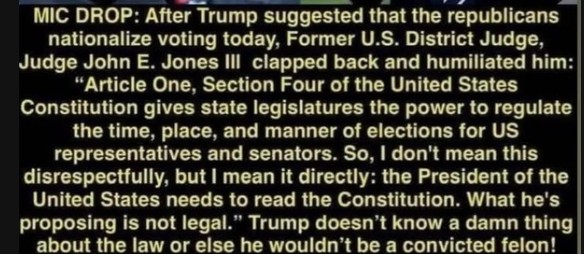
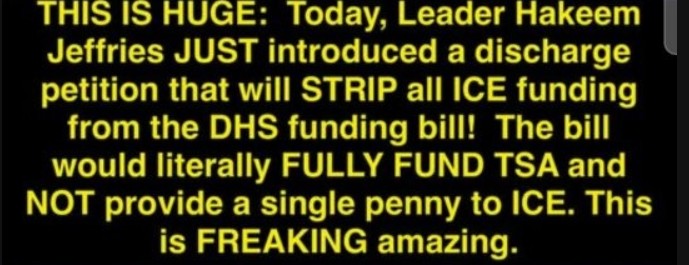
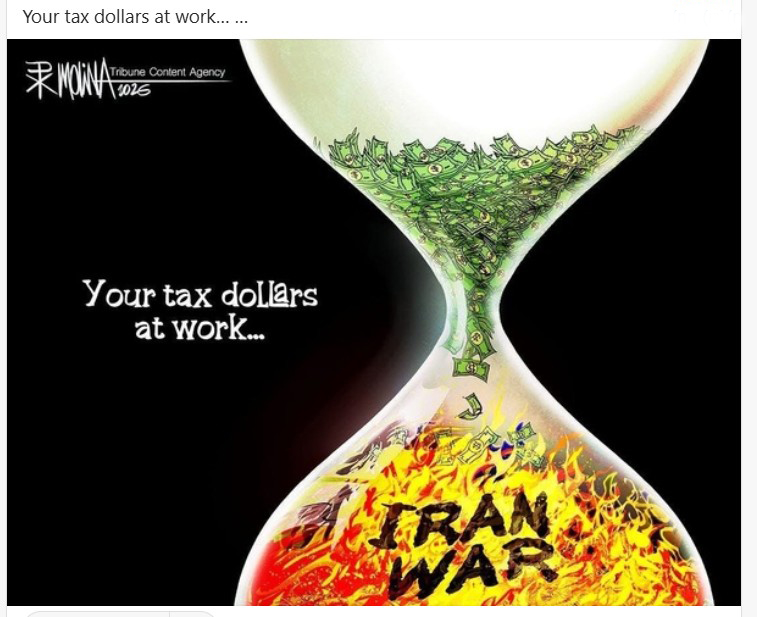
Trump has truly started something. Iran is now united against America.
Trump is lying about the war
The New York Times rarely resorts to the word “lie” when it comes to U.S. president, but the editorial board did not mince words on Saturday when it accused President Donald Trump of nonstop lying about his war with Iran on Saturday.
“From his first announcement of the attack on Iran on Feb. 28, President Trump has issued a stream of falsehoods about the war,” said the Times. “He has said Iran wants to engage in negotiations, though its government shows no sign of it. He has claimed that the United States ‘destroyed 100 percent of Iran’s Military capability’ when Tehran continues to inflict damage throughout the region. He has said the war is almost complete even as he calls in reinforcements from around the globe.”
“Lying is standard behavior for Mr. Trump, of course,” continued the editorial board. “His political career began with a lie about Barack Obama’s birthplace, and he has lied about his business, his wealth, his inauguration crowd size, his defeat in the 2020 election and so much more. A CNN tally of Mr. Trump’s falsehoods during one part of his first term found that he averaged eight false claims per day. Many people are so accustomed to his lies that they hardly notice them anymore.”
But lying about war is “uniquely corrosive,” said the Times, arguing that when a president “signals that the truth does not matter in wartime,” he encourages his cabinet and his generals to mislead the country about how the war is going.
“He creates a culture in which deadly mistakes and even war crimes can become more common. He makes it harder to win by hiding the realities of conflict and by making allies wary of joining the fight. Ultimately, he undermines American values and interests.”
Trump could have made a fact-based argument for confronting the regime, particularly regarding the threat it posed to its neighbors and its potential for nuclear weapon development, but Trump took the falsehood route.
“The president was only a few minutes into his Feb. 28 announcement of the start of the conflict when he offered an obviously contradictory rationale for it. He repeated his claim that American attacks last June ‘obliterated’ Iran’s nuclear program while also citing that program as a reason to go to war,” said the Times. “The claim of obliteration is false: Iran retains about 970 pounds of highly enriched uranium, potentially enough for 10 warheads.”
And the lies have only continued with Trump claiming the U.S. military had a “virtually unlimited supply” of high-end munitions even as the Pentagon had to withdraw weapons from South Korea to sustain its Iranian effort, said the Times. He also claimed “nobody” believed Iran would retaliate by attacking Arab countries, even though some experts “had warned of precisely this scenario.”
“Starting a war is the most serious action that a political leader can take,” argued the Times. “It ends lives and can change history. … Whatever short-term gain Mr. Trump thinks he is getting by lying about the war in Iran is far exceeded by the cost, for him, the country and the world.”
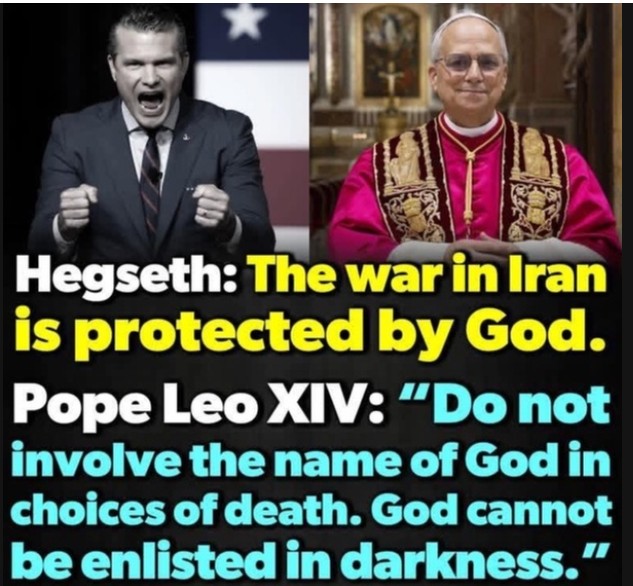
Mar. 21, 2026, 6:00 AM EDT
By
Zeeshan Aleem
President Donald Trump’s war with Iran is not going well. He began the conflict with a promise to use an air campaign to initiate regime change in as little as “two or three days.” But about three weeks in, Iran’s government, military and security forces remain highly functional. No popular uprising has emerged. And Iran’s government has seized control of the Strait of Hormuz, sending global oil prices surging and Trump into a panic.
Robert Pape, a political scientist at the University of Chicago, is one of the analysts who saw this situation coming a long way off. An expert on air power and regime change who has also taught at the U.S. Air Force’s School of Advanced Airpower Studies, Pape is almost comically well suited to address the core dynamics underlying how the war on Iran is unfolding. His scholarship and his newsletter, “The Escalation Trap,” all point in one direction: Trump’s goal of toppling Iran’s regime from the air alone is doomed, because fighting a war only with air power is by its very nature ill suited to win hearts and minds.
I spoke with Pape on the phone this week, and he explained why this kind of intervention has such a poor track record, what isn’t working strategically, why Iran isn’t losing the war, and what this all means for the possibility of Trump sending in ground troops.
Our conversation, edited for length and clarity, follows.
Zeeshan Aleem: When you heard in Trump’s initial announcement that he’s going to use air power alongside Israel to clear the way for protesters to take over the government, what did you think?
Robert Pape: What I thought is that President Trump was up against the weight of history. I’ve studied every air campaign since World War I, and in all that time, over 100 years, air power alone — without ground forces — has never toppled a regime. There have been times when there have been pro-democracy movements in combination with the air power; it has never worked. It has not worked in the dumb-bomb age, the smart-bomb age. We’ve tried so many different combinations, so much intelligence, and it has never worked.
You’re ending up with leaders from the second generation who are more anti-American, more dangerous, more willing to take costs.”
ROBERT PAPE
Aleem: Could you expand on how air campaigns haven’t succeeded even when coordinated with pro-democracy movements?
Pape: There’s no case where air power alone has coordinated with a civilian unarmed pro-democracy movement to topple a regime. The closest you get to this is in 1991, after the 39-day American air war and after the four-day ground war against Iraq to kick the Iraqi army out of Kuwait. The view inside of the George H.W. Bush administration was Iraq was so weakened and Saddam’s regime was so battered that Bush called publicly for the Shia to rise up and topple the Saddam Hussein regime. If you just looked at it on a piece of paper, it would seem like “Goodness. Well, of course, the Saddam regime would crack and it would fall.”
What happened instead? The Saddam regime had plenty of residual capability and butchered and killed tens of thousands of those Shia who rose up, and the bodies piled in the streets.
Aleem: What is it about air campaigns that makes them so ineffective at achieving regime change?
Pape: It’s ineffective not because the bombs are technically ineffective. It’s ineffective because the bombing triggers politics in the target government and in the target society that work against us. It’s a politically self-defeating strategy.
Before the bombing starts, you typically have a gap between the society and the government. What the bombing does is it changes from an internal game inside of Iran to now the foreign military attacker dictating the government that Iran should have.
And in this case, it’s not just any old third party doing the bombing. It’s the Godzilla of the American precision military. It’s the Americans who historically have done regime change in Iran before. In 1953 we controlled parts of the Iranian military and we fostered a military coup that put in the shah of Iran, a dictatorship, along with the SAVAK, which was one of the most brutal security agencies in history.
Notice President Trump did not say, “Well, we’re just simply going to ask the pro-democracy movement who they want.” Instead we — Americans — are going to decide who the government of Iran will be. Whether we call it a dictatorship or a puppet regime or not, that’s exactly the way this is going to be interpreted, and injects the politics of nationalism into the equation. Once you have nationalism, you have a fundamentally new political dynamic.
The new politics that have been triggered by the bombing work to the disadvantage of regime change, in the positive sense that you would get a generation of leaders who would be more likely to do Washington’s bidding. What you’re getting instead is negative regime change: You’re ending up with leaders from the second generation who are more anti-American, more dangerous, more willing to take costs in order to punish America, and allies of America.
Aleem: I think when people see the incredible power and precision of American strikes to take out targets, they think it might just work anyway.
Pape: The incredible power of precision attacks produces incredible fear and anger in the target country, both in its leadership and in its society. And that incredible fear and anger morphs into lashing back, right? The fear and anger causes fight-or-flight, and the fight aspect becomes much more dominant in this situation. And precisely because there’s not a ground force there, there are opportunities to lash back.
Aleem: If you had to say someone was winning this war or losing this war, what would you say?
Pape: I would say that this war has been tactically brilliant by the United States — the U.S. military has done everything we’ve asked it to do. But Iran is not losing the war.
The core reason is that by controlling and disrupting passage through the Strait of Hormuz, it has already gained enormous leverage. It has gained leverage in [raising] world energy prices. That leverage also works to its financial advantage, because Iran can shift its own oil through the strait; if we blow up those tankers — which we could easily do — this will only drive oil prices up even further.
Robert Pape
And if we have [to use] ground efforts in order to open the strait, I call this the limited territorial control option on my Substack. … This will only deepen the escalation trap even more, and a big reason for that is because, as my work on terrorism that I’ve done for over 25 years shows, 95% of all the suicide attacks around the world are in response to foreign ground presence.
Iran is not losing. It’s more powerful today than before the war.
Aleem: The Washington Post reported this week, according to a State Department cable that it reviewed, that Israeli officials believe Iranian protesters will get “slaughtered” by Iranian security forces if they mobilize, but Israel is still publicly calling for an uprising. What do you make of that?
Pape: I think this is an example of victory narrative meets escalation reality. There are domestic political incentives for the Israeli government and the U.S. government to articulate the victory narrative, which is this illusion that there is this quick and decisive victory just around the corner. But this is meeting escalation reality inside of their own administrations, inside of their own intelligence units, inside of their own militaries, that this victory narrative is not real.
Aleem: The Financial Times recently reported that many Iranians who initially supported the U.S. bombing have now switched their opinion and oppose it. Do we have any evidence to believe that that’s a widespread thing?
Pape: There’s a powerful indicator that the media is not using. But the actual indicator here is whether or not you are seeing a rise in targeting intelligence by those pro-democracy movements to help the Israelis and the Americans kill and target inside of Iran, and what you’re seeing is probably the opposite of that.
If we could kill 300 leaders in Iran on a single day, we would definitely do that right now. The reason that’s not happening is because we don’t know where they are. The fact that that’s not happening is a strong indicator that a true alliance between the pro-democracy movement and the American bombing campaign is not building.
Aleem: What does the killing of Ali Larijani — the secretary of Iran’s Supreme National Security Council and considered by many to be the country’s de facto leader after Ali Khamenei’s death — say about the strategy at play right now?
Pape: It’s pennies on the dollar. Iran had a “mosaic” plan, fully expecting that America and Israel were going to do leadership decapitation. That mosaic plan was essentially decentralizing all of the decisions that had to happen so you could still fight the war, even though you lose leaders along the way. I think this is just part and parcel of what Iran has been expecting.
Rep. Levin says Trump admin hasn’t briefed Congress on Iran in weeks: ‘Real disrespect’
You don’t see a single loss of a beat in their behavior. It’s not like we finally found the one leader who, once we kill that leader, the whole house of cards comes apart, because it’s not a house of cards. This is more of a matrix — a flexible matrix.
Aleem: Because of chains of succession?
Pape: No. 1, change of succession, and No. 2, the amount of high-volume real-time communication you need between the midlevels of the government and the very senior leadership is very thin. If you go down to, say, the brigade level in Iran, and you kill the brigade leader, you will paralyze the entire brigade of 4,000 or 5,000 men for probably weeks. But you take out a leader, and you might think, well, I’m going to have a much bigger effect. No, it’s the opposite, and the reason is because the volume and real-time connectivity that you need between the top echelons of the leader and the midlevels of the organization is different. It’s thinner.
Aleem: What are the off-ramps here? And what do you think are the chances that there’s a possibility of boots on the ground?
Pape: There’s no golden off-ramp where President Trump now will come out of this politically stronger than he was before. If there was, he would have taken it, because obviously he’s very sensitive to that.
The real choice here: Does President Trump cut his losses now, have some variant of declared victory? The political losses will be pretty severe, because if he tries to leave the conflict now, then this will likely leave Iran in control of the Strait of Hormuz, which they were not in control of before. And they will likely have uranium to make a bomb, and that will not change. So the political costs that President Trump would have to make to cut his losses — and he would have to move all of his forces out of the region to do this, otherwise it wouldn’t be credible — would be severe, but his presidency might be recoverable from that point on.
But if he goes deeper, if we go to stage three in the escalation trap, we actually cross the threshold to even limited ground operations in the Persian Gulf and the Strait of Hormuz, this will likely lead to a much longer set of consequences, and the political costs will go up rather dramatically. And he may still decide, say, in July or August to pull back or cut a deal with Iran in some way, but that then may well be his presidency. He can’t recover. He will be in Lyndon Johnson territory, to use a Vietnam analogy, and Lyndon Johnson was never able to recover once it was clear that escalation could not defeat the North Vietnamese.
What we’re learning is, the more escalation with Iran, the more escalation is favoring Iran, and that is what I see going into the future. To me, the best option for President Trump is to cut his losses now. Yes, the political costs will be high. He won’t be able to get the same deal he could have gotten from Iran even before the bombing started, and he didn’t like that deal. This will be a deal he doesn’t like even more. But the alternatives here are politically worse for him, and also worse for the country and the world.
Zeeshan Aleem
Israel is getting more Isolated
As of March 2026, Germany has withdrawn its support for Israel in the International Court of Justice (ICJ) case concerning genocide allegations brought by South Africa. This marks a significant shift from their previous position, where Germany had initially defended Israel against charges related to the war in Gaza.
Key Details Regarding Germany’s Position:
Withdrawal of Support: The German Foreign Ministry indicated they would no longer help Israel respond to the genocide accusations at the ICJ.
Earlier Position: Initially, Germany vehemently rejected accusations made by other countries (such as Nicaragua) that Germany was aiding in genocide, asserting they had not violated international law.
Shift in Stance: The change in position follows months of mounting international legal pressure and shifting public opinion regarding Israel’s actions in Gaza.
Case Context: The ICJ has previously warned that Palestinian rights under the Genocide Convention were at risk, and Germany has faced intense scrutiny over its arms exports and legal responsibility.
Cour internationale de Justice
The case is part of a broader international legal challenge aimed at stopping the conflict in Gaza.
Get Gas, dip into savings
The skyrocketing price of gas is one of the most ubiquitous and easy-to-grasp financial difficulties that Americans across the country have to deal with. It makes every little stop at the pump harder, and everyone who notices it tends to cast it on to the greater economy. Even people who don’t buy gas see the prices displayed in giant, neon lights all over the place. Fluctuations in gas prices typically result from complex policy decisions, global events, and supply-and-demand issues. But after the average national gas price
More tRump lies
President Donald Trump’s habit of shooting from the hip verbally may be part of the reason why he is struggling to control the narrative of the U.S.-Israeli war on Iran, despite a raft of tactical military successes. Trump said on Wednesday he “knew nothing” in advance about an Israeli attack on Iran’s South Pars gas field, a significant escalation in the conflict. But Israeli officials later told Reuters that the Israeli strike was indeed coordinated with the United States. The attack drew an Iranian aerial assault on energy infrastructure in Qatar and across the Middle East, further compounding fears about soaring world energy prices. To which Iran has expanded their response.
A path to de-escalating the conflict appears nowhere in sight, nearly three weeks in, with the global economic fallout worsening and the Iranians remaining defiant.
An interesting read
https://heathercoxrichardson.substack.com/p/march-18-2026
Congratulations to Russia. After enduring hardship, sweetness finally comes.
With the United States and Israel launching a war against Iran in the Middle East, this basically signals that in the four-year Russia–Ukraine conflict, Russia will now likely achieve ultimate victory.
If the United States and Israel expend an additional 1,000 tons of explosives in the Middle East, then there will be 1,000 tons fewer available on the Eastern European battlefield, including Ukraine.
Did you notice? Oil.
Russia’s lifeline.
Have you noticed that the world has become a bit strange?
Saudi Arabia sells oil. That’s not strange. But now they cannot get it out.
Russia sells oil too, and for now they get twice as much for every barrel than they got two weeks ago.
Manna from heaven, Trump fed right into their hands. more money, less munitions staring into Russia’s face.
Iran literally has Trump over a barrel — of oil
U.S. President Donald Trump returns to the White House, after Israel and the U.S. launched strikes on Iran, in Washington, D.C., U.S., March 1, 2026. REUTERS/Nathan Howard
John Stoehr March 18, 2026 | 07:39AM ET
I do not have a background in international relations. I do not possess any special knowledge of foreign affairs. I would struggle to explain the difference between military strategy and military tactics. Yet, apparently, I knew something our president did not.
The Iranians were never going to roll over.
They are Iranians.
Somehow that escaped Donald Trump’s attention. On Monday, he “expressed surprise at the breadth of Iran’s retaliation,” according to the Post. “They hit Qatar, Saudi Arabia, UAE, Bahrain, Kuwait. Nobody expected that. We were shocked. … They fought back.’’
Of. Course. They. Did.
No one was shocked – except perhaps a titanically self-centered president surrounded by yes men. In fact, he was warned time and again, if he goes to war with Iran, that its murderous regime would become harder; that it would widen the war by attacking neighboring Gulf states; that it would retaliate by threatening the global economy; and that it would, yanno, fight to the last man.
Because they’re Iranians.
Yet time and again, Trump’s advisors “downplayed” the risks in favor of a chance for him to play a war president on American TV. They believed Iran’s leadership was going to fold like Venezuela’s did. Meanwhile, Benjamin Netanyahu sold Trump on the idea that Iranians would revolt after the regime’s leader was dead, even though his own intelligence said they would get “slaughtered.”
Because no one appears to have remembered that these are Iranians we’re talking about, the president has lost control of the war. Battered and bruised, the regime still has control of the Strait of Hormuz, that narrow gap in the Persian Gulf and with that, a stranglehold on a quarter of the world’s supply of oil.
Three tankers were attacked Wednesday, three more Thursday. (A Times analysis on Monday found that “at least 16 oil tankers, cargo ships and other commercial vessels had been attacked.”)
The president panicked over the weekend. He said “hopefully” other nations like China, Japan, South Korea, France and the UK would send warships to secure the strait. By Monday, he was threatening allies in Europe. “It will be very bad for the future of NATO” if they do not join the effort, he said. Just three days prior, he admitted to knowing that NATO’s enemy, Russia, was helping Iran. He rewarded that effort by lifting sanctions on Russian oil. Perhaps as a result, NATO allies told him you’re on your own.
Trump is now acting like he didn’t need any help anyway, a sign of desperation and perhaps that he may be getting closer to deciding to send American ground forces to secure the strait.
Indeed, a White House source told Politico: “[The Iranians] hold the cards now. They decide how long we’re involved — and they decide if we put boots on the ground. And it doesn’t seem to me that there’s a way around that, if we want to save face.” Another source said: “The terms have changed. The off-ramps don’t work anymore because Iran is driving the asymmetric action.”
While Trump’s goal at the beginning of the war was unclear and ever-changing, it is no such thing now, as the Iranians have now determined what Trump’s goal must be: sending America’s sons and daughters to sacrifice their lives in the name of cheap gas.
“Any American troops on the ground would remain targets for Iranian attacks,” the Wall Street Journal said this morning. “The Islamic Revolutionary Guard Corps – 190,000 troops strong – and its elite Quds Force specialize in asymmetric warfare and have spent decades backing insurgents throughout the Middle East, including in neighboring Iraq, where they helped militants launch deadly attacks on U.S. troops following the 2003 invasion.”
But even if American forces occupied the entire coastline of Iran along the Persian Gulf, and even if the US Navy escorted every single tanker through the Strait of Hormuz, that might not be enough to quell fear in the oil markets, because all it takes to shake the confidence of insurers is a sunk tanker here and there.
During a meeting last week, Trump demanded to know why the US can’t immediately reopen the strait. The chairman of the Joint Chiefs of Staff explained, according to the Times, that all it takes to stop oil shipments is “one Iranian soldier or militia member zipping across the narrow neck of the strait in a speedboat [firing] a mobile missile right into a slow-moving supertanker.”
Though Iran’s navy has mostly been destroyed, a source told Reuters, it still has “plenty of options, including fast-attack craft, mini submarines, mines and even jet skis packed with explosives.”
Such risk almost certainly means insurers won’t underwrite shipping through the strait. It’s a situation in which little Iran has Trump where it wants him. “With oil already hovering around $100 a barrel, and insurance premiums for transiting the Persian Gulf surging,” the Times said, “the image of more burning tankers would make the Iranians look more powerful than they really are.”
And even if the president were to mount a generation-defining occupation, the goal of bringing down oil prices would not be realized in the short-term. Two hundred dollar barrels of oil could be a reasonable expectation, Rogé Karma wrote in The Atlantic on Friday, “if the strait remains closed for even a month.”
Indeed, the only real way of restoring the flow of oil is by convincing insurance and shipping firms that it’s safe to go through the strait, the Wall Street Journal said, and the only way to do that is convincing the Iranians that it’s in their interest to provide insurance and shipping firms the assurances they need.
So the solution is political. As Trump believes he can do whatever he wants on his own, however, the Iranians have him over a barrel. With oil prices currently at their highest since 2023, the American middle class is going to burn up as long as he’s over it.
Trump walks right into a reporter’s trap, never realizes his desperation is being used against him and what comes out next turns the room against him
At this point in President Donald Trump’s second term, most critics aren’t willing to believe a word that comes out of his mouth. But his latest claim on Monday about the Iran war stirred even more skepticism — the kind that makes people wonder if he’s simply spinning tall tales to give himself more credibility.
But his latest fable only grew more obvious the longer he kept talking.
As Trump tried to hold together a consistent narrative around his decision to go bombs-away on Iran, online observers took aim at the gaps in his story, asking whether Trump has been conferring with himself in a mirror after he invoked unnamed figures and unverifiable conversations.
At this point in President Donald Trump’s second term, most critics aren’t willing to believe a word that comes out of his mouth. But his […]
At this point in President Donald Trump’s second term, most critics aren’t willing to believe a word that comes out of his mouth. But his […]
The exchange unfolded Monday when an unexpected ally, Fox News correspondent Peter Doocy, put Trump on the spot, pressing him on his earlier claim that a former commander in chief had confided envy over not being the one to start the war.
Was it George W. Bush? “No,” Trump replied.
Was it Bill Clinton? Trump hesitated, saying, “I don’t want to say. I don’t want to say. Because …” Doocy cut in and floated Barack Obama, but Trump declined to name anyone, instead describing “a member of a party” who was gripped by “Trump derangement syndrome.”
He added that it was “somebody that happens to like me, and I like that person, who’s a smart person,” and insisting that person told him, “I wish I did it,” in reference to bombing Iran.
Still, he refused to identify who it was, saying, “I dont want to get into who. I don’t want to get them into trouble,” before trailing off with, “Maybe, hey, You know what, I think you probably know. You know what’s interesting, and maybe he’d be proud, I can even ask him that: ‘would you like me to reveal your name?’…”
The answers did little to clarify the claim. Instead, they raised a more immediate question: who exactly was Trump talking about?
Doocy had already run through the list of living former presidents when he said he could probably guess the name — and Trump agreed. The moment lingered just long enough to leave some wondering whether Doocy was in on the joke or letting it play out on Trump in real time.
Even as uneasy laughter rippled through the room — online, the reaction was far less forgiving.
“He is absolutely lying,” one observer said.
Another said Trump was referring to his first term: “It was 45. He was taking to himself.”
“This man clearly has dementia. Its painful to watch,” someone added. Some responses took a more personal turn, reflecting concern rather than outright anger.
“I’m actually feeling compassion for him. He reminds me of my dad when he was suffering from dementia and Alzheimer’s.”
Others focused on the narrowing list of possible figures Trump could have been referencing, noting his own comments about the mystery president being someone who likes him. “He said it’s not W. He said it’s someone who likes him…none of the other 3 like him.”
As the speculation grew, so did the criticism. “He has lost his mind!”
A few attempted to reconcile the claim by suggesting Trump may not have been referring to a U.S. president at all.
“He didn’t specify a former American President. Most likely a former authoritarian third world ex President.”
Earlier in the day, Trump had made similar remarks while defending his decision to bomb Iran, portraying himself as the only president willing to act.
“We Should’ve done it a long time ago, would have been a lot easier,” Trump said. “There’s no president that wanted to do it. And yet every president knew; I’ve spoken to a certain president, who I like, actually. A past president, former president. He said, ‘I wish I did it. I wish I did,’ but they didn’t do it. I’m doing it.”
When pressed on who it was, Trump again refused to identify the person.
“Which president?” reporters beckoned.
“I can’t tell you that. I don’t want to embarrass him. It would be very bad for his career, even though he’s got no career left.”
Both episodes drew scrutiny and captured a broader problem now shadowing Trump as he tries to frame the Iran conflict as a decisive win. With pressure mounting at home and skepticism growing abroad, Trump has doubled down on sweeping claims to defend his actions.
Trump has been working to rally support for his handling of the Iran conflict, particularly as tensions around the Strait of Hormuz have raised the price of oil and restricted trade and travel, creating havoc for the global economy. His comments appeared aimed at reinforcing a message that previous presidents lacked the will to act, casting his decision as both overdue and necessary.
NBC News reported that aides and sources tied to all four living former presidents denied any such conversation took place. A representative for George W. Bush said “they haven’t been in touch.” An aide to Bill Clinton said Trump was not referring to him. An aide to Barack Obama said there had been “no recent conversations,” and a source familiar with the matter said the claim did not involve Joe Biden.
The White House did not immediately respond to questions about the denials.
1. He declares victory and exits the Middle East within a few days, even though the Strait of Hormuz is still blocked — hoping that Iran will unblock it to sell its own oil.
I noted that this poses a high political risk for Trump. Most Americans were against the war to begin with. If fuel prices stay high and Trump has little to show for his war, he and Republicans are almost sure to be penalized brutally in the midterms.
2. He unblocks the Strait of Hormuz with American warships escorting oil tankers, then he declares victory and gets out.
This is militarily risky. The Pentagon has been turning down requests to escort tankers through the strait, saying the threat to American warships from Iranian bombardment and potential mines is too high. Navy officers say Iranian drones and anti-ship missiles could turn the area into a “kill box” for American sailors. So, trying to open the strait now risks the deaths of more U.S. service members.
3. He spends the next two weeks trying to decimate what’s left of Iran’s missile and drone capacities and its navy, in the hope that everything will return to normal after Iran is neutered. Then he declares victory and gets out.
I noted that this is risky in a different way. Iran has shown remarkable resilience in maintaining its missile and drone offenses even as the U.S. and Israel have destroyed much of them. If Trump declares victory and Iran’s belligerence continues notwithstanding, fuel prices could remain high and the “victory” will be shown to be a sham. The worst of all worlds for Trump.
4. He gets Russia, Venezuela, and oil producer allies in the Middle East to dramatically increase production, in hopes this will reduce oil prices and contain the slide of the U.S. stock market.
This will be very hard to do. OPEC’s surplus capacity is limited. Venezuelan production is also limited; even if U.S. oil companies dramatically increased their investment there, it would take many months to boost output. Russia is selling its oil to China and India. Even with additional supplies, the Department of Energy warns that gas prices are unlikely to recede to prewar levels until mid-2027.
***
Almost 6,000 of you voted on these choices.
42 percent of you thought he’d choose #1 — declare victory and get out within days.
Only 6 percent of you thought he’d choose option #2 — he’d unblock the Strait with American warships escorting tankers.
32 percent of you chose option #3 — believing that Trump would continue bombing Iran for at least another two weeks if not longer.
9 percent chose option #4 — getting more oil elsewhere.
(10 percent of you had other ideas about what he’d do.)
The issue is coming to a head even sooner than I assumed. It looks as though he’s choosing option 2. Trump says escort operations will begin “very soon,” and in a pair of social-media posts today he called on other nations to help keep the Strait open.
A tangled maze of ties uncovers Trump’s true masters — and his treachery
Trump has been acting as an agent for Russia
Thom Hartmann March 14, 2026 | 03:57PM ET
BeLoud Share
This article was paid for by AlterNet subscribers. Not a subscriber? Try us and go ad-free for $1. Prefer to give a one-time tip? Click here.
Eight of our American service members are dead and more than 140 wounded because Iran’s military has suddenly gotten really good at targeting our soldiers, airmen, and marines. News reports say they’ve been able to hit us with such precision because Russia is using their extraordinary spy satellite, spy plane, and advanced radar capabilities to help Iran’s military.
The Washington Post, which first reported on this, quoted a Russian military expert as saying that Iran is now “making very precise hits on early-warning radars or over-the-horizon radars,” seeming to validate the concern. The article added:
“Iran possesses only a handful of military-grade satellites, and no satellite constellation of its own, which would make imagery provided by Russia’s much more advanced space capabilities highly valuable — particularly as the Kremlin has honed its own targeting after years of war in Ukraine…”
When asked about the reports, Donald Trump — who’d just returned from the soldiers’ bodies’ dignified transfer — basically downplayed Russian efforts to hurt Americans, just like he did when he learned in 2020 that Putin was paying Afghan insurgents a bounty to kill our soldiers. He pointed out that the US had been sharing intelligence with Ukraine during the Biden administration, so apparently, according to him, Russia is justified in helping Iran kill American service members:
“They’d say we do it against them. Wouldn’t they say that we do it against them?”
His fellow real estate billionaire, Steve Witkoff (whose sons are making billions with Trump’s sons in the Middle East and who has been regularly traveling to Moscow for private meetings with Vladimir Putin) similarly shrugged off the report, telling CNBC:
“I can tell you that yesterday, on the call with [President Trump], the Russians said they have not been sharing. That’s what they said. So, we can take them at their word, but they did say that.” Witkoff later added, “Let’s hope that they’re not sharing.”
Putin himself, though, was nowhere near as circumspect, saying:
“On my part, I want to confirm our unwavering support of Tehran and our solidarity with our Iranian friends. Russia has been and will remain the Islamic Republic’s reliable partner.”
As if to confirm that Trump is Putin’s toady, just last week, in the wake of Iran shutting the Strait of Hormuz and cutting oil supplies to Asia and the Subcontinent, our president signed a waiver to our Russia sanctions so Putin can now sell unlimited amounts of Russian oil directly to India.
Every time Putin says “Jump,” Trump asks, “How high?”
Which raises the question: “Why? Why does Trump always give Putin whatever he wants and why is he so terrified of speaking out against him?”
Is it possible that Trump is actively working for Putin? What if Putin somehow owns him? Or is blackmailing him? And has been running him as an Russian asset since at least 2017?
That sort of treason would be more important than Russian agents Robert Hanssen (life without parole), Aldrich Ames (life without parole), or Ethel and Julius Rosenberg (death penalty).
And let’s not forget that right after Trump won re-election in November 2024, Russian state TV published explicit nudie pictures of Melania Trump and their anchors were laughing about it and at Trump. Was this Putin’s first assertion this cycle that he still owns Donald?
Jack Smith’s case in Florida was limited to Trump stealing sensitive documents and sharing them on two publicly known occasions (and didn’t even reference other known acts like Kid Rock’s allegation that Trump showed him Top Secret maps in the White House: this was apparently a regular thing for Trump).
That said, you can bet your bottom dollar that the FBI and other agencies worked as hard as they could to contain the damage done by Trump’s leaving documents that could cause “grave damage” to America in public places where spies could simply waltz in and take cell-phone pictures of them by attending a wedding or paying $200,000 for essentially unlimited access Club membership.
But what if it goes beyond that? What if Putin has owned him for years?
From Russian oligarchs laundering money through Trump’s operations — real estate is the most common device used worldwide for money laundering — to keeping him alive in his most difficult times, like those multiple bankruptcies in the 1990s when he almost lost everything?
Or perhaps blackmailing him?
What if Putin got him the presidency, and he knows that if America found out for sure, it would destroy him? Or has Jeffrey Epstein’s videos of Trump with underage girls? Or his own pictures, taken when Trump was in Moscow for one of his beauty pageants?
Which begs the question: exactly how much damage might Trump have already done to our nation, and what does he have planned for the next three years of this second term?
And is he getting ongoing day-to-day instructions from Putin, which explains why he’s so reluctant to discuss their conversations, as Rachel Maddow recently documented?
In 2019 the Washington Post revealed that throughout his last presidency, Trump was having regular secret phone conversations with Putin (more than 20 have been identified so far, including one just days before the 2020 election).
The Moscow Project from the American Progress Action Fund documents more than 270 known contacts between Russia-linked operatives and members of the Trump campaign and transition team, as well as at least 38 known meetings just leading up to the 2016 election.
The manager of his 2016 campaign, Paul Manafort — who was previously paid tens of millions by Vladimir Putin’s people to install a pro-Putin puppet as Ukraine’s president in 2010 — has admitted that he was regularly feeding secret inside-campaign strategy and polling information to Russian intelligence via the oligarch who typically paid him on their behalf.
Throughout the campaign, Manafort let Russian intelligence know where Trump needed help, and when, and it appears Russia jumped in to social media to provide the needed help.
Trump pardoned Manafort, which got him out of prison and ended any investigations. He’s still fabulously rich from his work for Russia.
As the New York Times noted in 2020:
“[I]nvestigators found enough there to declare that Mr. Manafort created ‘a grave counterintelligence threat’ by sharing inside information about the presidential race with Mr. [Konstantin] Kilimnik and the Russian and [pro-Russian] Ukrainian oligarchs whom he served.”
There is no known parallel to this behavior by any president in American history — one could argue it easily exceeds Benedict Arnold’s audacity — and bringing documents to Mar-a-Lago was just the tip of the iceberg.
The Washington Post reported in 2022 that Trump had a habit of carrying top-secret information that could severely damage our national security, leaving it in hotel rooms in hostile nations.
Was he bringing these documents with him to sell? Or just to show to leaders or oligarchs in those countries to impress them? Or because Putin, who has agents in those countries, told him to?
Trump doesn’t put all that effort into hauling things around unless it’s extraordinarily important to his ego or he thinks he can makes money off them. Or he’s scared.
“Boxes of documents even came with Trump on foreign travel,” the Post noted, “following him to hotel rooms around the world — including countries considered foreign adversaries of the United States.”
When Robert Mueller’s FBI team tried to investigate Trump’s ties to Russia and his possibly sharing sensitive military information with them, they were stonewalled.
The Mueller Report identified ten specific instances of Trump himself trying to obstruct the investigation, including offering the bribe of a pardon to Manafort, asking FBI Director James Comey to “go easy” on Gen. Michael Flynn after his dinner with Putin, and directing Attorney General Jeff Sessions to limit Mueller’s ability to investigate Trump’s connections to Russia.
As the Mueller Report noted:
“The President launched public attacks on the investigation and individuals involved in it who could possess evidence adverse to the President, while in private the President engaged in a series of targeted efforts to control the investigation.“For instance, the President attempted to remove the Attorney General; he sought to have Attorney General Sessions un-recuse himself and limit the investigation; he sought to prevent public disclosure of information about the June 9, 2016 meeting between Russians and campaign officials; and he used public forums to attack potential witnesses who might offer adverse information and to praise witnesses who declined to cooperate with the government.”
It adds, detailing Trump’s specific Obstruction of Justice crimes:
“These actions ranged from efforts to remove the Special Counsel and to reverse the effect of the Attorney General’s recusal; to the attempted use of official power to limit the scope of the investigation; to direct and indirect contacts with witnesses with the potential to influence their testimony.”
There are, after all, credible assertions from American intelligence that when Trump was elected, members of Russian intelligence and Putin’s inner circle were literally partying in Moscow, celebrating a victory they believed they made happen.
And apparently Putin and his intelligence operatives had good reason to be popping the champagne in November 2016. They were quickly paid off in a big way.
In his first months in office, Trump outed an Israeli spy to the Russian ambassador in what he thought was going to be a “secret Oval Office meeting” (the Russians released the photo to the press), resulting in MOSAD having to “burn” (relocate, change identity of) that spy.
The undercover agent was apparently working in Syria that year against the Russians, who were embroiled in the midst of Assad’s Civil War and indiscriminately bombing Aleppo into rubble.
That, in turn, prompted the CIA to worry that a longtime American spy buried deep in the Kremlin was similarly vulnerable to Trump handing him over to Putin.
As CNN noted (when the story leaked two years later):
“The source was considered the highest level source for the US inside the Kremlin, high up in the national security infrastructure, according to the source familiar with the matter and a former senior intelligence official.“According to CNN’s sources, the spy had access to Putin and could even provide images of documents on the Russian leader’s desk.”
The CIA concluded that the risk Trump had burned or was about to burn our spy inside the Kremlin was so great that — at massive loss to US intelligence abilities that may even have otherwise helped forestall the invasion of Ukraine — they pulled our spy out of Russia in the first year of Trump’s presidency, 2017.
Similarly, when they met in Helsinki on July 16, 2018, Trump and Putin talked in private for several hours and Trump ordered his translators’ notes destroyed; there is also concern that much of their conversation was done out of the hearing of the US’s translator (Putin is fluent in English) who may have been relegated to a distant part of the rather large empty ballroom in which they met.
The Washington Post reported, after a leak six months later, that when Trump met privately for those two hours with Putin the CIA went into “panic mode.” A US intelligence official told the Post:
“There was this gasp’ at the CIA’s Langley, Virginia headquarters. You literally had people in panic mode watching it at Langley. On all floors. Just shock.”
Three weeks after Trump’s July 16, 2018 meeting with Putin in Helsinki, Sen. Rand Paul (R-KY) made a solo trip to Moscow to personally hand-deliver a document or package of documents from Trump to Putin. Its contents are still unknown, although Paul told the press it was a “personal” letter of some sort.
Sen. Paul has also consistently taken Trump’s and Putin’s side with regard to the Ukraine war: he single-handedly blocked a $40 billion military aid package in the Senate. When the FBI searched Mar-a-Lago, he responded with a call for the repeal of the Espionage Act. He further suggested the FBI may have “planted” Secret documents at Mar-a-Lago.
Ten days after Paul’s trip to Moscow, The New York Times reported that the CIA was freaked out because their sources inside Moscow had suddenly “gone silent”:
“The full reasons the sources have gone silent are not known,” the Times reported, but Trump having intentionally given a man working for the FBI to Putin — a man whose job at that time was to find and reveal Russian agents involved in or close to the Trump campaign — may also have had something to do with it:
“[C]urrent and former officials said the exposure of sources inside the United States has also complicated matters,” noted the Times. “This year, the identity of an F.B.I. informant, Stefan Halper, became public after [Trump-loyal MAGA Republican] House lawmakers sought information on him and the White House allowed the information to be shared. Mr. Halper, an American academic based in Britain, had been sent to talk to Trump campaign advisers who were under F.B.I. scrutiny for their ties to Russia.”
Things were picking up the following year, in 2019, as Putin was planning his invasion of Ukraine while Trump was preparing for the 2020 election.
In July 2019, Trump had conversations with five foreign leaders during and just before a presidential visit that month to Mar-a-Lago; they included Putin and the Emir of Qatar.
In one of those conversations, according to a high-level US Intelligence source, Trump “made promises” to a “world leader” that were so alarming it provoked a national security scramble across multiple agencies.
As the Washington Post noted in an article titled, “Trump’s communications with foreign leader are part of whistleblower complaint that spurred standoff between spy chief and Congress”:
“Intelligence Community Inspector General Michael Atkinson determined that the complaint [against Trump] was credible and troubling enough to be considered a matter of ‘urgent concern,’ a legal threshold that requires notification of congressional oversight committees.”
On the last day of that month, July 31, Trump had another private conversation with Putin.
The White House spokespeople told Congress and the press that Trump said that he and Putin discussed “wildfires” and “trade between the nations.” No droids in this car…
But the following week, on Aug. 2, the Daily Beast’s Betsy Swan reported that Trump had that week asked the Office of the Director of National Intelligence for a list of all its employees (including all our “spies”) who had worked there more than 90 days, and the request had intelligence officials experiencing “disquiet.”
Perhaps just by coincidence, months after Trump left office with cases of classified documents, the New York Times ran a story with the headline Captured, Killed or Compromised: C.I.A. Admits to Losing Dozens of Informants:
“Top American counterintelligence officials warned every C.I.A. station and base around the world last week,” the Times’ story’s lede began, “about troubling numbers of informants recruited from other countries to spy for the United States being captured or killed, people familiar with the matter said.“The message, in an unusual top secret cable, said that the C.I.A.’s counterintelligence mission center had looked at dozens of cases in the last several years involving foreign informants who had been killed, arrested or most likely compromised. Although brief, the cable laid out the specific number of agents executed by rival intelligence agencies — a closely held detail that counterintelligence officials typically do not share in such cables.”
And now, to complicate matters, it appears Elon Musk took with him access to the payroll records of all of our nation’s spies and other foreign intelligence agents. The Elon Musk who, the Wall Street Journal reports, has also reportedly been having his own secret conversations with Putin.
If it turns out the Trump has been acting as an agent for Russia, how long might this have been going on?
Czechoslovakia’s Státní bezpečnost (StB) first started paying attention to Trump back in 1977, as documented by the German newspaper Bild when the StB’s files were declassified, because Trump married Czech model Ivana Zelnickova, his first wife, recently buried on his golf course in New Jersey.
Czechoslovakia at that time was part of the Warsaw Pact with the Soviet Union, and Ivana and her family had been raised as good communists. Now that a Czech citizen was married into a wealthy and prominent American family, the StB saw an opportunity and started tracking Trump virtually from his engagement.
As 2016 and 2018 investigations by the Guardian found:
“Ivana’s father, Miloš Zelníček, gave regular information to the local StB office about his daughter’s visits from the US and on his celebrity son-in-law’s career in New York. Zelníček was classified as a ‘conspiratorial’ informer. His relationship with the StB lasted until the end of the communist regime.”
An investigative reporting breakthrough by Craig Unger for his book American Kompromat led Unger to Uri Shvets, a former KGB spy who’d been posted to Washington, D.C. for years as a correspondent for the Soviet news agency TASS.
Shvets told the story — from his own knowledge — of how Trump and Ivana visited Moscow in 1987 and were essentially recruited or seduced by the KGB, a trip corroborated by Luke Harding in his book Collusion: Secret Meetings, Dirty Money, and How Russia Helped Donald Trump Win.
Their trip was coordinated by Intourist, the Soviet travel agency that was a front for the KGB, and the Trumps’ handlers regaled Donald and Ivana with Soviet talking points, presumably about things like the horrors of NATO.
The KGB’s psychological profile of Trump had determined he was vulnerable to flattery and not much of a deep thinker, so they told him repeatedly how brilliant he was and that he should run for president in the US.
Much to the astonishment and jubilation of the KGB, Trump returned from Moscow to the US to give a Republican presidential campaign speech that fall in Portsmouth, New Hampshire.
He then purchased a large ad in the New York Times, the Washington Post, and the Boston Globe on Sept. 1, 1987 that questioned America’s ongoing support of Japan and NATO, both thorns in the side of the USSR and their Chinese allies.
Trump’s ad laid it on the line:
“Why are these nations not paying the United States for the human lives and billions of dollars we are losing to protect their interests? … The world is laughing at America’s politicians as we protect ships we don’t own, carrying oil we don’t need, destined for allies who won’t help.”
As the Guardian reported in 2021:
“The bizarre intervention was cause for astonishment and jubilation in Russia. A few days later Shvets, who had returned home by now, was at the headquarters of the KGB’s first chief directorate in Yasenevo when he received a cable celebrating the ad as a successful ‘active measure’ executed by a new KGB asset. “’It was unprecedented,’ [Shvets said.] … It was hard to believe that somebody would publish it under his name and that it will impress real serious people in the west but it did and, finally, this guy became the president.’”
Meanwhile, Putin was making friends with powerful influence over American foreign policy.
Turkish President Recep Tayyip Erdoğan, who flipped his nation into a strongman neofascist state following an unsuccessful attempted coup in 2016 (he imprisoned and tortured numerous journalists and political opponents), has been deepening his relationship with Putin ever since that US election year.
In 2017, Erdoğan apparently gained access to America’s deepest secrets by secretly paying off Gen. Michael Flynn even as Flynn became Trump’s National Security Advisor, who also had at least one secret phone conversation with Russian Ambassador Sergey Kislyak after Flynn started working in the White House.
Flynn pleaded guilty in December 2017 to “willfully and knowingly” making “false, fictitious and fraudulent statements” to the FBI about one of those conversations with Russian Ambassador Kislyak. Flynn was also an unregistered agent of a foreign government while working in the White House: he had taken about a half-million dollars from Erdoğan.
Around the time he was leaving office, Trump pardoned Flynn, essentially burying the entire story.
From campaigning to destroy NATO to selling out Ukraine to letting Russia help kill American soldiers in the Gulf region, Trump’s goal appears to be, to paraphrase Ron DeSantis, to “Make America Russia.”
The big question is, “Why?”
The War Development(s) That Should Truly Scare Us
How Iran could speed up de-dollarization and how Trump could put boots on the ground in Iran—sort of.
Jonathan V. Last
Mar 16
1. Invasion
If you want to understand the difference in the quality of strategic thinking between Washington and Tehran, consider the messages being sent out over the last three days:
Washington: The war is over. We’ve defeated Iran totally. If other countries don’t come in and help fight Iran they will regret it. Especially our terrible allies, like Great Britain. Please, President Xi, come help us re-open the Strait of Hormuz?
Tehran: We will continue to resist, however we are open to allowing oil transport in the strait that we control provided the product is sold in yuan and not dollars.
I have been saying since the beginning that America is playing checkers while Iran plays chess, but it’s worse than that. American leadership is utterly incoherent: We won, but we need help. We hate our allies; but will our adversaries please come bail us out?
Meanwhile Iranian leadership survived a transition of power in the midst of war, achieved its strategic objective in closing the strait, and is now looking to leverage China’s rising economic ambitions against the United States.
I cannot overstate how significant it would be if Iran and China reached an agreement to allow oil transport under condition of a switch from the dollar to the yuan, so here’s European Business:
The condition, if formalized, would represent the most significant challenge to the petrodollar system in its fifty-two-year history, striking at the financial architecture that underpins American global power rather than at US military assets. . . .
To understand why the yuan condition matters, it is necessary to understand what the petrodollar system actually is. Born from the Nixon shock of 1971 and formalised in 1974, the arrangement under which Saudi Arabia and the broader Gulf agreed to denominate all oil sales in US dollars created a self-reinforcing loop that has governed global finance ever since. Because oil—the world’s most traded commodity—must be purchased in dollars, every nation that imports energy must first acquire dollars. Every central bank holds dollar reserves for precisely this reason. The dollar’s status as the world’s primary reserve currency is not an abstract achievement; it flows directly and mechanically from oil. . . .
[Iran] is proposing that access to the world’s most critical energy chokepoint be conditional on currency denomination.
The practical consequence, if even partially adopted, would be a bifurcated global oil market: yuan-denominated barrels flowing through Hormuz for those willing to pay in China’s currency, dollar-denominated barrels rerouted at significant additional cost and time for those who are not. The war premium that Western energy importers are already absorbing would become structural rather than temporary.
I don’t know how to make people care about this except to say that if Iran and China made this deal it would absolutely be the beginning of the end of the dollar backstopping the global financial order. The long-term cost to America would be incalculable.
The fact that Iran is making this overture ought to scare the crap out of us because it’s another sign that America’s political leadership is completely out-classed. We have an illiterate madman tweeting contradictory bullshit every ten minutes. Meanwhile, the Iranian regime is calmly and methodically probing the structural weaknesses of the American-dominated global financial order.
All of which is why I want to update my view that the most likely outcome of this war is that Trump will quickly declare victory and walk away. That’s one possible outcome. But it now seems possible that he will try to invade Iran, half-way.
Let me tell you about Kharg Island. …
A judge ruled Monday to permanently bar several school districts from following Arkansas’s law to display the Ten Commandments in public school classrooms.
U.S. District Judge Timothy Brooks ruled the law violates the Establishment Clause and the free exercise rights of the plaintiffs.
“Act 573’s purpose is only to display a sacred, religious text in a prominent place in every public-school classroom. And the only reason to display a sacred, religious text in every classroom is to proselytize to children. The State has said the quiet part out loud,” the judge wrote.
The ruling affects several Arkansas school districts but is not a statewide ban.
“Today’s decision ensures that our clients’ classrooms will remain spaces where all students, regardless of their faith, feel welcomed and can learn without worrying that they do not live up to the state’s preferred religious beliefs,” said Heather Weaver, senior counsel for the American Civil Liberties Union’s Program on Freedom of Religion and Belief.
Judge reinstates 1,000 Voice of America employees, deems firings illegal
U.S. District Judge Royce C. Lamberth ruled that the near-total shutdown of the U.S. Agency for Global Media, which oversees VOA and funds several international broadcasters such as Radio Free Asia, violated federal administrative law. He ordered the full-time employees to return to work by March 23, and told the agency to resume international broadcasting.
Federal judge blocks RFK Jr.’s changes to childhood vaccine schedule

The Centers for Disease Control and Prevention headquarters in Atlanta.Elijah Nouvelage / Bloomberg via Getty Images fileMarch 16, 2026, 4:25 PM EDT / Updated March 16, 2026, 5:15 PM EDT
by Berkeley Lovelace Jr. and Erika Edwards
A federal judge in Massachusetts on Monday blocked Health Secretary Robert F. Kennedy Jr.’s recent overhaul of the nation’s childhood vaccine schedule — a major blow to his vaccine agenda
The ruling stems from a lawsuit the American Academy of Pediatrics (AAP) and other medical groups brought against the Department of Health and Human Services, arguing that Kennedy’s changes to vaccine recommendations and to an influential vaccine advisory committee violated federal law.
In January, Kennedy and the Centers for Disease Control and Prevention made sweeping changes to the childhood vaccine schedule, reducing the number of recommended diseases to be vaccinated against from 18 to 11. The change dropped recommendations that all babies should be protected against hepatitis A, hepatitis B, RSV, dengue and two types of bacterial meningitis.
In response, more than 200 groups, including the American Medical Association, the March of Dimes and the Autism Science Foundation, announced they would disregard the changes and follow the AAP’s immunization schedule, instead.
The judge also put on hold the new members Kennedy has appointed to the CDC’s vaccine advisory committee since June. The Advisory Committee on Immunization Practices helps shape U.S. vaccine policy, including recommendations that influence the childhood vaccine schedule and which shots insurance must cover.
The panel was scheduled to meet Wednesday and Thursday. According to the AAP’s attorney, Richard Hughes, the judge’s decision essentially stops the meeting from happening.
An HHS official confirmed that the meeting had been postponed.
The ruling also stayed any of the votes Kennedy’s ACIP has taken since June, including a vote to no longer recommend the hepatitis B vaccine for all newborns.
The decision is a setback for Kennedy, a longtime anti-vaccine activist who promised to restore trust in the public health agencies, but whose controversial policies have created confusion among pediatricians and contributed to more distrust of childhood vaccination, experts say. A recent survey from the Annenberg Public Policy Center of the University of Pennsylvania found that trust in public health agencies has fallen in President Donald Trump’s second term.
“Today is a day to celebrate the triumph of science over misinformation,” said Dr. Richard Besser, president of the Robert Wood Johnson Foundation. “This is a huge blow to Kennedy’s vaccine policies.”
Dr. Andrew Racine, the AAP’s president, said the ruling “re-established a degree of clarity” about childhood vaccinations. “If anyone has any questions about what’s the appropriate vaccine schedule for their children, the best thing to do is to talk to their pediatricians.”
An HHS official said the agency will appeal the decision. Hughes suggested the case could make its way to the Supreme Court.
In a statement, Andrew Nixon, a spokesperson for HHS, said the agency “looks forward to this judge’s decision being overturned just like his other attempts to keep the Trump administration from governing.”
Kennedy has made a series of moves to reshape federal vaccine policy since he took office.
In June, Kennedy fired all 17 members of ACIP and replaced them with his own appointees, many of whom are critical of vaccines.
He also issued new rules for how vaccines are tested, a move experts said would make it harder to approve new shots. Kennedy has also moved to limit the use of Covid vaccines — making them harder to get for people under 65 — and removed a recommendation that healthy kids and pregnant women get the shots. He has also taken a harder line on shots that use mRNA technology.
The clear winner for Trump’s dumbest cabinet member
March 16, 2026 | 07:19AM ET
“Patently ridiculous,” Hegseth told reporters, adding — even as the strait’s blockage was proving to be Iran’s most powerful leverage in the war — we “don’t need to worry about it.” He also denied that the U.S. bombed the school where some 175 children were killed. Hegseth added that, as to CNN, “the sooner David Ellison takes over that network, the better.”
These remarks are remarkably stupid, on several levels.
First, CNN got it absolutely right in reporting that Trump’s national security team had underestimated Iran’s ability to disrupt global oil traffic. CNN cited “multiple sources familiar with the matter.”
The New York Times published a similar story, reporting that in the lead-up to the U.S.-Israeli attack, “Trump downplayed the risks to the energy markets.”
Even The Wall Street Journal, hardly a New York Times or CNN clone, substantiated the story on Friday, reporting that Trump rejected warnings that Iran would likely retaliate by closing the strait because he believed Iran would capitulate before doing so, and he assumed that even if Iran tried to close it, the U.S. military could handle it.
Second, Hegseth’s comment that we “don’t need to worry about” the blockage of the strait is not only false but flippantly insulting to an American public that deserves to know what the Trump regime is planning to do about soaring prices at the gas pump, directly due to that blockage.
Third, even if Hegseth believes that David Ellison’s ownership of CNN will silence CNN’s critical coverage of Trump, it’s remarkably stupid of Hegseth to say it out loud. “The sooner David Ellison takes over CNN, the better” is an open admission that Trump backed Ellison’s bid to acquire Warner Bros. Discovery, CNN’s parent, to silence criticism.
That deal is still pending, so Hegseth’s admission is likely to fuel even more opposition to it. California’s attorney general has already suggested he’ll go to court to block it. Now other attorneys general, the ACLU, and Democrats in Congress may join the case as co-plaintiffs.
Hegseth’s admission also confirms CNN’s worst fears that Ellison will throttle criticism of Trump — a fear that’s already caused several leading lights to exit. As Variety put it, “Anderson, cooped. Jake, tapped. Erin, burnt. Kasie, hunted. Wolf, blitzed.”
Ellison has already proven himself an unreliable steward of journalistic independence at CBS News. One departing producer there explained in a farewell memo to colleagues that she could no longer work where stories are “evaluated not just on their journalistic merit, but on whether they conform to a shifting set of ideological expectations — a dynamic that pressures producers and reporters to self-censor or avoid challenging narratives that might trigger backlash or unfavorable headlines.”
Finally, Hegseth’s denial that the U.S. is responsible for the deaths of nearly 200 schoolchildren in Iran is belied by mounting evidence that the U.S. did bomb the school. Hegseth’s further insistence that the U.S. “never targets civilians” is refuted by the U.S. military’s killing of at least 157 people on 40 small boats in the Caribbean without evidence they were “narcoterrorists” rather than civilians.
And, friends, this was just one news conference.
Pete Hegseth’s job is so far over his head that he can’t even see it. He evidently believes it’s to cheerlead and defend Trump with bonkers claims like “We didn’t start this war, but under President Trump we’re finishing it” and “America is winning decisively, devastatingly, and without mercy” and “we will show no quarter for our enemies.” (“No quarter” means kill everyone and take no prisoners, which is a war crime.)
In the days leading up to the U.S. attack on Iran, Hegseth spent his time criticizing “wokeness” at American universities, feuding with Anthropic over safeguards for AI, and, in the day before the war began, forcing Scouting America to abandon programs aimed at promoting diversity.
He dismisses war crimes, pooh-poohs the rules of engagement, and projects unequivocal belligerence at a time when the United States is rapidly losing whatever moral standing it had in the world.
Granted, it’s difficult to select one of Trump’s Cabinet members as the stupidest. But Pete Hegseth stands out for sheer boneheaded ignorance.
Pray for America and the world.

Another brilliant move by our “Stable Genius”:
Remember the Venezuelan oil tankers Trump seized with more than 1.8 million barrels of their petroleum on Dec. 10 as they made their way from Venezuela to Asia?
From the NY Times:
“The seizures have put the U.S. government in a financial bind. The ships are highly expensive to maintain. And the Trump administration cannot legally sell their oil without a judge’s permission.
Maintaining the seized tankers has already cost the United States tens of millions of dollars — and complicates Mr. Trump’s claims of swift financial victories from his military operations targeting Venezuela and Iran.
The government has already spent $47 million repairing and maintaining an aging ship, which is only valued at $10 million. And will most likely need to spend another $5 million over the next few months to cover insurance and crews, among other costs. Moreover, storing the ships’ oil costs the government $15,000 per day, or about $450,000 per month.
The petroleum cargo seized from the ship has a value of $120 million to $135 million,
In past crackdowns on sanctioned oil, American authorities intentionally avoided seizing the tankers themselves because of the costs involved.”
But our brilliant “Stable Genius” Conman-in-Chief, Donald Trump, knows better:
“The White House is also formulating a plan to expand the seizure of tankers, including those carrying Iranian oil, part of its effort to destabilize Iran’s government, according to two people with knowledge of the preparations.”
March 13, 2026
Heather Cox Richardson
Letters from an American
Despite reports that Russia is providing Iran with intelligence that permits it to target U.S. forces in the Middle East, late last night the Trump administration lifted sanctions on shipments of Russian oil until April 11, permitting it to be sold to buyers around the world for the next month. The U.S., along with the rest of the Group of Seven (G7) nations with advanced economies, has maintained sanctions against Russia since it invaded Ukraine in 2022.
Russian president Vladimir Putin has been eager to get those sanctions dropped because oil sales will help the flailing Russian economy. Treasury Secretary Scott Bessent says the move is necessary to help ease oil prices, which are skyrocketing because Iran has closed the Strait of Hormuz in retaliation for the attack by the U.S. and Israel. But German chancellor Friedrich Merz said the heads of the G7 had urged Trump not to ease the sanctions, saying “[t]here is currently a price problem, but not a supply problem.” He added that he “would like to know what additional motives led the US government to make this decision.”
After Trump lifted sanctions on Russian oil that was already in ships, Democrats cried foul. At a Senate Armed Services Committee meeting yesterday, Senator Angus King (I-ME) said: “There is a clear winner in this war. The clear winner is Vladimir Putin and Russia. Estimates released a few hours ago are that Russia has reaped $6 billion of benefit from this war since it began just two weeks ago. That’s about $400 million a day from the increase in oil prices and the easing of sanctions, which is somewhat puzzling to me…. I just think the record should show that the real winner so far is Vladimir Putin to the tune of $6 billion in two weeks.”
Meanwhile, Kim Barker of the New York Times reports that, at the request of the United States, Ukraine has sent interceptor drones and a team of drone experts to Jordan to protect U.S. military bases there. “We reacted immediately,” Ukraine president Volodymyr Zelensky told Barker. “I said, yes, of course, we will send our experts.” In a phone call to the Brian Kilmeade Show on Fox Radio this morning, President Donald J. Trump lied, he denied that Ukraine was helping the U.S. with drone defense, saying “we don’t need their help…. We know more about drones than anybody. We have the best drones in the world, actually.”
Six American servicemembers are dead after a military refueling plane crashed in Iraq. U.S. Central Command has not specified the circumstances of the crash beyond saying it was “not due to hostile or friendly fire.”
Lara Seligman of the Wall Street Journal reported today that Defense Secretary Pete Hegseth is sending an amphibious ready group of vessels led by the U.S.S. Tripoli and carrying about 5,000 Marines and sailors, to the Middle East.
This morning, Trump, who famously got five deferments to avoid the military draft, posted a picture of himself standing by his parents in his schoolboy military uniform. He captioned the photo: “At Military Academy with my parents, Fred and Mary!”
Last night, Trump posted on social media: “We are totally destroying the terrorist regime of Iran, militarily, economically, and otherwise, yet, if you read the Failing New York Times, you would incorrectly think that we are not winning. Iran’s Navy is gone, their Air Force is no longer, missiles, drones and everything else are being decimated, and their leaders have been wiped from the face of the earth. We have unparalleled firepower, unlimited ammunition, and plenty of time—Watch what happens to these deranged scumbags today. They’ve been killing innocent people all over the world for 47 years, and now I, as the 47th President of the United States of America, am killing them. What a great honor it is to do so! Thank you for your attention to this matter. President DONALD J. TRUMP”
On Wednesday, Kelsey Davenport of the Arms Control Association assessed that Trump’s frustration with the talks between U.S. Special Envoy Steve Witkoff, Trump’s son-in-law Jared Kushner, and Iranian Foreign Minister Abbas Araghchi in Geneva was fueled by Witkoff’s reports about those talks. But, Davenport noted, “Comments made by Witkoff in two background briefings with reporters on Feb. 28 and March 3, as well as media appearances since the strikes began, made clear that Witkoff did not have sufficient technical expertise or diplomatic experience to engage in effective diplomacy. His lack of knowledge and mischaracterization of Iran’s positions and nuclear program throughout the process likely informed Trump’s assessment that talks were not progressing and Iran was not negotiating seriously.”
Having reviewed recordings and transcripts from those meetings, the Arms Control Association believes that the Iranian offer showed flexibility and was “an opening offer and unlikely Iran’s bottom line.” Future negotiations might have revealed irreconcilable positions, Davenport wrote, but “Witkoff’s failure to comprehend key technical realities suggests he misunderstood the Iranian nuclear proposal and was ill-prepared to negotiate an effective nuclear agreement.”
This morning, Defense Secretary Pete Hegseth spent significant time at a press briefing at the Defense Department complaining about headlines that say the war is widening and that the administration did not take seriously enough that Iran could close the Strait of Hormuz. A “patriotic press,” he said, would say that Iran is weakening.
Despite widespread reporting, sourced from within the White House, that the administration did not, in fact, accurately gauge the chances of Iran’s closing the strait, Hegseth said it was “patently ridiculous” to think the administration didn’t prepare for the strait to be closed. He said about CNN, which reported that story, “The sooner [right-wing Trump ally] David Ellison takes over that network, the better.”
Hegseth said the Strait of Hormuz is open. “The only thing prohibiting transit in the straits right now is Iran shooting at shipping,” he said. “It is open for transit should Iran not do that.” Of the issue that the Iranians are shooting at the shipping, Hegseth said: “We have been dealing with it, and don’t need to worry about it.”
He claimed that the Iranians “can barely communicate, let alone coordinate. They’re confused and we know it. Our response? We will keep pressing, we will keep pushing, keep advancing. No quarter, no mercy for our enemies.”
As reporter Matt Novak notes, “No quarter is the refusal to take prisoners and instead just execute everyone. It’s been considered a war crime for over a century.” Former government war crimes lawyer Brian Finucane agreed, noting that “[d]enial of quarter—even the declaration of no quarter—is a war crime. And recognized as such by the U.S. government.”
Jack Detsch and Paul McLeary of Politico reported today that last year Hegseth slashed the oversight offices designed to limit civilian casualties in war and to investigate responsibility for them. Over the warnings of top military officials, he cut the number of employees working in that field from 200 to fewer than 40. Hegseth has vowed not to be hampered by “stupid rules of engagement,” but as Wes Bryant, the Pentagon’s former chief of civilian harm assessments, told the journalists, ““As it turns out, when you kill less civilians, you tend to be putting your resources toward killing the enemy.”
Democrats in both the House and the Senate are demanding an investigation into the strikes on a girls’ school that killed at least 165 civilians, most of them children.
Hegseth insisted today that the U.S. never targets civilians, and noted that Iran does. Observers note that the U.S. military has targeted at least 40 small boats in the Caribbean, killing at least 157 people it insists—without evidence—are “narcoterrorists.”
“[W]ar, in this context and in pursuit of peace, is necessary,” Hegseth said, “which is why each day, on bended knee, we continue to appeal to heaven. To Almighty God’s providence, to watch over and give special skill and confidence to our leaders and to our warriors. To those warriors, who this nation prays for every single day, I hear from all of you out there, who pray for them every day, stay on bended knee, and pray for them. I continue to say to them, Godspeed, may the Lord bless you and keep you, and keep going.”
In today’s phone call to the Brian Kilmeade Show, Trump suggested the war will not continue for long and said he will know it’s over “[w]hen I feel it, OK, feel it in my bones.”
Tonight, Alexander Ward, Lara Seligman, Alex Leary, and Vera Bergengruen of the Wall Street Journal reported that Trump’s advisors, including Chair of the Joint Chiefs of Staff General Dan Caine, warned Trump that if the U.S. struck Iran, its leaders could well respond by closing the Strait of Hormuz, but Trump said that Iran’s leaders would capitulate and that even if they tried to close the strait, the U.S. military could handle it. The authors report that, while Trump has told audiences that “we’ve won” the war in Iran, in fact he has no immediate plans to end the war.
Philip Gordon of the Brookings Institution, who was formerly a national security adviser to Kamala Harris and the White House coordinator for the Middle East under President Barack Obama, told Andrew Roth of The Guardian that previous administrations had spent much time gaming out war with Iran and foresaw exactly what is happening: Iran would attack its neighbors to try to spark a regional war and would close the Strait of Hormuz to hurt global trade and drive up oil prices. “One of the reasons we did the nuclear deal and didn’t try to change the regime is exactly what’s happening,” he said of the 2015 Joint Comprehensive Plan of Action (JCPOA). Trump took the U.S. out of that treaty in 2018, undercutting it.
Michael Rubin, a senior fellow at the center-right American Enterprise Institute, told Roth that while the military planning had been stellar, “politically, this is increasingly looking like a cluster f*ck. And the reason is that step one of any plan is to establish a goal—the targeting should be in pursuit of that goal. The United States has this backwards. We have the targeting, but we don’t have a clear goal, and that lies not on the Pentagon planners, but on Donald Trump.”
White House officials are concerned enough about the unpopularity of the war that they are trying to change their messaging to convince the American people that the military is so powerful that it will eventually overcome Iran’s ability to retaliate.
Perhaps the clearest sign the administration is concerned about the Iran war is that Vance is distancing himself from it. A story by Diana Nerozzi and Eli Stokols of Politico today claims that “Vice President JD Vance was skeptical of the U.S. striking Iran in the leadup to President Donald Trump’s decision to launch the war.” Sources told the journalists that Vance is “skeptical,” “worried about success,” and “just opposes” the war.
And yet Trump has also been threatening a “takeover” of Cuba, prompting Senate Democrats yesterday to file legislation to stop him from going to war against Cuba without congressional approval. Senator Tim Kaine (D-VA) said in a statement: “Only Congress has the power to declare war under the Constitution, but [Trump] operates with the belief that the U.S. military is a palace guard, ordering military action in the Caribbean, Venezuela, and Iran without Congress’ authorization or any explanation for his actions to the American people. We shouldn’t risk our sons and daughters’ lives at the whims of any one person.”
‘Rescuers flying blind’ after Midwest tornadoes as Noem’s DHS lets $200,000 contract lapse
March 13, 2026 | 01:03PM E
FEMA insiders have been warning that outgoing Department of Homeland Security Secretary Kristi Noem’s Noem’s policies are hampering operations and their ability to respond to disasters.
The consequence of that may be lives lost. Delayed contract approvals has “slowed FEMA’s ability to pre-position crucial search-and-rescue teams, left call centers understaffed, and delayed the sharing of data with state partners,” CNN reports.
When tornadoes hit the Midwest and Plains last weekend, state and local search-and-rescue crews had to work without a critical tornado-tracking tool typically provided by FEMA. The tool follows a storm’s destructive path and allows rescuers to quickly reach those most affected.
The $200,000 contract for that crucial tool was sitting on a desk awaiting approval, leaving rescue teams literally guessing on where storms had the worst impact.
CNN reports “thousands of FEMA spending requests” have stalled between Noem and FEMA acting chief Karen Evans. “Many have been slashed, others have sat for months,” sources claim and documents show.
Noem is scheduled to leave her position atop DHS at the end of March. For now, her team continues to oversee FEMA’s operations.
Beyond Noem’s tight spending policies, the government shutdown has stalled activity at the DHS, which oversees FEMA. Noem directed FEMA to scale back to “bare-minimum, live-saving operations only.”
In a follow-up email to the agency’s regional leaders, FEMA’s Karen Evans wrote that “all activities at FEMA need to cease.”
Much of FEMA’s work usually continues during government shutdowns. That’s because it’s tied to the Disaster Relief Fund, a pot of money Congress provides for disasters and emergencies.
This time, staffers were told there were only four exceptions to the no-work edict: things tied to President Trump’s State of the Union address, response to winter storms, meetings on the upcoming World Cup and Olympics, and “Nuclear activities.”
“People are being told not to even open their computers,” a high-ranking FEMA official said to CNN about their regional office. “It’s the most appalling experience of my professional life.”
“It’s a huge waste of time and taxpayer money for no reason, just to make the impact of the shutdown more significant,” another FEMA official said to CNN.
Meanwhile, Noem and the Trump administration blame Democrats for the DHS shutdown. Democrats support standalone funding for several agencies, including FEMA, but face Republican opposition.
A task force to help reform FEMA is set to present its final list of recommendations in the coming weeks.