This morning we got to see the Lipizzaner Stalions!
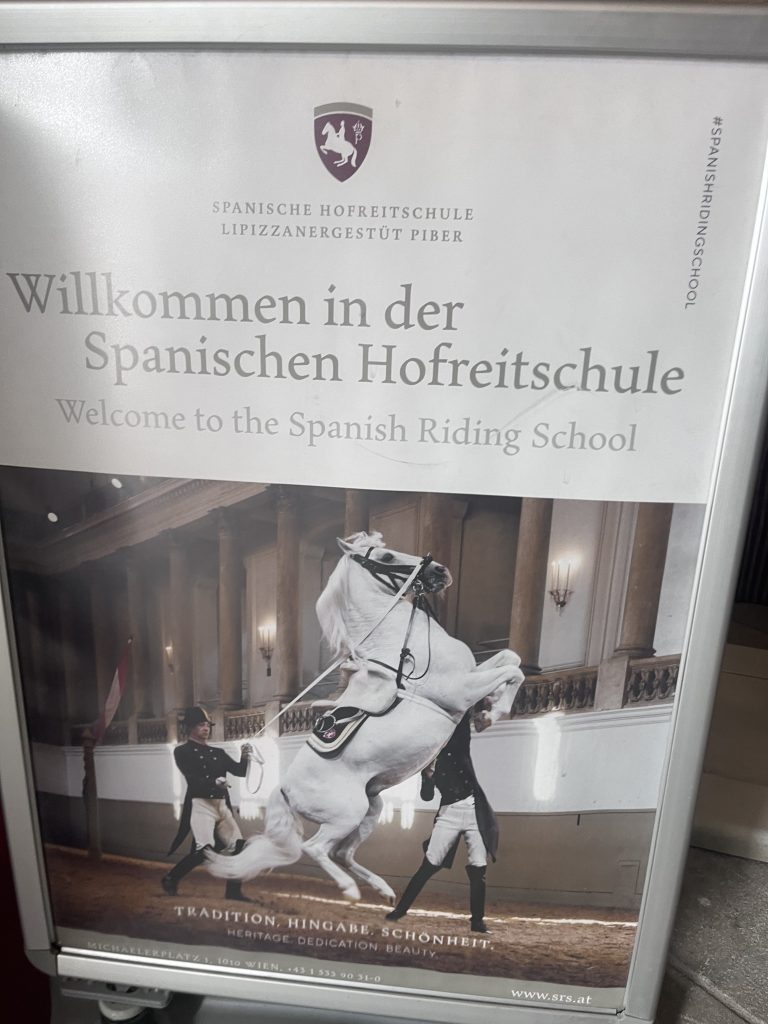
Off we trek again—this time to see the horses! The Spanish Riding School and its famous Lipizzaners—the Ballet of the White Stallions—perform in the unique Baroque Winter Riding School, a tradition that has continued here for more than 450 years. Beautiful, beautiful horses.
Last night Eileen went online and get tickets for us to stand and watch them practice for an hour. I noticed one rider using two sets of reins, something I had never seen before. I went online while we were there and learned that only the most accomplished riders use this system: one set for normal control, and a second set—connected to a second bit—for extremely fine control.
The horses’ delicate white tails flounced as they walked. We watched them change leads, move diagonally, and quite literally dance to the music. What a spectacle! I meant to get a video as we left, but forgot—no doubt I can find one online.
We were not allowed to take photos or video while they practiced!
Here are some I videoed while waiting outside:
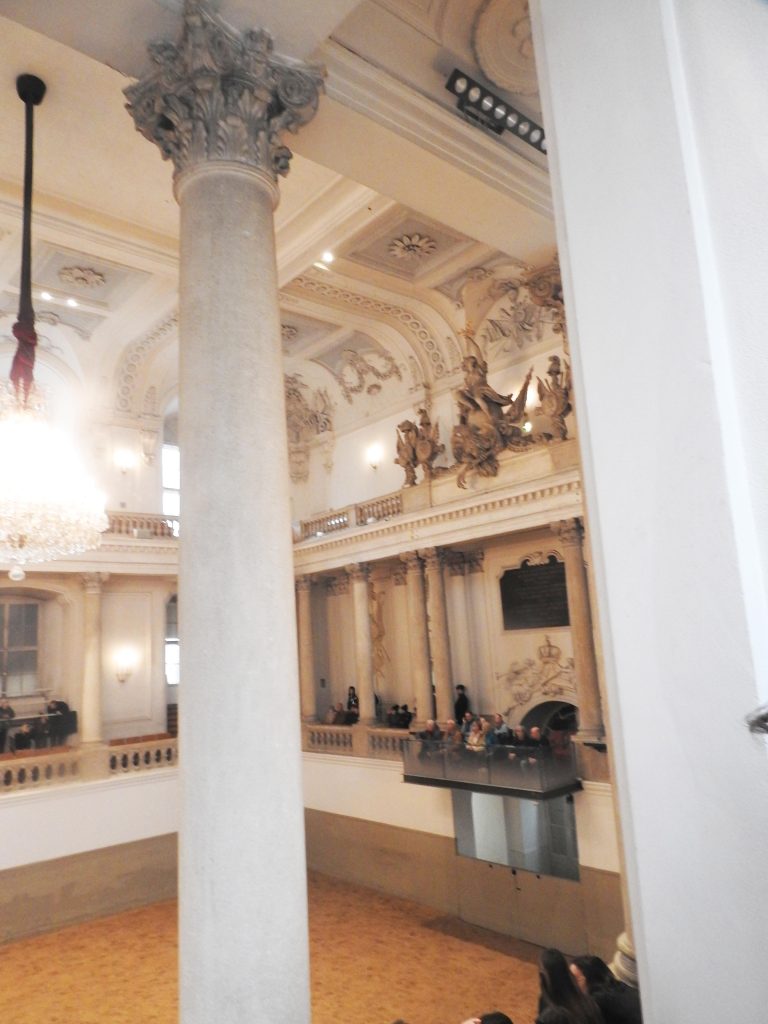
We could take photos before they entered though:
🐎 Spanish Riding School
Home of the Lipizzaner Stallions
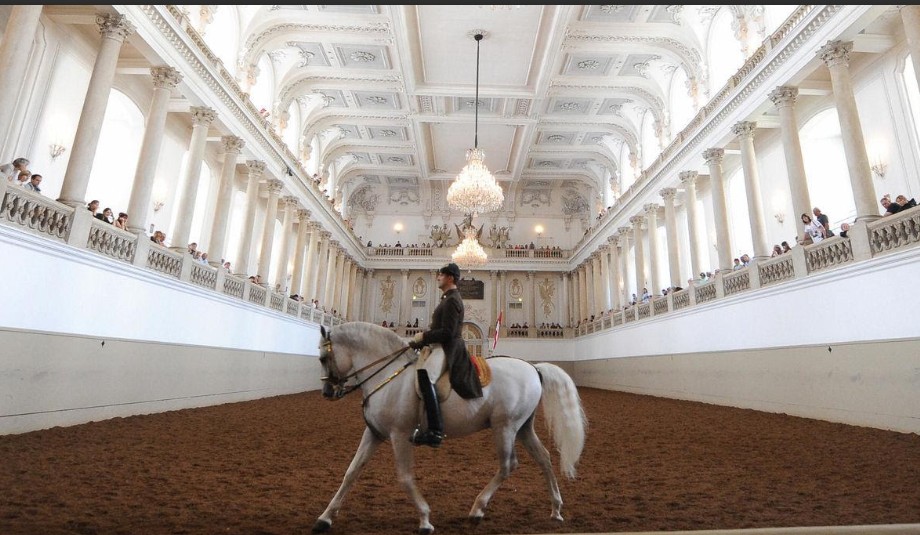
This is the Winter Riding Hall of the Spanish Riding School inside the Hofburg — where the famous Lipizzaner stallions perform.
A few details from your photo:
The elegant white Baroque hall (built 1729–1735).
Tall arched windows and upper viewing galleries.
The grand chandelier hanging over the arena.
The sand floor where the horses perform classical dressage.
The school preserves the Renaissance tradition of haute école riding — movements like the levade, courbette, and capriole. These white stallions are bred at the Piber stud farm and trained for years before performing.
Given your earlier note about the two sets of reins, you probably noticed the incredible precision of the riders here — some use double bridles for fine control.
There’s something almost timeless about that room — the same choreography, same architecture, centuries later.
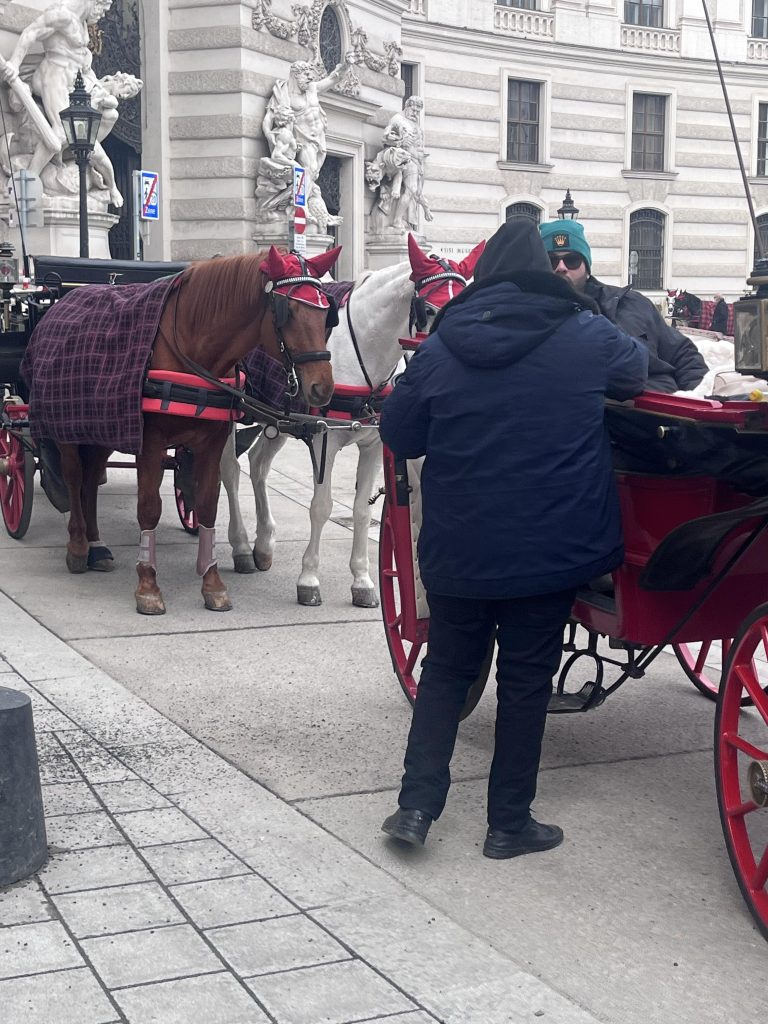
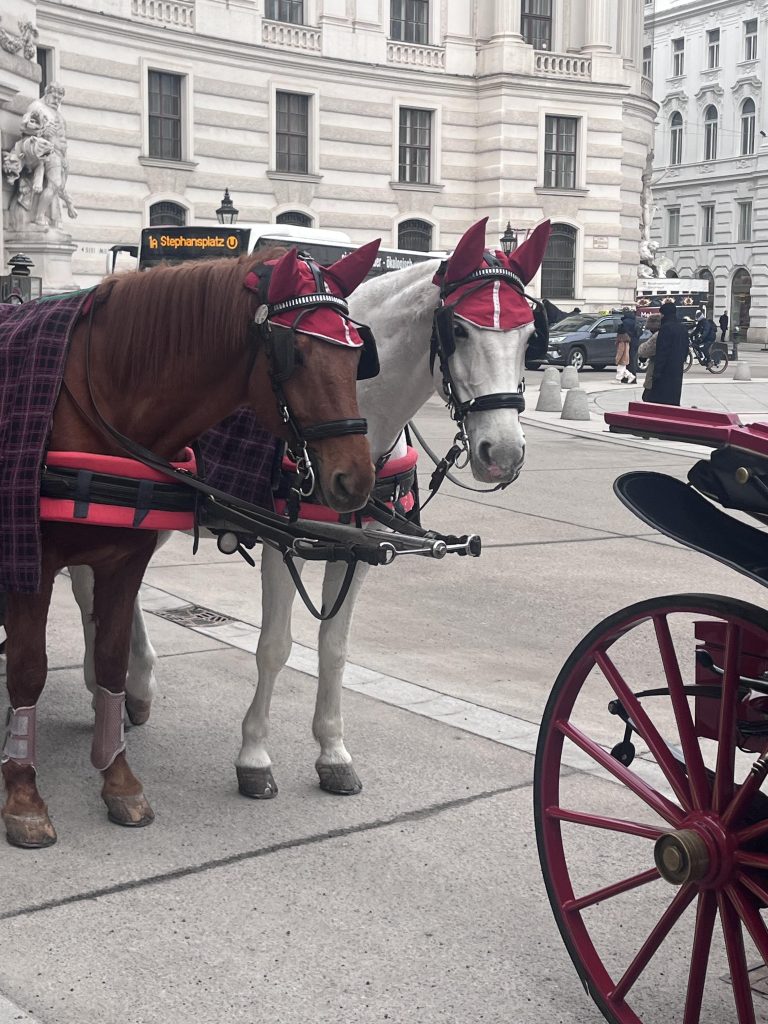
Outside of the horse riding building were – appropriately – horse drawn carriages.
Afterward, we walked over to the Hofburg Palace and visited the Austria Museum, which covered the period from about 1890 to the present. It was very interesting—lots of reading, and easily a hundred exhibits with photographs, clothing, music, and much more.
From there we went into a museum of ancient artifacts from Ephesus. In the late 1800s and early 1900s, archaeologists from here excavated the city and sent back many statues and architectural features—columns, roof elements, and other pieces. It was a fascinating exhibit.
Along the way I realized I had lost a glove, so I stopped at a kiosk and bought another pair.
Later this evening we’ll attend a concert at an opera house.
This city is overflowing with monumental architecture and museums—there are nine museums in one place alone around the Habsburg complex.
In the evening we went to an Opera House for a performance of Mozart.
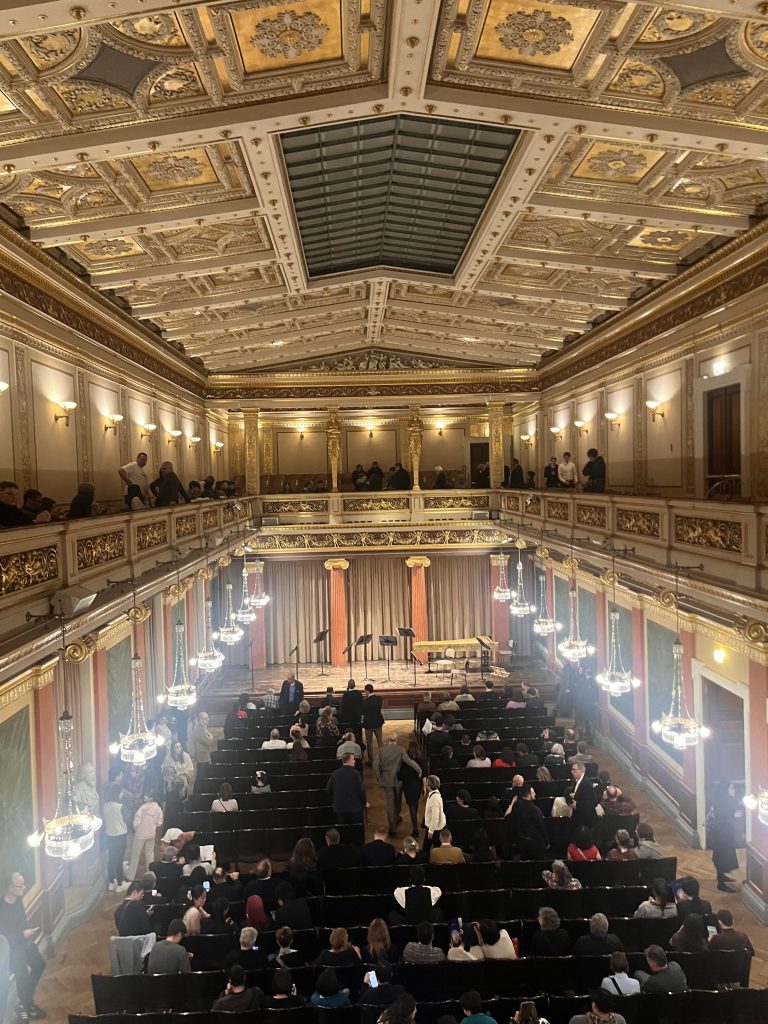
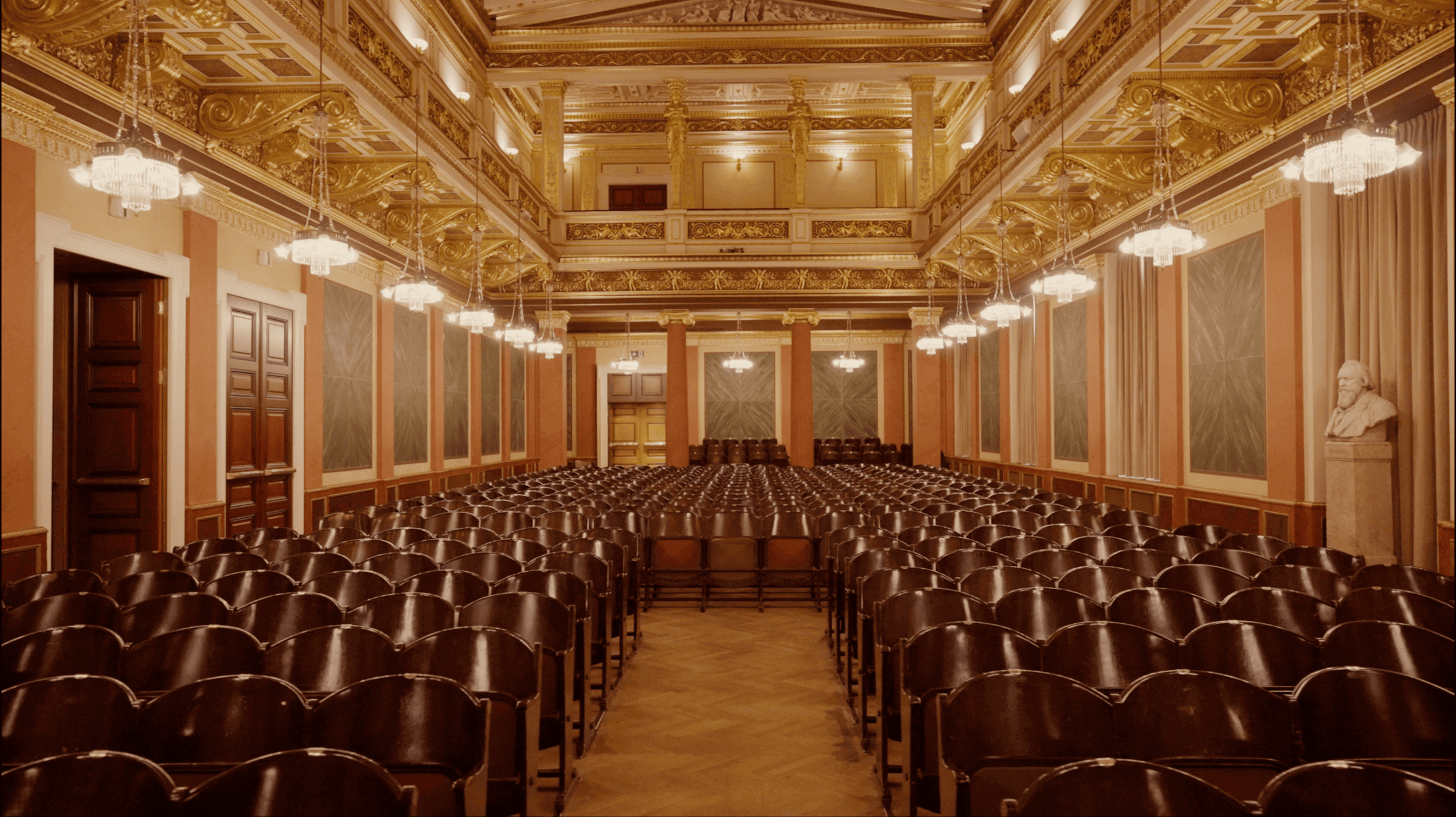
🎼 Brahms-Saal, Musikverein
inside the famous Musikverein
Clues from your photo:
Two levels of wraparound balconies
Rich gold ornamentation
Coffered ceiling with central skylight panel
Chandeliers lining both sides
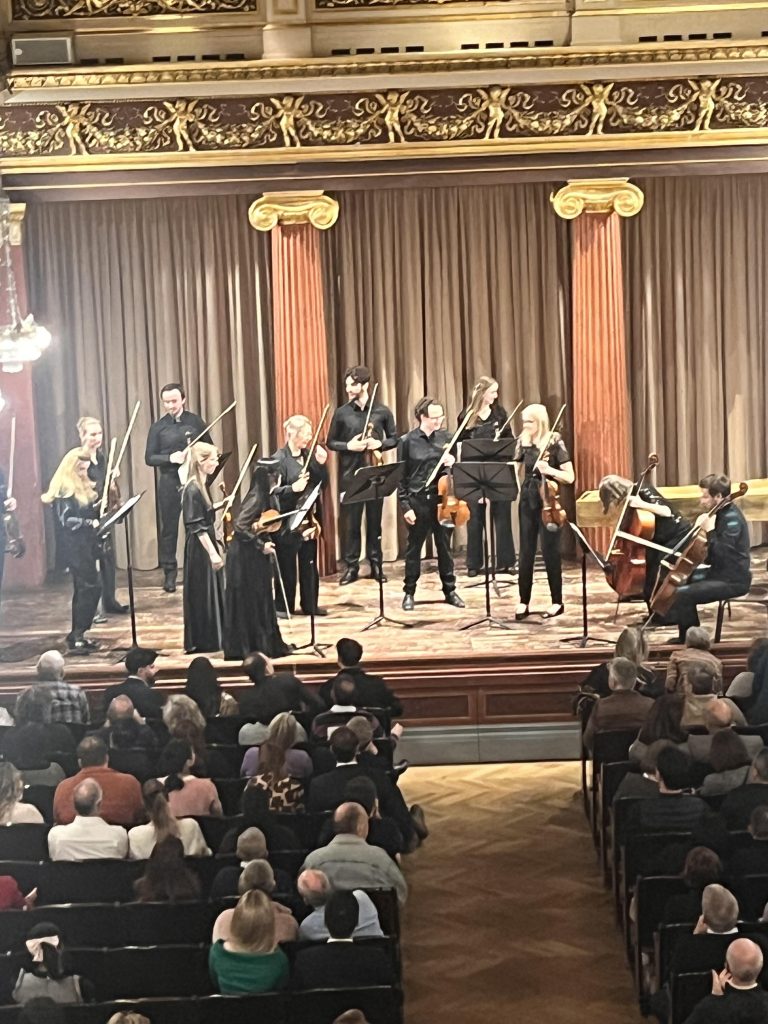
Stage suited for chamber orchestra or recital
The Brahms-Saal seats roughly 600, so your estimate of 500 fits well.
The Musikverein is home to:
If you were in Vienna and heard music here, you were in one of the finest acoustic environments in the world.
Alexa says that music was Handel, Minuette in G minor.