
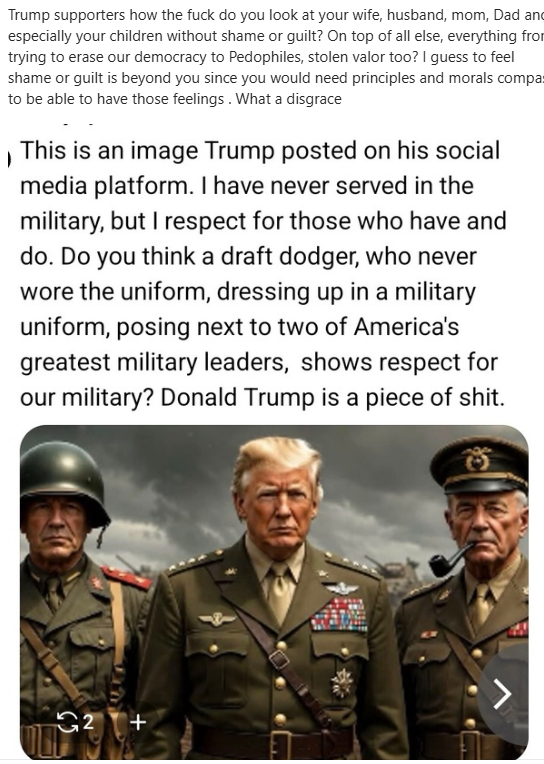
Actual photo:
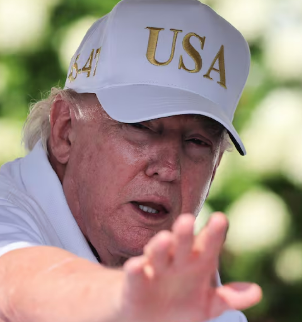
Trump posted photo: Edited to make him look younger, hair cut, sweat gone, eyes open, mouth closed. thinner:
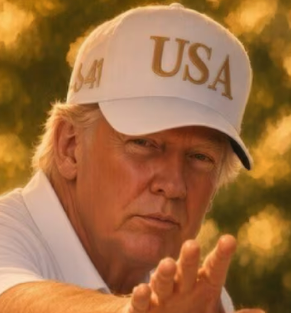
Shirt shows pot belly:


Shirt smoothed out to hide pot belly, “Trump” added, color changed from pasty white to tanned.
Next, on Trump’s page (note the letter signed by Jefferies):
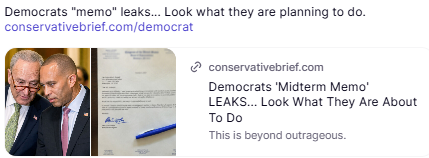
Look at the letter closely, it is dated October but the date and year are blurred out!:It is not about the midterms at all!!!
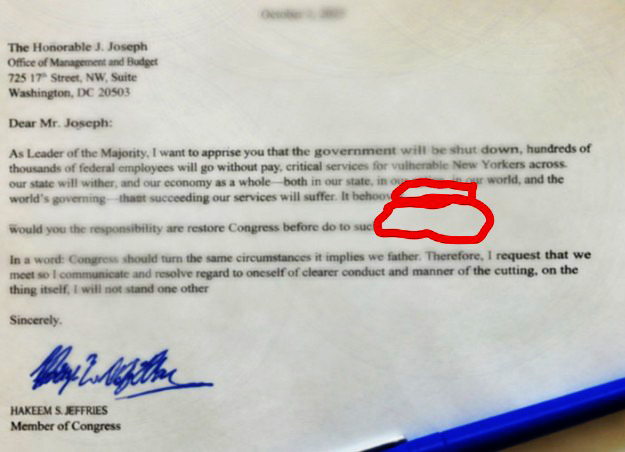
It is a letter about a shutdown, NOT a Democrat plot for the midterms!. Jefferies says “It behooves you…” and the words have been erased!
The next sentence is a conglomeration: “Would you the responsibility are restore Congress before due to suc…” Then the rest is erased!
What kind of garbage is Trump trying to foist on us? This letter is cut up and does not represent what Jrfferies wrote by any sense of the word!!
What does the original letter say? They do not want you to know!!
Truth Social Will Sell Wall Street Trump’s Posts Before You See Them
They finally figured out how to make Truth Social profitable.
For $60,000 to $100,000 each month, trading firms are getting early access to Trump’s posts through a new service offered by Trump Media & Technology Corp. “Truth API” will allow Wall Street to receive presidential news on tariffs, central bank policy, and global developments before anyone else.
CEO Kevin McGurn said that 10 organizations have already signed up, generating $7 million to $12 million in annual revenue. He brushed off ethical concerns from both watchdog groups and congressional Democrats, claiming the product is similar to those offered by other social media platforms.
It’s true that many social media companies sell API access, but none are selling hedge funds a head start on presidential tariff announcements. That’s not a product, that’s insider trading with a subscription fee.
Trump Media has lost more than $1 billion since the beginning of last year. It has $1 billion in debt, some of which can be demanded back by lenders on November 30, shortly after the midterm elections.
One question that remains is whether trading firms will keep paying $1.2 million a year for Trump’s posts once Trump is no longer in office. Shares fell another 8% Monday to $9.39, down from a 2024 debut near $62.
Trump Order Forces Kids to Receive Vaccine That Doesn’t Exist
Trump signed an executive order claiming he can override the CDC and upend the vaccine schedule for children. The State Department revoked more than 175,000 visas, many over minor law-enforcement encounters that never reached a courtroom. Florida’s attorney general threatened to charge WNBA players with assault over a hard foul. And the Trump administration is building a border wall through the site of a 1918 massacre still being studied as a crime scene.The president would like pharmacies to carry three vaccines that don’t exist, to cure a problem that also doesn’t exist.
Trump signed an executive order on Monday that would require the measles, mumps, and rubella vaccine to be split into three separate shots. The problem: no individually licensed measles, mumps, or rubella vaccine exists in the United States, and the licensing process takes years.
The question appears to be when to impeach, not if,
and the answer will be clear in time. The president has no intention of changing, except in that his criminal conduct, which includes the prosecution of an illegal war against Iran that he cannot extract himself from, will get worse, no matter what happens in November. (The Iran War could go on indefinitely.) Though a Democratic Congress cannot stop him before the damage is done, fear of accountability will almost certainly push him to commit more and greater crimes against the republic. Meanwhile, the consequences of his crime spree are burning up the US economy.Trump’s image as a “successful businessman” shielded him in 2024. Voters could rationalize their support, saying that he might have led an insurrection, but he was still better for their pocketbooks than Kamala. That image is now shattered. His crimes are enduring, painful and highly visible, and yet he blames his party for the public’s rage. His economic advantage is gone. With it, I think, is his political immunity.
Trump did not use either jumbo jet aircraft on the trip home!
In Ankara, Trump boarded the old Air Force One jumbo jet in view of television cameras. Then he was secretly shuttled minutes later to a smaller plane — an Air Force C-32A — via an airport catering truck! At first glance, Donald Trump’s clandestine ruse in switching planes using a food truck might seem like an amusing caper. MAGA was portraying Trump as some kind of chubby, old James Bond.But there was nothing heroic about this cowardly plot hatched by Trump, Pete Hegseth, Dan Caine and Trump’s security staff. For a start, the president has been caught in a bare-faced lie to the American public. For some reason, he cannot understand that the media is the proxy of the people. To mislead the press is to mislead the country.
Worse—way worse—was Trump’s acceptance that the White House press corps, his own White House and military officials and the flight crew were expendable as long as he was safe from what must have been a credible Iranian terror threat.
We already knew he dodged going to Vietnam because of spurious bone spurs. But that was just Trump. This was unforgivable.
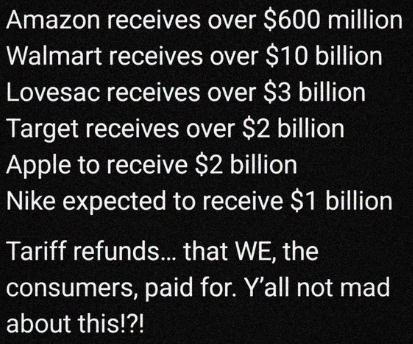

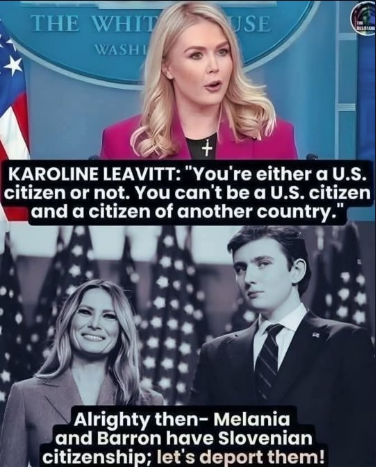
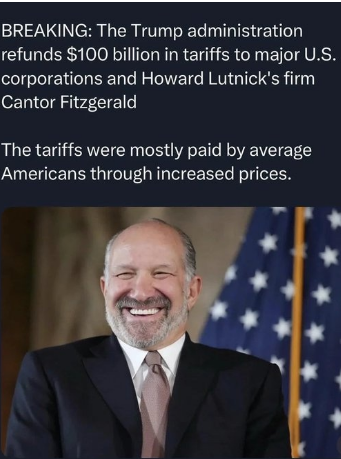
We pay for the tariffs, then billionairs get the money, not us?
Recently 16 Chinese military transport aircraft have landed in Iran.
It’s been confirmed that they’ve brought in a large number of air defense systems.
Trump gave Jinping an ultimatum not to give Iran weapons however China doesnt care what he says..They will not give up Iran like Venezuela.

Trump’s ‘pathological’ denials
Each day seems to bring a new example of President Donald Trump’s lies and “presidential tantrums,” and according to Nobel Prize-winning economist Paul Krugman, one legal concept explains the damage his “bad faith” governance is doing to the United States.
“Lately Donald Trump has been raging against several of his own appointees,” writes Krugman. “He has publicly raged against the attorney for DC Jeanine Pirro, for admitting that the failure of the Reflecting Pool was due to shoddy work by Trump’s chosen contractors, and for dropping charges against David Hearn and supposed saboteurs. He has raged at RFK Jr. for not making a stronger case for the false link between vaccines and autism. And according to the Washington Post, Trump has privately raged at Pete Hegseth, the defense secretary, for misleading him about the state of U.S. munitions, which have been critically depleted by his failed war on Iran.”
Krugman asserts that while these incidents may seem to be a series of unrelated “presidential tantrums,” they are in fact part of the same story: “what happens when a government operates entirely in bad faith, never telling the truth about what it is doing or why. Inevitably, officials in such a government don’t merely lie to the public: they lie to each other too. As a result, they can’t govern effectively, even in the pursuit of evil.”
According to Krugman, “Legal scholars have a term of art, the ‘presumption of regularity,’ which means that one assumes that the government is generally honest when undertaking legal proceedings.” Therefore, if the Justice Department brings charges against someone, the historical presumption has been that there must be some basis for it. “In other words,” writes Krugman, “that they aren’t simply a vindictive prosecution of one of Trump’s perceived enemies. When DOJ succeeds in securing an indictment from a grand jury, the historical presumption has been that government lawyers secured that indictment honestly, presenting the grand jury with complete and accurate information.”
“Under Trump II,” Krugman continues, “this presumption is no longer reasonable — and the courts have begun to acknowledge this reality. In a number of recent cases judges have demanded information about what the government told a grand jury or dismissed charges because the government was clearly engaged in vindictive prosecution. At this point the Trump administration’s word is worth nothing, or less than nothing.”
Krugman notes that the same concept can be applied to a wide range of issues. After Trump’s initial wave of tariffs was deemed illegal, for example, he ginned up a new rationale “that literally nobody believes” — that targeted countries aren’t doing enough to combat slave labor. Trump slashes SNAP, saying it’s to stop fraud, when everyone knows it’s simply because he’s against the government helping put food on the table. His administration denies FEMA aid to blue states, delivering various reasons, then it’s revealed that Trump is punishing states that didn’t vote for him. According to Krugman, “It’s all being done in sneeringly bad faith.”
This cycle of lies, says Krugman, has led to mounting “disasters.” Trump’s war on Iran, for example, has been a disaster on many fronts: economically, militarily, diplomatically, strategically, and so on. “One obvious question,” writes Krugman, “is why Trump didn’t move much sooner to conserve interceptor missiles etc., either by calling off the whole war or at least by calling off actions that used up already depleted stockpiles of weapons like ATACMs.”
According to Krugman, “Most attempts to answer that question focus on deranged Trump syndrome — his pathological inability to admit failure, which has led him to double down even as he runs out of ammunition. But it now appears that a contributing factor may be that he didn’t know how bad things were, because Hegseth lied to him, telling him that the munitions problem had been ‘fixed.’” Hegseth, in turn, is blaming his deputy. Krugman suggests that his deputy may have lied to him, as the U.S military has undergone a “Putinization” in which “nobody wants to tell Hegseth things he doesn’t want to hear.”
“It’s liars all the way down,” Krugman declares. “This is an administration in which to serve is to abase yourself constantly, rendering fealty to Dear Leader, lying to your colleagues and lying to the American people. And if this administration doesn’t like the official government reports that are detailing the many disasters it has caused, it just quashes them.”
Krugman concludes on a grim note, warning, “Americans should be prepared for more chaos and mendacity, because we are governed by people who, just like Trump, are unwilling to acknowledge the truth. Unfortunately, things can get worse – and they probably will.”
running out of missiles
On Friday, in an attempt to address rumors that the United States is running out of missiles due to the war with Iran, President Donald Trump accidentally revealed an effort to remedy the situation that is decidedly not consistent with the “America First” ethos.
“The U.S. has massive amounts of ‘munitions,’ especially of certain types,” Trump posted to Truth Social. “Additionally, large amounts are being manufactured and shipped to the U.S. as needed. Defense companies are building the largest number of plants and factories in our country’s history. The ‘leakers’ of these treasonous statements are being hunted down. Long term jail sentences will be sought!”
In other words, the same president who has fervently asserted that anything and everything should be manufactured in the U.S. — who went so far as to level tariffs against most of the world in a supposed effort to force companies to reshore factories — is importing weapons manufactured abroad in order to fix the problem he himself created in the first place. This admission comes as new data from the Labor Department shows that 23,000 jobs were lost in July, while its May and June reports were revised down by over 100,000 jobs. Over the course of Trump’s second term, it’s estimated that the manufacturing sector alone has lost 100,000 jobs despite his claims that tariffs would result in a boom of factory employment.
Commentators noted other problems with the president’s post about munitions. As Jim Geraghty, senior political correspondent for the conservative magazine the National Review, reasoned, “Now, if the report that munitions are dangerously low is false . . . that’s not really a leak of classified information, is it? It’s not leaking; it’s lying. And if leaking that information is treasonous, as the president contends, then the underlying facts about depleted stockpiles would have to be accurate, wouldn’t they?”
Geraghty expanded on these thoughts in an article, writing, “We have an administration that lies. It lies habitually, and it lies reflexively. It refuses to level with the American people about the problems that it faces because it wants everyone to believe that everything is going fine and we’re in a ‘Golden Age.’ Since the start of the war, the president, his cabinet, and other officials have insisted that the U.S. stockpiles of air-defense missiles and other critical munitions had never been higher or better and were virtually unlimited. Every time a report came out contending the opposite — often with fairly specific ranges of remaining munitions — the administration insisted it was a damnable lie.”
Donald Trump launched an illegal war in Iran which made Iran and its allies more powerful
– while making the United States and our allies much weaker.
Trump’s war created global shortages of oil, fertilizer, and helium which greatly increased prices in the U.S. and worldwide for gasoline, diesel, food, and computer chips.
Killing Iran’s leaders unified the nation behind their successors – who are even more anti-American than those Trump killed.
Trump’s war gave Iran control of the Straits of Hormuz, which Iran will use to extort payments that will drive up prices worldwide and fund a massive military buildup that will threaten U.S. allies in the region, including Israel.
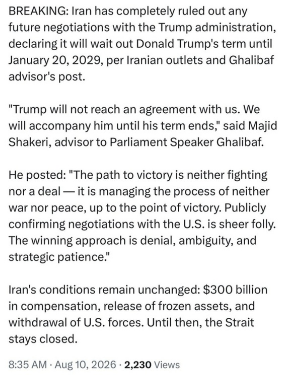
In addition, Iran is demanding
-a permanent end to U.S. attacks on Iran and its allies
-withdrawal of U.S. forces from the region
-ending the U.S. naval blockade of Iranian ports
-“complete compensation” for war damage
“unconditional” release of frozen assets.
-lifting of all U.S. sanctions
Iran is dictating these terms because Iran believes it defeated Trump by surviving U.S. bombing and firing enough missiles and drones to exhaust U.S. interceptor supplies.
And Trump’s weakened military has emboldened Putin to increase attacks on Ukraine and our NATO allies in Europe.
Tell Congress: Impeach Trump
for losing the Iran War
Trump launched this disastrous war because he believed Netanyahu
August 8, 2026
Heather Cox Richardson
At 4:00 this morning, just before they left for a five-week recess, Senate Republicans confirmed Acting Attorney General Todd Blanche to the position of Attorney General of the United States. This makes President Donald J. Trump’s personal criminal lawyer the top law enforcement officer of the country.
The attorney general is supposed to be the lawyer for the people of the United States.
Some Republicans, like 92-year-old Senate Judiciary Committee chair Chuck Grassley of Iowa, were enthusiastic about Blanche. “Mr. Blanche is a tough, fair prosecutor dedicated to the rule of law, and his leadership instills that same zeal throughout the entire Justice Department,” Grassley said.
Other Republicans were more skeptical but said if they didn’t confirm Blanche, Trump would choose someone worse. Perhaps in a permanent rather than an acting capacity, they said, he would be more likely to resist Trump’s pressure.
Republican senators played a very different role in the United States 52 years ago.
In late July 1974 the House Committee on the Judiciary had passed three articles of impeachment, charging the president with obstruction of justice, abuse of power, and contempt of Congress over his handling of the break-in at the Democratic National Committee headquarters at the Watergate complex in Washington, D.C.
The House would almost certainly send those articles of impeachment to the Senate, but what would happen there was not clear.
And then, on August 5, in response to a subpoena, the White House released a tape recorded on June 23, 1972, just six days after the Watergate break-in, that showed Nixon and his aide H.R. Haldeman plotting to invoke national security to protect the president.
Even Republican senators, who had not wanted to convict their president, knew the game was over. A delegation went to the White House to deliver the news to the president that he must resign or be impeached by the full House and convicted by the Senate.
On August 8, 1974, Richard Nixon spoke to the American people to tell them he was resigning the presidency of the United States.
“Throughout the long and difficult period of Watergate, I have felt it was my duty to persevere, to make every possible effort to complete the term of office to which you elected me,” he said. “In the past few days, however,” he continued, “it has become evident to me that I no longer have a strong enough political base in the Congress to justify continuing that effort….”
“From the discussions I have had with Congressional and other leaders, I have concluded that because of the Watergate matter, I might not have the support of the Congress that I would consider necessary to back the very difficult decisions and carry out the duties of this office in the way the interests of the Nation will require.”
“To leave office before my term is completed is abhorrent to every instinct in my body,” he said. “But as President, I must put the interests of America first. America needs a full-time President and a full-time Congress, particularly at this time with problems we face at home and abroad….
“Therefore, I shall resign the Presidency effective at noon tomorrow.”
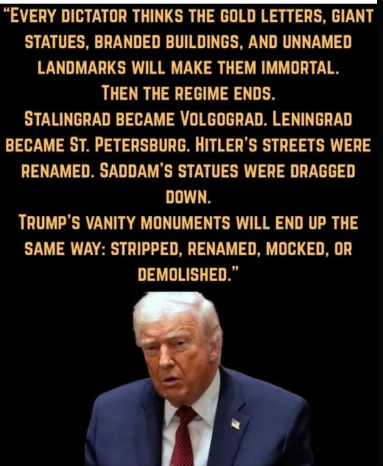
Hillary Clinton RIPS Trump’s Gold-Plated Oval Office With BRUTAL Saddam Hussein Comparison
Hillary Clinton just delivered a devastating comparison to Donald Trump’s increasingly lavish White House makeover, likening the gold-heavy Oval Office to the palaces of former Iraqi dictator Saddam Hussein. And unlike someone making the comparison from a distance, Clinton has actually been inside those palaces.
Speaking on Kara Swisher’s podcast, Clinton recalled visiting Baghdad after Saddam Hussein’s fall while serving as a senator. She said she held meetings inside several of his palaces and found them strikingly similar to what she now sees happening inside the White House.
“You know, when I was in Baghdad after the fall of Saddam Hussein, I had meetings – I was then a senator – in some of his palaces,” Clinton said. “And they were quite reminiscent of what we are now seeing in our own White House … It’s just insane.”
Clinton said the transformation of the Oval Office is particularly “sad” because of what the room has represented throughout American history. She contrasted its traditional dignity with Trump’s decision to cover portions of the room in gold and ornate decorations.
To Clinton, the makeover says something deeper about Trump himself.
“It’s a reflection of his narcissistic personality and his need to feel important, including sticking gold embellishments all over the walls of the Oval Office,” she said.
But Clinton’s harshest criticism wasn’t really about interior design. She argued that Trump appears more preoccupied with projecting power and importance than confronting major national challenges.
“This is a man who can’t concentrate,” Clinton said. “This is a man whose mind apparently goes to, ‘Where can I add more gold?’ instead of, ‘How do I get out of Iran without looking like the loser that I am?’”
She pointed to the challenge of ending the conflict involving Iran and the rapidly developing threat posed by artificial intelligence as issues that should command the president’s attention.
Instead, Clinton argued, Trump seems focused on surroundings and symbols that reinforce his desire to “appear important.”
Her Saddam Hussein comparison therefore goes beyond simply mocking Trump’s taste. Clinton is drawing a historical parallel between leaders who surround themselves with extravagant displays of wealth and power and the increasingly grandiose image Trump is cultivating around the presidency.
Trump has pursued an increasingly ornate vision for the White House, including plans for a massive ballroom, while critics accuse him of turning the presidential residence into a monument to his own personal image.
Clinton has seen this kind of political spectacle before.
It was inside Saddam Hussein’s palaces.
It is not over, Trump does not know when to throw in the towel.
The secretary of Iran’s Supreme National Security Council, Mohammad Bagher Zolghadr, laid out the country’s key demands for the U.S. amid negotiations to reopen the Strait of Hormuz on Saturday.
Iran and Oman are engaged in ongoing discussions around this key waterway, which carries a significant portion of the world’s oil supply and has been effectively closed during Iranian strikes in the Gulf region.
In a message shared by state media, Zolghadr called on the U.S. to end its naval blockade in the key waterway, lift sanctions on Iran and pay out war reparations.
Additionally, the Iranian official demanded the U.S. military withdraw from the country and cease attacks on Tehran’s allies.
“The Supreme National Security Council will never give up, whether in war or in negotiations,” Zolghadr said in a translated statement reported by state media.
Stolen Valor
Trump has an alternate plan
Trump will resign following the Blue Wave Midterm Election followed by Vance’s presidency and the Trump pardon.
He is demanding significant cash donations from his mega donors and wealthy corporate benefactors. He is strongly pushing his team to get approval for his billion-dollar slush fund that only he will control. He is trying to force, for the first time in history, the IRS not to investigate and Justice not to prosecute for any tax criminal acts involving himself, his family, and his connected corporations. All of these activities suggest that his resignation, followed by Vance’s presidency, the Trump pardon, and his family pardon, may happen within the next six months, especially now that Blanche secured his Attorney General position.<hr /><p>
Trump is terrible
Donald Trump flooded our communities with armed ICE agents, unleashing fear and chaos in our cities.
Then, he sent them to terrorize our airports.
Now, he’s even sending them to the polls this November.
That is VOTER INTIMIDATION!
Trump Sets Sights on New Government Office He Plans to Loot
FAT STICKY FINGERS
The president would love to get his hands on the State Department’s chandeliers, Corinthian columns, and a painting or two
President Donald Trump appears to have decided that the federal government’s most prized possessions are his for the taking.
Speaking to roughly 200 mining executives at the State Department on Friday, Trump said being president means he can remove things from government buildings—and even “grab a painting” for the Oval Office should the mood strike him.
“It’s a beautiful building,” Trump remarked as he looked around from his seat at the State Department desk. “I’m liking the chandeliers. I like those Corinthian columns, but cutting them out would be not good.”
He emphasized: “I’m allowed to do it,” as he appeared to claim broad authority to take government property. “Every once in a while I’ll come in here and grab a painting and put it into the Oval Office,” he said.
Trump also ran his fingers over a small, solid-gold replica of a deep-sea nodule sitting on the desk, a gift presented Friday by the CEO of American Ocean Minerals ahead of the mining-industry roundtable.
After the roundtable, the White House announced more than $2 billion in funding to revitalize the industry, along with more than $180 million for mining-school investments aimed at boosting the workforce.
Trump came under heavy fire in his first administration for failing to account for some 100 gifts valued at $250,000 given by foreign leaders to the presidential office. Expensive foreign gifts belong to the U.S. government, not the individual president, who is allowed to keep only lower-value items.
“I love stealing things,” said a mocking clip featuring character Creed from The Office.
Many observers couldn’t help but notice that Trump used the word “grab” when he said he could take whatever he wanted. The word echoed one of his most infamous uses of it: the hot-mic capture of Trump boasting on Access Hollywood before he was elected president the first time that he could kiss any woman he wanted without asking, and “grab [women] by the pussy.”
Stopgap transportation funding passed.
A Senate reconciliation bill will cut public transit funding by 20% and passenger rail funding by 83%.
Career criminal
https://x.com/IAmPoliticsGirl/status/2084806597323128975/video/1?s=51
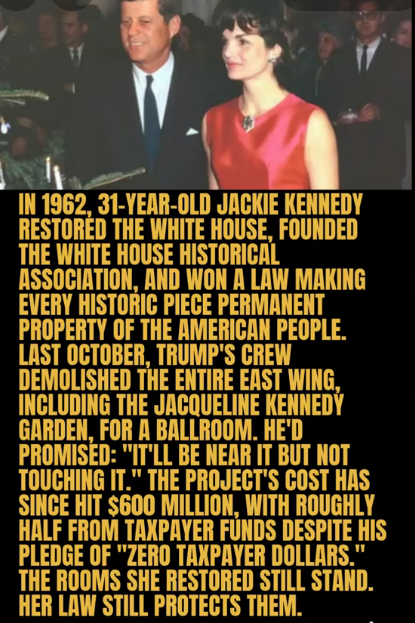
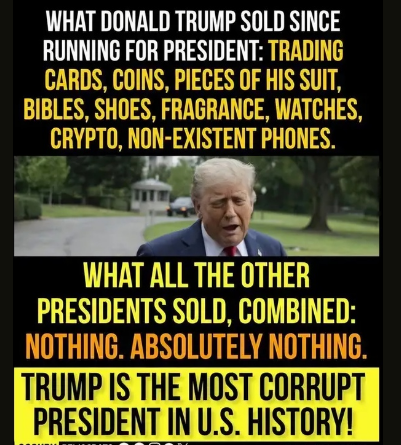
More why we cannot have good things, Trump’s half billion $ ballroom
Trump says he’ll bring ballroom fight to Supreme Court after lower court halts work
An appeals court ruled earlier Friday that construction must stop until Congress authorizes the project. The ballroom is among the president’s top priorities for this term.
Again why we cannot have good things, Trump’s TARIFFS
The Senate on Friday passed a major Russia sanctions bill, named for the late Sen. Lindsey Graham, who played a key role in the painstaking negotiations over the legislation that lasted over a year.
The bill ultimately sailed through the Senate on bipartisan vote, 86 to 11. It would next need a vote in the House, which is currently on recess until September.
The package would place mandatory sanctions on top figures in the Russian government, including Russian President Vladimir Putin, as well as Russian oligarchs, state-owned enterprises and foreign companies supporting Russia’s defense industrial base.
In addition, it would impose up to a 100% tariff on the top five countries, including China and India, that purchase Russian crude oil and natural gas.
This is why we cannot have good things, Trump has spent $4 billion to stop wind turbine construction.
An offshore wind company announced Thursday that it has reached a $1.2 billion settlement with the Trump administration, effectively abandoning development projects off the coasts of New York, California and Louisiana. The latest agreement brings the total amount spent on similar settlements to nearly $4 billion.
RWE U.S. Offshore stated that despite years of planning, investment and partnership with federal agencies, it determined there was no viable path forward to permit the projects in the foreseeable future.
In exchange for the $1.22 billion, RWE is relinquishing wind power leases that could have provided approximately seven gigawatts of power, sufficient for more than 5 million homes. The company now holds no remaining U.S. offshore wind leases.
On another front:
Trailing 12-month (TTM) inflation hit a three-year high of 4.2% in May before easing to 3.5% in June,
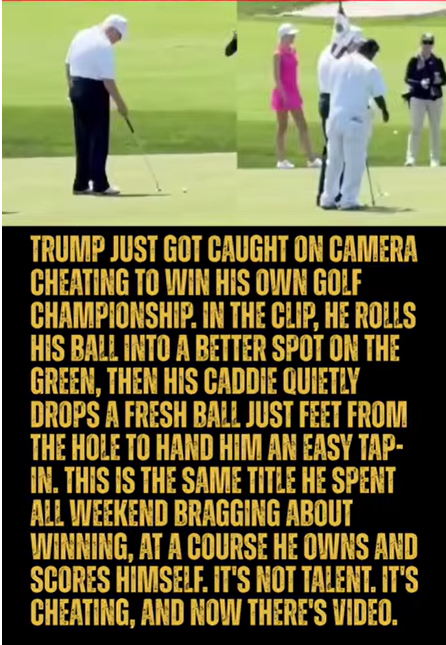
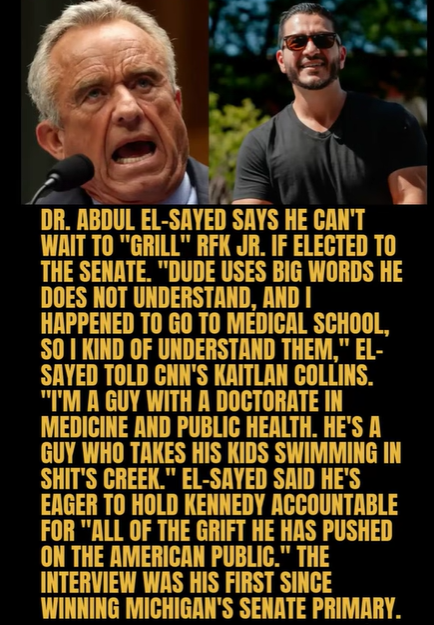
Trump admits it, he is trying to buy elections!
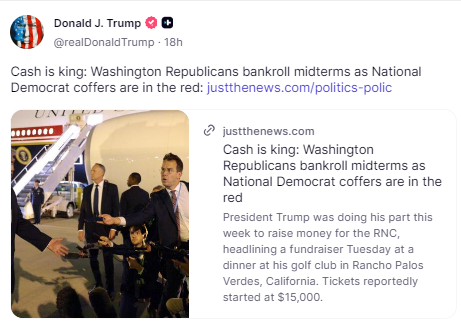
Trump REALLY hates foreigners
President Donald Trump took another stab at restricting automatic citizenship for people born in the United States after the Supreme Court rejected his earlier attempt.
In two executive orders signed Thursday, Trump reached for different legal maneuvers to test the limits of the 14th Amendment’s guarantee of birthright citizenship.
The first order said children would be ineligible if born to “alien enemies,” members of foreign terrorist organizations, or foreign lobbyists. The second order said children of people who fraudulently request tourist visas for the purpose of giving birth in the U.S. would not become citizens.
Trump harshly criticized the Supreme Court’s June decision reaffirming that the 14th Amendment grants citizenship to nearly everyone born on U.S. soil, including the children of undocumented immigrants, striking down his executive order from the first day of his second term.
The new orders marked a fresh effort to overcome that setback and deliver on a campaign promise by expanding the categories of people who the administration argues fall outside the constitutional guarantee. Constitutional scholars broadly agree that the president lacks the authority to eliminate birthright citizenship unilaterally.
“We had a bad decision, very unfair decision,” he told reporters in the Oval Office on Thursday. “Our country suffers because of it, and we’re ending it a different way.”
The new orders were certain to face legal challenges, and if they survive, would affect far fewer people than the original. An estimated 15 million undocumented immigrants live in the U.S., while only a few thousand people are foreign lobbyists registered with the Justice Department.
No significant populations of U.S. residents are designated as alien enemies or foreign terrorists, making that provision largely symbolic. The administration faces ongoing litigation over whether it can deport alleged gang members by treating them as alien enemies.
The second executive order draws on the president’s authority under the Immigration and Nationality Act to control international travel, according to White House Deputy Chief of Staff Stephen Miller, who appeared with Trump at the signing.
“People come here, pretend to be a tourist, pretend to be a visitor, say they want to go to Disneyland, they want to go visit a monument or go to a national park. But the real reason they’re here is to have a child, to make that child automatic citizen, leave our country and then have a U.S. citizen child,” said Miller, arguing that lying on a visa application amounts to fraud and invalidates the visa.
There is no official data on “birth tourism.” In 2024, fewer than 10,000 babies were born in the U.S. to people with foreign addresses, out of 3.6 million total live births, according to data from the Centers for Disease Control and Prevention analyzed by the nonpartisan Migration Policy Institute.
A divided Supreme Court upheld birthright citizenship in June in one of the most closely watched cases of the recently concluded term. Writing for the 5-4 majority, Chief Justice John G. Roberts Jr. said the framers of the 14th Amendment, ratified in 1868, intended to extend citizenship to virtually all people born on U.S. soil with limited exceptions for the children of diplomats and others.
“Citizenship, then and now, was the right to have rights — to freely participate in our political community. The Framers of the Fourteenth Amendment extended that promise to ‘every free-born person in this land,’” Roberts wrote. “We keep that promise today.”
The Trump administration argued for a narrower reading of the amendment, saying its language did not apply to people who were here illegally or temporarily because they had not demonstrated the necessary political allegiance to the country.
,P>
I am utterly ashamed.
I am utterly ashamed that the US has stopped any help to Ukraine. We promised Ukrainians that if they give up their nuclear weapons we will guarantee their sovereignty. We made it official and called it the 1994 Budapest Memorandum. But when Ukrainian sovereignty came under attack in 2014, we did nothing. Just as we are doing nothing today to stop the russian aggression.
I am utterly ashamed of the US president – a man who not only refused to help Ukraine survive, but openly sided with war criminal Putin. Trump promised everything then taco’d. Since Trump took office, Russia has exponentially increased its missile and drone strikes on Ukrainian cities and civilians. Trump gave them silent permission.
I am utterly ashamed of those who voted for Trump, and especially those who still, after all the lies and betrayals, continue to cheer him on. I find such behavior despicable and morally bankrupt.
Finally, I am utterly ashamed of everyone who remains silently complicit in this genocide. People who claim that they are “neutral.” The time of judgment will come. As Dietrich Bonhoeffer said: “Silence in the face of evil is itself evil; Not to speak is to speak. Not to act is to act.”
ICE Is Making Arrests at Airport Gates. The Airlines Are Saying No.
The Transportation Security Administration spent two decades teaching Americans that the airport is where your rights politely wait in a bin. ICE has now decided the checkpoint is also a place to get arrested.
According to documents reviewed by The Wall Street Journal, ICE has stepped up immigration enforcement at U.S. airports, making one to three dozen arrests a day last month, from San Francisco to Miami to Kansas City. Top ICE leaders have told officers to attempt arrests at TSA checkpoints when possible.
The method is simple. TSA hands ICE the passenger manifests, and ICE scours them for targets. The cooperation started last summer and has led to hundreds of arrests.
Many of the people being taken into custody haven’t traditionally been targeted. Earlier cases involved final deportation orders. The new arrests include people with expired visas but a green card or asylum application still pending: people who typically have been allowed to keep working and have protections from being deported.
On July 25 in Dallas, an ICE agent stood near a gate and called out “David” as an Orlando-bound Southwest flight boarded. Agents tried to board with an administrative warrant. A gate agent refused to let them on without one signed by a judge, and declined to let them see the boarding screen.
Southwest has rebuffed ICE at least a half-dozen times in recent weeks. JetBlue says it doesn’t collect immigration status at all. A flight attendants’ union cited an agent in Minneapolis who boarded a plane to threaten a passenger who had criticized his presence.
The federal government spent years telling airlines to treat every passenger as a possible threat. Now the airlines are the ones asking for a warrant.
Wyoming Wrote a ‘Stand Your Ground’ Law. It Left Out the Fine Print on Who Counts.
Wyoming is the kind of place where you can carry a gun without a permit, register nothing, and stand your ground against anyone who threatens you. The catch, apparently, is a definition of “you” that nobody printed in the statute.
Rihanna Kelver, 28, is a transgender woman who grew up in Laramie, ran for the school board at 18, and now works at a local bar and grill. Last September, three men confronted her outside the Crowbar and Grill. One shoved her to the pavement.
The moment she landed on her back, she drew a .380 subcompact pistol and pointed it. She didn’t fire. The men walked away. The whole thing lasted about 10 seconds, and surveillance video captured it.
Wyoming’s “stand your ground” law says a person has no duty to retreat if they reasonably believe their safety is threatened and they were not the initial aggressor. Kelver was arrested and charged with aggravated assault and possession of a deadly weapon with unlawful intent, charges carrying up to 15 years.
None of the three men were charged. The man who pushed her, Scott Durham, is listed as the victim in police reports.
Kelver rejected a plea deal that would have spared her jail but stripped away her gun rights. She goes to trial in November.
The state built a law that lets you draw a gun when you’re knocked to the ground. The only person facing prison is the one who got knocked to the ground. (Read more about this story here.)
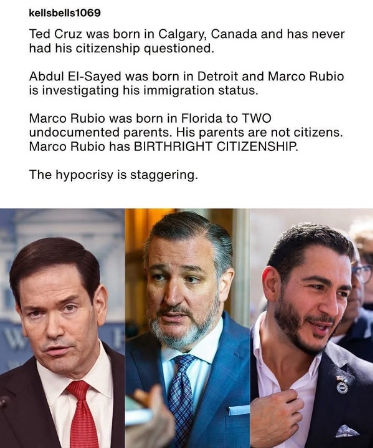
Trump Ranks a Michigan Primary Above 9/11. New York Would Like a Word.
Every president eventually assembles a personal list of the worst things ever to happen to America, and Trump has now finished his. It ranks a Michigan Senate primary above Pearl Harbor.
Speaking in a Las Vegas casino on Wednesday, Trump went after Michigan Democratic Senate nominee Abdul El-Sayed, calling him “a man of hate” and using an expletive to describe him.
Then he made the comparison that stunned the room. “Communism is the greatest threat to our country in its history,” Trump said, “including even World War I, World War II, Pearl Harbor, 9/11.”
On MS NOW’s “Morning Joe,” co-host Willie Geist said he was shocked, noting the president had said the election of a nominee in Michigan was worse than World War II, Pearl Harbor, and 9/11. Co-host Jonathan Lemire called the speech “obscene” and “inaccurate”, adding that the 25th anniversary of the September 11th attacks was coming up.
Contributor Mike Barnicle looked directly into the camera and issued a challenge. “Mr. President, if you’re listening this morning, I dare you to come to New York City on Sept. 11th,” he said, “and repeat what you just said here in Manhattan.”
Trump made the remarks weeks before the 25th anniversary of an attack that killed nearly 3,000 people.
The GAO Checked DOGE’s Math. Nearly $35 Billion of It Wasn’t There.
Elon Musk promised to run the government like a business, and he has finally delivered a business fundamental: inflated numbers on the receipts. The government’s own auditors just went through them line by line.
The Government Accountability Office examined $110 billion in savings DOGE claimed on its “Wall of Receipts,” a website tallying the cuts Musk swept through federal agencies to produce.
The results were not flattering. Of $61 billion in contract savings DOGE reported, the GAO found more than half — nearly $35 billion — was either not terminated at all or impossible to verify because DOGE’s data wasn’t specific enough to identify.
DOGE claimed it terminated 13,476 contracts. Nearly 2,000 of them were not terminated. It listed 264 leases as cuts, but 108 of them were already in process for termination before DOGE even existed.
The audit came at the request of Democratic Senators Gary Peters of Michigan and Richard Blumenthal of Connecticut. When the GAO tried to ask DOGE about its figures and submitted written questions, DOGE did not respond.
Musk aimed to cut $2 trillion. He claimed $215 billion. The auditors couldn’t confirm most of the slice they checked, and the group that produced the numbers wouldn’t answer the phone.

Trump’s Russian Connections
It wasn’t Trump that halted delivery of air defence weaponry to Ukraine — it was Elbridge Colby, known for his anti-Ukraine, pro-Putin position, who has been probably appointed as Hegseth’s undersecretary by the USSR-born Sergio Gor (the head of White House personnel).
Trump’s administration is full of Russian assets.
On the right from Gor is Trump’s troll-in-chief — Steven Cheung, White House Communications Director. It the guy behind AI-generated images of Trump as Pope and other questionable memes, posted by the White House official accounts.
Obviously, Trump is one of them — handpicked by the FSB long before he became the Republican presidential nominee in 2016. (There is evidence of Trump’s communication with high-ranked FSB influence brokers in 2012, right after Obama re-election; photos of the FSB operatives together with Trump in Moscow in 2013 when he came for Miss Universe pageant to Russia. See receipts at the account of user anthony7andrews on X-Twitter.)
Trump talked to Putin today — he announced the call beforehand — which was followed by a massive Russian attack on Kyiv, as the shocking news of the U.S. halting deliveries of air defence missiles to Ukraine trended online.
Kyiv residents are hiding in the subway from the drone and missile attacks; the locals report terrifying earth-shuttering explosions.
Other Ukrainian cities had been also hit.
Putin’s troops cannot achieve a breakthrough on the battlefield — can’t even occupy Donbas in full after 3.5 years of the full-scale war (Russia today occupies less territory than in March 2022), but they can terrorize Ukrainian cities and kill Ukrainian civilians, making people fearful of going to sleep.
That was the tactic used by Putin in 1999 — 26 years ago — to usurp power in Russia. The FSB planted and blew up several residential buildings in Moscow and other cities (they were caught red-handed in Ryazan where vigilant residents caught their guys planting bags in the basement of their apartment building) — Putin stated this was done by Chechens and began bombing Grozny, restarting the Chechen war (after Russia signed a peace treaty with Chechnya in 1996).
So, you can appreciate why the Ukrainians don’t believe Putin’s offers for a “peace agreement” — mind you, Ukraine already signed 3 “ceasefire agreements” with Russia (in 2014, 2015, and 2019) — Putin broke all of them.
The much hyped “2025 Russian offensive” has crashed against the iron bulwark of Ukrainian determination.
The Trump administration’s attempts to forge an alliance with Putin are ultimately misguided — and they will severely damage the U.S. on the global stage. So will the betrayal of Ukraine.
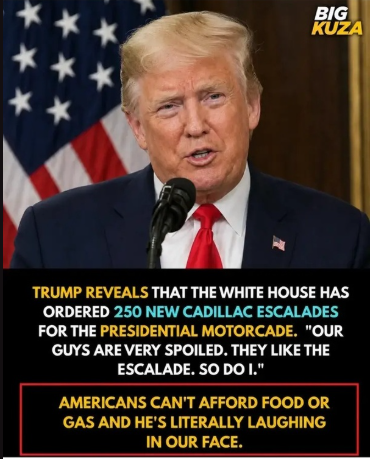
New Alliance
Reports indicate that efforts are accelerating to establish a new military alliance involving China, Russia, North Korea, and Iran, in a move that is being compared to the NATO alliance.
Most expensive folly ever and DeSantis out of control
In announcing the closure of the Everglades immigration detention center known as “Alligator Alcatraz,” Gov. Ron DeSantis said the notorious facility — denounced as inhumane by civil rights groups — was always meant to be only temporary until more permanent detention centers could be secured, and federal officials now have that capacity.
He gave a staged response to his deliberately inhumane decisions as he tries to save face. He may tout efficiency, but despite being open for less than a year, Alligator Alcatraz will likely turn out to be the single most expensive immigration detention center in the history of the United States, critics assert.
CBS News Miami reports that financial analyses by its journalists indicate that operating the detention camp in the Everglades and Baker County cost as much as $3,571 per detainee each day, more than 20 times the national average. Critics have decried these massive, no-bid contracts, which drew more than $1 billion in taxpayer dollars away from essential state health, food security, and housing programs.
A recent Miami Herald investigation estimates that while misusing more than $1 billion on the detention camps, he guided taxpayers’ dollars to between 55 and 83 companies owned or operated by political allies, friends, and donors.
Over a year, DeSantis repeatedly dipped into Florida’s Emergency Preparedness and Response Fund — described by Democratic and other critics as a slush fund — to finance his anti-immigrant operation, circumventing regular channels and ignoring checks and balances.
Since 2023, DeSantis manipulated the process by waiving more than 24 state laws and regulations and extending the 60-day emergency more than 20 times. All to pave the way to erect “Alligator Alcatraz,” the detention camp on land sacred to the Miccosukee Tribe. Critics are deeply concerned that there has been no accountability to the legislature or the public and everything was conducted in secret.
Human cost
DeSantis’ vanity project came at a tremendous human cost. He boasts that his agents have seized almost 22,000 undocumented immigrants. Hundreds disappeared into the detention network, all dehumanized and mistreated.
Amnesty International paints pictures of cruelty and despair. Human beings forced to endure calamitous living conditions: trapped in cages; no AC in sweltering heat; overflowing toilets; and routine flooding during severe weather.
When it comes to the public’s money, DeSantis and most of those in the political class act as if the supply is infinite and that he has the right to use it for projects that harm the very people they purport to serve.
Sea change
Also of widespread concern is DeSantis’s use of taxpayers’ money to subvert higher education while enriching his MAGA buddies, as well as the manner in which he has hijacked higher education.
“This is a conservative capture of Florida’s public higher education,” said Robert Cassanello, a University of Central Florida history professor who is president of the United Faculty of Florida union. “It’s all ideological, and politically driven.”
As the Florida Tributary’s Michael Vasquez reports, DeSantis has used an army of loyalists to build a conservative higher-ed empire.
“With only a year left in office, Gov. Ron DeSantis has a limited window of time to wield power in Tallahassee. But on college campuses across Florida, DeSantis continues to expand his army of political loyalists — both college presidents and university trustees, who are poised to dominate for many years to come, no matter who is elected governor in 2026,” Vasquez wrote.
“As a result, higher education could become DeSantis’ enduring political legacy. And the governor’s final year in office will provide still more opportunities to push academia in a conservative direction.
Vasquez reports that DeSantis’ hijack is “intertwined with the conservative Heritage Foundation … which authored the controversial Project 2025 blueprint to guide the Trump administration’s efforts to reshape Washington.”
“With President Donald Trump term limited as well, aligning with Heritage could benefit DeSantis politically in the future,” Vasquez explained. “This Heritage-inspired sea change has outraged alumni and the communities surrounding Florida’s college campuses, some of whom view DeSantis’ allies as interlopers — many of the leaders DeSantis has installed have no previous connections to the schools they now run, limited experience in higher education, or live out of state. Those limitations have not stopped these new leaders from burrowing deep into the universities’ affairs, according to public records obtained by The Tributary, from micro-managing the materials presented in individual classrooms to replacing signs on bathrooms.”
Well-placed allies
Guided by the Heritage Foundation, DeSantis, Christopher Rufo, and a coterie of far-right allies on the boards of trustees and elsewhere in the higher education firmament have engineered the changes.
DeSantis has forced out progressive and forward-thinking university presidents and replaced them with men and women carrying the anti-Black, anti-woman, anti-LGBTQ+ banner. They willingly manipulate curricula, erase Black history, dismantle DEI and affirmative action programs, and impose a cold, sterile, far-right conservative syllabus across campuses.
Meanwhile, allies on trustee boards engineered exorbitant paydays for each president installed at public state universities.
The takeover began when DeSantis and his allies dismantled New College of Florida. Since 2023, former House Speaker and close DeSantis ally Richard Corcoran has run the Sarasota university. His base salary is $699,000, while his total annual compensation frequently exceeds $1.2 million, including perks like an $84,000 housing stipend, a $12,000 car allowance, and lucrative performance/retention bonuses.
In February, he received a $200,000 bonus performance award for the third year in a row, and that was followed by another $600,000 bonus days later for an “accrued retention payment” for continuing “uninterrupted service” for the past three years.
He is feasting at the public trough despite New College having a student population of fewer than 700.
Former Lt. Gov. Jeanette Nuñez was named sole finalist during the search for president of Florida International University. She’d served as interim and was voted in as permanent last summer. Nuñez has an annual base salary of $925,000 as part of her five-year contract and she is eligible to receive annual performance bonuses of up to $400,000.
Former Education Commissioner Manny Diaz Jr. was ensconced as president of the University of West Florida with a lavish total annual compensation package of $946,040. This includes a $674,000 base salary, up to $107,840 in annual performance-based incentives, a $60,000 housing allowance, a $14,000 car allowance, and an $89,000 retirement supplement.
As has become commonplace in this process, Diaz was approved in a single-candidate competition — despite clear rules intended to require “more than two” finalists for trustees to consider.
Diaz has been a chief architect of the state’s retooling of public higher education with support from both DeSantis and members of the conservative Heritage Foundation.
Phoenix columnist Diane Roberts captures the greed with which these people operate.
UF trustees chair Mori Hosseini, a real estate magnate, rules the University of Florida the way DeSantis has operated in the Sunshine State, she writes: “No part of the university is free from his influence. He pushed UF’s distinguished College of Medicine to hire the state’s science-challenged surgeon general. Now UF pays Dr. Joseph Ladapo more than $300,000 per year — not that he does anything so pedestrian as actually teach classes.”
Few of those in DeSantis’ orbit aren’t enjoying exorbitant paychecks at the public’s expense, Roberts added.
“A trustee who hasn’t been identified had a hand in arranging an adjunct gig at UF’s law school for Florida’s attorney general [James Uthmeier]. The average pay for an adjunct professor is between $3,000-$7,000 per course. Uthmeier’s getting $100,000 for two hours of instruction per week.
“The AG doesn’t see the problem.”
Uthmeier recently staged an event to announce a statewide audit: He wants to “combat public corruption” and root out “bribes, kickbacks, conflicts of interest, evidence of money being spent on special interests, personal interests, personal gain,” Roberts wrote.
Critics have not taken all this lying down. Students, faculty and labor unions have fought back against the corruption of the process, several have filed lawsuits, but DeSantis and crew have sidelined or ignored detractors and continued on their merry way.
The profound hostility that Florida’s politicians have towards universities and their insistence on using ideological purity tests to choose their leaders not only “makes Florida look stupid,” as Roberts points out, but it is also jeopardizing the futures of the next generation.
Trump’s hold on sanity
The Reflecting Pool story is about Trump’s grip on reality, but the press corps won’t go there,” Dan Froomkin says in this blog post, arguing that news outlets are being too timid about the “absurd” vandalism narrative.News organizations “need to provide the essential context when Trump makes preposterous claims,” Froomkin concludes. “They must stop the sanewashing. And that’s going to require them to address Trump’s relationship to reality and use words like delusional.”
Over at National Review, Noah Rothman says the Reflecting Pool is “now a serious scandal” because “innocent people” were targeted by the government “because the president wanted to see someone catch a charge.(and go to jail)”
The average American, Rothman asserts, can’t really relate to the politically motivated cases against James Comey and Letitia James. “By contrast, they are likely to see at least shades of themselves in the nameless pawns whom the federal government viewed as expendable losses in Trump’s failed face-saving maneuver.”
CNN’s Devan Cole and Katelyn Polantz reported that one of those “pawns,” former Olympian David Hearn, “is asking a judge to order the Justice Department to turn over potentially embarrassing information about how they pursued” the case against him.
More insanity: Trump revamps White House helipad, then tears it up
Construction on a new helipad went through a restart as crews demolished a granite seal that would be the landing spot for Marine One, as work on new changes to the helipad requested by President Trump rolls along.
Construction workers on Wednesday used jackhammers to remove the seal, The Associated Press reported. It is unclear why workers removed the seal.
Initial development on the helipad began after crews removed the fighting arena from the White House’s South Lawn following the “Freedom 250 UFC” event to celebrate Trump’s 80th birthday in June.
Reports first circulated in May that Trump had discussed placing the helipad outside the White House to allow for the new VH-92A Patriot helicopter used for Marine One to land and not destroy the South Lawn. The helipad is designed to be a permanent addition to the White House.
Trump in July told reporters that Sikorsky Aircraft, the same company that manufactures the new helicopters and is a subsidiary of Lockheed Martin, was covering the cost of the project.
“Sikorsky is paying for it, you know why?” he asked reporters. “Because they didn’t tell us how powerful these helicopters were and they felt a little bit guilty.”
The White House helipad construction continues on the South Lawn, July 22, 2026, in Washington.
The president added that work on the helipad required removing any grass, not because “the grass gets discolored, [but because] it gets ripped out, ripped out, and it was all over.”
Trump said construction on the helipad will cost $6 million, which he said Sikorsky is paying in full. When reached for comment about the project, Lockheed Martin referred The Hill to the White House.
“For years, the White House has desperately needed a proper helipad on White House grounds that will allow the president to land safely and also protect the beautiful South Lawn grass from the fierce exhaust fumes of the incredible Marine One,” White House spokesperson Davis Ingle told The Hill in a statement Wednesday.
The granite floor of the helipad, which included the presidential seal, could be seen as July came to a close.
The Washington Post’s reporting, however, indicated that Trump was frustrated with its appearance and urged construction crews to redo their work.
Workers destroy a helipad on the South Lawn of the White House, Aug 4, 2026, in Washington.
Two people familiar with the project told the outlet that the president has shown interest in adding a landing pad that is level with the horizon. But this will mean the work that is completed will have to be destroyed to allow for the sloped South Lawn to be leveled.
It is unclear how much more money will be spent to rework the helipad.

Nothing but hate from Trump.
Trump says El-Sayed is ‘full of shit,’ calls him a ‘man of hate’
President Trump lashed out at Michigan Democratic Senate nominee Abdul El-Sayed during a campaign-style event in Las Vegas on Wednesday.
“The polls were wrong again last night when they said it would be a landslide victory for a hater of Jews and a hater of Israel,” Trump said at an event aimed at touting the “no tax on tips” provision of the One Big Beautiful Bill Act.
“This guy hates Jews,” he continued. “Somebody said, ‘Oh that’s a little strong.’ No, he hates Jews and hates Israel.”
“Abdul El-Sayed, can you believe this?” he exclaimed. “He’s a man of hate, and now he’s going around saying, ‘Oh I love everybody.’ He doesn’t love everybody. Put him in office, and you’re going to find out what he loves.”
Trump went on to say El-Sayed hates Jewish people and Israel “with a burning passion in his heart.”
“There’s not a frickin’ thing he can do about it,” he continued.
Trump then blasted progressive policies as socialist and communist and took the opportunity to hit El-Sayed again.
“When I watch Abdul, he’s full of shit,” Trump said.
The president’s remarks come hours after El-Sayed narrowly defeated Rep. Haley Stevens (D-Mich.) in the Democratic Senate primary.
Trump swiped at El-Sayed in a Truth Social post earlier Wednesday, calling his primary win “a victory for Republicans.”
El-Sayed will face former Rep. Mike Rogers (R-Mich.) in November.
El-Sayed’s critics have long accused him of antisemitism. He has pushed back against the accusations, noting he is critical of the policies of the Israeli government.
The Democrat said he was committed to Jewish safety during an interview Wednesday on MS NOW.
“My commitment to Jewish safety is the same as my commitment to the safety of my own kids,” El-Sayed said. “We have a responsibility to take on antisemitism in all of its forms, wherever we see it. It’s the same responsibility we have to take on Islamophobia.”
Trump’s latest freak-out is a national emergency: security expert
President Donald Trump’s seeming cognitive decline is so pronounced, it has been noticed by everyone from his relatives to his closest advisers. Yet according to a retired professor from the US Naval War College, Trump’s mental health problems are now the problem of all America — and his freak out over losing a politically-motivated prosecution illustrates the point.
“Many Americans—and much of the rest of the world—have become inured to Donald Trump’s strange rants,” wrote The Atlantic’s Tom Nichols on Tuesday. “When he shouts about sharks, when he drones on about his brilliant uncle, when he casually ponders violating the Constitution, his supporters try to dress his statements up as some kind of strategy: He’s not lost touch with reality, you see. He’s doing the weave, or he’s owning the libs. He’s fighting the fake news and flooding the zone. He knows what he’s doing.”
Nichols added, “These excuses have never really held much water. But his rant yesterday about the Reflecting Pool (speaking of things that don’t hold water) was a warning that the president has encased himself in the hard amber of irrationality that inevitably surrounds authoritarian leaders. He has become detached from reality—and that detachment is extremely dangerous.”
He contrasted Trump’s various unseemly statements with comments that seem to disregard reality itself. While the former can be dangerous in their own right, he argued, the latter are even more so because they reveal a leader who is literally incapable of seeing when they are wrong.
“Trump has now passed from being a stubborn narcissist to a cocooned authoritarian,” Nichols argued. “Political scientists since World War II have studied the problem of ‘irrational’ leaders, people in positions of power who seem unable to accept any version of reality that conflicts with their assumptions. Irrational, in this sense, does not mean ‘stupid,’ or ‘incompetent,’ or ‘psychotic.’ It refers more specifically to leaders who have become so trapped by their own self-regard, so isolated from the outside world, so imprisoned within their own sense of infallibility that they refuse to consider any arguments or information that conflicts with their beliefs.”
He added, “Trump reportedly relishes being compared to some of the great dictators of the past, but he apparently does not comprehend how their stories are also warnings. Joseph Stalin was so certain he had outfoxed the Nazis that he fell into catatonic denial for several days after the Germans attacked in 1941. Saddam Hussein refused to believe that American troops were crossing into Iraq, even as tanks rumbled toward Baghdad. Nicolae Ceaușescu of Romania was one of many leaders throughout history who refused to believe that he was about to be deposed, despite troops advancing on their palace. (He and his wife died shouting orders at their firing squad.)”
Nichols went on to point out how Trump’s apparent irrationality has so far impacted him mainly in terms of policies like the tariffs, the Iran war or the debacle over renovating the Reflecting Pool. Yet the consequences could become more dire, especially if America faces a serious geopolitical threat.
“Trump is not going to have some sudden epiphany about the need for an open and honest policy process,” Nichols said. “Like other authoritarians before him, the president has retreated, irrevocably, behind the walls of his own Forbidden City of the mind—a place where he is the emperor, his judgment is always right, and his commands must always be obeyed.”
Speaking with AlterNet in May, psychiatrist Dr. Henry Abraham (formerly of Tufts University) — who was the chief signatory of a letter of three dozen medical professionals warning Congress about Trump’s mental infirmities — broke down his diagnoses.
“The president’s condition appears to be deteriorating,” Abraham told AlterNet, adding that “there has been a frightening progression of symptoms. These include grandiosity without moral safeguards, paranoia, impulsivity, vindictiveness, easy misperception of being harmed, moments of omnipotence, uncontrolled rage, and sole control over the use of nuclear weapons in a time of war.
Yikes!
Trump is never humiliated by losses in court, because he doesn’t t feel shame. He suffers narcissistic injury. A narcissistic injury is a deep emotional wound or insult experienced by a narcissist when their inflated self-image or grandiosity is threatened or exposed. He reacts to criticism with rage and uncontrolled contempt
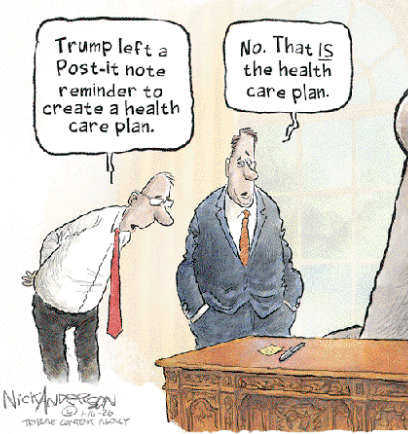
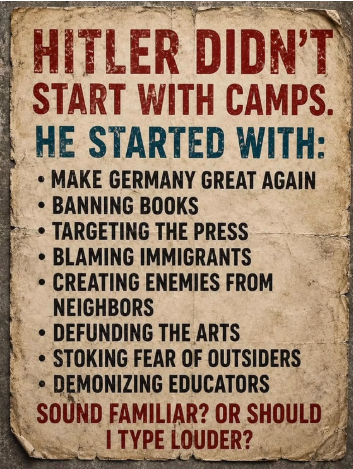
Add to the above:
- Cult of personality: Strong emphasis on personal loyalty, large rallies, and presenting himself as uniquely able to solve national problems.
- Attacks on institutions: Frequent criticism of courts, the press, elections, and other institutions when they oppose him.
- Nationalist rhetoric: “America First” emphasizes national interests, although it differs substantially in ideology and historical context from Nazi racial nationalism.
- Use of scapegoats: Critics say he has blamed immigrants, political opponents, or other groups for many of the country’s problems. Hitler’s scapegoating, by contrast, became state-sponsored racial persecution and ultimately genocide.
- Personal branding: Trump has long put his name on buildings, golf courses, hotels, and other properties. Critics view this as self-aggrandizement; supporters see it as business marketing.
- Military-style displays: Military parades and patriotic symbolism have drawn comparisons from some observers, though many democracies also hold military ceremonies.
Regarding “monuments to self” specifically:
- Hitler commissioned grand architectural projects through Albert Speer to glorify the Nazi regime and envisioned transforming Berlin into “Germania.”
- Trump has not yet built monuments to himself in the governmental sense. However, he has extensively branded private properties with the “Trump” name, and some supporters have independently erected statues or monuments honoring him. Govenment projects are in the works.
A SAD WASTE
According to a Reuters report published 8-4-2026, U.S. military sources said the United States has used “virtually all” of its inventory of the Army’s long-range surface-to-surface precision missiles:
- ATACMS (Army Tactical Missile System)
- PrSM (Precision Strike Missile), the newer missile that is replacing ATACMS.
The report says these missiles have been heavily expended during the ongoing conflict with Iran. It also states that other key missile inventories have been significantly reduced, including:
- Patriot air-defense interceptors
- THAAD interceptors
- Tomahawk cruise missiles (roughly half reportedly used)
At the same time, the report notes that:
- Defense analysts caution that rebuilding stocks of sophisticated missiles such as PrSM and ATACMS will take years, even with expanded manufacturing, and that reduced inventories could affect readiness for other potential conflicts, such as those involving China or Russia.
So, based on today’s reporting, the claim that the U.S. has used virtually all of its available ATACMS and PrSM missiles reflects what multiple unnamed U.S. officials told Reuters.
Reflecting pool
– the public is expressing strong criticism of President Donald Trump, focusing on his alleged dishonesty and incompetence, particularly regarding claims of vandalism at the Reflecting Pool. Many commenters accuse Trump of lying and mismanaging the situation, with some suggesting legal repercussions for those involved in prosecuting false charges. There is a general sentiment of frustration and disbelief at the administration’s actions, with calls for accountability and skepticism about Trump’s leadership abilities.
Republicans went totally nutso on Dr. Anthony Fauci last week,
trying to catch him with a perjury trap before the US Senate. They called him names, citied lies and pseudoscience, and attacked his integrity.
He withstood asinine statements like Josh Hawley, in an extraordinary bit of projection, saying:
“You became a narcissist and a megalomaniac and a liar! You’ve done more to harm science than anybody in my lifetime!”
Throughout it all, he retained his composure and refused to take any of their bait.
But the larger story here is what these white supremacist MAGA Republicans were trying to cover up with this deflection strategy.
Libertarian crackpot and fake science fan Rand Paul led this attack, ostensibly designed to sweep the headlines away from dead and dying Americans in Iran, the price of food and rent, and the allegations that Trump was raping children. But the real goal was even more monstrous.
What happened in 2020 can only be called an intentional, racially-based mass murder of American citizens, planned and executed by Donald Trump and Jared Kushner for purely political purposes, and virtually ignored by the American mainstream media.
And these ongoing attacks on Fauci — led by proponents (like Rand Paul) of the discredited, pseudo-science theory that “herd immunity” could have solved the crisis if we only let enough people die from Covid — are part of the effort to whitewash that history.
Here’s what really happened that they don’t want you to remember:
Throughout January and February of 2020, Covid was limited to a few clusters here in the US, all in Blue state cities that were major air hubs like Seattle and New York.
March 2020 was the month when things went to hell here. On March 5th there were 129 known cases and only 11 deaths in the US: just 33 days later, hospitals were using refrigerated trucks as morgues and over 10,000 Americans were dead of Covid.
Fear ran through communities and stalked our homes because nobody yet knew for sure how this disease was transmitted or how deadly it would become.
We were washing our groceries with bleach after picking them up at the store’s parking lot from people wearing masks, goggles, and gloves. We bought up all the air filters in the country. We worked from home when we could. We isolated ourselves from other people as much as was humanly possible.
In March and early April, serious Covid outbreaks were showing up across the Northeast and Trump — who had two years earlier shut down both of the two federal pandemic task forces Obama had put into place after the Ebola scare — charged his son-in-law, nepo-baby slumlord Jared Kushner, with responding to the crisis.
Trump put medical doctors on TV daily, the media was freaking out about refrigerated trucks carrying bodies away from New York hospitals, and doctors and nurses — along with Dr. Fauci — were our new national heroes.
By March 7th, US deaths had risen from 4 to only 22, but that was enough to spur federal action. At Fauci’s suggestion, Trump’s official emergency declaration came on March 13th, and most of the country shut down during the following week.
The skies and highways fell silent, the Dow collapsed, and millions of Americans were laid off, but saving lives was, as Dr. Fauci pointed out, the number one consideration.
Jared Kushner put together a task force of preppie 30-something white men he knew from college to coordinate getting Personal Protective Equipment (PPE) from Trump buddies and companies close to Republican members of Congress into hospitals.
They even had a plan for the Post Office to distribute 650 million masks — 5 to every American household — to slow the pandemic.
But then came April 7th, just one month later, when the New York Times ran a front-page story with the headline: Black Americans Face Alarming Rates of Coronavirus Infection in Some States.
It was followed the day later with the all-caps headline across the top of the front page: BLACK AMERICANS BEAR THE BRUNT AS DEATHS CLIMB.
It hit conservative media, Donald Trump, and Jared Kushner like a lightning bolt.
Most of the non-elderly people dying from Covid, the report found, were Black or Hispanic, not white people!
As The New York Times reported on April 7th:
“The coronavirus is infecting and killing black people in the United States at disproportionately high rates…
“In Illinois, 43 percent of people who have died from the disease and 28 percent of those who have tested positive are African-Americans, a group that makes up just 15 percent of the state’s population. African-Americans, who account for a third of positive tests in Michigan, represent 40 percent of deaths in that state even though they make up 14 percent of the population. In Louisiana, about 70 percent of the people who have died are black, though only a third of that state’s population is.”
White supremacist Republicans and rightwing media responded with a collective, “What the hell?!?”
Rush Limbaugh declared solemnly that afternoon:
“With the coronavirus, I have been waiting for the racial component.”
And here it was:
“The coronavirus now hits African Americans harder,” Limbaugh giddily intoned, “harder than illegal aliens, harder than women. It hits African Americans harder than anybody: disproportionate representation!”
It didn’t take a medical savant, of course, to figure out why, and it had nothing to do with the biology of race or Covid: it was purely systemic racism. African Americans die disproportionately from everything, from heart disease to strokes to cancer to childbirth, and are also over-represented in low-paid public-facing service jobs where they would more easily catch Covid.
It’s a symptom of a racially rigged economy and a healthcare system that only responds to money, which America has conspired to keep from African Americans for over 400 years. Of course Black people were going to die more frequently from coronavirus.
But the New York Times and the Washington Post simultaneously publishing April 7th front-page articles about that disparity — followed by it leading the news that night on ABC, CBS, NBC, CNN, MSNBC, and Fox “News” — echoed across the rightwing media landscape like a Fourth of July fireworks display.
Tucker Carlson, the only prime-time Fox host who’d previously expressed serious concerns about the dangers of the virus, changed his tune the following day, as documented by Media Matters for America.
Now that Black people were the ones most likely to die if we forced people back to work, Tucker said on April 8th:
“[W]e can begin to consider how to improve the lives of the rest, the countless Americans who have been grievously hurt by this, by our response to this. How do we get 17 million of our most vulnerable citizens back to work? That’s our task.”
“The rest,” of course, were white people. Those “vulnerable citizens” Tucker wanted to get back to work were disproportionately minorities. As a report from the House Select Subcommittee on the Coronavirus noted:
“Essential workers who needed to work in person, and their family members, were significantly more likely to contract the coronavirus early in the crisis. These essential workers disproportionately earned low wages and were more likely to be people of color.”
On the other hand, salaried workers — overwhelmingly white — were telecommuting. Everywhere that (mostly white) people could work from home, employers were making accommodations.
But Trump wanted the rest of the economy to recover from the election-year shutdown shock quickly because he knew presidents running for reelection during economic bad times almost always lose. He knew that if he wanted to win that November and stay in the White House, that meant getting “essential” workers like transit drivers, store clerks, and people in slaughterhouses back to their jobs.
Particularly if they were Black or Hispanic, as were the majority of these “essential” workers, particularly in meat packing.
(The CDC’s Morbidity and Mortality Weekly Report, July 10, 2020, found that among 9,919 cases in 21 states with reported race and ethnicity, 87% of all Covid deaths occurred among racial and ethnic minority workers.)
Brit Hume joined Tucker’s show and, using his gravitas as Fox’s “real news guy,” intoned, in response to the report that mostly Black and Hispanic people were dying:
“The disease turned out not to be quite as dangerous as we thought.”
Left unsaid was the issue of for whom it was “not quite as dangerous,” but Limbaugh listeners and Fox “News” viewers are anything but unsophisticated when it comes to hearing dog-whistles on behalf of white supremacy.
Fully 12,677 Americans were dead by that April day, but now that Trump and the rightwing media knew that most of the non-elderly dying people were and would be Black and Hispanic, priorities were suddenly very, very different.
Now it was time to quit talking about people dying and start talking about getting those Black and Hispanic people back to work, even if it meant exposing them to a deadly disease!
On April 12th, just four days after the news that most deaths were Black and Hispanic people in Blue states, Trump retweeted a call to fire Dr. Anthony Fauci and declared, in another tweet, that he had the sole authority to open the US back up and would announce a specific plan to do that “shortly.”
On April 13th, the ultra-rightwing, nearly-entirely-white-managed US Chamber of Commerce published a policy paper titled Implementing A National Return to Work Plan.
The next day, Freedomworks, the billionaire-founded and -funded group that animated the Tea Party against Obamacare a decade earlier, published an op-ed on their website calling for an “economic recovery” program including an end to the capital gains tax and a new law to “shield” businesses from Covid-death and -injuries lawsuits.
Three days after that, the white-billionaire-funded Freedomworks and the all-white House Freedom Caucus issued a joint statement declaring that:
“[I]t’s time to re-open the economy.”
Freedomworks published their “#ReopenAmerica Rally Planning Guide” encouraging conservatives to show up “in person” at their state capitols and governor’s mansions, and, for signage, to:
“Keep it short: ‘I’m essential,’ ‘Let me work,’ ‘Let Me Feed My Family’” and to “Keep [the signs looking] homemade.”
One of the first #OpenTheCountry rallies to get widespread national attention was April 19th in nearly-all-white New Hampshire. Over the next several weeks, rallies filled with angry white people had metastasized across the nation, from Oregon to Arizona, Delaware, North Carolina, Virginia, Illinois and elsewhere.
One that drew particularly high levels of media attention — complete with swastikas, confederate flags, and assault rifles — was directed against the governor of Michigan, rising Democratic star Gretchen Whitmer and her Black Lieutenant General, Garlin Gilchrist.
This was around the time long-standing rightwing white supremacist networks began to awaken and coordinate with each other. They reached out to members of Congress and the Senate and found Republican allies. Trump explicitly encouraged them to require low-wage essential workers to return to their jobs.
Suddenly things began to change as the federal government stopped trying to save lives and started promoting policies that would eventually kill — unnecessarily — at least a half-million Americans with the disproportionately biggest death tolls among working-age Blacks and Hispanics.
NBC News, when they’d gotten hold of April emails from within the White House, ran the headline:
“Trump Administration Scrapped Plan to Send Every American a Mask in April, Email Shows.”
When Rachel Maddow reported that meat-packing plants were epicenters of mass infection, the conservative Chief Justice of the Wisconsin Supreme Court pointed out that the virus flare wasn’t coming from the “regular folks” of the surrounding white community: the sick people were mostly Hispanic and Black.
He essentially said, “No big deal.”
The Republican meme was now well-established and was being repeated virtually daily on Fox “News” and rightwing talk radio: Working-age white people were far, far less likely to get less sick, more likely to be asymptomatic, or — even if they were unlucky and got sick — most likely to survive a trip to the hospital.
And meat packing plants essential to white Americans’ food supply were places with few white people (and the few whites in them were largely poor and thus disposable).
Trump’s response was to issue an executive order using the Defense Production Act (which he had refused to use to order production of testing or PPE equipment) to order the largely Hispanic and Black workforce back into the slaughterhouses and meat processing plants.
African Americans were dying in our cities, Hispanics were dying in meat packing plants, the elderly of all races were dying in nursing homes.
But the death toll among working age affluent white people (who could telecommute and/or were less likely to be obese, have hypertension, or struggle with diabetes) was still relatively low.
It took a lot of pressure off Trump and his Republicans. They could now politicize the virus, and, if they did it right, they could do so publicly with a “wink” to their white supremacist base while blaming it all on Democratic Blue state governors.
And if they could get the economy back to cranking along within the next few months, Trump might be able to pull the 2020 election out of the bag.
As an “expert” member of Jared Kushner’s team of young, unqualified white men supervising the administration’s PPE response noted to Vanity Fair’s Katherine Eban:
“The political folks believed that because it was going to be relegated to Democratic states, that they could blame those governors, and that would be an effective political strategy.”
That’s right: “An effective political strategy.”
It was, after all, exclusively Blue States that were then hit hard by the virus: Washington, New York, New Jersey, and Connecticut. Red states, not being coastal travel hubs and generally lightly populated, seemed to have been spared.
And there was an election coming in just a few months, so Trump began explicitly scapegoating Blue state governors for the high death rates.
Just four weeks after Trump changed his policy to force “essential workers” back into their jobs, he went on Fox to argue that Blue states should not get federal assistance because they were mismanaging Covid. As NBC News reported, Trump said:
“It’s not fair to the Republicans, because all the states that need help, they’re run by Democrats in every case. Florida is doing phenomenal. Texas is doing phenomenal. The Midwest is, you know, fantastic…”
He kept at it, for months, leading up to the election in November.
As ABC News reported on September 17, 2020, Trump gleefully pushed Kushner‘s “effective political strategy,” pointing out the low Covid death rates in Red states, adding:
“So we’re down in this [Red state] territory. And that’s despite the fact that the blue states had had tremendous death rates. If you take the blue states out, we’re at a level that I don’t think anybody in the world would be at. We’re really at a very low level. But some of the states, they were blue states and blue state-managed.”
ABC News closed that article with a paragraph noting:
“[Y]esterday was the furthest the president has gone in politicizing the pandemic which has claimed the lives of nearly 200,000 Americans.”
As a result of Trump’s and Kushner‘s “effective political strategy” of forcing Black and Hispanic people to bear the brunt of the deaths while blaming them on Democrats, by year’s end the United States was ranked 5th worst in the world in our response (behind Brazil, Mexico, Colombia, and Iran); we had about 20% of the world’s Covid deaths, but only 4.5% of the world’s population.
As the National Institute of Health’s National Library of Medicine noted in December 2020:
“Approximately 97.9 out of every 100,000 African Americans have died from COVID-19, a mortality rate that is a third higher than that for Latinos (64.7 per 100,000), and more than double than that for whites (46.6 per 100,000)…”
The lasting legacy of Trump’s April 8th change in policy and his encouraging Covid skepticism to get Black and Hispanic people back to work is that today we’re the world’s worst in terms of death and sickness, period.
He’d thrown his unqualified slumlord son-in-law Jared Kushner at something even a professional would’ve found the challenge of a lifetime. And then manipulated it to intentionally expose Black and Hispanic people to a deadly disease while helping him in the upcoming 2020 election by going back to work.
More people have died of Covid in America, as a percentage or in absolute terms, than any other developed country in the world.
Why? Because Trump and his Republican enablers and co-conspirators were just fine with getting the economy back on track to win an election over the bodies of dead Black and Hispanic workers and their families, particularly when they could blame it on Democratic Blue-state governors.
Former Attorney General Kennedy’s grandson Max Kennedy Jr, 26, was one of the administration’s volunteers, who blew the whistle to Congress on Kushner and Trump. As Jane Mayer wrote for The New Yorker:
“Kennedy was disgusted to see that the political appointees who supervised him were hailing Trump as ‘a marketing genius,’ because, Kennedy said they’d told him, ‘he personally came up with the strategy of blaming the [Blue] states.’”
As that report released from the House Select Subcommittee on the Coronavirus noted in 2022:
“In the first half of 2020, African Americans and Latinos had death rates from coronavirus that far outweighed those of whites. While 62% of the population age 45-54 in 2020 was white, this population accounted for only 22% of coronavirus deaths in that age range. …
“Disparities were even more pronounced in some states such as Louisiana, where in April 2020, African Americans represented 70% of coronavirus deaths despite being only one third of the state’s population.”
And once Trump and Kushner put that death-based reelection strategy into place in April, it became politically impossible to back away from it, even as more and more Red state white people started to become infected.
As Trump told Dr. Deborah Birx in mid-April and she reported in her book Silent Invasion: The Untold Story…:
“‘We will never shut down the country again. Never.’ His pupils hardened into points of anger… I felt the blood drain from my face, and I shivered slightly.”
Trump’s change — from Fauci’s policy of prevention to a policy of Rand Paul’s beloved “herd immunity” once he realized on April 7, 2020 that healthy white people were largely immune from death by the coronavirus — put the US on-course to have the worst Covid death rate in the world.
That was the day everything changed because Trump and Kushner were willing to let Black and Hispanic people die on a gamble they could still put the economy back together fast enough to win the 2020 election.
Over a million Americans have died so far, more than any other nation. Multiple studies show that up to 500,000 of those deaths wouldn’t have happened if Trump had just promoted masks and lock-downs through the year before the vaccine was available and, since then, if he had condemned the anti-vax movement that emerged in the last months of his presidency.
But he didn’t do either. All because he knew the virus disproportionately killed Black and Hispanic people and he was willing to let human beings die just to win the election.
And sure enough, as Congress reported in December 2022, a massive number of those deaths were — as a clear result of Trump’s policy — among Black and Hispanic people.
If that’s not race-based mass slaughter, aka genocide at a Serbian war crimes level, then the phrase has lost much of its meaning.
Now you know the rest of the story, and what’s motivating Republicans like Paul and Hawley to behave so reprehensibly, hoping to cover up their and Trump’s racially-based mass slaughter of Americans.
An NBC report indicates that U.S. military commanders are deliberately
allowing some Iranian missiles and drones to penetrate air defense systems in order to conserve their dwindling stockpile of interceptor missiles. According to the report, after Iran launched nearly 9,000 missiles and drones since the start of the war, U.S. commanders are now only intercepting threats directly targeting American forces, accepting damage to some targets such as runways, radar installations, and fuel depots, in order to preserve Patriot, THAAD, and SM-series interceptor missiles, which take years to replace.
LAPD Officer Faces 16 Felonies for Recording Racist Colleagues
FCC commissioners took $87,000 in Paramount gala tickets while reviewing its merger,
Max Miller slurred through a defense against abuse claims, and Arizona ruled clergy can keep child abuse secret
An LAPD officer who recorded his colleagues calling Black people “monkeys” now faces 16 felony counts and up to 13 years in prison. Two FCC commissioners took Kennedy Center gala tickets worth over $87,000 from Paramount while reviewing its $111 billion merger. Ohio Rep. Max Miller livestreamed a 25-minute defense of himself against abuse claims while slurring his words. And the Arizona Supreme Court ruled that clergy don’t have to report a father’s confessed child abuse if their faith says otherwise.
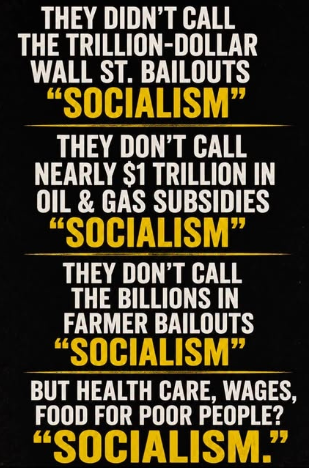
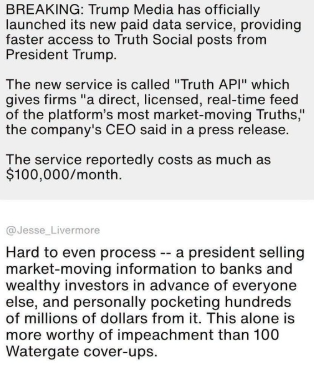
Russia strikes a US FACILITY / Trump renegs on Patriot
Trump said on July 8 that he will give Zalinski license to manufacture the Patriot.
Now Trump says he may reneg on giving a licence to Ukraine for Patriot missiles and interceptors. Again, Trump breaks his word, as he always does.
President Donald Trump on Friday reversed course on his offer earlier this month to give Ukraine a license to produce Patriot air defense systems, saying during a Cabinet meeting that “we have not agreed to that.”
“We have to be very careful about letting somebody build them,” Trump said as he gathered his top officials at Camp David. “You have to be very judicious, but you have to be very careful. Now, we have not agreed to that. We’re talking about it. But it’s a hard thing to give away that kind of technology.”
The president’s remarks contradict Ukrainian President Volodymyr Zelenskyy’s readout of their Tuesday meeting at the White House, in which Zelenskyy said Trump agreed to provide the license. Zelenskyy, while in Washington, met with executives at Lockheed Martin, the U.S. defense giant behind the Patriot missiles.
Trump is the most despicable, untrustworthy , creep that ever was. Trump is Putins bitch. If he once again throws Zelensky under the bus, he proves that nobody can ever trust USA with ANYTHING, as long as Trump is in charge.
So Russia struck a US owned Factory, plus one of their missiles struck inside Poland yet Trump still does whatever he can to benefit Putin.
Trump and Putin……Trump and Netanyahu…….they are an axis of evil. North Korea is in on this also. And Nothing would please Trump more if those monsters could join up to terrorise the rest of the world, and take over all of it. Trump truly thinks he can rule the world.
He has gone completely out of his mind.
This is how the president spens much of his typical day:
11:16 AM – AI photo of Kaitlan Collins as Dylan Mulvaney
11:43 AM – AI image attacking Bruce Springsteen
3:22 PM – An AI art installation of Trump throwing a ‘Trump 2028’ hat
3:23 PM – Photo of him standing next to a TV with Biden’s final Oval Office address playing
3:23 PM – AI art of him giving his speech at the WHCD
3:23 PM – AI photo of Chris Christie fighting Democrat Rep. Jerry Nadler
3:23 PM – AI image attacking Jimmy Fallon, Jimmy Kimmel, and Stephen Colbert
3:24 PM – Trump 2028 poster that says “give the enemy nightmares.” Nobody is scared of him
3:24 PM – AI image attacking Rosie O’Donnell
3:25 PM – Fake movie poster of him in Star Trek
3:25 PM – Another Trump 2028 poster
3:31 PM – AI poster of the U.S. attacking Kharg Island in Iran
3:31 PM – AI image of him taking over an Iranian oil tanker
3:32 PM – AI image of him taking over an Iranian oil tanker x2
3:33 PM – AI image of him taking over an Iranian oil tanker x3
3:47 PM – Posts an AI image of an Iranian ship being blown up
4:36 PM – AI image of him taking over an Iranian oil tanker x4
4:36 PM – AI image of him taking over an Iranian oil tanker x5
4:37 PM – AI image of him taking over an Iranian oil tanker x6
4:39 PM – AI image of him cosplaying as a Navy Commander
4:39 PM – AI image of him smoking a cigar wearing a Trump 2028 hat
4:40 PM – AI poster of him with founding fathers
4:41 PM – Poster of himself saying “the man who saved America” which couldn’t be further from the truth
4:41 PM – Weird photo of him standing behind a pillar
4:45 PM – AI image of himself saying “Guardians of the world”
4:47 PM – AI image of American jets saying “Guardian Angels of the world”
4:48 PM – Another AI photo of an Iranian ship being blown up
4:49 PM – AI image of himself saying “Guardians of the world” x2
4:52 PM – AI photo of lightning over the Capitol building saying “panic in DC”
4:53 PM – A photo of himself saying “plan trusted”
4:54 PM – AI image of an eagle and a jet saying “America is back” which certainly isn’t true
4:54 PM – AI photo of a beach saying “Trump’s America” which is ironic given that the image is fake lol
4:55 PM – Photo of him giving a speech
4:56 PM – Photo of himself pointing at members of his cabinet
4:57 PM – AI photo of himself and JFK
4:58 PM – Fake photo of himself wearing a pink Trump 2028 hat
4:59 PM – AI photo of a Trump 2028 mug surrounded by crying people
4:59 PM – Photo of him putting on his Trump 2028 hat at the WHCD
5:00 PM – Posts graph downplaying American casualties in Iran
5:01 PM – AI photo of an air filter between the United States and Canada
5:04 PM – Attacks Republican Senator John Thune
5:04 PM – AI image of him as a doctor
5:16 PM – Fake movie poster of him and George Washington in a time travel movie
He’s insane. 25th Amendment NOW.
China steps in on Iran’s side.
- Diplomatic support: China backs Iran at the UN, pushes for ceasefires, and opposes sanctions.
- Economic support: Continued oil purchases, financial assistance, and trade that help Iran withstand pressure.
- Military supplies: Air-defense systems, technology, intelligence sharing, or other equipment without sending troops. Recent reports have discussed Chinese weapons transfers to Iran.
Trump could just not keep his pie hole closed, and had to tell lies about China promising not to step in because of the wonderful friendship between himself and Xi…..he actually threatened that China would be very sorry should they interfere.
China begs to differ……….Trump really is great at antagonising simply everyone . Iran now has some powerful allies…….Trump has nobody.

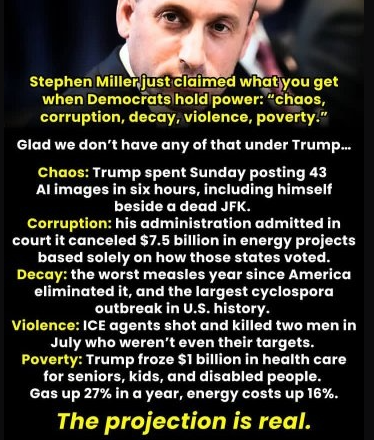
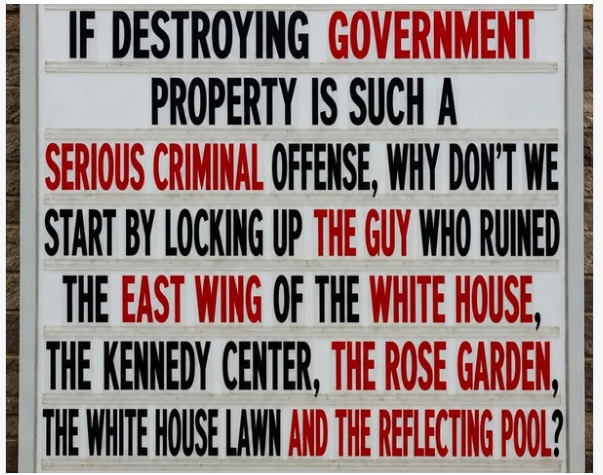
Trumps team got kicked out of Brazil.
How embarrassing. They decided to fly down just before Brazils election to talk about election fraud lol. Really, Trumps gall exceeds anything I’ve seen before. HE REALLY THINKS HE CAN INFLUENCE OTHER COUNTRIES ELECTIONS.
Brazil denied their visas . Looked straight through them. It seems other countries have the sense to NIP SUCH NONSENSE IN THE BUD. Imagine…a country has to deny visas to officials from USA because they don’t trust them not to interfere in their elections. That is really ironic.
A Texas cop searched more than 83,000 license plate cameras nationwide to hunt down a woman who had an abortion.
A Tennessee candidate for governor says he’d ban mosques, Buddhism, and Hinduism. And the Trump administration denied Oregon emergency funding for two wildfires as 86 blazes burned over a million acres.
Trump blamed “Radical Left Lunatics, most likely Dumocats [sic], who have spent their lives trying to ruin our Country,” for “some real problems with Vandalism at the beautiful Reflecting Pool.”
By the next day, he was blaming “multiple individuals for vandalizing our Nations magnificent Reflecting Poll [sic]. Who would do such a thing? These are very serious crimes having to do with the destruction of National Monuments. Years in jail! Work will begin immediately on its repair.”
Minnesota governor Tim Walz commented: “Found an imaginary problem, said only they could fix it, didn’t listen to experts, hired buddies who grifted millions, failed miserably, bragged how great it went. The entire Trump presidency in a nutshell.”
Administration officials insisted that the problems with the reflecting pool renovations were entirely the fault of vandals. White House press secretary Karoline Leavitt pushed back on Walz’s statement, saying “The vandalism is very real.” Jeanine Pirro, the U.S. Attorney for the District of Columbia, scoffed at the idea that there had not been vandalism, telling Jesse Watters of the Fox News Channel that she had just been at the pool and “someone was intent on doing incredible damage to the pool.”
Interior Secretary Doug Burgum told Dana Bash of CNN that the contractors had nothing to do with the problems; it was “vandalism.” He insisted the government could prove there were vandals and suggested there were “photographs.” When Bash pressed him over whether the government actually had “photographs of a person or people cutting a 300- or 350-foot gash in the bottom of the reflecting pool,” he deflected, saying: “I’m not sure why you and others in the media think that you want to keep trying to question” the president’s version of events.
On June 29, Trump posted: “The Reflecting Pool, which suffered great damage due to the Vandals and Radical Left SCUM that hate our Country, has been, for the past two days, in full operation. It looks beautiful! After July 4th, we will release the water, fix the damage done to the very expensive waterproof matting, with the use of sharp knives and muscle, including the 350 foot gash along its right side, and have it looking as good as it was two weeks ago, when it was absolutely PERFECT!”
Now, of course, the Department of Justice’s filing proves that the idea of vandals was always a lie. The problems with the renovation of the reflecting pool were exactly what critics said all along: a hasty, expensive, ill-thought-out project failed. This case is so bad, Chris Geidner of LawDork noted, that Pirro went out of her way to blame the Interior Department for the misguided indictment.
The disparity between the fantasy Trump and his cronies sold to their supporters and the reality of the situation when they were forced to prove their allegations in court matters. Administration officials insisted before the media that the project had been a great success, hurt only by “Radical Left SCUM that hate our Country.” In order to prove their lie, administration officials used the power of the government to harass, indict, and threaten a random individual whom they could blame for their own failures. Then, when forced to prove their allegations in a court of law, they withdrew the claim entirely.
This has always been the pattern of Trump and his cronies: weave a fantasy story in front of friendly media cameras, a fantasy of their own great success undercut by haters, then abandon—or lose—the legal cases based on the fantasy.
For all the bluster before the cameras of Trump cronies insisting the 2020 election was stolen, Trump’s attorneys backed away from the claims. They either withdrew or lost all but one of the 60 lawsuits they brought over the election. As a headline in the Wall Street Journal put it in 2020: “Trump Cries Voter Fraud. In Court, His Lawyers Don’t.”
The one case Trump’s lawyers won found that the Pennsylvania secretary of state overstepped by allowing voters extra time to provide missing identification for mail-in ballots. Even with that ruling, Daniel Barnes of NBC News reported, Biden still won the state by more than 80,000 votes.
Even as reality makes it clear that his claims are a fantasy, Trump continues to spin his yarns, seeming to have little else to convince voters to support him. Today he doubled down on his insistence that vandals caused the problems with the reflecting pool. “I disagree 100% with Jeanine Pirro, the U.S. Attorney for the District of Columbia, on the Reflecting Pool. I don’t know what she was thinking? To me, it was a pure case of VANDALISM…. There may have been some contractor difficulty, but the major damage was caused by VANDALS! President DJT”
President Donald Trump’s Cabinet officials routinely flout federal record-keeping laws
By utilizing disappearing messaging apps, with recent revelations exposing that Secretary of State Marco Rubio and Defense Secretary Pete Hegseth are among officials who continue to use Signal’s auto-delete function — even after the Signalgate fiasco, when Trump administration officials discussed war planes using a private app and apparently unwittingly invited Atlantic Editor-in-Chief Jeffrey Goldberg into the chat.
Meanwhile, Elon Musk’s so-called Department of Government Efficiency operated almost entirely without a paper trail, and Office of Management and Budget Director Russell Vought told Congress the White House has no plans to publish an after-action report on what the short-lived government agency actually did.
These secrecy tactics extend to law enforcement and national security agencies as well. Immigration and Customs Enforcement — which has had 22 people die in its custody this year alone — has refused to mandate its agents wear body cameras. To make matters worse, the FBI will no longer investigate the immigration agency’s confrontations with the public, further diminishing evidence of ICE’s activities. And at the Department of Defense, officials are attempting to hide “controlled unclassified information” from FOIA requests, potentially hiding hundreds of millions of records forever.
The White House is also embracing ever-higher levels of secrecy. The Justice Department recently issued a damaging legal opinion declaring the law that governs public access to presidential records, the Presidential Records Act, unconstitutional, saying Trump no longer needs to abide by it. This is an unprecedented move that could make all future presidents less transparent. That’s why my organization, Freedom of the Press Foundation, is currently fighting in court to stop it.
To top it off, while the administration publishes Fauci’s unredacted diaries, it is simultaneously proposing a government-wide nondisclosure agreement to muzzle federal workers from sharing the very kinds of information Paul released.
This transparency double-standard creates a toxic information asymmetry. The public will suffer if employees stop memorializing crises altogether, terrified their records will later be weaponized out of context, while their colleagues’ records are unlawfully deleted without repercussion.
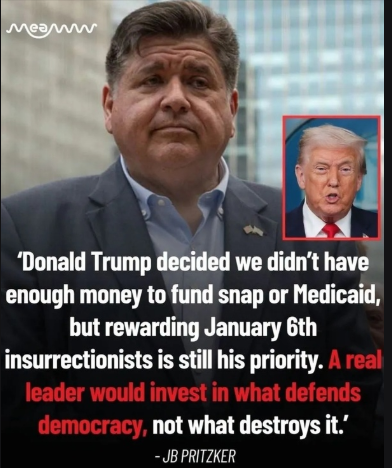
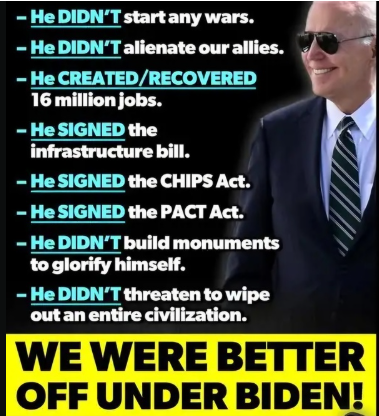
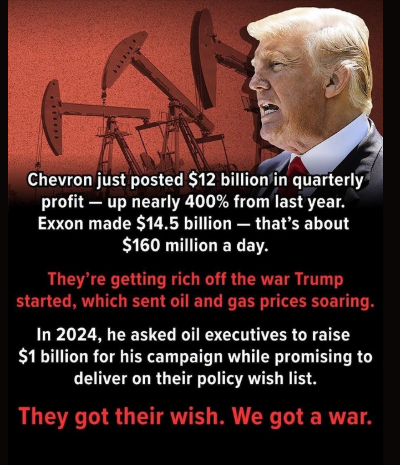
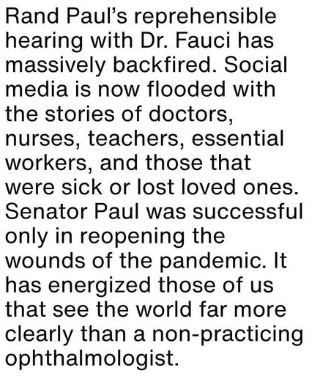
Here’s something that Trump apparently never thought of. So, he raises import fees. Foreign goods are more expensive. Now you got domestic products, which should now be much cheaper, right? Nope. Even if entirely made in the US 100%, competition still remains supreme. Say you’re talking about peas. Imported peas used to cost, say, $1 a can. With tariffs, they now cost $2.50. The American-made peas for $1.25 are starting to look much better…or so lamebrains like Trump, with no real market experience thought. Competition still exists, though. So if foreign peas are now $2.50, the “better” American peas are now at least $3.00.
Partially because of appearance (if the lower-quality peas cost A, then our superior peas MUST be worth at least B).
.
Trump wants to wreck another iconic DC treasure
You’ve surely seen how Blob the Builder thinks the best legacy he can leave the country is a portfolio of massive buildings and silly monuments and chintzy baubles. Not decent housing, universal health care, good wages, affordable child care, a top-notch public education system, or first-class scientific and technological research. Nah. He’s all about self-aggrandizement. Ballrooms and arches. Gold plating. He measures his worth in the pounds of gilt he can super-glue onto every surface, much like the pounds of fake tan lotion he slathers onto his face.
Here’s his latest insult.
In 1920, the federal government opened the 330-acre public East Potomac Park on a manmade island in D.C. (The Jefferson Memorial sits at the north end of the island; the park takes up most of the rest.) One major recreation use is golf: There are two 9-hole courses favored by novices and casual golfers (par 27 and par 36), one 18-hole course (par 72), three practice holes, a driving range, a fully stocked golf shop, miniature golf, foot golf (first I’ve heard of this and it sounds like fun), and food and drinks at the Potomac Grille.
Greens fees on the weekend range from $20 to $32 for the 9-hole courses and $48 for the 18-hole course. (In metro Boston, playing 18 holes at the public George Wright Golf Course in Hyde Park will cost you $70 on a weekend.) East Potomac has discounts for veterans, seniors, and those 18 and younger.
But golf doesn’t consume the entire park. There also are:
Indoor and outdoor tennis courts
Athletic fields for baseball, softball, soccer, rugby, and football
A public pool
A playground
A 3.2-mile scenic perimeter road and loop heavily used by runners, walkers, and cyclists
A flat, paved path along the water used by walkers and recreational anglers (who catch striped bass, catfish, perch, and more)
Picnic areas
A public floating dock for kayaks and paddleboards
There are sweeping views of the water and some of our nation’s most iconic monuments. To top it all off, the park is lined with more than 500 graceful flowering cherry trees, relatives of the cherry trees that circle the Tidal Basin and continue north onto the grounds of the Washington Monument.
In short, East Potomac Park is a gem, a haven for a wide variety of recreational uses, treasured by locals and visitors alike.
Naturally, Trump is going to wreck it.
He wants to tear out the golf courses and fields and paths and picnic areas that are there now and build a luxurious championship-level 18-hole course that could host major pro tournaments. (Don’t hold your breath, Jabba; PGA Championship venues are already booked through 2035 and the US Open is set through 2051 with a few open slots in the 2040s. Then again, I think holding your breath would be a great idea.)
In June, as Trump, Interior Secretary Doug Burgum, and a golf course architect toured the grounds, a news photographer grabbed a shot of one of Trump’s minions holding architectural plans signed by Trump that showed the new golf course taking up the entire park: No 9-hole course, no playground, no other recreational facilities.
To add insult to injury, Trump has dumped about 37,000 cubic yards of contaminated soil in a huge mound at one of the 9-hole courses at the park and is now saying the park is dirty and dangerous. The soil came from the demolition of the East Wing of the White House and construction of that massive ballroom. The government says it hasn’t finished testing the soil for contaminants, but so far has found lead, chromium, arsenic, mercury, PCBs, pesticides, and petroleum-related byproducts. The feds claim none of them are present at dangerous levels, and there’s no asbestos.
They also claim there are no plans to use the contaminated soil as fill for the new golf course.
Do you believe them?
Preservation and environmental groups certainly don’t. One of them, the DC Preservation League, is asking a federal court to let them test samples. The feds are refusing. Others have sued to stop the project altogether.
Meanwhile, locals who use and treasure the park are upset:
Like all his harebrained ideas, Trump hasn’t sought permission from any of the agencies that oversee the park. He says his folks are just going to break ground Sept. 1, regulations be damned. Unless a federal court judge stops him. Otherwise, he’ll continue to splash his grotesque excesses all over our Capital.
Trump rips Pirro decision after DOJ drops Reflecting Pool case: ‘I don’t agree’
President Trump called out U.S. Attorney Jeanine Pirro on Saturday for agreeing to dismiss the Lincoln Memorial Reflecting Pool vandalism case against former Olympian David Hearn.
“I disagree 100% with Jeanine Pirro, the U.S. Attorney for the District of Columbia, on the Reflecting Pool,” Trump wrote in a post on Truth Social. “I don’t know what she was thinking? To me, it was a pure case of VANDALISM, that included the grass, which had a big 86 47 emblazoned in giant letters on it, and other elements of the surrounding area.”
Pirro’s office noted in its filing that the pool’s issues were a result of over spraying and delamination.
“Specifically, the newly released documents reveal that work on installing the lining almost immediately fell behind, due to a combination of very rainy and windy weather, repeated failures of testing on the sealing of the expansion joints, and delays in obtaining sealing product at the worksite,” prosecutors wrote in the filing.
The administration faced heavy scrutiny over the project after the “American flag blue” paint began to peel and an algae bloom formed in the basin. It was drained more than once since the renovation began for repairs.
Trump in his latest post did not dismiss the issues but maintained his argument that Hearn was responsible for some of the damage.
“There may have been some contractor difficulty, but the major damage was caused by VANDALS,” he wrote.
Good news!
DOJ will drop Reflecting Pool criminal case, citing ‘flawed installation’
The Justice Department moved Friday to drop its criminal prosecution of a former Olympian charged with destroying the Lincoln Memorial Reflecting Pool, saying the damage was instead the result of a “rushed and botched installation.” Reasons for Dismissal -Contractor Issues: Documents revealed extensive lining failures and peeling throughout the pool, installed by Atlantic Industrial -Coatings.Time Pressure: The project was rushed to finish before the America 250 celebration, with weather delays causing further complications. -Evidence Shift: Inspections found damage in inaccessible areas, leading prosecutors to conclude they could not prove vandalism beyond a reasonable doubt. “Its dismissal today does not erase the abuse of government power in arresting and charging a patriotic American who did nothing wrong. The government’s approach was ready, fire, aim. The administration owes Mr. Hearn an apology,”
Trump is an idiot
.The FBI released a public service announcement Thursday stating water and wastewater utilities in at least seven unspecified states have reported incidents of cyberattacks, some of which were activity that degraded water operations.
And so what does Trump say? ““We heard in Minnesota there was a cyberattack, and they blame it on Iran. I don’t think so,” Trump said during a Cabinet meeting at Camp David in Maryland. “I think I blame it on Minnesota because they’re grossly incompetent.”
The malicious attacks disrupted automated operations at several water facilities, forcing some communities to temporarily switch to manual controls. State officials said there is no indication that drinking water was contaminated or that residents need to change their water usage.
Minnesota IT Services said it is coordinating its investigation with the FBI, the Cybersecurity and Infrastructure Security Agency and the Environmental Protection Agency to identify the source of the attacks.
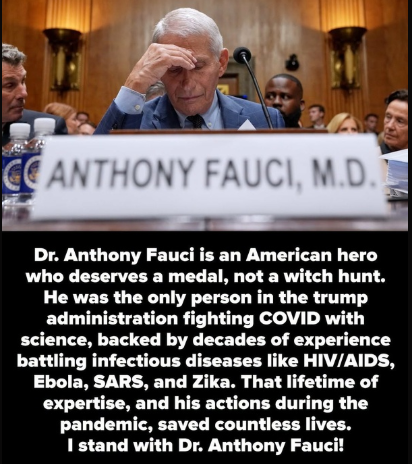
Does Anyone Believe This One Sided “Deal” is Anything but Worthless Paper Trump Wrote?
It Is Not Any Kind of a “DEAL”.
Trump announces deal for Hamas to disarm; Israel ‘skeptical’
President Trump on Thursday evening announced a deal for Hamas to disarm in “carefully structured phases,” which, if carried out, would address one of the main sticking points for a broader peace deal in Gaza.
“This agreement is a critical step towards Gaza finally being governed by a new Palestinian government that will work closely with the Board of Peace to help the Palestinian people,” Trump wrote in a Truth Social post. “At the same time, Israel will have the security it deserves, with Gaza no longer used as a base for terror attacks.”
“The agreement will be carried out in carefully structured phases,” he added. “As disarmament is completed, Israeli forces will withdraw, and the International Stabilization Force will work with a new Palestinian police force to take responsibility for Gaza being safe for its residents and its neighbors.”
Trump did not provide details of the phases in his post.
A U.S. official said Israel remains “skeptical” that Hamas will follow through.
“They’re very skeptical that Hamas will disarm. But again, they’re not really being asked to do much in the process because this isn’t really a trust deal. This is really, you know, it’s a conditions-based deal. And as things happen, that everyone has to follow the obligations they’ve taken,” the official said.
Amit Segal, chief political analyst for Israel’s N12News, outlined some terms earlier in the day, saying Hamas would surrender all weapons within “weeks” to depots guarded by multinational forces, as well as ending all military activity and recruitment.
Israel would not withdraw its military behind the “yellow line,” the demarcation that has divided Gaza since a peace framework was announced in October, until disarmament is complete.
Neither the Israelis or Hamas had officially commented on Trump’s announcement as of 7 p.m. EDT on Thursday. The Hill reached out to both sides.
The Jerusalem Post reported on Thursday that the 15-point document under discussion did not “adequately address” Israeli demands for the full demilitarization of the Gaza Strip.
The outlet said Israel’s concerns were conveyed to former U.K. Prime Minister Tony Blair, a mediator who sits on the “Board of Peace” meant to oversee Gaza’s reconstruction.
U.S. and Board of Peace officials said the first step in the roadmap is establishing a “complete monopoly of weapons,” so that Hamas cannot disrupt the peace process moving forward.
The first tranche of weapons would be police firearms, followed by heavy weapons, weapons depots and tunnels, they said.
“That will obviously be a very technical process in which we will rely heavily on the expertise and support of the International Stabilization Force, which has studied this situation for months now and looked at how this can be done,” said one official.
The final challenge would be collecting “personal weapons,” which would be achieved through enforcing existing Palestinian legislation.
“Of course, there’s the issue of the militias and the clans that exist in Gaza that they will also have to demilitarize and decommission their weapons as part of this process,” the official said.
Once that phase is verified — through a process agreed on by both sides — Hamas will officially transfer “civilian and security functions” to the National Committee for the Administration of Gaza, formed by the Board of Peace.
Once Israel is satisfied that there is no internal threat in Gaza, it will begin a phased withdrawal of its military “according to a timetable that needs to be finalized.”
“And last but not least, is the main principle of reconstruction and the reconstruction of the Gaza Strip,” the official said.
Yes, give up everything and Israel will take over, yup, Hamas will do that – right now! NOT
Why not have Israel give up their weapons, destroy their nuclear weapons, give up all weapons down to side arms and have Palestine rule over Israel?
Same scenario.

The Trump administration has weakened America’s counterterrorism defenses
The Trump administration has weakened America’s counterterrorism defenses by downsizing staff, politicizing intelligence, cutting grants and forcing federal agents to focus on immigration enforcement, according to a new report by Democratic lawmakers on the Senate Homeland Security Committee.The 37-page report also accuses the administration of skewing its focus on domestic terrorism almost exclusively to left-wing groups, ignoring significant threats from far-right and white supremacist extremists.
“Since the first day of his second term, President Trump and his Administration have dismantled critical national security agencies and programs and diverted significant resources and attention away from the fight against terrorism,” the report says.
“These actions are the result of a combination of ideologically motivated firings and realignment of personnel and the wielding of government resources — from grants to counterterrorism authorities — as a weapon against political opponents. The Administration’s actions have left Americans far more vulnerable to a potential terrorist attack, and left law enforcement officers and agents without the tools to protect our nation,” it continues.
The report says the second Trump administration has significantly degraded the vast counterterrorism infrastructure that was built after the 9/11 attacks and refined over the 25 years since.
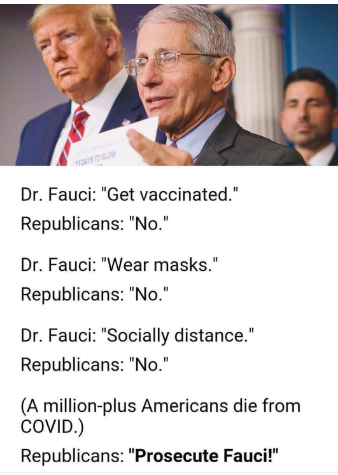
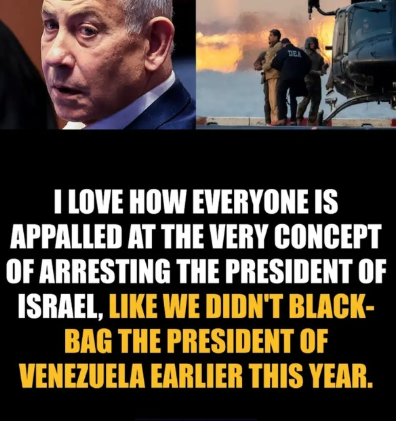
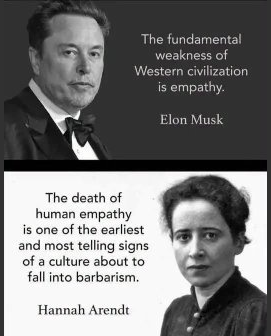
Trump has expanded his discretionary power. Millions are being hurt.
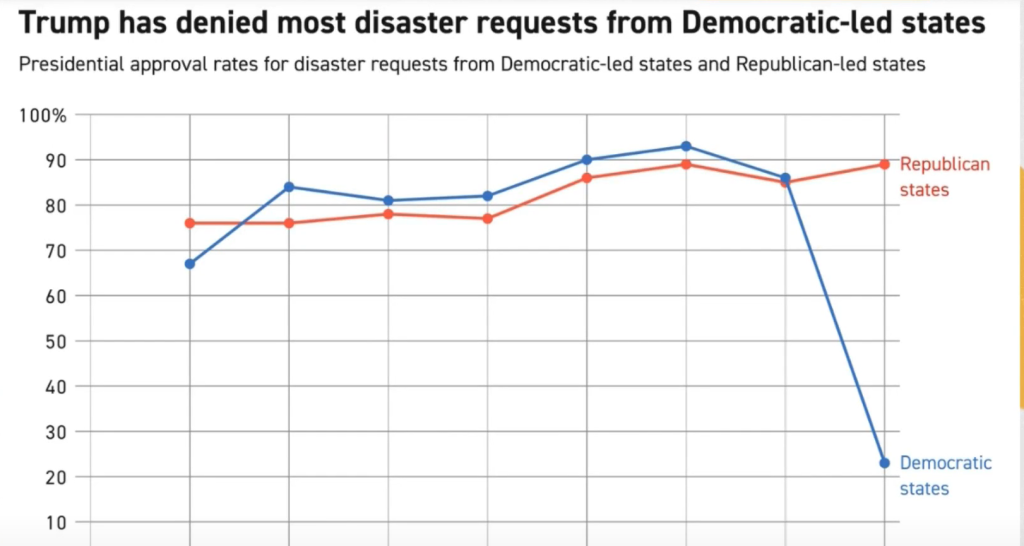
The Trump administration is asking Congress for an additional $10 million to cover costs related to Freedom 250 events recently held on the National Mall, including a prayer event, a fair and a fireworks show.
Sen. Jeff Merkley (Oregon), the top Democrat on the Senate Appropriations subcommittee that oversees funding for the Mall, said an earlier request from the administration was presented to Congress last week as part of a broader request for short-term funding across the government. That request, which asked for an unspecified amount of funding “to recoup costs associated with support of events celebrating America’s Semiquincentennial,” prompted questions about why the additional funds were needed, Merkley said.Merkley on Wednesday wrote to Interior Secretary Doug Burgum, asking how past funds set aside for Freedom 250 had been spent. The One Big Beautiful Bill, which Republicans passed last summer without Democratic votes, set aside $150 million for the Interior Department for events and activities related to the semiquincentennial.
Much of that funding has been redirected to Freedom 250, which has also solicited donors and received financial support from major corporations.
“It is unacceptable to ask the American people to bail out Freedom 250,” Merkley wrote, asking for more details on why the administration was requesting the funds and how past money had been spent. “Congress already appropriated $150 million — without bipartisan input — with the administration promising that private donors would help finance the rest.”
The GOP revolt over Todd Blanche is suddenly very real
Todd Blanche’s nomination to be President Donald Trump’s permanent attorney general is on hold. And it could stay that way until September — or potentially even forever. GOP Sens. John Cornyn and Thom Tillis, both of whom are leaving Congress at the end of the year, say the Trump administration has yet to satisfy their demands on Trump’s IRS settlement. The pair is asking Blanche to formally kill the so-called anti-weaponization fund and narrow the scope of the audit immunity afforded to Trump, his family, his businesses and others under the agreement, and are withholding their support.
Stephen and Katie Miller secretly turned to Anthony Fauci for COVID advice (see his diary below)
—then demanded the doctor be jailed for his handling of the pandemic.
The couple’s hypocrisy was exposed in secret passages from the diary kept by Fauci as he led the country’s response to the deadly virus.
Miller has painted a picture of a world utterly removed from moral ideals, delivered with spit-flecked intensity. “You look at these violent antifa demonstrations, and you see any photograph of those who were assembled. To be blunt, not one of the people that are demonstrating looks like a normal person. Not one looks normal,” he said. “They’re all deformed in some way, in their appearance, in their dress, in their mannerism.”
His bullshit is almost as deformed as his remarks about Texas’ Democratic Senate candidate James Talarico, who Miller labelled the “first transgender Senate candidate.” Then he had the audacity to say that “when Talarico goes in for a blood test, when he gets a physical, blood doesn’t come out. Soy milk comes out.” It’s just more juvenile insults that have raised further questions about the progressively personal nature of political discourse.
Oh, and while declaring that “America’s doors are closed, fully, to asylum seekers,” his demand that ICE agents reach a quota of 3000 captures per day has America’s tourism industry desperately gasping for breath. Even our travel agents are warning travellers to holiday where it’s safe.
Miller has given the word ‘ironic’ a new meaning. While he’s driving this bullshit down the throats of those who are listening, he forgets that his grandfather escaped anti-Jewish violence in Belarus. Old man Miller arrived in the United States as a poor immigrant and was later joined by his family. Yet his grandson, Stephen Miller is dead set on denying other families the same opportunity.
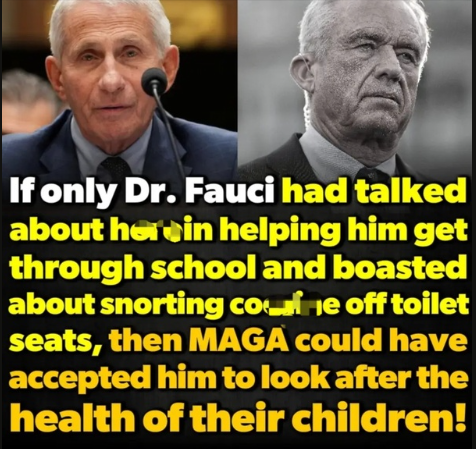
Working for the federal government now requires a willingness to share in the president’s delusions.
But providing evidence sufficient to convince people outside of the MAGA cult of personality, including federal judges and grand juries, has hampered efforts to deal out the vengeance that Trump has demanded. He’s already canned one attorney general for not being able to deliver on his revenge fantasies, so it’s not a stretch to see Kennedy following a similar path out the door.
There are plenty of people in the world who are willing to say obviously untrue things in public for attention, money or both, but in private acknowledge the limits of their claims. But when Trump has decided something is true, there’s little that can shake his conviction. There’s even less to be done to safeguard someone unable to sufficiently alter reality to reflect his misguided beliefs. From Trump’s point of view, then, Kennedy being unable to deliver isn’t because the task is impossible — it’s a skill issue on the secretary’s part. Kennedy, in Trump’s view, isn’t bringing the desired results, which matter more to the president than provable facts themselves.
Trump never has had any knowledge as to who we are.
Had 9/11 Happened Today, Would the World Cry for America?
Not to my mind, Trump has wasted all that goodwill. When the towers fell in 2001, the whole planet cried with America. Older generations remember that. Newer ones never heard of it at all. The shock reached Paris cafés, Nairobi markets, Tokyo offices, and villages in Afghanistan that had never had a reason to think about New York. Countries that despised U.S. politics still lit candles, held vigils, and sent condolences. Iran, yes, Iran, held a public moment of silence for the victims. NATO invoked Article 5 for the first time in its history: an attack on one member is an attack on all. That same Iran is the country the U.S. has been bombing since February 2026. A joint U.S.-Israeli campaign hit Iranian nuclear sites, military leadership, and infrastructure that month, a ceasefire in April didn’t hold, and today the U.S. is in its second week of renewed nightly strikes, with Washington and Tehran trading talk of negotiations and talk of further escalation in the same breath. The country that once paused in silence for American dead is now the one receiving American bombs, turning even the Iranians who once mourned with America against it. It’s hard to explain to anyone too young to remember, but the mood back then was almost surreal. Newspapers across Europe printed the American flag on their covers. Crowds left flowers at U.S. embassies. Moscow’s city hall hung a banner reading We Weep With You. The whole world pressed pause for a moment, like it wanted to say: we’re with you. That early wave of goodwill is exactly what makes the next two decades feel like such a massive, once-in-a-century waste. The World Moved Fast Governments, alliances, and ordinary people showed up in ways that are easy to forget now. NATO backing the U.S. under Article 5 was only the start. European allies tightened airports, shared intelligence, and sent forces once ISAF formed in Afghanistan. Canada diverted hundreds of flights and hosted thousands of stranded passengers in towns like Gander. The UN Security Council condemned the attacks and pushed new counterterrorism rules. Russia offered intelligence and opened logistics routes through Central Asia. Muslim-majority states across the world publicly condemned the attacks, and many granted overflight rights and cooperation. Pakistan became a key logistics corridor. Gulf partners hosted bases and aircraft. Central Asian states provided airfields that made early operations possible. Cities well beyond Europe held vigils and moments of silence. Cathedrals, mosques, synagogues, and temples hosted joint prayers, and crowds lined up to donate blood. In Tehran, ordinary Iranians held candlelight vigils while their leaders issued condolences. From Nairobi to Tokyo, flags flew at half-mast, newspapers ran black covers, and radio stations paused their programming. It wasn’t abstract sympathy. People organized, gathered, and mourned. Allies sent forensic teams, search-and-rescue specialists, air marshals, and port-security advisers. NATO AWACS crews patrolled U.S. skies. Intelligence services shared names, money trails, and travel data that led to arrests far from New York or Washington, and banks tightened rules and froze accounts linked to terror networks. Airports changed screening overnight. Moments of silence took place at football matches in Europe and Latin America, orchestras dedicated performances to the victims, and landmarks lit up in U.S. colors. Even rival states paused the usual rhetoric. For a brief window, the tone worldwide was grief first, politics second. That early solidarity turned into real commitments: troops for ISAF, trainers for Afghan security forces, development teams, medics, engineers, police mentors. Not every promise held up, and not every country agreed on strategy later. But in the days and weeks after 9/11, the reaction was clear and concrete. Condemn the attacks, stand with the victims, help shoulder the load. The U.S. had a golden moment. For a brief window after 9/11, it held near-universal sympathy and support, the kind of goodwill that doesn’t come around often. It could have built lasting alliances, coordinated a global counterterrorism strategy, and even addressed some of the political grievances that fed extremism in the first place. Instead, Washington went full cowboy and decided raw military power would do the job on its own. Afghanistan came first, and at the start it made sense. The Taliban had sheltered bin Laden and al-Qaeda, and the world accepted that something had to be done. NATO allies sent troops, intelligence agencies shared information, and even countries with frosty relations to the U.S. offered logistical help. The mission’s stated goal was clear enough: dismantle al-Qaeda, remove the Taliban from power, and keep Afghanistan from becoming a terrorist safe haven again. That mission didn’t stay focused for long. What began as a targeted counterterrorism operation turned into a massive nation-building project the U.S. had neither the patience nor the cultural grounding to pull off. The strategy drifted from fighting al-Qaeda to propping up a deeply corrupt Afghan government and trying to rebuild the country’s institutions from scratch while fighting an insurgency that never let up. It became a 20-year grind. The Costs of War project at Brown University puts the direct death toll in the hundreds of thousands when Pakistan is included, with estimates ranging from roughly 176,000 to over 240,000, and the financial cost above $2 trillion. The war outlasted multiple presidents and military commanders, each promising a corner was about to be turned. Instead it ended with a chaotic, televised withdrawal in August 2021, the Taliban sweeping back into Kabul before the last U.S. plane had even left the runway. What started with overwhelming global sympathy ended in a humiliating retreat that left behind hard questions about whether the mission had been doomed from the moment it tried to do everything at once. Jordan’s Support Wasn’t Just Words Jordan was one of the top non-NATO troop contributors to ISAF, and its help started early and stayed consistent. The Jordan Armed Forces sent a field hospital to Afghanistan in 2002 that treated hundreds of thousands of patients over the years it operated there. Jordanian infantry task forces later deployed to Helmand and guarded coalition bases like FOB Sharana, freeing up American soldiers for other missions. NATO officers who worked alongside them made a point of thanking Jordan specifically for what its troops brought to the mission. Jordan’s role went beyond boots on the ground. Its Female Engagement Teams worked with Afghan women and children in ways American units structurally couldn’t, given how differently gender and family access work in rural Afghan society. Jordanian troops preached what they called the true, moderate essence of Islam in villages where the Taliban had been the only religious voice locals ever heard, renovating mosques and running Ramadan programs for orphans and struggling families. A small, Muslim-majority kingdom sent doctors, soldiers, and outreach teams into a war zone to counter a Taliban that claimed to speak for their shared religion, and it kept doing it for over a decade. That mattered on the ground in Afghanistan, and it mattered for the “West versus Islam” storyline extremists were trying to sell. The World That Cried With America That’s the world America had in the fall of 2001. NATO allies, Gulf monarchies, European tabloids, Iranian mourners, and a Jordanian field hospital all pointed the same direction at once. Governments that agreed on almost nothing else agreed that what happened in New York and Washington was a crime against everyone, and they backed that agreement with troops, intelligence, airspace, and money. It’s the kind of alignment that historians usually have to reach back generations to find, and the U.S. had it handed to it in a single morning. None of that goodwill was owed to anyone. It was earned in real time, by an America that had just been hurt and had the world’s sympathy because the world recognized the moment for what it was. What happened to that sympathy over the following two decades is a separate story, and it starts with a choice Washington made about what to do with a war in Afghanistan that still, on paper, made sense.
Fauci’s diary reveals his thoughts on a ‘rambling’ Trump and his own fame
Released by GOP Sen. Rand Paul, diary entries from the federal scientist who helped lead the covid response spotlight the internal battle over how to handle the outbreak.
Summary
Fauci, the National Institutes of Health scientist who helped lead the U.S. response to the coronavirus pandemic before stepping down in late 2022, privately complained about President Donald Trump’s “rambling” and reveled in media coverage of his role, according to personal diary entries released this weekend by Sen. Rand Paul (R-Kentucky).
Paul, who is investigating the origins of covid-19, has called Fauci to testify on the pandemic before the Senate Homeland Security and Governmental Affairs Committee on Wednesday. Paul has maintained for years that Fauci helped cover up the possibility that the coronavirus leaked from a lab, a claim that Fauci has persistently denied.
The personal diary consists of more than 1,000 pages of near-daily entries during the pandemic’s most critical months, providing an intimate look at how the prominent scientist at the center of the nation’s pandemic response navigated two presidential administrations during the spiraling health crisis.
When asked about the diary entries Monday, a spokesperson for Fauci declined to comment. The White House also did not immediately respond to a request for comment.
Here are some of the key takeaways:
Hot and cold relations with Trump
Fauci spent part of the first year of the pandemic working with Trump and trying to counteract the president’s comments downplaying the outbreak — a challenge he detailed in many journal entries.
The first time they met in the Situation Room, on Jan. 29, 2020, they appeared to get along. Fauci wrote: “The President came in and the first thing he said as he looked at me was: ‘Anthony, you are really a famous guy. My good friend Lou Dobbs … told me that you were the one of the smartest, knowledgeable and outstanding persons he knows. He then stayed for 20 minutes and asked most of his questions of me. I was surprised and very pleased and the Deputies were clearly stunned and impressed.”
When Trump walked out of the room, Fauci recalled the president saying: “Thanks, again, Anthony. We are counting on you.”
In late February, he wrote that Trump had called him about the covid situation, and Fauci said that he “encouraged him not to underplay the seriousness of the situation since if it turns out bad, it would look like he is covering up. … I thought that he heard what I said, but the next day, he again underplayed it.”
But in a pair of entries the next month, Fauci wrote about growing tired of Trump’s “rambling.”
March 27, 2020: “Very laborious press conference where the POTUS rambled on. He wasted the opportunity to just focus on the relief package and went inot his diatribe against previous administrations.”
Mar 28, 2020: “AMAZING interaction with POTUS. … I led the discussions since the POTUS kept referring to me. It was a disturbingly rambling discussion since he kept talking about TV ratings, and HC [Hydroxychloroquine], and influenza and virtually everything else as I was trying to keep him on track (with the help of the VP). … I insisted through the rambling and lack of attention span that the POTUS explicitly say that this is NOT a quarantine.”
On June 2, 2020, he wrote about a more positive meeting with Trump in the Oval Office focused on covid vaccines. “As usual, POTUS was very warm and friendly with me. When he walked into the Oval with us waiting, I was standing next to the door and he said ‘I love you, Tony. I feel like giving you a big hug.’”
In the summer of 2020, Fauci repeatedly wrote about the media “making an open conflict between me and Trump” as he told the president and other administration officials to stop downplaying the crisis.
On July 10, Fauci wrote that he had an “important meeting” with Mike Pence, during which Fauci told the vice president he would be “coldly honest.”
“I then told him that he is completely losing credibility when we have >60,000 new cases with increased hospitalizations and deaths and he starts off at the Pressers saying “We are in a good place.’”
Fauci took a similar approach with Trump, detailing how he got a call from Trump on July 15 — an “Amazing Day!!” Fauci wrote — in which the president “started off by saying that this tension of me versus him is terrible and needs to stop. He ‘loves’ me and know we have a very special relationship and have bonded right from the beginning.”
Fauci continued: “He then started to talk to me about how bad or not things were. He wanted me to be “positive”. I took the opportunity to say’ ‘Mr. President, with your permission, can I be absolutely frank with you? We have a problem and we need to own it. We need to admit that the situation is serious, otherwise we completely lose credibility. … He was not entirely happy with this but said that he understood the point that I was making. It was a very good conversation.”
Fauci wrote on Aug. 4 that he had to directly explain to Trump — whom he described as “throwing around the F— word” and “raving that we are seeing more cases only because we are doing more testing” — that increased testing does not cause cases.
“All in all it was a manifestation that he is desparate and still does not understand the pandemic. Very interesting encounter,” Fauci wrote.
Fauci wrote on Aug. 8: “POTUS acting even more erratically. Keeps insisting that increased case numbers are due only to increased testing, ignoring the increases in percent positive, hospitalizations and deaths (>1000/day).”
On Nov. 1, 2020, after an interview with Fauci published in The Washington Post, Trump called him from Air Force One. According to the diary, Trump said: “Tony, I really like you, and you know that, but what the f— are you doing? You constantly drop bombs on me. Everybody wants me to fire you, but I am not going to fire you, you have too illustrious a career, but you have to be positive.”
Trump continued: “I like you but so many people, not only in the White House, but throughout the country hate you because of what you are doing. … And that f—er Biden. He is so f—ing stupid. You are 10 times smarter than he is. I am going to kick his f—ing ass in this election. I will win by a landslide. Just wait and see. … Tony, you have to be positive. I do not want to keep you off TV, but when you are out there, you have to be positive.”
Fauci also criticized the president for his election denial claims:
Nov. 10, 2020: “POTUS still insisting that the GOP won the election. Completely alternate universe. Kayleigh and GOP Senators (Graham, McConnell, Ted Cruz) all prostituting themselves by supporting the POTUS’s baseless claims. Heading towards a constitutional crisis.”
Nov. 16, 2020: “Continual surge: 138,000 new infections yesterday. POTUS has no interest at all in the Pandemic. He is focusing on blocking Biden from being POTUS. He is embarrassing the USA. However, 72,000,000 voted for him. Difficult to understand. Craziness has overtaken part of our country.”
In a March 29, 2021 entry, Fauci wrote that Trump “is truly an obnoxious adolescent.”
Lab-leak theory
Ahead of Wednesday’s hearing, Paul has focused on Fauci’s diary entries addressing a theory that the coronavirus leaked from a lab in Wuhan, China. Paul has long argued that Fauci and other government leaders were not forthcoming about U.S. ties to virus research conducted in Wuhan, where the coronavirus outbreak was first detected in 2019.
Fauci has persistently denied Paul’s claims. His diary entries, which trace his thinking on the virus’s possible origins, echo this position.
On Jan. 26, 2020, Fauci wrote that new data showed “the first infection was in early December and was not connected to the market” — referring to a “wet market” in Wuhan where animals were sold — spreading among people weeks before the outbreak was publicly reported. “Remember, early on the Chinese were saying that there is no human to human transmission and all the original 27 cases were from the market. Now we know the market was not the source, it was the amplifier,” he wrote.
Five days later, Fauci wrote that he got a call from a biologist for advice about dealing with “conspiracy theories” that the virus was given inserted mutations and deliberately or accidentally released in Wuhan. Fauci wrote that he suggested that a larger group of evolutionary biologists and virologists come together, which happened the following day.
After the meeting of experts, Fauci recounted that “there was not total agreement about the likelihood of deliberate insertion.” They agreed to see if the World Health Organization could convene more experts.
Paul and other critics of Fauci have said that he should have been more immediately forthcoming about his early doubts about the virus’s origins. Fauci and his allies have pointed to comments such as a February 2020 interview with USA Today, in which Fauci acknowledged that the market may have been an “amplifier” for the virus and said that people were “actually looking at” whether the virus had been accidentally or deliberately released, although he downplayed the possibility.
Several times in his diary, Fauci decried the mounting questions from Paul and others on whether there had been a cover-up of the virus’s origins.
In April 2021, Fauci wrote that members of the “radical right wing” and officials such as Paul were trying to “connect me with the virus from WUHAN. … They are saying that I deliberately worked with the Chinese together with [zoologist] Peter Daszak to create a virus that would be released to the world. This sounds very much like a way-out conspiracy theory, which it is. However, there are enough crazy people around to make this a problem.”
The following month, he wrote: “The issue of the escape of the virus from the Wuhan Chinese lab is starting to heat up again” — spurred on by “the usual cast of characters.”
Fauci later dismissed this idea again as a “typical conspiracy theory.”
In May 2021, he wrote that the situation was getting “out of control” with press reports “concerning my ‘flip flopping’” on theories of the virus’s origin. “I had always said that the very highly likelihood is that the virus originated naturally from an animal reservoir jumping to a human. However, over the past couple of days given the amount of speculation about the possibility of a lab leak I have been saying that no one is 100% certain of the origin including me and so I am calling for a thorough investigation.”
“Calling for an investigation is merely to put to rest the extraordinary amount of speculation and conspiracy theories,” he continued. “However, this is being interpreted as Fauci flip flopping again. The far right is really amazing in their distortion of reality.”
Fauci makes remarks alongside President Donald Trump at a press briefing by the Coronavirus Task Force in March 2020. (Bill O’Leary/The Washington Post)
Moments of celebrity
As his global notoriety grew, Fauci contended with, and sometimes reveled in, his positive press coverage and moments of fame.
On March 10, 2020: “For better or worse, I am becoming an international celebrity. Calls from all over the world.”
Twelve days later, he wrote: “WH press conference picked up by many outlets. Many print profiles and features on me. Ridiculous — too numeous to count! … Press is going wild with me.”
The next day, he wrote: “Apparently the WH is very upset that I am being profiled and it looks like I am putting down the POTUS and becoming a star that outshines him. The press is playing into this as is the tweet storm. Very stressful!!”
Do I need to say more? Trump’s posts:
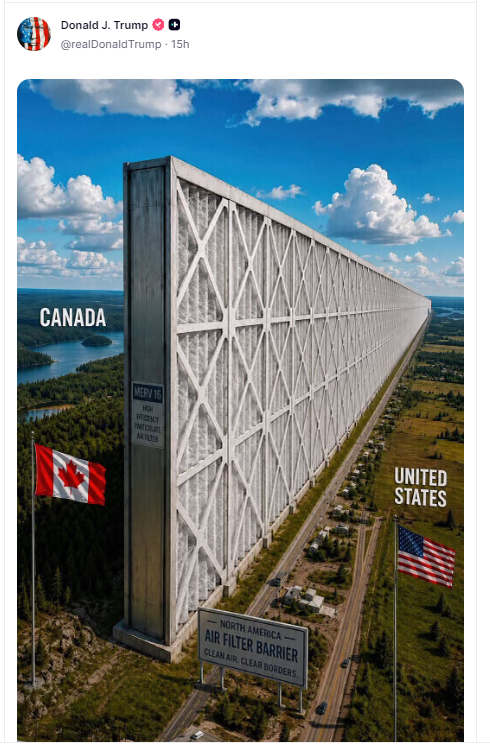
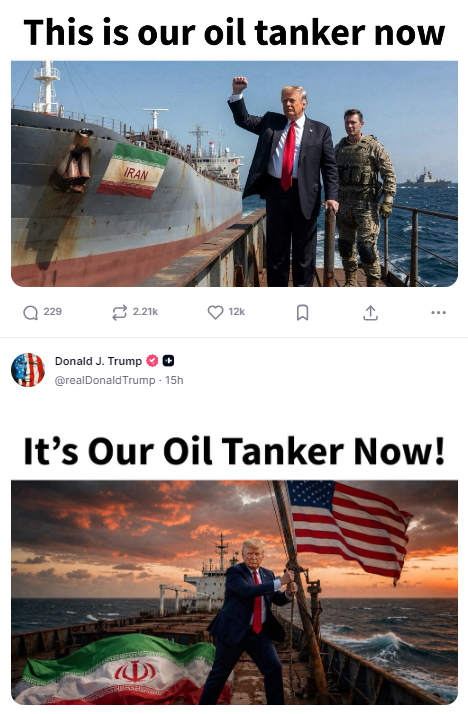
We have been subject to the sociopath for a year and a half — 18 months of the most loathsome, least competent, and most corrupt person ever to be president of the United States.
We’ve watched him take a meat-axe to every major institution of our democracy, draw the nation into a never-ending war, establish a murderous domestic police state, reject renewable energy in favor of the dirtiest possible fossil fuels, make billions off his presidency, and cause most Americans to become poorer and less economically secure.
Which is it? Now adding 140 plus 4!
Iran war casualty count eclipses 600 as Pentagon quietly changes accounting
Trumpers got caught in a lie. The Pentagon updated its war casualty database Saturday, recording more than 140 additionally wounded and restoring the four soldiers killed due to Iranian strikes last week amid questions about a lack of transparency over the war’s toll.
The Defense Casualty Analysis System, or DCAS, also featured a new tracking category — “Overseas Operations” — for killed and wounded “starting July 7.”
When the new Pentagon data is combined with updated totals for Operation Epic Fury, 18 troops have died and another 624 have been wounded since the US launched its war against Iran on Feb. 28. The number of wounded is a significant increase from the previous peak of 482 observed by CNN last week.
The Pentagon drew scrutiny from media outlets and lawmakers last week when killed and wounded numbers decreased in the DCAS system as Iranian attacks continued. The 12 Democratic lawmakers on the Senate Armed Services Committee sent a letter to Defense Secretary Pete Hegseth on Thursday requesting answers on what was causing the changes.
The Defense Department’s acting press secretary, Joel Valdez, insisted in a Thursday social media post that the decreases were due to “temporary data disruptions on the (DCAS) website.” CNN observed data glitches that led to fluctuating casualty totals when monitoring the DCAS site on a minute-by-minute basis last week.
On Friday, CNN asked the Pentagon for more details about the data interruption, but the department neither acknowledged nor responded to the inquiry as of Sunday afternoon.
Beyond the July 7 starting date, the new “overseas operation” category on the DCAS site does not include any distinguishing details or specify the conflict in which the casualties occur, and the Pentagon did not immediately respond to questions seeking clarification on what the category covers. The category features a by-name list of fallen troops, though, that includes the three Army soldiers killed in Jordan due to an Iranian strike and the soldier killed in northern Iraq last weekend during a controlled detonation of an Iranian drone.
The July 7 date coincides with when President Donald Trump claimed a new conflict with Iran began in a War Powers notification the administration sent to Congress earlier this month. (The War Powers Act of 1973 requires the president to end military operations within 60 days unless authorized by Congress to continue; the Trump administration argued that the April ceasefire with Iran stopped the clock on May 1 for the conflict’s initial period.)
Lawmakers of both parties have argued against the administration’s interpretation of the War Powers clock, though some analysts and officials contend that the act itself represents an unconstitutional limit on presidential war-making authority. Secretary of State Marco Rubio argued the law is “unconstitutional, 100 percent” during a May press briefing at the White House.
Republican Sen. Lisa Murkowski of Alaska said to Hegseth during a July 21 hearing that she is “concerned” the administration is circumventing Congress through the ceasefire clock reset.
“The claim essentially allows the president to extinguish the War Powers clock just at the moment that it becomes legally inconvenient … avoiding the congressional authorization that the Constitution requires and the War Powers (Act) intends,” she said.
The military’s new mandatory T test could backfire — big time
On Tuesday, Secretary of Defense Pete Hegseth and Joint Chiefs Chairman Gen. Dan Caine appeared before the Senate Appropriations Committee, hats in hand. The Pentagon is burning through appropriations, with both Navy and Air Force 2026 operations budgets set to run out by the end of July. The war in Iran has depleted key weapons stockpiles, reducing U.S. inventories of interceptor missiles and stealth cruise missiles to less than half and costing over $37 billion to date. To the naked eye, these costs reflect disastrous mismanagement of an unauthorized and escalating war.
On Wednesday, the GOP-led House approved a whopping defense funding bill anyway, authorizing an unprecedented $1 trillion for military spending. Not only did the MAGA wing reward Trump’s incompetent war in Iran with a massive spending boost, it codified Hegseth’s rebrand of the “Department of War,” snuck in Trump’s voter suppression bill, and blocked hormone therapy coverage for gender care just as Hegseth is braying about testosterone levels.
Hegseth expected lawmakers to correct his urgent shortfall, but wouldn’t correct, clarify or explain his own false claims about Iran. Hegseth’s early-in-the-war announcement that Iran’s military had been “destroyed and made combat ineffective” was obviously untrue, but republicans still put an unprecedented $1trillion budget in his hands. Arming a blowhard who delivers braggadocio instead of sober analysis is not confidence inspiring, it’s irresponsible. It’s also scary as hell.
Hegseth’s bloodlust
As a Fox News commentator, Hegseth lobbied hard for presidential pardons for war criminals, leading Trump to fully pardon a Lieutenant convicted of murdering two Afghan civilians, and a Major who admitted to the CIA that he killed someone off base in 2010 and buried his remains. For his own activities in Iraq, Hegseth kept a ‘kill board’ totaling up his kills, including dead civilians, providing context for his bloodlust today (“maximum lethality not tepid legality”) and his disdain for restraint (“stupid rules of engagement.”)
Hegseth seems to be grooming U.S. servicemembers for war crimes, taking them to a place where rules and laws do not apply. Added to over 200 extrajudicial killings in South America, they bombed a school in Iran, killing 175 grade-schoolers, and are now bombing Iran’s civilian energy infrastructure and water desalination facilities, more war crimes. Millions of Iranians are living under fire in nightmarish hellscapes, compounding anti-American hatred sure to outlast Trump for generations.
This is the same idiocy that blames other countries for climate-change induced wildfires, while pouring gas on the flames. But of all the mistakes, bloodlust, and incompetence displayed to date, none is more dangerous than Hegseth’s new obsession with testosterone.
Hegseth is mandating testosterone testing
On July 16, Hegseth announced mandatory annual testosterone screening for troops 30 years and older, a new initiative that Hegseth claims will ensure enlistees “have the right testosterone levels to operate at your absolute best.” What he didn’t announce is that testosterone supplements can cause infertility, shrink testicles, and drive up red blood cell counts, which thickens blood and raises the risk of blood clots and pulmonary embolism.
Even worse is what T supplements can do to overall IQ and cognitive functioning. Medical studies have tracked how increased testosterone levels can induce aggressive behavior because they also change brain wave patterns.
Although Hegseth and other chest beaters think increased testosterone will make men quicker and sharper, medical research suggests the opposite. The relationship between T and IQ is shaped like an inverted U: cognitive performance is strongest when testosterone sits in a moderate range, and dramatically declines at both low and high ends of the spectrum.
In short, when T levels are too high, men get stupid. While that may explain some of Hegseth’s frequent blunders, excessive testosterone among the troops would present obvious risks.
Too much T rots your brain: How excess testosterone impairs cognitive performance
In controlled studies that raised serum testosterone in healthy men to ‘supraphysiological’ levels — beyond what the body normally produces — researchers measured how verbal and spatial memory changed, confirming a downturn in cognition levels at high doses. Rather than testosterone being simply ‘good’ or ‘bad’ for the brain, research shows that it can help or hurt cognition depending on where a person’s levels fall relative to their own physiological baseline.
This pattern shows up in the medical research repeatedly, across different populations and cognitive domains. But Hegseth’s directive aims to establish hormonal baselines across the force, which cannot measure or indicate how a person’s levels compare to their own past historical baseline.
None of this makes testosterone a villain. Men with low testosterone face meaningfully higher risk of dementia, and testosterone loss with age also contributes to cognitive decline. The nuance assuredly lost on Hegseth is that pushing testosterone artificially high — whether through unsupervised supplementation, misuse of steroids, or aggressive hormone therapy — can backfire, and erode memory and executive function. Hegseth seems to think that hormones are simple dials where more is better, but they are biometric signals the brain has evolved to interpret within complex ranges, and stepping too far outside that range — in either direction — comes at a cost.
Will Hegseth have the cognitive bandwidth, or even the professional discipline, to consult medical research before pushing T supplements to millions of servicemembers? Color me skeptical. He’s chief mouth-breather to the most incompetent, anti-science, anti-intellectual administration the world has ever seen. But he knows that when Trump starts deploying the military against U.S. citizens, aggressive soldiers with low brain function will make the perfect Praetorian Guard.
The disturbing truth behind Trump’s 7-country bombing campaign He and his family are bleeding the US blind.
A US$1.5 trillion defense budget isn’t an accident; neither is the hunt for critical minerals, which the United States is fighting over with the same hunger it once reserved for oil. Under President Donald Trump, war has become more of a business plan than a matter of security. Strategic military moves are lining the pockets of Trump’s friends and family with money. This includes the critical minerals rush to fatten Trump’s profitable war machine.
Feeding the War Machine
On February 28, the US and Israel began a ruthless bombing campaign in Iran, killing over 3,000 people in just 39 days, the majority of whom were civilians. Trump campaigned on “ending wars,” but instead has expanded military interventions and escalated new conflicts. In the first 11 months of his second term, Trump has bombed seven countries: Iran, Iraq, Nigeria, Somalia, Syria, Venezuela, and Yemen. He also threatened to take over Greenland by force to create missile defense bases and mine for minerals.
War-hungry Trump needs a powerful and constantly replenished arsenal, as his wars deplete weapon stockpiles. Military aggression in West Asia, particularly the war with Iran, has burned through the munitions faster than defense factories can replace them. The US used over 45% of its Precision Strike Missiles, about half of its THAAD and Patriot PAC-3 interceptors, nearly one-third of its Tomahawks, and over a fifth of its JASSMs in its war with Iran. These weapons rely heavily on critical minerals, leaving the US desperate for more to rebuild.
As exposed by the Oakland Institute in its recently released report, a key driver of the current race for critical minerals is the military-industrial complex. Military spending in the United States is growing rapidly, and with it, the need for critical minerals. Trump’s proposed 2027 defense budget is a shocking US$1.5 trillion, almost twice the 2023 budget. The only thing a budget this large signifies is plans for future military expansion and campaigns. To support this growth, up to US$100 billion was allocated to the Department of War by Trump’s “One Big Beautiful Bill Act” to produce critical minerals and related industries and projects.
AI, Critical Minerals, and Modern Warfare
This record-high military budget isn’t just for building more of the same defense machines. The military is expanding its tech capabilities, with a plan for an “AI-first warfighting force.” The Trump administration has declared that its priority is to secure critical minerals for “vital national security and economic activities, including rising military threats and growing high-tech industries, such as artificial intelligence, data centers, nuclear energy, and new energy technologies.”
This web between the government, tech and AI corporations, mining companies, venture capital firms, and military institutions has emerged around a common goal: securing critical minerals and advancing the use of AI in the military.
In 2022, the Pentagon awarded US$9 billion of contracts to Google, Oracle, Microsoft, and Amazon to develop and manage the US military’s cloud computing infrastructure. In addition, the Department of War has administered US$75 billion to AI-driven programs and another US$9 billion to data centers since 2016. Since 2020, the Pentagon’s contracts with AI firms have grown exponentially, with Palantir Technologies and Anduril Industries seeing the fastest growth. Palantir was the lead contractor on the Maven Smart System, which enabled the US military to sift through large volumes of data and rapidly select targets on the battlefield. The US used Maven in Iran, Iraq, Syria, Ukraine, and Yemen, despite grave concerns about its accuracy. The Pentagon has still not answered whether AI systems like Maven played a role in the massacre at Shajareh Tayyebeh Girls School in Iran, where the US bombed and murdered 156 people, the majority being young schoolgirls.
Cronyism at Large
Expanding the military-industrial complex has created unprecedented opportunities for Trump’s inner circle to profit. Business partners, family members, and close friends and associates have secured lucrative government contracts and preferential access to exclusive military and mineral ventures.
Donald Trump Jr. was heavily involved in selecting candidates for Pentagon jobs in 2025. Soon after, companies that his firm, 1789 Capital, had invested in—such as Vulcan Elements, Firehawk Aerospace, SpaceX, and Anduril—secured contracts with the Pentagon. Likewise, Trump’s sons are proprietors of a shell corporation that has invested in a New York-based mining investment group, Cove Capital, which is working on a US$1.6 billion tungsten project in Kazakhstan, granted by the Trump administration. US Sen. Elizabeth Warren (D-Mass.) correctly called it “corruption in plain sight.”
By gaining access to more critical minerals, Trump can expand the war machine and, in turn, make a profit. His administration has shown it will stop at nothing to achieve that. A March 2026 leaked memo from the US State Department included a proposal to withhold lifesaving HIV assistance to Zambia if its government denied access to the country’s critical minerals.
The Human and Environmental Price
Beyond the abuse of power, the US takeover of critical minerals comes with devastating impacts on the land and Indigenous communities. The Intergovernmental Panel on Climate Change (IPCC) warned that mining has “severe environmental impacts” with “often […] few if any redistributive benefits for communities in regions where extraction takes place.” Instead of local development, the extraction of strategic minerals is linked to violence, human rights abuses, and conflict. None of these repercussions are a matter of concern for the Trump administration. Conflict and destabilization, in fact, help secure access and control over critical minerals, as evident in Congo.
This web between the government, tech and AI corporations, mining companies, venture capital firms, and military institutions has emerged around a common goal: securing critical minerals and advancing the use of AI in the military. This should be an urgent concern for people around the world, as the hunt for critical minerals will deepen extractivism, militarization, and geopolitical competition at a time when our focus should be on ending conflicts, securing peace, and international cooperation to fight climate change. The administration has also turned its back on Americans in the hunt for critical minerals and the strengthening of the war machine; Trump has drained funding from sectors like education, climate change, healthcare, and science. If this disregard for everyone and everything remains unchecked, irreversible damage will occur to the planet and the people of the world.
July 25, 2026
Heather Cox Richardson
It turns out Trump has not abandoned his plan to paint the massive grey granite Eisenhower Executive Office Building white. As Philip Kennicott reported in the Washington Post yesterday, more than two dozen experts have sued to stop the plan, saying paint could irreversibly damage the stone and would be a “taxpayers’ nightmare” as the building would have to be repaired and repainted regularly.
But on Monday, deputy assistant to the president Heather Martin filed a declaration saying the White House Office of Administration was beginning preparations for the paint job. As Kennicott points out, the administration is using the case to give the president the ability to “erase the nation’s physical culture, its man-made, natural and cultural wonders.”
The administration is arguing that the General Services Administration (GSA), the agency that normally handles maintenance of federal buildings, has ceded control of the building to the White House Office of Administration. The GSA follows the requirements of the National Historic Preservation Act and the National Environmental Policy Act, laws that require extensive reviews and input from experts and the public.
Those laws do not apply to the White House Office of Administration. Greg Werkheiser of Cultural Heritage Partners, one of the organizations that sued to stop Trump from painting the Eisenhower Executive Office Building, told Kennicott: “The precedent is potentially devastating. Anytime the president takes a personal interest in a project, he can simply pluck it out of an agency that is subject to review and put it in his own shop.” That change would not be limited to buildings, Kennicott explains. It could be used, for example, to rush a pipeline through pristine wilderness.
A White House official told Kennicott that the White House conducts necessary reviews and that taking over for the GSA allows the White House “to more efficiently and economically manage the project.”
The Lincoln Memorial Reflecting Pool would like a word.
Kennicott also calls out the administration’s proposed major rule change in the National Historical Preservation Act (NHPA). Trump installed a loyalist as vice chair of the Advisory Council on Historic Preservation. On Friday, July 17, the chair proposed dramatic revisions to Section 106 of the NHPA. This is the section of the 60-year-old law that requires federal agencies to “take into account” what their actions will do to historic properties and places. This is the requirement that gives the public, as well as local, state, and tribal governments, a voice in the changes to historic and cultural sites.
Brent Leggs is the chief executive officer of the National Trust for Historic Preservation, a privately funded, nonprofit organization founded by Congress in 1949 to support historic preservation. He warned that “[t]he ACHP’s proposed changes to Section 106 will eviscerate the preservation of our shared civic and cultural heritage in the United States. If [they are] implemented, federal agencies will no longer be required to avoid or minimize damage to our nation’s historic sites and landscapes, or seek public input on federal projects that would impact historic places.”
Yesterday the Advisory Council on Historic Preservation, packed with 21 Trump appointees on a 24-member board, voted to move the revisions to Section 106 forward. Rachel Treisman of NPR noted that the National Register of Historic Places lists more than 100,000 properties with more than 1.8 million sites, structures, objects, and districts, all of which will lose protections if the new rule takes effect. Werkheiser told Treisman: “What it means is that the federal government, in its own discretion, can decide whether—if ever—to tell an American community that it’s about to do a major project that could harm or destroy a historic resource. The public will be completely cut out of any conversation around the future of places that matter to them in this country.”
According to Sara Bronin, who served as the Senate-confirmed chair of the advisory council under President Joe Biden—the current chair is an “acting” official—the rule changes would also remove from historical protection “significant cultural landscape features” like the Grand Canyon. Supporters of the change say it would help “agencies strike a more appropriate balance between evaluating effects on historic properties and advancing critical federal projects.” Highways, for example, which in the past have leveled entire neighborhoods as well as burial sites, would no longer require review.
Revising Section 106 would smooth two projects important to the administration.
The administration wants to open a ten-mile buffer zone barring mineral, oil, and gas extraction around Chaco Canyon, New Mexico, to development. The area “is a vibrant place of prayer, pilgrimage and core to the identity of many Southwest tribes, whose connection to this land stretches back thousands of years,” Representative Gabe Vasquez, a Democrat from New Mexico, told reporters on Wednesday. Deb Haaland, who served as Biden’s secretary of the interior and is a member of New Mexico’s Laguna Pueblo, notes that Chaco Canyon has been recognized by the UNESCO World Heritage Center as a site of universal importance and that the buffer land holds more than 4,700 known archeological sites.
Cochiti Pueblo governor Phillip Quintana called the area “one of the most important Indigenous cultural landscapes in North America, a place whose meaning reaches far beyond any single administration.”
Last November, Senators Martin Heinrich (D-NM), the top-ranking Democrat on the Senate Energy and Natural Resources Committee, and Ben Ray Luján (D-NM) and Representatives Vasquez, Teresa Leger Fernández (D-NM), and Melanie Stansbury (D-NM), a member of the House Natural Resources Committee, wrote to Interior Secretary Doug Burgum asking him to protect the cultural landscape around Chaco Canyon.
They noted that “under Section 106 of the National Historic Preservation Act (NHPA), you are legally required to ensure that you consider how your actions will affect historic properties, which also requires consulting with each relevant Tribal government. These steps must be taken before pursuing your proposed action.”
The revisions to Section 106 would remove that requirement.
Bronin noted that the changes to Section 106 would also fast-track the triumphal arch Trump wants to build at Memorial Circle near Arlington National Cemetery.
On June 15, Senator Angus King (I-ME), the ranking member of the Subcommittee on National Parks; Representative Jared Huffman (D-CA), the top-ranking Democrat on the Committee on Natural Resources; Senator Martin Heinrich (D-NM), the top-ranking member of the Committee on Energy and Natural Resources; and Senator Jeff Merkley (D-OR), the top-ranking Democrat on the Subcommittee on Interior, Environment, and Related Agencies and Representatives Maxine Dexter (D-OR) and Yassamin Ansari (D-AZ) responded to a Section 106 assessment with a letter to Secretary Burgum.
The lawmakers noted that they were the ranking members in the House and Senate committees with jurisdiction over the construction of monuments in Washington, D.C. “We oppose this project in the strongest terms,” they wrote. They called out the Section 106 process as “fall[ing] short of the law.” Among other things, they noted that the comment process for the new project had been only ten days and that the proposed arch would “deface one of the most deliberate and historic sightlines in America.”
They wrote that proceeding with the project would break at least three laws, and warned that officials moving forward with it “would be answerable as individuals” and face penalties up to and including criminal fines and imprisonment.
“Every official who directs this work, and every firm that performs it,” they wrote, “proceeds at their own peril.” “This project is stone-cold illegal,” King told Luke Broadwater of the New York Times. “It is one of the clearest legal cases I’ve seen in more than 50 years of being a lawyer.”
But now, at least some of those legal concerns might go away. Treisman said the revision of Section 106 would mean that the near-constant noise from the arch’s construction would not be weighed as a consideration in its construction, and the arch’s destruction of the historic views built into the capital from its inception would not be considered either.
What is at stake is more than just buildings. It is the whitewashing and bulldozing of our history and culture, created over centuries by the many people who have built the United States, in service to the small vision of Trump and his enablers.