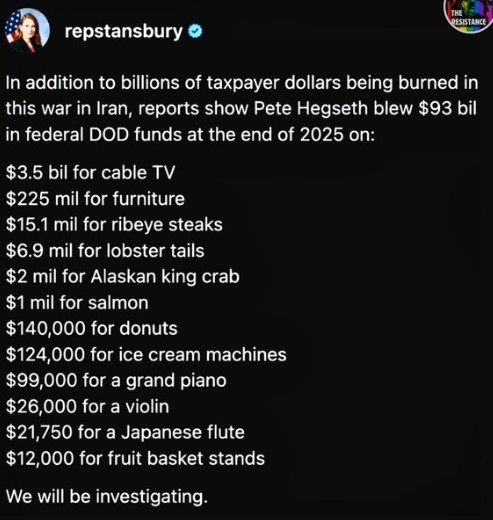


tRump claims to be a Christian, but he is not
Besides Christianity is based upon an older religion Zoroastrianism !
The most important people in religion could be named Jesus Christ, Muhammad, or the Buddha. But there is an important religious thinker from a very remote time who is the basis on the fundamental beliefs of all the major western religions. This is Zarathustra (Zoroaster to the Greeks). He was a mystic, poet, and revolutionary living in ancient Persia (modern Iran) between 1500-1000 BC. When he lived there was much chaos in the world, with many gods (polytheism), and many sacrifices made to these gods as well as by humans due to the fate of existence being controlled by the god of fate. The world being created and controlled by many gods and randomness was not what Zoroaster was talking about, and he came up with an incredibly different view of the world.
He was able to describe a single Supreme God who had created everything, and Zoroaster offered the existence of a cosmic war between good and evil. He also discussed a place for the good in heaven and the bad in hell. He spoke about a future time when all mankind would be judged and punished for their actions, a messiah would come to save mankind, and there would be a resurrection from the dead.
The ideas of Zoroaster were to become the core beliefs of Judaism, Christianity and Islam. The staggering number of similarities, which can be found in the Gathas (Zoroastrian hymns) and those that developed in the Abrahamic religions, illustrate the emergence of universal spiritual ideas throughout time and across cultures.
Persia, the home of the most powerful religious thinker of all time. His central idea (the absolute requirement of personal moral responsibility) is a very viable practical philosophy.
The One and the Two
Prior to Zoroaster’s time, the ancient Iranian religion was closely aligned with the Vedic religion found in India. The ancient Iranian religion represented a world filled with gods (daevas), complex rituals, and a realization that the universe actually operated based solely on the forces of nature, rather than upon moral forces.
According to legend, at age 30 Zoroaster experienced a mystical experience when he was taken into the presence of Ahura Mazda, the “Lord of All Wisdom.” During this experience, Zoroaster came to understand that Ahura Mazda was not simply another god among many; rather, he was the only uncreated, ultimate Creator of the universe. He was completely good, completely just, and completely light-giving.
However, this led to another philosophical problem: If the Creator was wholly good, what is the origin of evil? Zoroaster’s response to this question was profound and revolutionary. He developed the idea of cosmic dualism. The opposite of Ahura Mazda, he taught, was an independent, destructive being called Angra Mainyu (later called Ahriman). Angra Mainyu was the catalyst behind darkness, decay, disease, and deception.
Thus, evil was born. For the first time in history, evil has been identified as an immensely intelligent force acting to destroy God’s creation, not just a natural force, nor just a manifestation of a whimsical god’s emotions.
The Cosmic Battle and the Power of Choice
According to Zoroaster’s version, the universe as a whole is in a continuous battle between Light (Ahura Mazda) and Darkness (Angra Mainyu). But Zoroaster’s belief is that, since Ahura Mazda created us, we are not to be passive victims of this battle; rather, we are to be active partners with Ahura Mazda.
Zoroaster taught that all human beings possess free will and therefore are not beholden to predestined fate or to the whims of the gods. Every day, every hour, every minute, and every second, we are confronted with the choice to support either the forces of Light or the forces of Darkness. Simply stated, the most basic idea of Zoroastrianism is that we must always choose:
“Good Thoughts, Good Words, Good Deeds”
(Humata, Hukhta, Hvarshta)
By making positive moral decisions to choose truth over lies, construct kindness instead of cruelty, or create as opposed to destroy etc., you are giving power to the side of Light and aiding Ahura Mazda in winning the battle.
This creates an opportunity for humans to elevate their lives to a level of universal significance. Each human being’s choice is of great importance, as their moral choices are connected to their assistive participation in redeeming the universe.
 |
The Babylonian Connection: A Convergence of Ideas
How was it possible for the teachings of an ancient Persian prophet to have so much in common with the teachings of both Judaism and Christianity? One of the major historical times when these two disparate cultures crossed paths was when a new nation arose in Babylon: the Babylonian exile. During the Babylonian Exile in 586 B.C.E., the Babylonians were victorious over the city of Jerusalem (destroying the First Temple) and took many of the Jewish leaders into captivity in Babylon. Fifty years later, the Persian King Cyrus the Great conquered Babylon and released the Jews at that time by permitting them to return to Jerusalem to rebuild their temple.
When Jewish scholars and priests lived within the borders of the Persian Empire, they were also living very close to the Persian people and their Zoroastrian beliefs and practices. Prior to the Babylonian exile, most of what we define as early Jewish texts/Scriptures were not preoccupied with cosmic adversary or fiery hell, but rather viewed the afterlife as an unknown and therefore, a lowly space, called Sheol, a shadowy realm.
Following the Babylonian Exile, during the Second Temple Period, Jews became increasingly concerned with the theological tenets that would have parallels to those of Zoroastrianism. Satan’s role in Jewish theology changed from being a prosecutor in the heavenly court (Book of Job) to serving as a cosmic adversary of God. Many of the major theological themes (final judgment, resurrection from death, separation of souls into heaven and hell) became core to the Jewish understanding during this time.
Many scholars do not see these theological developments as a simple process of copying from one culture to another, but rather as a profound convergence. The presence of Zoroastrianism may have acted as a catalyst or common language that allowed Jewish thinkers at that time to better understand/clarify and adapt their present understanding of spiritual truths that were already emerging within their own tradition. These important concepts of moral choice, divine justice and ultimate redemption have found their fullest development in Christianity and Islam.
Three Zoroastrian Practices for Modern Life
Zoroaster’s teachings offer a powerful, action-oriented philosophy for living with purpose and integrity today. Here are three ways to apply his wisdom:
1. The Daily Alignment (Good Thoughts, Good Words, Good Deeds):
When you wake up in the morning, make an effort to create a mental connection with the forces of Creation. Then make a commitment to yourself that you will do your best to have good thoughts, good words, and good deeds today. When you have to make a decision, think about how this will affect your life and ask yourself if it is constructive or destructive. Ask yourself if it is true or false. By focusing on these three basic forms of morality, you establish a set of guidelines for how to live during the day.
2. The Rejection of Fate:
When Zoroaster refused to accept the determinism of the world, he declared that people are not at the mercy of fate. Therefore, he believed in free will and that every person has the power to control their own life. While we cannot control events in our lives, we can control how we respond to them. Many of us live our lives as passive participants. To live your life as an active participant, reclaim your power and become an active creator of your own life.
3. The Practice of Light:
Fire and light are the ultimate symbols of purity and wisdom from Ahura Mazda. You can use fire and light to create a small home ritual. When you use a candle to help light your way in the dark, you are not just creating a visual effect. It is also a reminder of the presence of truth and goodness. You can also use the candle to reflect on the moral choices you have made during the day and as a commitment to make more moral choices tomorrow.
The Ultimate Triumph
According to Zoroaster, while there will be a cosmic conflict that lasts until the end of time; he also predicted that there would be a time when the Light would prevail over Evil (Angra Mainyu) and all darkness would cease to exist, and the world would one day return to its original state which is known as Frashokereti (making wonderful). The victory of the Forces of Light does not rest solely on God’s promises but is dependent upon the participation of mankind through courage and action.
For over three thousand years, Zoroaster has offered mankind his teachings and a challenge to each individual. His teachings serve as both a historical record and an appeal for all individuals to accept the responsibility of fighting evil and doing their part in bringing heaven to earth. The battle between good and evil exists in every human being as a battle for the heart, and as every decision affects this battle, each person has the power to contribute to bring about the victory of good over evil.


Dementia?
Trump posted 10 times (all at 10 PM 3-29-26) that the DOJ targeted New York AG Letitia James because she insured both of her houses!
Bank fraud charges against James were dismissed late last year, and a grand jury in Virginia later refused to re-indict her.
Trump is Russian Agent
Many nations offered to send oil to Cuba, but Trump said no, he blockaded Cuba to force them to change the regime.
U.S. President Donald Trump has effectively blocked all oil shipments to Cuba in an attempt to pressure the government in Havana.
Separately, the U.S. temporarily eased sanctions on Russia to help improve the flow of oil that has been restricted by the U.S.-Israeli war with Iran.
In the meantime, the Russian ship Anatoly Kolodkin has been making its way to Cuba. The vessel departed from Russia’s Primorsk port carrying some 650,000 barrels of crude, LSEG ship-monitoring data also showed.
But now there is an exception, Russia is going to be allowed to sell oil to Cuba!
Karolying Leavitt thinks we had a regime change in Iran.
“Has it not? Their entire leadership has been killed. Wouldn’t you say there’s been a change in the regime”?
We made the regime worse.
We swapped out an 86-year-old hardline leader for a young hardline leader.
Regime change is NOT swapping out names.
It’s changing the goals, values, principles, laws and governance.
listen to Trump tell you what the Declaration of Independence means.
Trump:
of course you have the Declaration of Independence
Moran: What does it mean to you?
Trump:
Well, it means exactly what it says. It’s a declaration. It’s a declaration of unity and love. Respect, and it means a lot. And it’s something very special.
Hegseth injects combative Christianity into America’s military
by Ellen Mitchell – 03/29/26
During his briefing on the Iran war last week, Defense Secretary Pete Hegseth suggested that Americans take a knee and pray to Jesus for the success of U.S. forces in the Middle East. A few days later, he read out a sermon praying that “wicked souls” be “delivered to the eternal damnation” in the fight against Iran.
Trump said bitcoins were bad for the country, until he figured out he could make tons of money off of the coins – which are used to move money stealthily by criminals.
On Jan. 15, 2026, French President Emmanuel Macron said France was now providing two-thirds of Ukraine’s intelligence.
Ukrainian intelligence officials suspected the U.S. had leaked information to Russia, causing Ukraine to stop sharing intelligence with the U.S.
Shortly after, a rumor gained traction that Ukraine relied so heavily on French intelligence because Ukraine had allegedly given the U.S. false intelligence that the U.S. then leaked to Russia, uncovering the U.S. as an unreliable intelligence partner for Ukraine.
Pentagon prepares for weeks of ground operations in Iran, officials say, as thousands of U.S. troops arrive in Middle East
If President Donald Trump approves the plans, such an effort would mark a new phase of the war that could be significantly more dangerous to U.S. personnel than the first four weeks. Any potential ground operation would fall short of a full-scale invasion and could instead involve raids by a mixture of Special Operations forces and conventional infantry troops, said the officials.
Trump announces, in a speech , that he will no longer support NATO members. Who didn’t see that coming? And, could it get any sillier, he wants to rename the strait of Hormuz the Trump strait?
Trump accidentally sabotaged his own party
REUTERS/Elizabeth Frantz
John Stoehr March 28, 2026
The Democrats in the Congress held the line and won. So far, that’s the story of the fight over the shutdown of the Department of Homeland Security (DHS).
The Republicans said no to two proposals for weeks, during which time airports nationwide descended into chaos. Employees at the Transportation Security Administration (TSA) were working without pay.
The mess was getting so messy that last weekend, Senate Republicans went to the president with a deal. The Democrats would fund all of DHS but not ICE. Airports would return to normal. The GOP would get a chance to secure ICE funding later. But Donald Trump said no. He said he would agree if the Democrats supported unrelated legislation called the SAVE Act.
But the president didn’t stop there with his unrealistic demands. To create what he believed was leverage over the Democrats, he dispatched ICE agents to airports around the country. It was reported that they were “assisting” the TSA, but in reality, Trump was trying to bully the Democrats, especially Chuck Schumer, into giving him everything he wanted.
Senate Democrats made clear their intention to restore order at airports by funding all of DHS, except for ICE.
Kremlin has outlawed the “ideology of childlessness.”
As Russian men die off and Russian women give birth less often, the country faces a “demographic crisis,” so the Kremlin has outlawed the “ideology of childlessness.” Russia’s Health Ministry has approved updated guidelines for doctors:
The women’s edition of a medical-history questionnaire should inquire into the patient’s reproductive plans. And if she isn’t planning to reproduce, the guidelines say, she should be sent to therapy “for the purpose of fostering positive attitudes toward childbirth.”
(AC/Moscow Times, London Times) …If Russian women don’t have kids, who is Putin going to send to die in Ukraine 18 years from now?
high price of gasoline
Economists say the high price of gasoline is because refineries base their pricing for gasoline on the cost to replace their inventory of foreign crude (Despite producing significant amounts of light sweet crude, many U.S. refineries are traditionally configured for heavier, more sour imported crude), so costs for gas stations go up immediately. But when the price of oil drops, they don’t lower the cost of their gasoline until they have refined all the sour crude they have already purchased.
This often leads to accusations of price gouging — not just from you but from lawmakers, too. But legislation to combat that has failed in the past because of “concerns they will discourage U.S. firms from ramping up production when it’s needed most, further constricting supply and leading to even greater shortages.”
Gas prices are expected to continue climbing over the next few days, and consumer sentiment is falling, The Post reported yesterday. The global benchmark price for a barrel of crude oil was above $112 yesterday — up 50 percent from last month.
Houthis enter missile fray as Israel hits nuke sites
2026-03-28 HKT 16:32
Iranian media reported Israeli strikes on Friday on three Iranian nuclear facilities and two steel plants, with officials saying there was no radioactive release.
Gulf countries and Israel came under missile fire and Israeli forces struck Iran’s nuclear sites on Saturday as the Middle East conflict raged into a second month.
In a sign that the conflict may be expanding further, Israel’s military said air defenses responded to a missile launched from Yemen – the first since the start of the war on February 28 and after threats from Iran’s Houthi allies to launch attacks.
The conflict, which began a month ago to the day, showed no sign of ending, with Israel announcing fresh strikes on Tehran and reports of around 10 intense blasts and a plume of black smoke.
Emirati authorities said debris from a missile interception started fires at an Abu Dhabi industrial zone, injuring five Indian nationals.
Saudi Arabia said it had intercepted a missile and several drones, and Bahrain said a blaze caused by the “Iranian aggression” had been brought under control.
In Israel, repeated air raid sirens sent people to shelters, including in Tel Aviv where a man was killed and two others wounded, and in the country’s north, where media reported a simultaneous attack from Iran and its Lebanese ally Hezbollah.
An Iranian missile and drone attack on the Prince Sultan Air Base in Saudi Arabia wounded at least 12 American soldiers, two of them seriously, according to The New York Times and The Wall Street Journal, citing unidentified officials.
G7 foreign ministers, meeting near Paris, expressed the “absolute necessity to permanently restore safe and toll-free freedom of navigation” in the Strait of Hormuz, which has been in a state of near closure as a result of Iranian and called for “an immediate cessation of attacks against civilians and civilian infrastructure”.
Israel confirmed it had struck the Khondab heavy water complex and a uranium processing plant in Ardakan, while the UN nuclear watchdog said Iran had informed it of another strike on the Bushehr nuclear power plant.
Iran’s Foreign Minister Abbas Araghchi threatened retaliation “for Israeli crimes” in a post on X, saying the attacks contradicted Trump’s “extended deadline for diplomacy” while the country’s Revolutionary Guards warned they would strike industrial sites across the region, having earlier issued similar warnings for US military bases and hotels hosting American troops.
Yemen’s Houthi rebels had warned on Friday they would join the war if US-Israeli attacks on ally Iran continued or if more countries joined the conflict.
The Houthis have in the past attacked shipping in the Red Sea in response to regional conflicts, but had so far not intervened in the latest war. “We affirm that our fingers are on the trigger for direct military intervention,” the group said in a statement. (AFP)
Update: Israel’s military said it intercepted a missile launched from Yemen toward Israel early Saturday, the first time it had faced fire from that country. The Iranian-backed Houthi rebels claimed responsibility for the attack, which calls into question whether the rebel group backed by Tehran will again target commercial shipping traveling through the Red Sea corridor.
Hello, Boomer? It’s me, Zoomer!
Haters like to say Gen Z can’t make phone calls, but a very wholesome phone experiment is forging friendships between Zoomers and Boomers living thousands of miles apart. Researchers recently stuck a payphone on the street near Boston University, no doubt confusing Gen Z students who’d never seen one in the wild. There’s only one number this phone dials, and it connects to a Nevada nursing home. Total strangers can pick up the phone and start chatting with someone 50 years their senior. What a lovely way to bridge generational divides and teach the youths about extinct methods of telecommunication.
England
It has been announced that the Future Homes Standard (FHS) will mandate that most new homes built from 2028 must include on-site renewable energy generation as standard.
While it has been on the cards for some time, the government has now published details of its FHS, moving new regulatory requirements from policy into implementation.
Under the FHS, all new homes – with some exceptions such as high-rise buildings – must include on-site renewables, mainly rooftop solar, along with low-carbon heating such as heat pumps and heat networks.
This higher standard for new homes will come into force from 2028, a year later than anticipated.
“If this policy is to succeed, the focus must go beyond what is installed in homes to how the grid is operated. Making better use of existing infrastructure through active voltage control can reduce bills and unlock capacity, while improving flexibility and resilience. Scaling clean power will only work if the network beneath it is ready to support it.”

Diabetes: There’s an app for that
Sam Glassenberg’s daughter was diagnosed with diabetes when she was 5, and Glassenberg felt totally unprepared for the whirlwind of medical information he’d need to internalize to keep her healthy. So he turned diabetes management into a game, literally, with “Level One,” a video game he designed that looks like “Candy Crush” but teaches players of all ages how to manage their diagnosis. Who knew it was possible to gamify dosing insulin and tracking ketones? It’s worked so far for Glassenberg’s daughter, who’s now 11 and thriving.
Even as a Stanford-trained computer science engineer, Glassenberg found it confusing and frustrating, especially with the high stakes involved.
“It’s ridiculous,” he said. “It’s horrible because for those first few months, you’re learning through play, but that play is trial-and-error on your own kid.”
So, he did what game designers do best. He built a video game — called “Level One: A Diabetes Game” — a free mobile app that has had about 50,000 downloads since its launch last April.
Meet Moon Mascot ‘Rise,’ the zero-g indicator for NASA’s Artemis II mission

In its “Missions” blog, NASA explains that zero gravity indicators are plush items that are small and provide a visual indication of when the spacecraft and its crew reach space. Submitted by a 2nd grader.
Abbreviations
Even everyday abbreviations may boggle the mind: For example, why is “pound” abbreviated as “lb”? Maybe you memorized the term in school, or maybe one day you asked the deli manager what that “LB” on the sticker meant, but it’s not an easy one to decipher on its own, because the word and its abbreviation don’t share a single letter. There is an answer as to why it’s shortened that way, though, and it dates back to ancient Rome.
The Romans used a basic unit of weight called a libra (~0.722 pounds), derived from the Latin for “scale” or “balance.” Libra pondo is a Latin phrase that translates to “a pound by weight.” When these terms reached Britain, they became the standard for weighing gold and silver. The abbreviation “lb” is a shortening of libra that was carried over to the English word “pound.” The British currency is also called the pound, and the £ symbol represents libra.
Another concept worth mentioning is the Roman uncia, a Latin word that translates to “one-twelfth.” It was used by the Romans as a unit of measurement for one-twelfth of a libra, and it became the inspiration for the English word “ounce.” So, where did that “z” in the abbreviation “oz” come from? On the journey from Latin to English, there was a detour with the Italian word onza.
President Donald Trump is toying with renaming one of the world’s most critical shipping routes after—who else—himself.
Speaking at an investor forum in Miami on Friday night, Trump casually referred to the Strait of Hormuz as the “Strait of Trump,” before quickly correcting himself, then insisting it wasn’t a slip.
“Excuse me, I’m so sorry. Such a terrible mistake,” he told the crowd.
Donald Trump stands on stage at a lecture with his arms stretched out.
Speaking at an investor forum in Miami on Friday, Trump casually referred to the Strait of Hormuz as the “Strait of Trump.”
“The Fake News will say, ‘He accidentally said.’ No, there’s no accidents with me.”
The remark drew laughs in the room, but behind the scenes, it’s not entirely a joke.
Trump has reportedly privately floated renaming the waterway the “Strait of America,” or even after himself, if the U.S. succeeds in wresting control of it from Iran, according to The New York Post.
Moscow Goes (Digitally) Dark
Russia has suffered hundreds of thousands of casualties since Putin’s invasion of Ukraine, and lost much of its influence in the region. This month, the capital went weeks without Internet
By Andrew Ryvkin
March 28, 2026
Moskvichka, a lifestyle publication run by one of the Kremlin’s most notorious propagandists, Kristina Potupchik, just published a review of Ava, a new restaurant overlooking Red Square that serves crab doughnuts, a scallop-and-strawberry salad, and a white-chocolate-and-sour-cream cake wrapped in edible gold. What the magazine failed to mention is that the view from Ava has changed drastically in the last couple of weeks.
F.S.O. (Russia’s secret service) officers in full military gear are stationed around the Kremlin. A masked gunman is perched on Lenin’s tomb. First-time diners who have trouble finding the restaurant will have to ask directions from the drivers of armored cars and pickups with mounted guns that have recently appeared on every road leading to the Kremlin. Because, for three weeks, the Russian capital has had no mobile Internet or G.P.S. Here, Google Maps—along with every other app that needs an Internet connection—is nothing but a blank screen.
Ironically, Russia’s command-and-control structures suffered a massive blow when SpaceX turned off the country’s Starlink terminals and the Kremlin blocked Telegram, which its troops used to coordinate. Even the Ministry of Defense considers Max an insecure means of communication for the military, and there’s talk of unblocking Telegram on the front lines only.
Having seen the president of Venezuela captured and the supreme leader of Iran killed, Vladimir Putin feels anything but safe.
Putin’s personal paranoia may also be a major factor. The F.S.O. is, essentially, an army created to protect one man. Its assets are stationed specifically to defend the Kremlin and Putin’s many dachas, and the security perimeter around these sites keeps expanding; Putin’s Black Sea residence now has a two-mile no-go zone around it. Having seen the leader of Venezuela captured and the leader of Iran killed, Putin feels anything but safe—even with the U.S. offering Russia major concessions to end the war in Ukraine.

Heather Cox Richardson
Mar 27, 2026
In an interview with Reuters on Monday, Singapore’s minister for foreign affairs, Dr. Vivian Balakrishnan, put in bald language the change in the world order instigated by President Donald J. Trump.
“For 80 years,” Balakrishnan explained, “the US was the underwriter for a system of globalisation based on UN Charter principles, multilateralism, territorial integrity, sovereign equality.” That system “heralded an unprecedented and unique period of global prosperity and peace. Of course there were exceptions. And of course, the Cold War was still in effect for at least half of the last 80 years. But generally, for those of us who were non-communists, who ran open economies, who provided first world infrastructure, together with a hardworking disciplined people, we had unprecedented opportunities.
“The story of Singapore, with a per capita GDP of 500 US dollars in 1965. Now, [it is] somewhere between 80,000 to 90,000 US dollars. It would not have happened if it had not been for this unprecedented period, basically Pax Americana and then turbocharged by the reform and opening of China for decades. It has been unprecedented. It has been great for many of us. In fact, I will say, for all of us, if you look back 80 years.
“But now, whether you like it or not, objectively, this period has ended…. Basically, the underwriter of this world order has now become a revisionist power, and some people would even say a disruptor. But the larger point is that the erosion of norms, processes, and institutions that underpinned a remarkable period of peace and prosperity; that foundation has gone.”
In its place, as scholar of authoritarianism Timothy Snyder said to me in a YouTube conversation yesterday, Trump is aligning himself with international oligarchs like Russia’s Vladimir Putin, Hungary’s Viktor Orbán, Saudi Arabia’s Mohammad bin Salman (MBS), and China’s Xi Jinping. Because of his position as the president of the United States of America, this means he is aligning the United States of America with this oligarchical axis as well, abandoning the country’s democratic principles and traditional allies.
The fallout from the Iran war has also benefited Russia’s Vladimir Putin. Despite reports that Russia is aiding Iran in the fight, the Trump administration dropped sanctions on Russian oil that was already at sea, giving Russia an injection of up to $10 billion a month into its cash-strapped war effort against Ukraine.
Today Trump reposted Russian propaganda claiming that Ukraine discussed funneling money to Biden’s reelection campaign. Also today, four Russian lawmakers arrived in Washington, D.C., for the first such visit since Russia invaded Ukraine in 2022 to talk with lawmakers and officials, “part of the normalization of relations with the United States of America,” as one of the Russians told the Russian press.
Trump declared he was determined to achieve peace between Russia and Ukraine, but this week, according to Ukraine president Volodymyr Zelensky, administration officials said the U.S. would not guarantee Ukraine’s security unless Ukraine withdraws from its own land in Donbas. Ceding the region to Russia would essentially give Putin what he launched the war to grab. It is the same region that was at stake in 2016, when Russian operatives told Trump’s 2016 campaign manager they would help Trump’s presidential candidacy if he would look the other way as Putin installed a puppet over the region.
This afternoon, Noah Robertson and Ellen Francis of the Washington Post reported that the Pentagon is considering diverting weapons intended for Ukraine to the Middle East. They also noted that on Monday, Pentagon officials told Congress that it was going to divert about $750 million in funding provided by NATO countries for Ukraine to restock military weapons in the U.S. instead. About allocating weapons, Trump told the reporters, “we do that all the time. We have them in other countries, like in Germany and all over Europe. Sometimes we take from one and we use for another.”
Last week, the U.S. eased sanctions on banks in Russia’s ally Belarus, and today Trump announced he would ease further sanctions on Belarus to try to get fertilizer into the U.S. since Iran’s closure of the Strait of Hormuz has stopped the transportation of about 20% of the world’s fertilizer. Also today, Belarus’s president Alexander Lukashenko signed a treaty with another of Putin’s allies, North Korea’s president Kim Jong Un, announcing a “fundamentally new stage” of the relationship between the two countries as they “oppose undue pressure on Belarus from the West.” Both Belarus and North Korea support Russia in its war on Ukraine.
Trump has openly endorsed Orbán for reelection in Hungary’s April 12 elections, posting on social media yesterday: “Relations between Hungary and the United States have reached new heights of cooperation and spectacular achievement under my Administration, thanks largely to Prime Minister Orbán. I look forward to continuing working closely with him so that both of our Countries can further advance this tremendous path to SUCCESS and cooperation.” Urging Hungarians to vote for Orbán, Trump continued: “He is a true friend, fighter, and WINNER, and has my Complete and Total Endorsement.… I AM WITH HIM ALL THE WAY!”
The framers of the Constitution tried to set up a system that would make it impossible for a president to go to war for private interests or the benefit of other countries, establishing that Congress alone can declare war. The framers wanted the American people to weigh in on whether they wanted to dedicate their lives and their fortunes to a war.
But Trump simply began the Iran war without consultation with Congress, and administration officials have refused to appear at hearings, instead briefing Congress behind closed doors. At an annual fundraising dinner for Republican members of Congress, Trump appeared to acknowledge he was violating the Constitution. He spoke of the “tremendous success” of what he called his “military operation” in Iran. He continued: “I won’t use the word war ’cause they say if you use the word war, that’s maybe not a good thing to do. They don’t like the word war because you are supposed to get approval. So I will use the word military operation.”
Now, as the war costs at least $1-2 billion a day and Trump’s declarations fluctuate wildly from saying the war is over to suggesting he is considering deploying ground troops to posting this morning that Iranian negotiators “better get serious soon, before it is too late, because once that happens, there is NO TURNING BACK, and it won’t be pretty!” even Republicans are starting to have misgivings. The war has pushed Trump’s approval rating down to just 36%, while a new Reuters poll shows that only 25% of Americans approve of how Trump is handling the cost of living. Today the stock market, which has generally trended downward since the invasion, dropped sharply as traders apparently recognized that the cost of oil is not coming down anytime soon.
Yesterday, after a classified briefing, House Armed Services Committee chair Mike Rogers (R-AL), who backed the Iran strikes, told reporters that Congress members “want to know more about what’s going on, what the options are, and why they’re being considered,” adding, “And we’re just not getting enough answers on those questions.” Chair of the Senate Armed Services Committee Roger Wicker (R-MS) commented: “I can see why he might have said that.”
Morelle noted that even if the White House or the Pentagon did start to provide specifics, “I’m not sure it would matter anyway because the president changes his mind so frequently. He might say something and literally without exaggeration, a half hour later say something completely different, or even sometimes within the same press conference, give two wildly different answers.”
Morelle told Walker and Kovensky: “They fight us on things that will help American families be able to pursue dreams, take care of the food, housing, and healthcare needs of millions of families that they can’t afford”—precisely the things that, as Minister Balakrishnan noted, the post–World War II international order enabled people around the world to attain. “But,” Morelle said, “they can go into an ill-conceived military action that has neither the support of Congress nor the support of American families, which has no clear objectives, shifting goals, and has alienated our allies and made us less safe.”
TACO Trump #234
Trump Backs Section 702 Reauthorization After Once Calling To ‘KILL FISA’
The president is much more concerned about the law’s potential now that he’s in charge of the government wielding it.
For the world there is no longer any such thing as American credibility
In the years after Barack Obama’s presidency, it became an article of faith that one of his central errors in foreign policy was the Syria “red line.” He had said he would attack Syria if it used chemical weapons — but when evidence emerged that it had used those weapons, he pushed the question of intervention to Congress, which declined to act.
“A disaster,” Donald Trump called it at the time. A cause of “generational and reputational damage,” said then-Sen. Marco Rubio (R-Florida). Part of “an incoherent maze” of foreign policy, Pete Hegseth argued a few years later. In ignoring a red line that he had drawn, Sen. Lindsey Graham (R-South Carolina) explained, Obama had risked squandering American credibility around the world.
Obama’s red line flip flop looks like the model of careful policymaking compared to what we have witnessed since the Iran war began. Last week, President Trump posted on social media that “If Iran doesn’t FULLY OPEN, WITHOUT THREAT, the Strait of Hormuz, within 48 HOURS from this exact point in time, the United States of America will hit and obliterate their various POWER PLANTS, STARTING WITH THE BIGGEST ONE FIRST.”
The rest of the story is well known. Iran refused to be cowed by this threat and continued its attacks and its closure of the strait. Trump’s response? To quickly climb down and announce that he had postponed any action on energy infrastructure for five days, claiming that — suddenly, overnight — Iran and the U.S. had been engaged in “productive conversations” toward a “complete and total resolution of our hostilities in the Middle East.” The Iranians denied any such talks were taking place. Now Trump says he’s extending the pause by another week and a half.
It is by now clear that Trump is being graded on a curve. When he says he will raise tariffs to 130 percent or that he will blow up Iran’s biggest gas field or that “the war is very complete, pretty much” none of these statements mean much. They could be actual American policies or not, or they could stand as policy for a day or a week after which they will change. After saying that the war was pretty much complete, that same day Trump asserted that “we haven’t won enough” and that “we’ll not relent until the enemy is totally and decisively defeated.” He’s said that he agreed to negotiate with Iran’s leaders but then couldn’t because they keep getting killed — though it is of course his own military (and Israel’s) which is doing the killing. All clear?
Trump’s supporters claim this incoherence is strategic genius, that he is keeping people off guard. Except that policy seems to change for a variety of reasons: Maybe the stock market falls, or maybe the target country lavishes praise on Trump and gives him a gold bar. Trump’s superpower is that he is flexible enough to turn on a dime and has a base that will accept anything he proposes. Once unalterably opposed to Middle Eastern wars, many of his MAGA followers now believe in this Middle Eastern war with the zeal of converts. And while Trump has made clear that he would like to end the hostilities, the problem this time, unlike with tariffs, is that he cannot stop what he started. Iran gets a vote. And it is currently voting to keep fighting, calculating that though weakened, it has enough military power to do damage to the world economy, thereby inflicting pain on the U.S.
For the world there is no longer any such thing as American credibility, just a strange reality television show in which the main actor swerves, bobs and weaves his way through crises, hoping that what he says today will solve the crisis caused by what he said yesterday. The day before he threatened to obliterate Iran’s power plants, Trump had claimed that the US was considering “winding down” its military operations against Iran and implied that protecting the Strait of Hormuz was not his problem and could be dealt with by other nations whose imports passed through the strait. At another point, he said he didn’t need any other country’s help. Businessmen used to rail against previous administrations because of policy uncertainty. Now they line up to praise Trump as his carnival of chaos roils markets almost every week.
Trump has gotten used to playing with the U.S.’s massive power, punishing those who don’t bend the knee and rewarding those who do. In doing this, he is squandering credibility built up over decades to extract short-term goodies — sometimes to the benefit of his own family’s business interests. But in Iran he seems to have come up against an adversary that won’t play by his rules.
Trump loves to make up stuff (LIE)
At a Cabinet meeting on Thursday, President Donald Trump told a lengthy story about negotiating the creation of a personalized Sharpie pen. The only problem: the company that produces Sharpies denies it ever happened.
Theoretically, Trump’s tall tale was an attempt to prove his skill at saving money. It started with complaints about cost overruns tied to the renovation of the Federal Reserve building, but then the pen he was holding caught his attention, and it was tangent time.
“This pen is an interesting example,” before relating a presumably improvised story in which he called “the guy” and told him, “I’d like to use your pen, but I can’t have a great thing with a big S on it saying Sharpie as I’m signing a $1 trillion airplane contract to buy brand new fighter jets.”
“The guy,” said the President, offered to provide personalized black pens with “the White House” written in gold free of charge, until Trump insisted on paying $5 a pen.
Setting aside that this story does not, in fact, prove Trump’s thrift — were it authentic, he would have successfully negotiated the price up from free to $5 — it also turned out that it simply wasn’t true. According to a spokesperson from the manufacturer of Sharpie, “We don’t have any information about the conversation described.”
So with another Trump whopper in the news, here are five of his biggest and most baffling lies from the past several years.
1. “They’re eating the dogs.”
Who can forget when, at a presidential debate against Kamala <ahref=”https://www.rawstory.com/tag/white-house” target=”_blank” rel=”noopener”>Harris, Trump claimed that immigrants in Springfield, Ohio, were eating the city’s pets? Apparently voters forgot, and fast, because they elected him president shortly thereafter.
2. Wind energy is “driving whales crazy.”
Earlier this week, the Trump Administration agreed to pay nearly $1 billion to stop the construction of wind farms off the U.S. coast. He’s given all manner of justifications for his hatred of wind turbines over the years, but arguably the most nonsensical is his assertion about their effect on whales.
3. Impossible drug prices.
Over the past year, Trump has frequently claimed that his administration would cut drug prices by “900, 600, 500, 1,200” percent, and many other numbers. These numbers are, of course, impossible because math doesn’t work that way. If drug prices were reduced by 100%, they’d be free, and anything more than that, and they’d be paying you to take them.
4. His uncle knew the Unabomber.
Last year, Trump boasted that his Uncle John was a professor of Unabomber Ted Kaczynski at MIT, but it was quickly pointed out that that couldn’t be possible. First off, Kaczynski never went to MIT. Second, Uncle John died in 1985, and Kaczynski wasn’t revealed to be the Unabomber until 1996, so there was no way Unk could have spoken to Trump about the terrorist a decade before he was found to be one.
5. He warned us all about Osama bin Laden.
Just recently, Trump brought back a lie he’s told before: that the book he published in 2000 contained a warning that Osama bin Laden was going to commit a major attack. “I wrote it in a book. You can even check — about a year before the World Trade Center came down.” Indeed you can check, and people have, finding no such prediction.
Trump is TACO again, now 10 days!
A good start to my feelings:
Trump just threatened to commit a crime
Trump just threatened to commit a crime — and nobody stopped him
Kevin Lamarque
Sabrina Haake March 26, 2026 | 06:38AM ET
On March 21, at 7:44 pm, Trump threatened to “obliterate” Iran’s power plants if Iran didn’t reopen the Strait of Hormuz within 48 hours. He posted his threat on social media (so transparent! so strong!), promising that if Iran didn’t open the Strait “within 48 HOURS from this exact point in time,” the U.S. “will hit and obliterate” their power plants. And, because the world is his subordinate, he thanked it for its attention to this matter.
Iran relies on 130 thermal plants across the country for more than 95% of its electricity. Targeting all those plants would be a war crime. Intentionally bombing any non-military infrastructure essential to the survival of civilians, like power plants, is a violation of international humanitarian law.
Why? Because when power plants collapse, water pumping and desalination stations stop functioning. With no water, civilians die from dehydration and organ failure, some within days, some within hours. Children and the elderly die first. When hospitals lose power, life-support machines shut down, and surgeries are cancelled. Food production and distribution also collapse without power. Amnesty International observed that, “By threatening such strikes, (Trump was) effectively indicating willingness to plunge an entire country into darkness, and to potentially deprive its people of their human rights to life, water, food, healthcare and adequate standard of living, and to subject them to severe pain and suffering.”
IRAN JUST THREATENED UKRAINE
Not the Middle East. Not a military base in Iraq. Not Israel.
UKRAINE.
A country already 3 years deep in a war with Russia — already bleeding, already broken — just became a “legitimate target” for IRAN.
Let that sink in.
Iran says Ukraine helped Israel shoot down Iranian drones
So a country fighting for its OWN survival helped an ally defend THEIR survival
And Iran’s response? Declare every inch of Ukrainian territory fair game for strikes.
But here’s the part nobody is connecting:
Iran and Russia have a military cooperation pact
Iran has been supplying Russia with Shahed drones TO USE AGAINST Ukraine
Now Iran is threatening to strike Ukraine DIRECTLY
Russia is already bombing Ukraine from the north, east, and south
Iran just offered to open a threat from the SOUTHEAST
They’re showing you Iran lashing out at everyone.
They’re NOT showing you that this isn’t random — it’s COORDINATED.
→ Russia wants Ukraine destroyed
→ Iran has been helping Russia destroy Ukraine for 3 years with drones
→ Now Iran has a “reason” to threaten Ukraine directly
→ Ukraine is forced to split its attention between TWO hostile nations
→ NATO is forced to split resources between TWO theaters of war
→ And that’s EXACTLY what both Russia and Iran want
One country fighting one war is survivable.
One country fighting two wars against two allies who WANT the same outcome?
That’s not a war. That’s an execution.
Prepare accordingly.
Among the classified records taken to Mar-a-Lago by President Trump were documents so sensitive that one had been distributed to just six people, while another set was relevant to his business interests.
The disclosure, made to the House Judiciary Committee as part of its investigation into the probes into Trump, offers new details about the types of records the president took with him to Florida after losing the 2020 election.
The public is still barred from seeing former special counsel Jack Smith’s report surrounding the investigation that prompted him to bring Espionage Act charges against Trump after 300 documents with classified markings were discovered at his Florida estate.
The files shared with Congress include a January 2023 memo of work on Smith’s team. Senate Judiciary Chair Chuck Grassley (R-Iowa) also shared them on Tuesday.
In it, agents are seen discussing the need to secure permission to show the classified documents at trial, arguing that Trump’s business interest in the documents indicates his motive, while the closely held documents show the highly sensitive nature of the materials. The memo does not provide further specifics about the contents of the classified documents.
“Most damning is what these documents, cherry-picked by your own DOJ for disclosure, show about President Trump’s conduct,” Raskin wrote in a letter to Attorney General Pam Bondi, going to quote from the memo from Smith’s team.
The “FBI has also found that certain classified documents President Trump improperly retained ‘would be pertinent to certain business interests.’ DOJ prosecutors further assessed that these ‘classified documents pertinent to his business interests’ established ‘a motive for retaining them,” Raskin wrote.
“The memorandum further specifies that the disclosure of these documents represented ‘an aggravated potential harm to national security.’ The prosecutors also wrote that these were ‘highly sensitive documents—the type of documents that only presidents and officials with the most sensitive authority have.’ One ‘particularly sensitive document was accessible by only 6? people, including the president.’”
At another point in the memo, prosecutors discuss Trump showing a classified map to passengers traveling with him aboard a flight, including his now chief of staff Susie Wiles.
According to the panel’s Democrats, it’s possible the Justice Department disclosure may violate an order from U.S. District Court Judge Aileen Cannon, who sided with Trump in barring the release of Smith’s report.
Cannon’s order barred Bondi from sharing the report or “any information or conclusions” from it.
Great, now we are going to have to breath SMOG
TRUMP is an idiot
US suspends anti-smog fuel rules in bid to ease pump prices
By Jarrett Renshaw
March 25, 2026
High gasoline prices at a Mobil station in West Hollywood
A gas pump is inserted inside an Audi vehicle at a Mobil gas station in Beverly Boulevard in West Hollywood, California, U.S., March 10, 2022. REUTERS/Bing Guan/File Photo Purchase Licensing Rights, opens new tab
HOUSTON, March 25 (Reuters) – President Donald Trump’s administration announced on Wednesday it will temporarily suspend federal anti-smog regulations on seasonal gasoline blends to combat higher pump prices since the start of the war on Iran.
The move by the Environmental Protection Agency will allow retailers to sell less expensive formulations of gasoline, including mixtures that include 15% ethanol – known as E15 – that are typically not permitted during warmer months.
Iran dismisses US ceasefire proposal: State news agency
by Max Rego – 03/25/26 7:52 AM ET
Iran has dismissed an initial 15-point ceasefire proposal from the United States, according to the state-run Fars news agency.
“Iran does not accept a ceasefire,” an “informed person” told the outlet. “Basically, it is not logical to enter into such a process with those who violate the agreement.”
Pakistani officials confirmed Wednesday that the Islamic Republic had received the proposal, according to The Associated Press.
The Iranian military launched more strikes on Israel and the Persian Gulf region overnight, including an attack that sparked a massive fire at Kuwait International Airport.
Pakistani officials told the outlet that the peace plan centered on sanctions relief, civilian nuclear cooperation, missile limits, a rollback of Iran’s nuclear program and monitoring by the International Atomic Energy Agency (IAEA).
It also includes opening up shipping access through the Strait of Hormuz. Since U.S.-Israeli strikes began on Feb. 28, Iran has significantly limited vessels traveling through the key passageway used to transport oil, resulting in an increase in global energy prices.
President Trump said Monday that previously threatened U.S. strikes on Iranian energy infrastructure would not occur for five days after “productive conversations” with Tehran. He also told reporters that same day that U.S. envoys Steve Witkoff and Jared Kushner spoke with their Iranian counterparts on Sunday.
On Tuesday, the president told reporters that he, Vice President Vance and Secretary of State Marco Rubio, in addition to Witkoff and Kushner, are also involved in negotiations with Iran.
Even amid the alleged talks, the Pentagon is preparing to deploy roughly 2,000 soldiers from the U.S. Army’s 82nd Airborne Division to the Middle East, a source familiar with the matter told The Hill on Tuesday.
Mohammad Bagher Ghalibaf, the speaker of the Iranian parliament, earlier this week denied that negotiations between Tehran and Washington were taking place.
“No negotiations have been held with the US, and [fake news] is used to manipulate the financial and oil markets and escape the quagmire in which the US and Israel are trapped,” he wrote on the social platform X.
Western powers were unable to secure shipping in the Red Sea. Hormuz will be harder
By Lisa Baertlein and Jonathan Saul
March 25
Summary
Red Sea efforts failed despite billions spent and military involvement
Iran’s military capabilities surpass those of the Houthis
High stakes for global oil supply and energy prices
The Western allies trying to negotiate a way to protect the Strait of Hormuz for energy shipping face a stark reality: a similar effort in the Red Sea that started years earlier cost billions of dollars and ultimately failed against Yemen’s Houthis.
The costly Red Sea experience – four ships sunk, more than $1 billion in weapons expended, and a route that the shipping industry still largely avoids – looms over the more complex Strait of Hormuz, the shipping artery used by roughly a fifth of global oil and liquefied natural gas supply and now blocked by Iran, a more formidable adversary than the Houthis.
Iran’s threats to the strait and its attacks on energy infrastructure in nearby Gulf nations have sent oil prices soaring in the worst disruption to oil and gas supplies in history. Absent the strait’s reopening, shortages will become more acute, threatening higher costs for energy, food and numerous other products worldwide.
“There is no substitute for the Strait of Hormuz,” Kuwait Petroleum CEO Sheikh Nawaf Saud Al-Sabah said in a fiery video call streamed to the CERAWeek energy conference in Houston on Tuesday. “It is the world’s strait, under international law and practical reality.”
U.N. Security Council members on Tuesday were negotiating resolutions for protecting the strait, with some nations, such as Bahrain, taking a forceful stance that would authorize the use of “all necessary means” to protect the strait – which could mean the use of force.
Advertisement · Scroll to continue
Reuters interviewed 19 security and maritime experts who described the myriad challenges facing the U.S. and its allies in protecting the strait. Iran has far more advanced military forces than the Houthis, an arsenal of cheap drones, floating mines, and missiles, and easy access from its steep mountainous coast to the narrow waterway.
“Defending convoy operations in the Strait of Hormuz is significantly more challenging than in the Red Sea,” said retired Rear Admiral Mark Montgomery, who in 1988 was involved in U.S. tanker escorts through the Strait of Hormuz during the Iran-Iraq war.
That’s a big concern for U.S. President Donald Trump as he seeks to justify the Iran war ahead of the November midterm elections to inflation-weary American voters now facing gasoline at nearly $4 a gallon. The spike in energy prices is not expected to fully reverse until the waterway opens, analysts said.
Trump has been noncommittal about U.S. involvement, first saying the U.S. Navy will escort ships when needed, then more recently saying other nations should lead the effort. Iran has blocked most ships from the maritime chokepoint since joint U.S.-Israeli attacks on Iran began February 28.
Iran is considering a proposal to levy fees on vessels that want to use the strait, a Iranian lawmaker told state media last week.
THE HORMUZ QUAGMIRE
The U.S. mission to protect Red Sea shipping from the Houthis launched in December 2023, with European nations joining in with their own operation a few months later. The allies shot down hundreds of drones and missiles, but the Houthis still sank four ships between 2024 and 2025. Shippers now largely avoid the passageway, once home to 12% of world trade, opting for a much longer voyage around the Horn of Africa.

Global trade is in danger of losing steam
Global trade is in danger of losing steam due to the U.S. and Israeli war with Iran, the World Trade Organization warns.
Growth in world trade in goods will grow just 1.9% this year, down from 4.6% growth in 2025 and could slow even more if the Middle East conflict keeps energy prices high and disrupts global transport, according to a WTO report.
If oil and liquefied natural gas prices remain high throughout 2026, growth of global trade in goods could drop to as little as 1.4%, while a prolonged blockade of the Strait of Hormuz by Iran, choking one-third of fertilizer urea imports, risks hitting major producers like India, Thailand, Brazil, fueling food security risks, the WTO says.
But even as the flow of Middle Eastern oil remains restricted, new trade lanes are opening. Australia and the European Union have finally inked a free trade deal after eight years of negotiations, removing tariffs on almost all goods and annoying both farmers on both sides. Here are the highlights of the deal.
The deal follows intensified talks amid sharply higher U.S. tariffs under the Trump administration and growing worries about China’s dominant position in rare earths and other critical minerals. The two sides also agreed to deepen security and defense cooperation.
ICE without masks at the Airport
Trump deployed ICE agents to major airports on March 23 amid mounting TSA callouts and travel delays. Their usual masked presence — often associated with aggressive sweeps of pedestrians in cities like Minneapolis — gave the public a rare, unfiltered look at the men and women actually behind the mask.
‘